Aquatic Plants for Ponds and Aquariums
48 plant profiles · Discover aquatic plants for aquariums and ponds. Learn depth requirements, lighting, carbon dioxide needs, and how to manage growth rates.
Aquatic plants live either fully submerged in fresh or marine water, floating on the surface, or rooted in saturated sediment with leaves held above the waterline. Because they take up dissolved minerals directly through their submerged foliage or via specialized root systems, their growth is governed strictly by water chemistry, dissolved carbon dioxide, and light penetration. Selecting the correct species depends on whether you are planting a shallow outdoor pond, a pressurized freshwater tank, or a low-tech bowl.
Submerged oxygenators and background stem species anchor into the substrate or drift in the water column. Canadian waterweed (Elodea canadensis) and straight vallisneria (Vallisneria spiralis) grow rapidly in unheated or moderately heated tanks, drawing excess nitrate and phosphate straight from the water. For aquascaping layouts with high illumination, roundleaf toothcup (Rotala rotundifolia) develops pink to orange-red tips, while slow-growing epiphytes like anubias (Anubias barteri) rot if buried in substrate and must be tied directly to bogwood or stone.
For water gardens and ponds, depth determines species survival. Large emergent perennials such as the sacred lotus (Nelumbo nucifera) require deep containers placed under 20 to 45 cm (8 to 18 in) of standing water with direct sunlight, whereas free-floating miniatures like Asian watermeal (Wolffia globosa) and common duckweed (Lemna minor) float unrooted on the surface, multiplying rapidly to provide canopy cover and nutrient absorption.
Amazon Frogbit
Hydrocharis laevigata
☀️ Bright Indirect 💧 Aquatic

Amazon Sword
Aquarius grisebachii
💧 Aquatic

American Lotus
Nelumbo lutea
☀️ Full Sun 💧 Aquatic
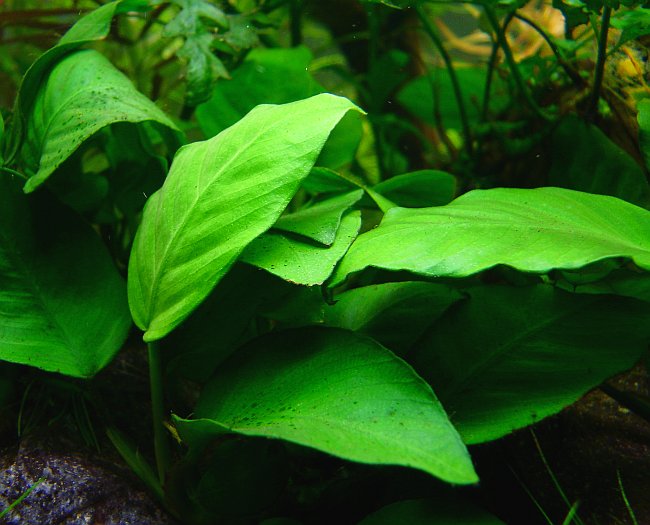
Anubias
Anubias barteri
☀️ Low Light 💧 Aquatic

Arrowhead
Sagittaria sagittifolia
☀️ Full Sun 💧 High

Arumleaf Arrowhead
Sagittaria cuneata
☀️ Full Sun 💧 Aquatic
Asian Watermeal
Wolffia globosa
☀️ Full Sun 💧 Aquatic

Blue Lotus
Nymphaea nouchali
☀️ Full Sun 💧 Aquatic

Brazilian Waterweed
Elodea densa
💧 Aquatic

Canadian Waterweed
Elodea canadensis
💧 Aquatic
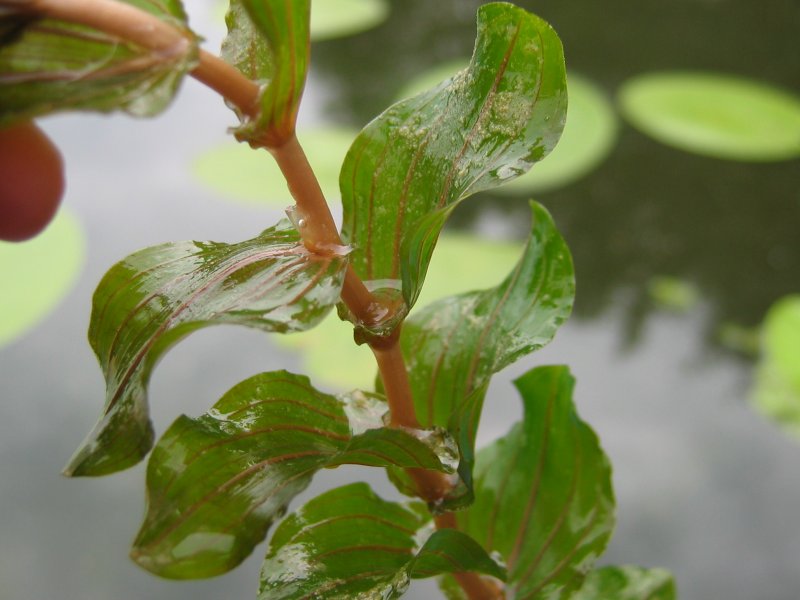
Clasped Pondweed
Potamogeton perfoliatus
💧 Aquatic

Common Club-Rush
Schoenoplectus lacustris
☀️ Full Sun 💧 Aquatic

Common Duckweed
Lemna minor
☀️ Full Sun 💧 Aquatic

Common Quillwort
Isoetes lacustris
💧 Aquatic
Common Water-Crowfoot
Ranunculus aquatilis
☀️ Full Sun 💧 Aquatic
Creeping Primrose-Willow
Ludwigia repens
☀️ Bright Indirect 💧 Aquatic
Dwarf Baby Tears
Micranthemum callitrichoides
☀️ Bright Indirect 💧 Aquatic
Dwarf Hairgrass
Eleocharis acicularis
☀️ Bright Indirect 💧 Aquatic
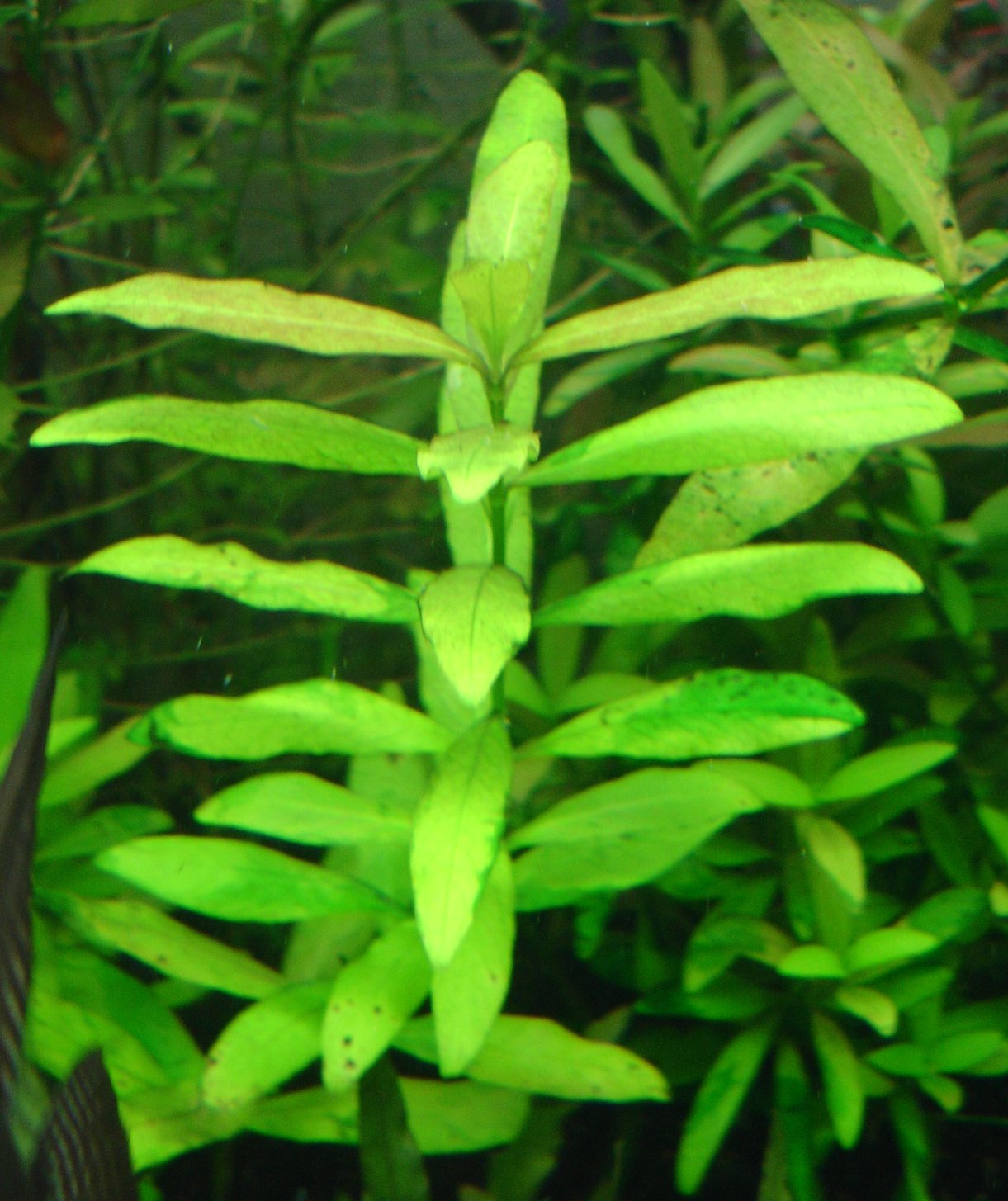
Dwarf Hygrophila
Hygrophila polysperma
☀️ Bright Indirect 💧 Aquatic

Dwarf Waterclover
Marsilea minuta
☀️ Full Sun 💧 Aquatic

Eelgrass
Vallisneria spiralis
☀️ Bright Indirect 💧 Aquatic

European Bur-Reed
Sparganium emersum
☀️ Full Sun 💧 Aquatic
Fanwort
Cabomba caroliniana
☀️ Bright Indirect 💧 Aquatic
Flowering Rush
Butomus umbellatus
☀️ Full Sun 💧 Aquatic
Common Questions
Do all aquatic plants need substrate to grow?
No, free-floating plants and true epiphytes grow without any substrate. Species such as anubias attach directly to hardscape like rocks or driftwood using their roots, while free-floating species absorb all required nutrients directly through the water column.
How much light do submerged aquatic plants need?
Most submerged aquatic species require 8 to 10 hours of consistent light daily. Low-demand species thrive at light levels around 10 to 20 lumens per liter, while high-demand red stem plants need 40 to 50 lumens per liter alongside supplemental carbon dioxide.
Why are the leaves on my aquatic plants turning clear and disintegrating?
Disintegrating or translucent leaves indicate severe nutrient starvation, lack of dissolved carbon dioxide, or underwater transition shock known as crypt melt. When emergent-grown nursery stock is submerged, terrestrial foliage dies back over 10 to 21 days before submerged leaves emerge.
How do you stop duckweed and floating plants from taking over a pond?
You must skim floating plants manually with a fine pool net every 7 to 14 days during peak summer growth. Increasing surface water movement with an aerator or fountain pump disrupts calm water pockets and prevents small floaters from forming unbroken mats.