
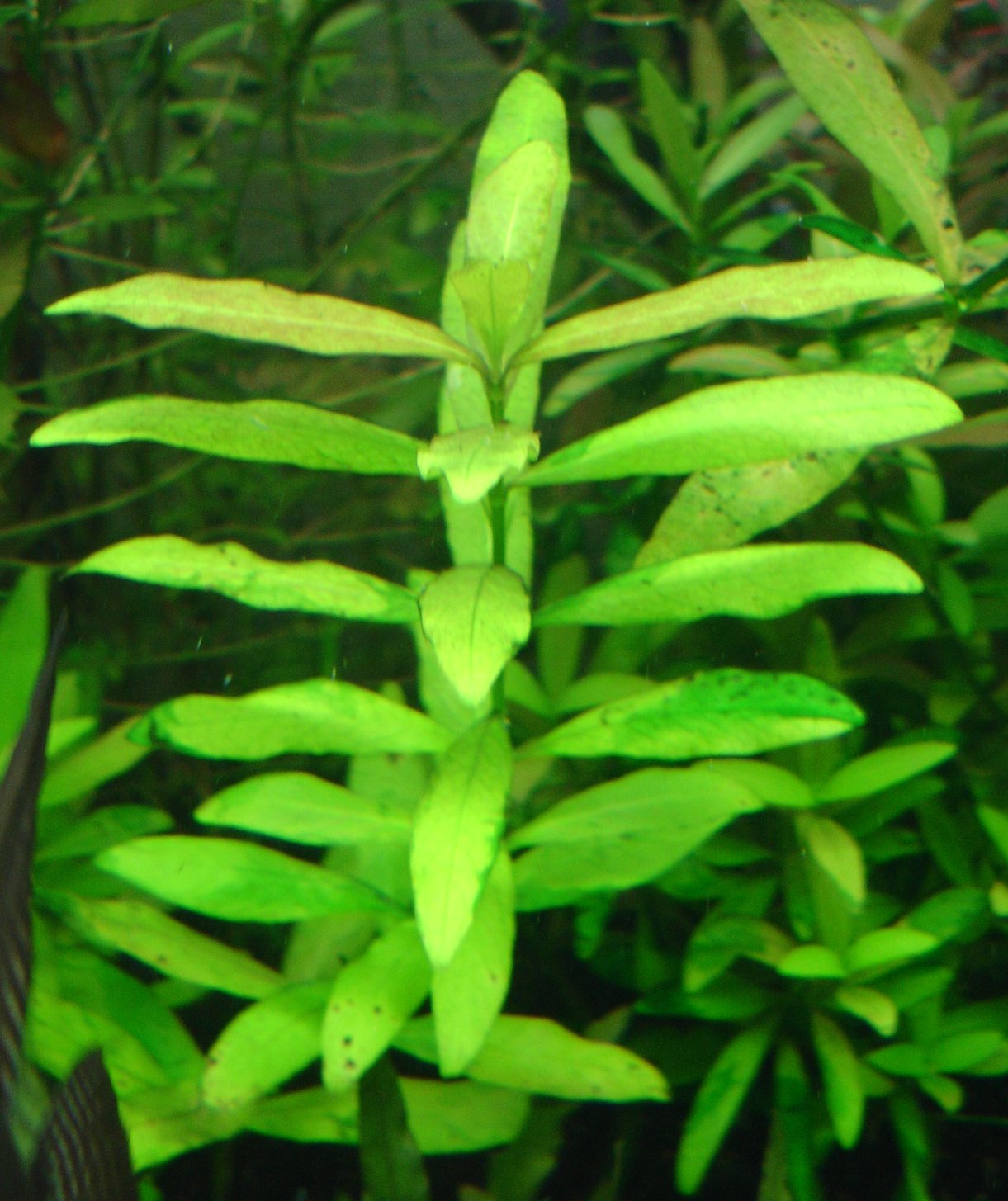
Dwarf Hygrophila is a highly adaptable aquatic perennial from the family Acanthaceae, native to the wetlands of India, Bangladesh, China, and Malaysia. Known scientifically as Hygrophila polysperma, it is recognized by its ability to grow both submerged in water and emersed along muddy banks.
While it is one of the easiest aquarium plants to maintain, it grows so aggressively that it is listed as a Federal Noxious Weed in the United States. You must check local regulations before purchasing, as it is illegal to transport or sell in several states, including Florida and South Carolina.
Key Facts
- Light: Low to high, with 10-12 hours daily
- Growth Rate: Extremely fast, requiring weekly trimming
- Temperature: Prefers 18–30 °C (64–86 °F)
- Water Type: Freshwater with pH 5.0–8.0
- Placement: Best suited for background or midground
Is Dwarf Hygrophila Right for Your Aquarium
Dwarf Hygrophila is the ideal starter plant for freshwater aquarists because it survives in almost any water condition. It fills empty spaces in a tank within weeks, providing cover for shy fish and helping to oxygenate the water column. However, its speed is a double-edged sword; it can quickly shade out slower-growing species if not pruned regularly.
This plant is particularly useful for nutrient export, as it rapidly absorbs nitrates and phosphates that would otherwise fuel algae growth. It suits tanks of at least 40 litres (10 gallons) due to its vertical reach. Because of its invasive nature, never dispose of trimmings in local waterways or down the drain; always dry them out or freeze them before composting.
Identifying Hygrophila polysperma
Dwarf Hygrophila features opposite, lance-shaped leaves that grow along a central brittle stem. Submerged leaves typically reach 4 cm (1.5 in) in length and 1 cm (0.4 in) in width, appearing bright green under standard lighting. When the plant reaches the water surface, it develops emersed leaves that are shorter, darker, and slightly hairy.
The stem is typically 2-3 mm (0.1 in) thick and can grow up to 60 cm (24 in) tall in deep tanks. Under intense light, the upper leaves of certain cultivars may turn pink or bronze. Unlike the giant hygro (Hygrophila corymbosa), which has much broader, tougher leaves, this species remains delicate and flexible in the current.
Light Requirements for Color and Growth
This species thrives under moderate to high lighting, though it can survive in low-light environments. In low light, the plant grows leggy with large gaps between the leaf nodes and maintains a strictly green color. To achieve the compact growth and reddish tints seen in many aquarium photos, you need a light intensity of at least 0.5 watts per litre (2 watts per gallon).
- Low Light: Slow growth, long internodes, pale green leaves.
- Medium Light: Steady growth, bushy habit, vibrant green.
- High Light: Rapid growth, reddish-brown top leaves, very short internodes.
Provide a consistent photoperiod of 10 to 12 hours. If the lower leaves begin to fall off, it is usually a sign that the upper canopy is too thick and is blocking light from reaching the base of the stems.
Water Parameters and Temperature
Dwarf Hygrophila tolerates a wide temperature range between 18 °C and 30 °C (64–86 °F). It is not picky about water hardness and can thrive in both soft and very hard water (2–15 dGH). While it does not require supplemental CO2, adding it will significantly increase the leaf size and the speed of growth.
Maintain a pH between 5.0 and 8.0 for optimal health. Regular water changes are beneficial to replenish micronutrients, though the plant is hardy enough to withstand fluctuations that would kill more sensitive species like Rotala wallichii. It is an excellent choice for community tanks with tropical fish like tetras or guppies.
Choosing the Right Substrate and Soil
You can grow Dwarf Hygrophila in plain gravel or sand, as it absorbs many nutrients directly from the water through its leaves. While it does develop a root system to anchor itself, it is not a heavy root-feeder like Cryptocoryne species. A nutrient-rich aquarium soil will encourage faster establishment, but it is by no means a requirement.
If using an inert substrate like silica sand, you should supplement the water with liquid fertilizers. The roots are thin and white, spreading horizontally just beneath the surface of the substrate. Ensure the substrate depth is at least 5 cm (2 in) to prevent the buoyant stems from floating away before they can take root.
Humidity and Emersed Growth
When grown above the water line, Dwarf Hygrophila requires humidity levels above 70% to prevent the leaves from drying out. In its native habitat, it grows as a terrestrial plant during the dry season. In a home setting, this is usually achieved in a terrarium or a covered aquarium where the plant can grow out of the water.
Emersed growth is much sturdier than submerged growth, with stems becoming slightly woody. The leaves become smaller, more oval, and develop a darker green hue. If you transition a plant from emersed to submerged growth, expect the old leaves to melt away as the plant grows new, thinner submerged foliage.
Feeding and Fertilization
To maintain the health of Dwarf Hygrophila, liquid iron supplements are necessary if you want to see red or pink coloration. It is a fast-growing plant that quickly depletes potassium from the water. If you notice small, pin-sized holes appearing in the older leaves, this is a definitive sign of potassium deficiency.
- Nitrogen: Required for overall leaf size and growth speed.
- Potassium: Prevents necrotic spots and leaf drop.
- Iron: Enhances the pink/red hues in ‘Rosanervig’ and ‘Sunset’ varieties.
A standard all-in-one liquid fertilizer dosed once or twice a week is usually sufficient for this species. In high-tech setups with CO2, you may need to dose daily to keep up with the plant’s metabolic rate.
How to Propagate Dwarf Hygrophila
Propagation is achieved through simple stem cuttings taken from a healthy mother plant. Use sharp aquascaping scissors to cut a stem at least 10 cm (4 in) long, ensuring there are at least two leaf nodes on the cutting. Remove the leaves from the bottom node and insert the bare stem into the substrate.
New roots will typically form within 3 to 7 days. You can also leave cuttings floating on the water surface, where they will develop adventitious roots from the nodes before being planted. This plant is so prolific that even a single leaf left floating in the tank can occasionally sprout a new plantlet from its base.
Common Problems and Pests
The most frequent issue is lower leaf loss caused by self-shading. Because the plant grows so densely, the top leaves block light from the bottom, causing the plant to become bare at the base. Regular thinning of the group and aggressive pruning of the tops will allow light to penetrate deeper.
While few pests bother this plant, some herbivorous fish like large Goldfish or Silver Dollars (Metynnis argenteus) may eat the soft leaves. Algae can also become a problem if the plant stops growing due to a lack of nutrients. If green spot algae appears on the leaves, it often indicates a phosphate imbalance in the aquarium water.
Toxicity and Safety Warnings
Dwarf Hygrophila is completely non-toxic to humans, cats, dogs, and all known aquarium inhabitants. It is safe for shrimp and snails, providing an excellent surface for biofilm to grow, which serves as a food source for fry and invertebrates. There are no known irritants in the sap or tissues of the plant.
The primary safety concern is ecological rather than biological. Because it can survive in cool water and low light, it can easily outcompete native vegetation if it enters local ponds or rivers. Always dispose of excess plants by sealing them in a bag and placing them in the trash; never release aquarium life into the wild.
Does Dwarf Hygrophila Bloom?
Dwarf Hygrophila produces small, axillary flowers only when grown in its emersed form. The flowers are typically pale blue, lilac, or white and appear in the leaf axils along the upper parts of the stem. They are rarely seen in a fully submerged aquarium environment.
Flowering usually occurs in late summer or autumn when the day length changes. In a terrarium or ‘dry start’ aquarium, these flowers add a distinct visual element. Once the plant flowers, it may focus less energy on leaf production, so many growers pinch off the flower buds to maintain a bushy, foliage-heavy appearance.
Year-Round Aquarium Maintenance for Dwarf Hygro
| Spring | Increase liquid fertilization as natural light levels rise. Perform a heavy prune to 10 cm (4 in) above the substrate to encourage new, bushy growth. |
|---|---|
| Summer | Monitor aquarium temperatures; if water exceeds 30 °C (86 °F), increase aeration. Thin out the canopy weekly to prevent lower leaf rot. |
| Autumn | Check for flower buds on emersed stems. Reduce lighting duration slightly if you notice an increase in green hair algae on the leaf edges. |
| Winter | Ensure the aquarium heater is stable at 22-24 °C (72-75 °F). Growth may slow down, so reduce fertilizer dosing by half to prevent nutrient buildup. |
Dwarf Hygrophila Health and Diagnosis
| What you see | Likely cause | What to do |
|---|---|---|
| Small holes in older leaves | Potassium deficiency | Increase dosing of a potassium-rich liquid fertilizer. |
| Lower leaves turning yellow and falling | Lack of light at the base | Thin out the top of the plant or move it to a brighter area. |
| Stems becoming thin and very long | Insufficient light intensity | Upgrade your aquarium lighting or move the plant directly under the light source. |
| New leaves are white or pale | Iron or manganese deficiency | Add a dedicated micro-nutrient or iron supplement to the water. |
Popular Hygrophila polysperma Cultivars
- ‘Rosanervig’ – features distinct white or pink veins on green leaves.
- ‘Sunset’ – similar to Rosanervig, with intense reddish-pink tops.
- ‘Tiger’ – displays subtle dark marbling on the leaf surface.
- ‘Ceylon’ – a variety with narrower leaves and a more bronze tint.
Frequently Asked Questions
How do I tell Dwarf Hygrophila apart from Dwarf Sagittaria?
Dwarf Hygrophila is a stem plant with leaves growing in pairs along a vertical stalk, whereas Dwarf Sagittaria (Sagittaria subulata) grows in a grass-like rosette from the substrate.
Is Hygrophila polysperma illegal in the US?
Yes, it is on the Federal Noxious Weed List, meaning it is illegal to import or transport across state lines, and several states ban its sale entirely.
Can I grow Dwarf Hygrophila from seeds?
While seeds are produced in the wild, most 'aquarium seeds' sold online as Dwarf Hygro are actually other species; it is much more reliable to propagate via stem cuttings.
What is the difference between Dwarf Hygro and Dwarf Hairgrass?
Dwarf Hairgrass (Eleocharis acicularis) looks like a lawn of fine green hair, while Dwarf Hygro has distinct broad leaves and grows much taller.
Why is my Dwarf Hygrophila turning red?
This is usually a response to high light intensity and low nitrogen levels, which triggers the production of protective reddish pigments in the new growth.
Sources & Verification
Taxonomy and distribution are checked against the databases below. Care guidance is written for cultivated species only and reviewed by our editor. How We Build Plant Profiles →
