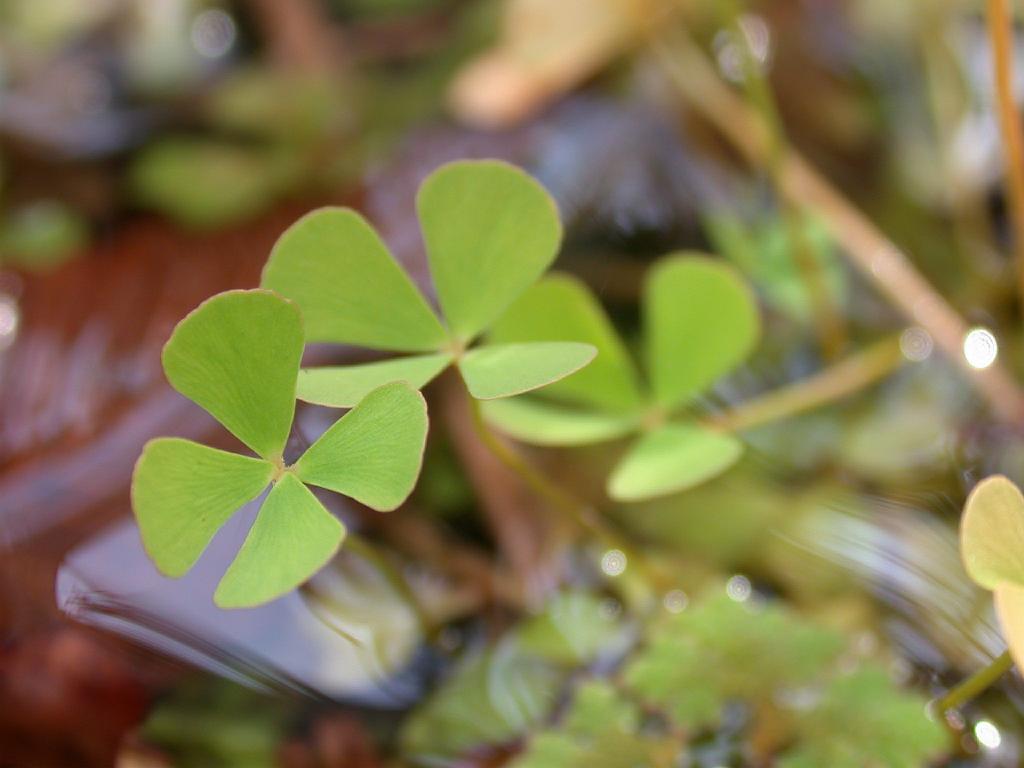
Dwarf waterclover (Marsilea minuta) is a creeping amphibious fern native to tropical and subtropical wetlands across Africa and Asia, recognisable by its four-lobed leaves that resemble a four-leaf clover. It spreads through creeping rhizomes along muddy margins, paddy fields, and slow-moving freshwater shallows.
Known as shusni shak in South Asia, it serves both as a harvested wild green and an adaptable carpeting plant for freshwater aquariums. It fails quickly if the root zone dries out completely or if competing algae smothers submerged foliage.
Key Facts
- Plant type: Perennial amphibious fern
- Water depth: Mud to 30 cm (12 in) submerged
- Light: Full sun to bright indirect
- Edible parts: Young shoots and tender leaves
- Substrate: Nutrient-rich mud, loam, or aquasoil
- Minimum temperature: 15 °C (59 °F)
Growing Dwarf Waterclover as an Edible Crop and Aquarium Plant
Dwarf waterclover thrives in waterlogged conditions and suits container water gardens, bog planters, and indoor aquariums. The plant spreads continuously via horizontal runners, forming dense mats along the surface of wet soil or under shallow water.
You will succeed with this species if you maintain constant moisture at the roots. It tolerates water levels fluctuating from saturated mud up to 30 cm (12 in) of standing water, making it far more forgiving than sensitive terrestrial herbs.
Dwarf Waterclover Botanical Description and Leaf Habit
Dwarf waterclover produces slender, branching rhizomes bearing leaves divided into four distinct wedge-shaped pinnae. Each leaflet measures 5-18 mm (0.2-0.7 in) long and 4-15 mm (0.15-0.6 in) wide, arranged symmetrically at the apex of an erect or floating petiole.
As a true fern, the plant does not produce flowers or true seeds. Instead, it forms hard, bean-like sporocarps measuring 2-4 mm (0.08-0.16 in) near the base of the petioles, which contain both microspores and megaspores. Growth habit shifts dramatically with water depth:
- Emersed growth: Petioles stand upright at 5-15 cm (2-6 in) high with stiff, spreading leaflets.
- Submerged growth: Leaves remain dwarfed at 2-5 cm (0.8-2 in) tall, often forming single-lobed or compact four-lobed carpet foliage.
- Floating habit: In deeper water, petioles elongate up to 25 cm (10 in) to position leaflets flat against the surface.
Water, Light, and Substrate Conditions
The ideal water temperature for active growth ranges between 20-30 °C (68-86 °F). Substrate quality determines leaf density, requiring a rich mineral base rather than inert gravel.
Outdoor bog planters require at least 6 hours of direct sunlight daily to maintain thick growth. In an indoor aquarium setting, use medium to high-intensity LED lighting providing 30-50 micromoles of PAR at the substrate bed to prevent runners from stretching upward.
- Substrate: Heavy loam, clay pond soil, or nutrient-charged aquarium soil.
- Water pH: Tolerates a range between 6.0 and 7.5.
- Water hardness: Soft to moderately hard water (2-12 dGH).
How to Plant and Propagate Water Clover
Propagate water clover by dividing creeping rhizomes with at least three leaf nodes and visible roots. True spores rarely require manual cultivation because vegetative propagation from runners produces instant results.
When planting in bog containers or aquarium foregrounds, use tweezers to press each runner into the substrate. Space divisions 3-5 cm (1.2-2 in) apart in a grid pattern:
- Trim long roots to 1 cm (0.4 in) before inserting to encourage lateral rooting.
- Anchor the horizontal runner lightly under fine substrate so it does not float free.
- Keep water levels shallow (2-5 cm / 0.8-2 in) during the first two weeks until roots anchor firmly.
How to Care for Water Clover Plants
Maintain standing water continuously because drying substrate kills the rhizomes within 48 hours. In outdoor containers, top up evaporated water twice weekly during peak summer heat.
Feed outdoor containers monthly with a diluted, balanced aquatic fertilizer formulated at 10-10-10. For aquarium carpet growth, supplement iron and trace minerals weekly into the water column. Carbon dioxide injection is not strictly mandatory, but adding 15-20 mg/L of dissolved CO2 triples lateral spreading speed.
How to Harvest Water Clover Greens
Harvest young, tender petioles and leaves when stems reach 8-12 cm (3-5 in) in height above the mud. Cut leaves with sharp kitchen shears 1 cm (0.4 in) above the runner to leave the spreading root system undisturbed.
Regular harvesting encourages dense branching across the runner network. Take no more than one-third of the total foliage from a single cluster at one time, allowing 10-14 days between harvests in warm conditions.
Culinary Uses and Traditional Benefits
In Indian cuisine, dwarf waterclover is widely known as shusni shak and eaten lightly cooked with garlic, green chillies, and mustard oil. The leaves carry a mild, pleasant earthy flavour with a delicate, spinach-like texture when stir-fried briefly.
The plant has been traditionally used in Ayurvedic and folk practices as a calming remedy for insomnia, stress, and respiratory discomfort. As with many ferns, plants contain the enzyme thiaminase, so the greens are traditionally blanched or thoroughly cooked rather than eaten raw in significant volume.
Managing Water Clover Problems and Algae
Submerged foliage succumbs to filamentous green algae if water column nutrients exceed the plant’s uptake capacity. Maintaining balanced lighting and performing regular 25% weekly water changes prevents algal buildup on creeping leaves.
Inspect foliage regularly for common wetland and aquarium issues:
- Yellowing leaves: Indicates nitrogen or iron deficiency in lean substrates.
- Leggy, stretched petioles: Caused by insufficient light intensity reaching the lower water column.
- Leaf melt after planting: A normal transition response when shifting from emersed greenhouse culture to submerged aquarium conditions.
- Stagnant water rot: Occurs when standing water remains foul without light aeration or seasonal flushing.
How to Store Harvested Water Clover
Store freshly harvested leaves in the refrigerator wrapped loosely in a damp paper towel inside a ventilated container for up to 3-4 days. Because tender aquatic leaves wilt rapidly once exposed to dry air, submerge cut stems in cold water immediately after gathering.
Wash the foliage under running water twice to remove sediment and pond debris. Discard yellowed leaflets before chilling, as trapped excess moisture will cause bruised petioles to deteriorate within 24 hours.
Seasonal Care for Dwarf Waterclover
| Spring | Divide overwintered rhizomes once water temperatures exceed 16 °C (61 °F). Plant divisions into fresh rich mud and apply a low-dose aquatic fertilizer tablet. |
|---|---|
| Summer | Maintain water levels to counteract evaporation. Harvest tender leaves bi-weekly and thin out dense runners to prevent surface matting. |
| Autumn | Collect maturing sporocarps if desired. In temperate climates, move container tubs indoors or sink pots below the local frost line before freezing begins. |
| Winter | Maintain indoor aquarium temperatures above 18 °C (64 °F) with regular 10-hour photoperiods. For outdoor dormant tubs, keep mud consistently damp in an unheated shed. |
Dwarf Waterclover Troubleshooting and Growing Problems
| What you see | Likely cause | What to do |
|---|---|---|
| Submerged leaves melting or turning brown shortly after planting | Transition shock from emersed nursery growth to submerged conditions | Trim away decaying foliage and maintain stable lighting while new submerged leaves sprout. |
| Petioles growing excessively tall and reaching water surface instead of carpeting | Insufficient light intensity reaching the substrate bed | Increase light levels to 30-50 micromoles of PAR or reduce water depth. |
| Yellowing between leaf veins across new growth | Iron deficiency in the substrate or water column | Insert root fertilizer tabs containing chelated iron into the substrate near active runners. |
| Fine green hair algae coating leaflet edges | Excess dissolved phosphate and prolonged photoperiod | Reduce daily lighting to 8 hours and perform a 30% water change. |
Water Clover Species and Cultivated Relatives Compared
- Marsilea minuta (wild form) – standard dwarf species with 1-2 cm wide leaflets
- Marsilea hirsuta – close relative with variable one- to four-lobed submerged foliage
- Marsilea quadrifolia – larger temperate relative tolerant of freezing pond conditions
- Marsilea crenata – Southeast Asian culinary species known as semanggi with scalloped leaflets
Frequently Asked Questions
What are water clover benefits?
Water clover leaves provide dietary minerals and vitamins when cooked, and the plant functions as a natural water-filtering carpet in ponds and aquariums. Traditionally, it was prepared as a soothing culinary green to promote sleep and alleviate mild nervous tension.
How often to water clover plants?
Water clover must never dry out; keep the root zone submerged in 2-10 cm (0.8-4 in) of standing water or continuously wet mud. If grown in shallow pots, check water levels daily in summer to prevent the substrate from desiccating.
Can you grow water clover seeds?
Dwarf waterclover is a fern and does not produce true seeds, propagating instead via spores contained in small, hard capsules called sporocarps. For cultivation, gardeners almost exclusively propagate it using vegetative runner divisions, which establish much faster than spores.
Is water clover safe for aquarium shrimp and fish?
Yes, dwarf waterclover is completely non-toxic and provides safe shelter and grazing surfaces for freshwater fish and dwarf shrimp. Ensure any newly purchased potted plants are rinsed thoroughly to remove commercial snail pesticides before introducing them to an aquarium.
How do you tell Marsilea minuta apart from true four-leaf clover?
Dwarf waterclover (Marsilea minuta) is an aquatic fern with smooth-edged or lightly notched fan-shaped lobes that fold closed at night, while true clover (Trifolium repens) is a terrestrial legume with three (rarely four) oval leaflets marked by pale v-shaped chevrons.
Information about traditional or historical uses is provided for educational interest only and is not medical advice. Do not use any plant to treat a condition without speaking to a qualified professional.
Sources & Verification
Taxonomy and distribution are checked against the databases below. Care guidance is written for cultivated species only and reviewed by our editor. How We Build Plant Profiles →