
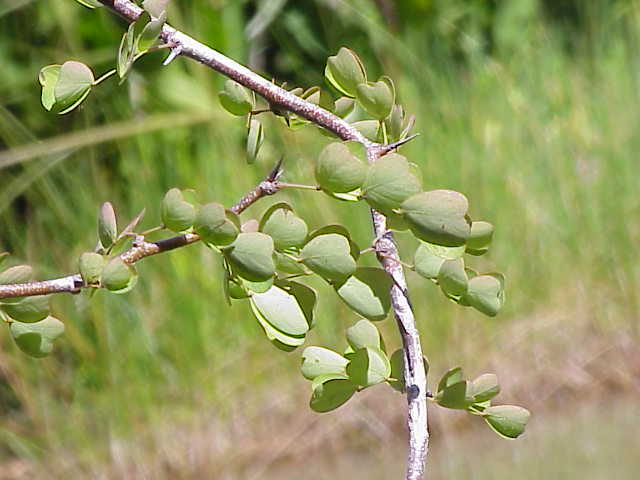
Logwood (Haematoxylum campechianum) is a spiny, small-to-medium legume tree native to southern Mexico and Central America. Its dense heartwood produces a natural red-to-purple dye that altered global trade in the seventeenth century.
Trees require tropical heat and full sun, failing quickly when exposed to ground frost. Sharp thorns up to 15 mm (0.6 in) long make strategic placement essential away from foot traffic.
Key Facts
- Sunlight: Full sun, minimum 6 hours daily
- Water: 2.5 cm (1 in) weekly during summer
- Hardiness: USDA zones 10 to 11
- Height: 6 to 15 m (20 to 50 ft)
- Soil pH: 6.0 to 7.5
Is Logwood Right for Your Garden?
Logwood requires warm, frost-free climates in USDA zones 10 through 11 and full sunlight to thrive. It tolerates poor, wet soils where other trees fail, making it useful for damp tropical lowlands.
The trunk produces sharp spines up to 15 mm (0.6 in) long along smaller branches. Plant it away from pedestrian paths, property boundaries, and play areas to avoid injury.
What Logwood Looks Like
Logwood grows as a gnarled tree with deeply fluted grey bark, pinnate leaves, and sharp axillary spines measuring up to 15 mm (0.6 in) long. The foliage consists of 2 to 4 pairs of heart-shaped leaflets, each 1 to 3 cm (0.4 to 1.2 in) long.
In late winter and spring, pale yellow flowers bloom in racemes measuring 5 to 10 cm (2 to 4 in) long. The blooms attract honeybees and produce flat, light brown seed pods containing 1 to 3 seeds.
Mature Height and Canopy Spread
Logwood reaches a mature height of 6 to 15 m (20 to 50 ft) with a canopy spread of 3 to 8 m (10 to 26 ft). It maintains a moderate growth rate, adding 30 to 60 cm (12 to 24 in) of height each season under full sun.
Trunks develop irregular, ridged shapes with age, reaching diameters up to 60 cm (24 in). Regular pruning maintains a single trunk or limits overall canopy height in smaller gardens.
Best Site and Sunlight Requirements
Position logwood in a outdoor location that receives at least 6 hours of direct sunlight every day. Dense shade reduces flowering and causes sparse leaf growth along inner branches.
The tree adapts to sandy, loamy, or limestone-rich soils with a pH between 6.0 and 7.5. It survives temporary soil inundation during heavy rainy seasons, as well as moderate coastal salt spray.
How to Plant Logwood
Plant young logwood saplings during spring in a hole twice as wide as the root ball and at equal depth to its container. Proper planting ensures stable root establishment in warm soils.
Follow these steps for successful planting:
- Dig a pit measuring 60 cm (24 in) wide and as deep as the container.
- Mix native soil with 20 percent organic compost if planting in dry sand.
- Set the tree upright, backfill soil, and tamp gently to eliminate air pockets.
- Apply 15 L (4 gal) of water around the root zone immediately after planting.
- Spread a 5 cm (2 in) layer of wood bark mulch around the base, keeping it 10 cm (4 in) clear of the trunk.
Logwood Water and Fertilizer Care
Provide 2.5 cm (1 in) of water weekly during the primary growing season from May through September. Mature trees develop deep taproots that withstand brief drought periods without supplemental irrigation.
Apply a balanced granular fertilizer twice per year in March and June:
- Use a 10-10-10 balanced formula at a rate of 100 g (3.5 oz) per 2.5 cm (1 in) of trunk diameter.
- Scatter fertilizer evenly under the drip line, avoiding direct contact with the bark.
- Water deeply after fertilizing to distribute nutrients down to the primary roots.
Pruning and Maintenance
Prune logwood in late winter while dormant to shape the main canopy and remove low-growing suckers. Always wear thick leather gloves when handling branches to protect hands from sharp thorns.
Cut away dead, damaged, or crossing branches back to the branch collar. Removing suckers around the base maintains a clean trunk structure and prevents unwanted dense thickets.
Pests, Diseases, and Common Problems
Logwood suffers few major pest infestations, but scale insects and root rot cause occasional damage in poorly managed conditions. Monitoring foliage twice a month helps catch problems early.
- Scale Insects: White or brown spots along stems; control with horticultural oil sprays.
- Fungal Leaf Spot: Dark spots during humid periods; improve canopy airflow through pruning.
- Root Rot: Wilting leaves caused by prolonged standing water in non-draining clay; improve drainage.
- Thorny Thickets: Dense unpruned basal shoots; cut suckers flush with the ground in spring.
Winter Protection and Cold Tolerance
Logwood defoliates and suffers severe stem dieback when temperatures fall below 0 °C (32 °F). It cannot survive prolonged freezing conditions or frozen ground.
In zone 10 areas where brief cold snaps occur, wrap young tree trunks with burlap or frost cloth when temperatures drop below 3 °C (37 °F). Established trees recover from light top-kill if root zones stay warm.
Traditional Uses of Logwood Dye and Timber
Heartwood from logwood yields hematoxylin, a natural reddish-brown dye historically used to color wool, silk, and cotton jet-black or deep purple. The extract remains an important histological stain in modern laboratory microscopy for cell nuclei.
Logwood shares historical dye uses with brazilwood (Paubrasilia echinata) and black cutch (Senegalia catechu). Similar spiny leguminous trees in tropical landscapes include sweet acacia (Vachellia farnesiana) and mesquite (Prosopis juliflora), which are cultivated for timber and fodder.
Year-Round Care for Logwood
| Spring | Apply 100 g (3.5 oz) of balanced 10-10-10 fertilizer around the drip line. Clear weeds within 50 cm (20 in) of the trunk and water deeply twice weekly during new growth. |
|---|---|
| Summer | Provide 2.5 cm (1 in) of irrigation weekly during dry periods. Inspect branch undersides for scale insects and spray horticultural oil if pests appear. |
| Autumn | Reduce watering frequency as tree growth slows down. Replenish organic mulch around the base to a depth of 5 cm (2 in) to protect surface roots. |
| Winter | Prune dead or rubbing branches before new spring buds open. Protect young trunks with burlap if localized temperatures are forecast to drop below 3 °C (37 °F). |
Logwood Problems and Quick Solutions
| What you see | Likely cause | What to do |
|---|---|---|
| Yellowing leaves during summer | Nitrogen deficiency or waterlogged soil | Improve drainage around the root zone and apply a balanced 10-10-10 fertilizer. |
| White crusty bumps on twigs | Scale insect infestation | Coat affected stems thoroughly with organic horticultural oil in early spring. |
| Sudden leaf drop in winter | Temperatures falling below 5 °C (41 °F) | Wrap young trunks with insulating frost cloth during cold snaps. |
| Wilting foliage with soft bark near base | Fungal root rot from poor drainage | Reduce watering frequency and clear heavy soil away from the root flare. |
Logwood Selections and Forms
- ‘Campeche’ – historic high-dye yielding wild selection originating from southern Mexico
- ‘Standard Wild Type’ – spreading, spiny form grown for timber and tropical shade
Frequently Asked Questions
What is logwood used for?
Logwood heartwood contains hematoxylin, a natural compound historically used to dye textiles purple and black. Today, laboratory technicians use hematoxylin stains to examine tissue samples under microscopes.
Is logwood toxic to pets?
Logwood is mildly toxic to dogs and cats if leaves, seeds, or bark extracts are ingested. The high tannin content causes mild nausea, vomiting, or diarrhea.
How fast does a logwood tree grow?
Logwood grows at a moderate rate of 30 to 60 cm (12 to 24 in) per year in full sun and warm conditions. Trees reach flowering maturity within 3 to 5 years.
Where is logwood native to?
Logwood is native to southern Mexico and northern Central America, including the Yucatán Peninsula. It has naturalized across many Caribbean islands.
Is logwood the same plant as blackwood?
Logwood is sometimes called Campeche blackwood, but it is distinct from Australian blackwood (Acacia melanoxylon) and African blackwood (Dalbergia melanoxylon). Check the scientific name Haematoxylum campechianum to verify species identity.
Information about traditional or historical uses is provided for educational interest only and is not medical advice. Do not use any plant to treat a condition without speaking to a qualified professional.
Sources & Verification
Taxonomy and distribution are checked against the databases below. Care guidance is written for cultivated species only and reviewed by our editor. How We Build Plant Profiles →