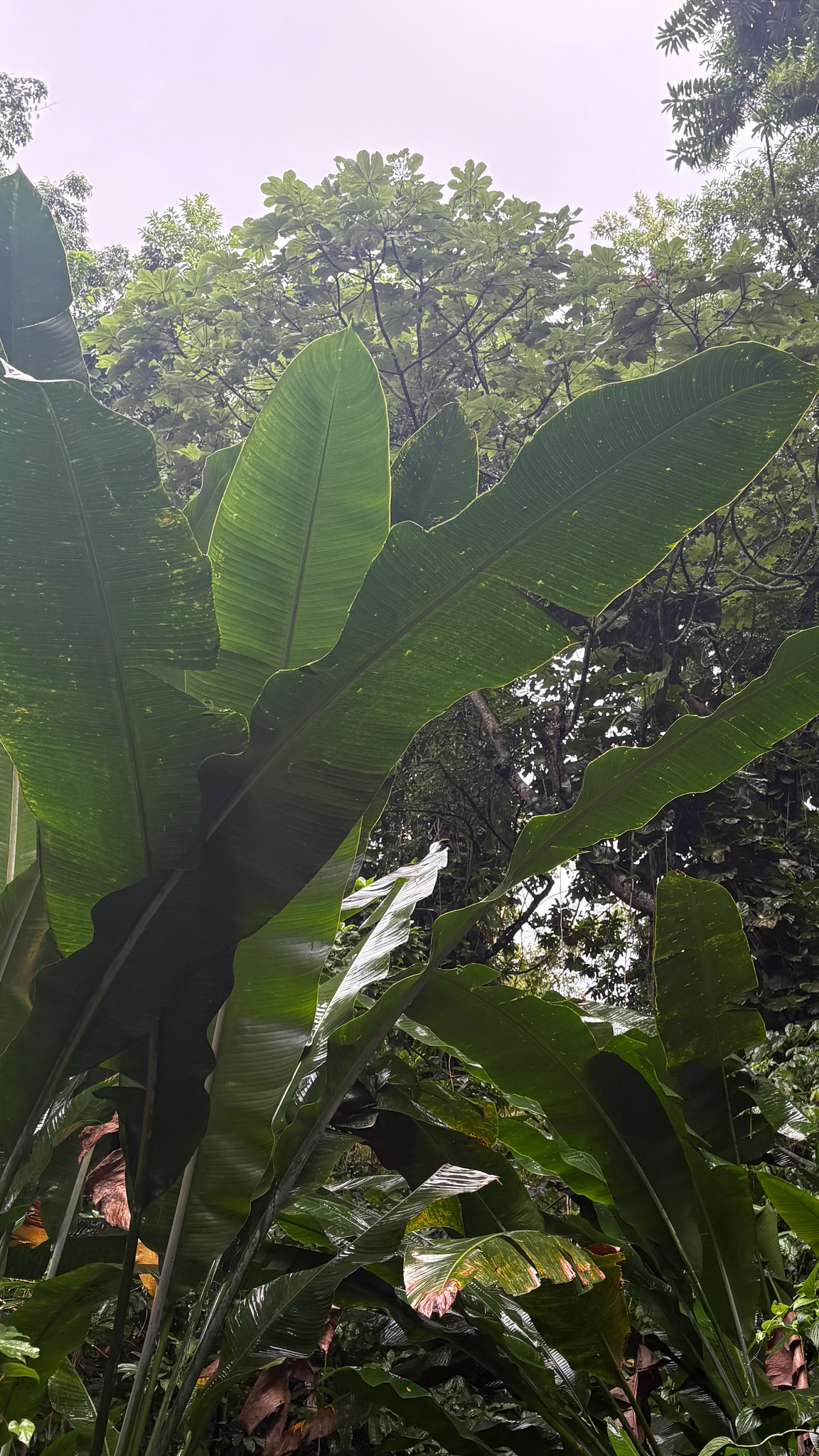
Parrot’s beak (Heliconia psittacorum) is an evergreen perennial herb native to northern South America and the Caribbean, recognized by its upright, claw-shaped floral bracts. In tropical climates, it spreads rapidly across garden borders via underground rhizomes.
Stems collapse when temperatures drop below 10 °C (50 °F), meaning outdoor culture requires USDA hardiness zones 10 through 11. Plants grown in dry indoor air rarely produce flowers and frequently develop brown bract edges.
Key Facts
- Height: 1 to 1.8 m (3.3 to 6 ft)
- Light: Full sun to partial shade (minimum 6 hours direct light)
- Water: Keep soil evenly moist; never allow root ball to dry
- Hardiness: USDA Zones 10b to 12; damaged by frost
- Feeding: High-potassium granular fertilizer every 8 weeks in spring and summer
Is Parrot’s Beak Right for Your Garden?
Parrot’s beak suits warm, frost-free gardens where it can receive abundant sunlight and constant moisture. It performs well as an architectural screen, along swimming pool margins, or planted in massed borders across subtropical and tropical zones.
Because the root system spreads through aggressive creeping rhizomes, planting it next to delicate, shallow-rooted perennials leads to crowding within two growing seasons. Confining the roots within physical subterranean barriers or large containers prevents the colony from outpacing nearby plantings.
Parrot’s Beak Botanical Appearance and Structure
Parrot’s beak grows as a clump of erect pseudostems reaching 1 to 1.8 m (3.3 to 6 ft) in height with a spread of 60 to 150 cm (2 to 5 ft). The foliage resembles miniature banana leaves, oblong-lanceolate in shape, measuring 40 to 60 cm (16 to 24 in) long and 8 to 12 cm (3 to 5 in) wide, arranged alternately along smooth green stems.
The terminal inflorescence stands strictly upright on a smooth peduncle. Long-lasting, boat-shaped floral bracts measure 7 to 10 cm (2.8 to 4 in) in length and display shades of orange, scarlet, apricot, or yellow. Small tubular true flowers emerge from the bracts, measuring 3 to 4 cm (1.2 to 1.6 in) long, and are tipped with deep greenish-black or dark blue markings resembling the plumage of a parakeet.
Where to Site Parrot’s Beak in the Landscape
Position parrot’s beak where it receives at least 6 hours of direct sun daily to trigger heavy flower production. While the foliage survives in bright partial shade, flowering drops significantly when light levels remain low throughout the day.
Select a location sheltered from sustained prevailing winds. Strong gales shred the broad leaf blades along their lateral veins, leaving foliage ragged and accelerating moisture loss during hot afternoons.
Soil Preparation and Planting Method
Plant rhizome divisions in warm soil with the rhizome crown set 5 cm (2 in) below the surface. Space individual plants 60 to 90 cm (24 to 36 in) apart to allow ample room for clonal spread during the first season.
Prepare beds with rich organic matter before installation:
- Incorporate 8 to 10 cm (3 to 4 in) of well-rotted manure or compost into the top 30 cm (12 in) of soil.
- Adjust alkaline substrates to an acidic to neutral pH between 5.5 and 6.8 using agricultural sulfur.
- Install a rigid root barrier 30 cm (12 in) deep if planting near masonry pathways or delicate flower beds.
- Apply a 7 cm (3 in) layer of coarse wood bark mulch around the base to retain soil moisture.
Watering and Fertilizing Parrot’s Beak
Water parrot’s beak deeply whenever the top 2.5 cm (1 in) of soil dries out during the active growing season. Mature clumps in high-heat environments consume 25 to 50 mm (1 to 2 in) of water each week.
Heavy flowering requires steady nutrition:
- Apply a slow-release granular fertilizer formulated at an N-P-K ratio of 3-1-5 or 12-4-18 every 8 weeks from spring to early autumn.
- Supplement monthly with chelated iron if alkaline irrigation water causes chlorosis between leaf veins.
- Reduce water frequency by half during cool winter months when vegetative elongation stalls.
Pruning Stems and Maintaining Clumps
Cut flowering pseudostems down to ground level as soon as the bracts wither and turn brown. Individual stems are monocarpic, meaning each stalk blooms only once before naturally declining.
Sanitation prevents fungal pathogens from colonizing dying tissue:
- Use sanitized bypass pruners wiped with 70% isopropyl alcohol between clumps.
- Remove tattered, sunburned, or wind-damaged outer foliage at the base twice per year.
- Thin dense colonies every 3 years by removing one-third of the oldest non-flowering shoots to improve air circulation.
How to Propagate Parrot’s Beak
Propagate parrot’s beak by rhizome division in late spring when soil temperatures exceed 21 °C (70 °F). Clumps recover rapidly from division during the onset of seasonal rain and warmth.
Follow these steps to divide an established clump:
- Dig up an outer section of the clump using a sharp spade, exposing the connected rhizome network.
- Sever rhizome sections that possess at least 2 to 3 active eyes or young pseudostems.
- Trim attached foliage stems back to 15 to 20 cm (6 to 8 in) to reduce water transpiration stress.
- Replant immediately in pre-moistened, humus-rich soil and maintain constant moisture until new shoot growth emerges.
Parrot’s Beak Flowering Season and Cut Stems
Inflorescences emerge continually from late spring through mid-autumn, lasting up to 3 weeks on the plant in prime conditions. Each terminal stalk produces 4 to 6 colorful distichous bracts that cradle the true tubular blossoms.
Parrot’s beak serves as an exceptional commercial cut flower. Harvest floral stalks in the early morning when 2 to 3 bracts have opened, cutting the stem near ground level. Recut the base underwater and place in fresh water; do not refrigerate stems below 12 °C (54 °F), as cold storage causes the bracts to turn black.
Winter Care and Temperature Thresholds
Parrot’s beak requires winter protection wherever temperatures fall below 10 °C (50 °F). Freezing temperatures at 0 °C (32 °F) kill the above-ground stems immediately, though well-mulched rhizomes can survive light brief freezes down to -2 °C (28 °F).
Gardeners in marginal zones 9b and 10a can manage winter chill with specific precautions:
- Cover root zones with a 15 cm (6 in) blanket of dry straw or shredded leaves before the first anticipated frost.
- Move containerized specimens into a heated greenhouse or bright conservatory before night temperatures hit 10 °C (50 °F).
- Cease all fertilizer applications from late autumn until sustained spring heat returns.
Seasonal Maintenance for Parrot’s Beak
| Spring | Divide overgrown rhizomes when soil warms above 21 °C (70 °F). Apply a balanced slow-release fertilizer and refresh organic mulch to a depth of 7 cm (3 in). |
|---|---|
| Summer | Water thoroughly 2 to 3 times per week during dry periods. Cut spent flowering stems down to the ground to redirect energy into emerging basal shoots. |
| Autumn | Apply a final light application of high-potassium fertilizer early in the season. Collect clean stems for cut-flower vases before cool weather slows bract formation. |
| Winter | Halt all feeding and reduce irrigation, allowing the top 5 cm (2 in) of soil to dry between waterings. Apply heavy straw mulch over rhizomes in zones subject to occasional cold snaps. |
Diagnosing Common Parrot’s Beak Problems
| What you see | Likely cause | What to do |
|---|---|---|
| Leaf margins drying, curling, and turning brown | Low atmospheric humidity or insufficient soil moisture | Increase watering frequency and mist container plants daily or relocate away from drying winds. |
| Bracts turning brown, cracking, or failing to open | Extreme dry heat, low humidity, or fungal anthracnose | Shield plants from arid winds, maintain steady irrigation, and remove infected inflorescences with clean pruners. |
| Pale yellow leaves with green veins (chlorosis) | Alkaline soil causing iron or magnesium deficiency | Drench the root zone with chelated iron and incorporate elemental sulfur to lower soil pH below 6.8. |
| Soft, black, foul-smelling base of stems | Rhizome rot from poor drainage or waterlogged heavy clay | Dig up the clump, slice away rotted rhizome sections, and replant in well-drained, aerated soil. |
| Stems stretch tall and weak with no flower bracts | Insufficient direct sunlight | Transplant the clump to a site that receives a minimum of 6 hours of unshaded sun daily. |
Cultivars of Heliconia psittacorum
- ‘Golden Torch’ – vivid golden-yellow bracts, compact habit
- ‘Lady Di’ – scarlet bracts with greenish-white sepals
- ‘Andromeda’ – two-tone orange and scarlet bracts
- ‘Alan Carle’ – clear chartreuse-yellow bracts and stems
- ‘Sassy’ – pinkish-orange bracts with white tips
Companion Plants for Parrot’s Beak
Combine parrot’s beak with tropical foliage plants that share its demand for moist, nutrient-rich soils and warm sun. The upright vertical lines of its bracts create sharp contrast against broad spreading leaves or fine-textured groundcovers.
Effective companion species include:
- Elephant ear (Alocasia macrorrhizos), which provides broad shield leaves as a contrasting background.
- Ti plant (Cordyline fruticosa), offering deep red or purple strap-like leaves that echo orange and red bract colors.
- Canna lily (Canna indica), complementing the upright reed-like architecture in wet border plantings.
- Zingiber ginger (Zingiber zerumbet), adding dense understory foliage and textured cone bracts.
Frequently Asked Questions
What color is a parrot's beak flower?
The floral bracts range from bright yellow and apricot to vivid orange and scarlet, depending on the cultivar. The actual small flowers emerging inside the bracts are yellow or orange tipped with distinct dark greenish-black markings.
How tall does Heliconia psittacorum grow?
Heliconia psittacorum reaches a mature height between 1 and 1.8 m (3.3 to 6 ft). It is considered a dwarf heliconia compared to larger relatives like lobster claw (Heliconia bihai), which can exceed 4 m (13 ft).
Can you grow parrot's beak as a bonsai?
No, true parrot's beak (Heliconia psittacorum) cannot be grown as a bonsai because it is an herbaceous rhizomatous perennial without woody stems or cambium. The plant commonly called 'parrot's beak bonsai' is usually Gmelina philippensis, a woody shrub native to Southeast Asia.
Why are the bracts on my parrot's beak cracking and turning brown?
Flower bracts crack and dry out primarily when atmospheric humidity drops below 50% or when hot, dry winds dehydrate the tender bract tissue. Keep the root zone evenly moist and shelter the plant from strong drafts to preserve the bracts.
Is parrot's beak heliconia toxic to cats and dogs?
No, Heliconia psittacorum is non-toxic to domestic pets such as dogs and cats. However, chewing on tough fibrous leaves can cause minor mechanical stomach upset or vomiting.
Sources & Verification
Taxonomy and distribution are checked against the databases below. Care guidance is written for cultivated species only and reviewed by our editor. How We Build Plant Profiles →
- Kew Plants of the World OnlineTaxonomic baseline, native range and distribution data.
- Missouri Botanical Garden Plant FinderCultivation parameters, hardiness zones, and botanical description.
- Global Biodiversity Information Facility (GBIF)Occurrence data and verified regional distribution.
- Wikipediageneral reference