
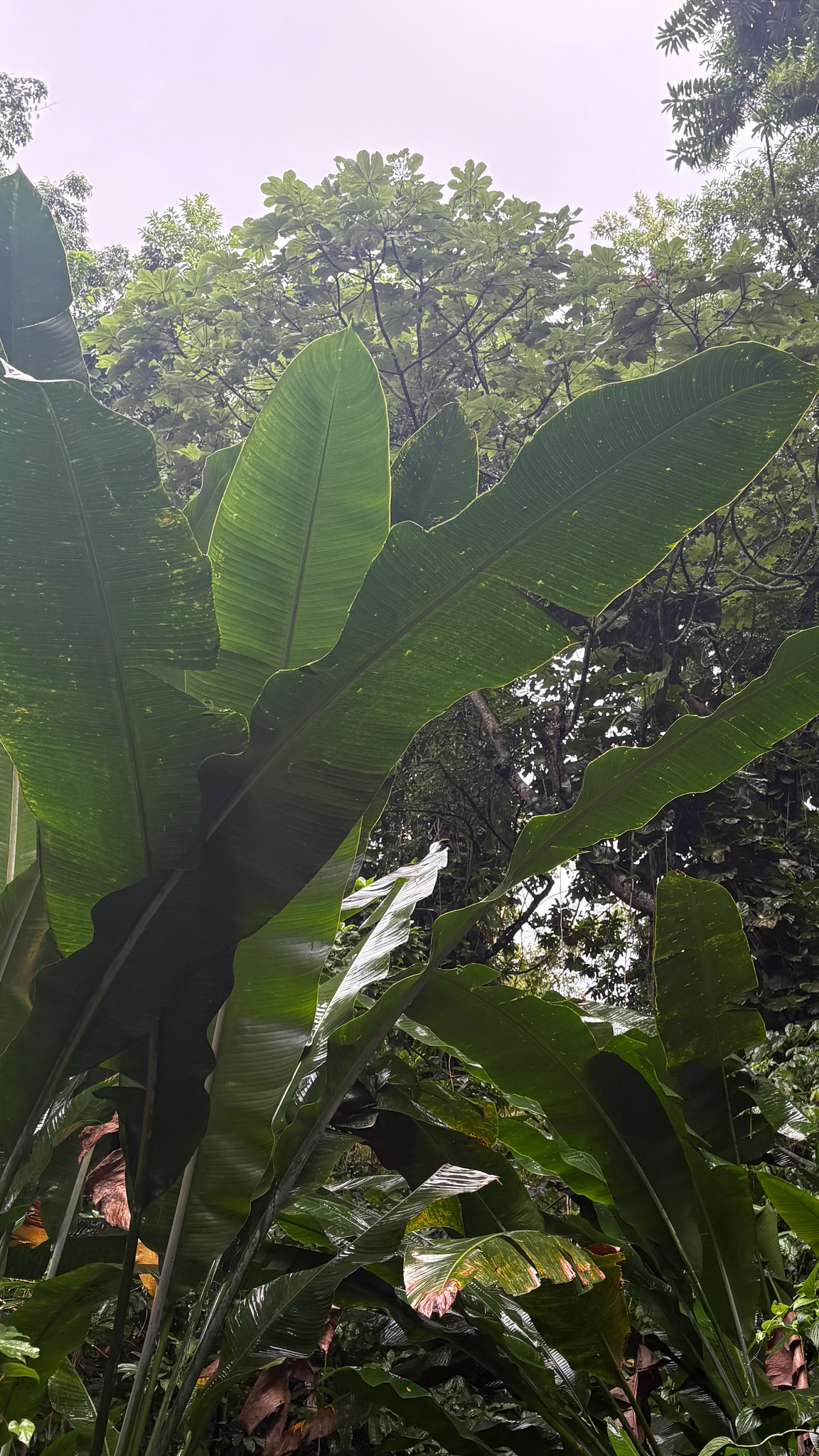
Wild Plantain is a massive tropical perennial native to the Caribbean islands, reaching heights of up to 5 m (16 ft). Known scientifically as Heliconia caribaea, it produces thick, upright flower bracts that resemble lobster claws in shape and color.
This species requires significantly more space than the smaller Parrot’s Flower (Heliconia psittacorum). It thrives in high humidity and fails quickly if temperatures drop below 10 °C (50 °F) for extended periods.
Key Facts
- Water: Keep soil consistently moist at all times
- Light: Needs at least 6 hours of full sun
- Height: Reaches 3-5 m (10-16 ft) at maturity
- Hardiness: Best in USDA zones 10b to 12
- Bracts: Upright red or yellow boat-shaped structures
Is Wild Plantain Right for Your Garden?
Growing Wild Plantain requires a large garden space and a commitment to high-moisture maintenance. This is not a plant for small patios or dry climates, as it quickly reaches 4 m (13 ft) in height and spreads via underground rhizomes. It suits gardeners in tropical zones who want a permanent, high-impact screen or a focal point with architectural foliage.
Because it is a heavy feeder, you will need to provide regular compost and fertilizer to maintain the deep green color of the leaves. In urban settings, ensure you have a 2 m (6.5 ft) wide area to accommodate the clumping growth habit of the pseudostems.
Identifying Heliconia caribaea
Wild Plantain is a clumping perennial with upright, boat-shaped bracts that grow in a distinct alternating pattern. The leaves are large, green, and oblong, reaching lengths of 1.5 m (5 ft) and widths of 40 cm (16 in). Unlike the Hanging Lobster Claw (Heliconia rostrata), the flower spikes of this species point toward the sky.
- Inflorescence: Upright spike with 5-12 waxy red or yellow bracts
- Height: Mature plants reach 3-5 m (10-16 ft) in ideal conditions
- Stem: Thick green pseudostems formed by overlapping leaf bases
- Fruit: Small blue drupes that appear after the flowers fade
Choosing the Best Planting Site
Plant Wild Plantain in a wind-sheltered spot with full sun to partial shade. While it can tolerate some shade, flower production is highest when the plant receives at least 6 hours of direct sunlight. Shelter is necessary because the large leaves shred easily along the veins in heavy winds, which can ruin the plant’s appearance.
The soil must be deep, fertile, and well-draining but capable of holding significant moisture. In its native Caribbean habitat, it grows in volcanic soils rich in minerals, so adding volcanic rock dust or high-quality compost can improve growth in sandy garden soils.
How to Plant Wild Plantain Rhizomes
Bury the rhizomes 5-10 cm (2-4 in) deep in soil that has been amended with well-rotted manure or compost. Space individual rhizomes at least 1.5 m (5 ft) apart to allow for the rapid expansion of the clump. If planting from a nursery pot, ensure the top of the root ball is level with the surrounding soil surface.
- Orientation: Place the rhizome horizontally with the growth buds facing up
- Watering: Saturate the soil immediately after planting to remove air pockets
- Mulch: Apply a thick layer of wood chips to keep the rhizome cool
Watering and Feeding for Maximum Growth
Apply water 2-3 times per week during the growing season to keep the soil consistently moist. Wild Plantain consumes significant amounts of water to support its large leaf surface area and thick stems. If the soil dries out completely, the leaf edges will turn brown and the plant may stop flowering.
Use a balanced fertilizer or a high-nitrogen 3:1:2 ratio every 2 months during the spring and summer. These plants are heavy feeders and respond well to organic liquid fertilizers or slow-release granules applied at the base of the clump.
Pruning and Maintenance Tips
Cut spent flower stalks down to the soil line once the bracts turn brown or mushy. Removing old stalks encourages the rhizome to produce new, healthy shoots and keeps the clump from becoming congested. Pruning also improves air circulation, which reduces the risk of fungal infections like leaf spot.
Use sharp, sterilized loppers to make clean cuts through the fibrous pseudostems. If the clump becomes too large for its space, use a sharp spade to remove outer sections of the rhizome during the spring months.
Propagating Heliconia by Division
Divide the underground rhizomes during the early spring or the start of the rainy season. Each division must include at least one healthy pseudostem and a visible growth bud, often called an ‘eye’. This is the most reliable way to produce new plants that are identical to the parent.
- Step 1: Dig up a section of the outer clump with a sharp spade
- Step 2: Cut the foliage back to 30 cm (12 in) to reduce water loss
- Step 3: Replant immediately at the same depth as the original plant
Common Problems and Pests
Check the undersides of leaves for spider mites, which appear as tiny red dots during dry spells. These pests thrive in low humidity and can cause the foliage to look dusty or yellowed. Fungal leaf spots can also occur if the foliage remains wet overnight or if air circulation is poor.
Avoid overhead watering and space plants at least 1.5 m (5 ft) apart to allow for proper airflow. If you notice scale insects on the stems, wipe them off with a cloth dipped in horticultural oil or insecticidal soap.
Winter Care and Cold Protection
Move container-grown plants indoors if temperatures are forecast to drop below 10 °C (50 °F). Wild Plantain is strictly tropical and will suffer leaf damage at 5 °C (41 °F) and root death at freezing. In borderline zones like 10a, wrap the base of the plant in burlap and apply a thick layer of straw mulch.
Stop fertilizing in late autumn to prevent soft new growth that is more susceptible to cold damage. If the plant is hit by a light frost, wait until spring to prune away the damaged foliage, as the dead leaves can provide a small amount of insulation for the core of the plant.
Year-Round Care for Wild Plantain
| Spring | Divide large clumps and replant rhizomes. Begin fertilizing with a high-nitrogen formula every 8 weeks. |
|---|---|
| Summer | Water 3 times weekly during dry spells. Monitor for spider mites on the undersides of the leaves. |
| Autumn | Apply a 10 cm (4 in) layer of organic mulch. Reduce watering frequency as growth slows down. |
| Winter | Protect from temperatures below 10 °C (50 °F). Cut back dead or frost-damaged stalks to the ground. |
Common Wild Plantain Problems Explained
| What you see | Likely cause | What to do |
|---|---|---|
| Brown leaf edges | Low humidity or dry soil | Increase watering frequency and apply a thick layer of mulch to retain moisture. |
| No flowers produced | Insufficient sunlight | Ensure the plant receives at least 6 hours of direct sun or thin out overhanging tree branches. |
| Yellowing leaves | Poor drainage or nutrient deficiency | Improve soil drainage with grit and apply a balanced liquid fertilizer. |
Popular Wild Plantain Cultivars
- ‘Richmond Red’ – solid deep red bracts, very common in cultivation.
- ‘Gold’ – bright yellow bracts with thin green margins.
- ‘Purpurea’ – maroon-tinted foliage and dark red flower bracts.
Companion Plants for Lobsterclaw
Plant alongside Red Ginger (Alpinia purpurata) to create a layered tropical look with contrasting flower shapes. The upright bracts of the Wild Plantain provide a structural backdrop for lower-growing species. Using plants with different leaf textures helps to fill the space around the base of the tall Heliconia stems.
- Ti Plant (Cordyline fruticosa): Provides colorful foliage at the base
- Elephant Ear (Colocasia esculenta): Complements the large leaf texture
- Shell Ginger (Alpinia zerumbet): Offers variegated foliage and drooping flowers
Frequently Asked Questions
Can I grow Wild Plantain as a houseplant?
No, it is generally too large for indoor growth, reaching 5 m (16 ft) and requiring very high light and humidity. Use the smaller Parrot’s Flower (Heliconia psittacorum) for indoor containers instead.
How long do the flowers last?
Individual bracts can remain colorful for 6 to 8 weeks on the plant. They are also excellent cut flowers, lasting up to 14 days in a vase of water.
Is Heliconia caribaea toxic to cats or dogs?
It is considered non-toxic to pets, though the large, fibrous leaves can cause mild stomach upset if ingested. The edges of the leaves can also be sharp enough to cause minor scratches.
What is the difference between Wild Plantain and Heliconia rostrata?
Wild Plantain (Heliconia caribaea) has upright flower spikes that point upward, while Heliconia rostrata has hanging, pendulous flower spikes that drape downward.
Sources & Verification
Taxonomy and distribution are checked against the databases below. Care guidance is written for cultivated species only and reviewed by our editor. How We Build Plant Profiles →

