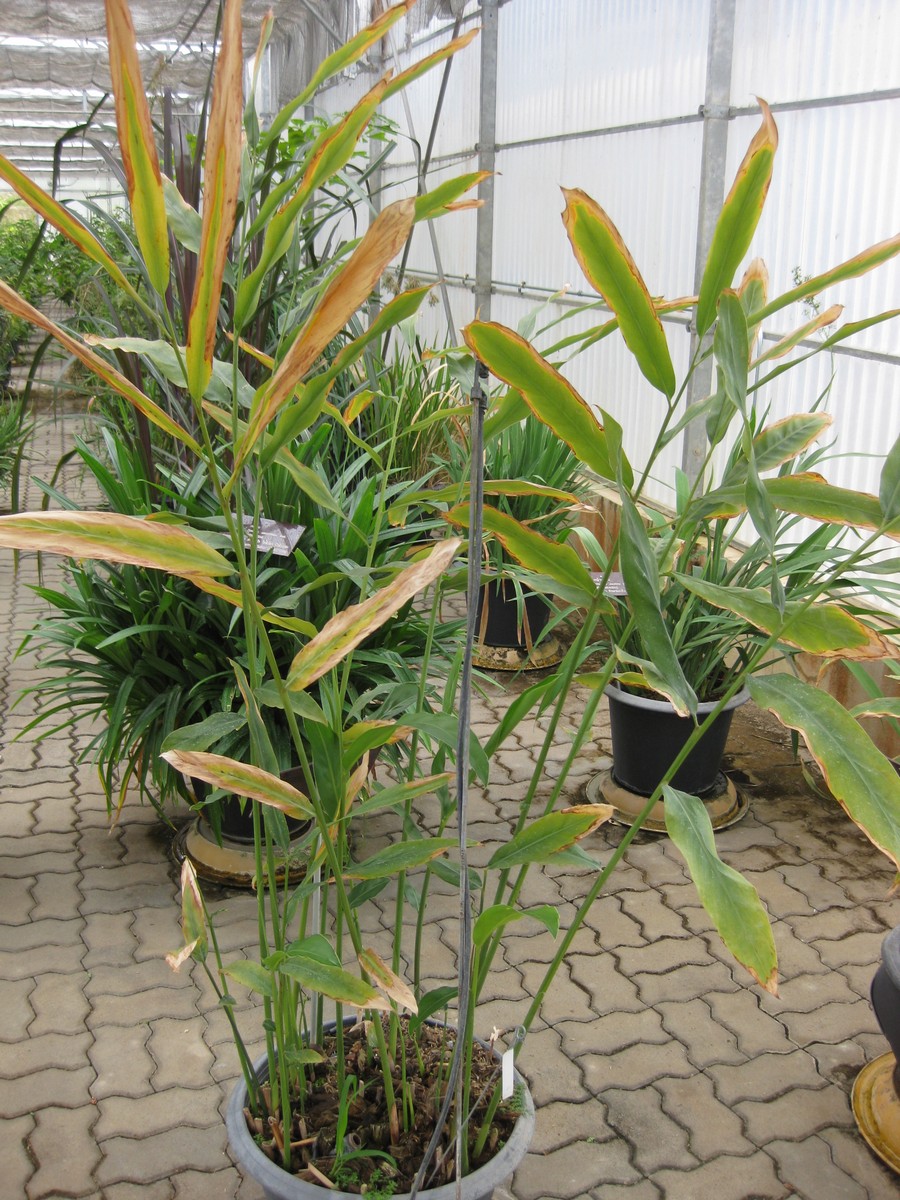
Red Ginger (Alpinia purpurata) is a rhizomatous tropical perennial native to Maluku and the southwest Pacific islands, known for its tall stalks and vibrant red floral bracts. It grows in dense clumps and is a staple of tropical landscaping and the cut flower industry.
Success with Red Ginger depends on maintaining high humidity and consistent moisture, as the plant will wilt or stop blooming in dry air. While it looks like a shrub, it is a herbaceous plant that can reach heights of 4.5 m (15 ft) in its native habitat.
Key Facts
- Water: Keep soil constantly moist; do not allow to dry
- Light: Partial shade to bright, filtered sunlight
- Soil: Rich, organic, well-draining soil (pH 6.0-6.8)
- Hardiness: Best in USDA zones 10-12; frost sensitive
- Humidity: Requires levels above 60% for healthy bracts
Is Red Ginger Right for Your Garden?
Red Ginger needs a tropical or subtropical climate with high humidity to produce its signature red spikes. It is not a plant for dry or temperate gardens unless kept in a heated greenhouse or large conservatory. In regions like Hawaii and South Florida, it is frequently used as a privacy screen or focal point due to its dense, upright growth habit.
You must provide ample space, as a single rhizome can spread to cover 1.5 m (5 ft) within a few seasons. It is a heavy feeder and requires a site with rich, organic soil that never dries out completely. Because it can reach 4.5 m (15 ft) in height, it should be placed toward the back of garden beds where it won’t overshadow smaller specimens.
Identifying Red Ginger Features
Red Ginger is a rhizomatous perennial with upright, cane-like stems reaching 2.7 to 4.5 m (9 to 15 ft). The leaves are lance-shaped, reaching 30-80 cm (12-31 in) in length and 10-20 cm (4-8 in) in width. The showy part is the terminal inflorescence, which consists of bright red or pink bracts arranged in a cone shape.
- True flowers are small and white, emerging from within the red bracts.
- Stems grow in dense clumps from thick, horizontal underground rhizomes.
- Foliage is glossy green and remains evergreen in frost-free climates.
- Bracts can grow up to 30 cm (12 in) long on mature plants.
The Best Spot for Alpinia purpurata
Choose a location with partial shade or filtered sunlight to prevent leaf scorch in hot climates. Red Ginger thrives in areas protected from strong winds, which can shred the large, thin leaves and cause the tall stalks to topple. It prefers a spot with high ambient humidity, often doing best near water features or in mass plantings where a microclimate is created.
The soil must be rich in organic matter and have excellent drainage while retaining moisture. Avoid planting in low-lying areas where water sits for days, as this can lead to rhizome rot. If your garden has heavy clay, amend it deeply with compost and peat moss before planting.
How to Plant Red Ginger Rhizomes
Plant rhizomes 5 to 10 cm (2 to 4 in) deep with the growth buds or “eyes” facing upward. Space individual plants at least 90 to 120 cm (3 to 4 ft) apart to allow for their horizontal spreading habit. Spring is the ideal time for planting when soil temperatures consistently stay above 21 °C (70 °F).
After planting, water the area thoroughly and apply a thick layer of organic mulch to keep the soil cool and moist. You should see new green shoots emerging from the soil within 3 to 6 weeks. For container growth, use a minimum 15-gallon pot to accommodate the heavy rhizome mass.
Watering and Fertilizing Schedule
Water frequently to keep the soil consistently moist, especially during the peak growing months of summer. Red Ginger is not drought-tolerant and will show signs of stress, such as leaf curling and browning, if the soil dries out. In hot, dry weather, you may need to water daily to maintain the necessary moisture levels.
- Apply a balanced, slow-release fertilizer every 6 to 8 weeks.
- Use a 10-10-10 NPK ratio during the active growing season.
- Mulch with 5 cm (2 in) of organic matter to retain moisture.
- Increase watering if leaf tips begin to turn brown.
Maintenance and Pruning Tips
Prune Red Ginger by cutting old, flowered stalks down to the ground level. This encourages the rhizome to send up fresh, vigorous new shoots from the base rather than spending energy on dying stems. Remove any yellowing or diseased leaves throughout the year to maintain airflow and prevent fungal issues.
If the clump becomes too dense or outgrows its space, you can thin out the stems by removing every third stalk. This is best done in early spring. Always use sharp, sterilized shears to prevent the spread of pathogens between plants.
How to Propagate Red Ginger
You can propagate Red Ginger by planting the viviparous plantlets that grow from the old flower spikes. These small clones develop their own roots while still attached to the parent plant. Once they have two or three leaves, gently remove them and pot them in a moist, sterile seed-starting mix.
- Wait for plantlets to develop 2-3 leaves before removal.
- Ensure rhizome divisions are kept warm and humid.
- Pot divisions in a well-draining, peat-based mix.
- Keep new plants in filtered light until established.
Protecting Tropical Ginger from Cold
Red Ginger will die back to the ground if temperatures fall below 0 °C (32 °F), though the rhizomes may survive a light frost if heavily mulched. In USDA zones 9 and lower, you must grow Alpinia purpurata in large containers that can be moved to a heated greenhouse for the winter. Growth stops entirely when temperatures remain below 15 °C (60 °F) for extended periods.
If a frost occurs, wait until the danger has passed before cutting back damaged foliage. The rhizome often remains dormant until the soil warms back up to 21 °C (70 °F). Inside a home or greenhouse, ensure the plant receives supplemental humidity through misting or a humidifier during the winter months.
Year-Round Care for Red Ginger
| Spring | Divide overgrown rhizomes and replant in fresh, organic soil. Start a regular fertilization schedule with a 10-10-10 NPK mix. |
|---|---|
| Summer | Monitor soil moisture daily and water as soon as the surface feels slightly dry. Check bracts for viviparous plantlets for propagation. |
| Autumn | Reduce fertilizer application as growth slows. Prune away any spent flower stalks to the base of the plant. |
| Winter | Protect from temperatures below 10 °C (50 °F). Apply 10 cm (4 in) of mulch to ground plants or move containers to a heated area. |
Why Is My Red Ginger Dying? Quick Diagnosis
| What you see | Likely cause | What to do |
|---|---|---|
| Brown leaf edges | Low humidity or underwatering | Increase misting and check soil moisture daily. |
| No flowers | Insufficient light or age | Move to a brighter spot and wait for stalks to mature for 1-2 years. |
| Yellowing leaves | Poor drainage or cold stress | Ensure pot has drainage holes and keep temperatures above 15 °C (60 °F). |
| Stunted growth | Root bound or nutrient deficiency | Repot into a larger container or apply a slow-release fertilizer. |
Popular Alpinia purpurata Cultivars
- ‘Jungle King’ – features very large, deep red flower bracts
- ‘Jungle Queen’ – produces large, soft pink bracts
- ‘Eileen McDonald’ – a popular pink-flowering variety
- ‘Kimi’ – a dwarf variety suitable for smaller pots
- ‘Tahitian’ – known for exceptionally long, vibrant red spikes
Best Companion Plants for Red Ginger
Pair Red Ginger with other moisture-loving tropicals that share its light requirements. The broad leaves of the Bird of Paradise (Strelitzia reginae) provide a structural contrast to the upright ginger canes. For groundcover, use the Peacock Plant (Goeppertia makoyana) to fill the space around the ginger’s base while enjoying the same humidity.
- Shell Ginger (Alpinia zerumbet): Offers variegated foliage and drooping flowers.
- Red Button Ginger (Costus woodsonii): Provides a shorter, denser red floral display.
- Torch Ginger (Etlingera elatior): Adds massive, ground-level blooms for a tiered effect.
- Ti Plant (Cordyline fruticosa): Adds colorful foliage that complements the red bracts.
Frequently Asked Questions
Is Red Ginger the same as the ginger used in cooking?
No, Red Ginger is an ornamental plant and is not the culinary ginger (Zingiber officinale). While it belongs to the same family, it is grown for its flowers rather than its edible rhizome.
What is Red Ginger on a restaurant menu?
In a culinary context, 'Red Ginger' usually refers to beni shoga, which is culinary ginger (Zingiber officinale) pickled in plum vinegar, not the ornamental Alpinia purpurata.
What is the difference between Red Ginger and Torch Ginger?
Red Ginger (Alpinia purpurata) produces flowers at the tips of its leafy stalks, whereas Torch Ginger (Etlingera elatior) produces flowers on separate, leafless stalks that emerge directly from the soil.
Is Red Ginger the same as Red Button Ginger?
No, Red Button Ginger is Costus woodsonii, which has spiraling stems and smaller, more compact flower cones compared to the tall, plume-like bracts of Alpinia purpurata.
How long do Red Ginger flowers last?
The red bracts can remain attractive on the plant for several weeks, and when cut for arrangements, they typically last for 10 to 14 days in water.
Information about traditional or historical uses is provided for educational interest only and is not medical advice. Do not use any plant to treat a condition without speaking to a qualified professional.
Sources & Verification
Taxonomy and distribution are checked against the databases below. Care guidance is written for cultivated species only and reviewed by our editor. How We Build Plant Profiles →