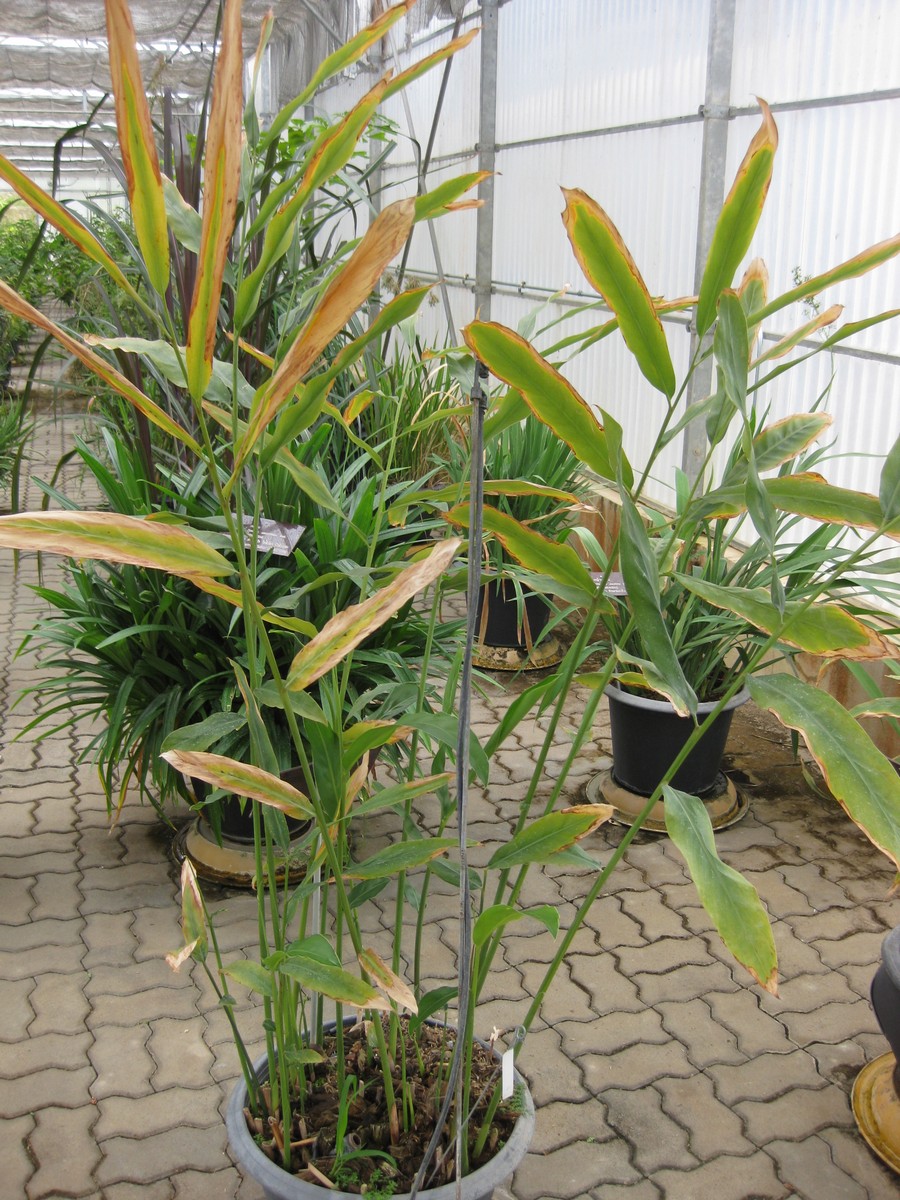
Shell ginger is a massive tropical perennial from the ginger family, native to East Asia, and is best known for its drooping clusters of waxy, shell-shaped flowers. Alpinia zerumbet produces thick, cane-like stems and broad, lance-shaped leaves that release a spicy scent when crushed or brushed against.
While it can reach heights of 3 m (10 ft) in the ground, indoor specimens usually stay smaller but require high humidity to prevent leaf browning. This species is a heavy feeder that flowers on second-year growth, meaning pruning must be timed carefully to avoid losing the bloom cycle.
Key Facts
- Light: Bright indirect light or partial sun
- Water: Keep soil consistently moist but never waterlogged
- Humidity: High levels, ideally above 50%
- Temperature: Minimum 10-15 °C (50-60 °F)
- Size: 1.2-3 m (4-10 ft) tall indoors
Is Shell Ginger Right for Your Space
Shell ginger is a large-scale plant that requires significant floor space and high ceilings to accommodate its arching canes. Because it can spread 1.5 m (5 ft) wide, it is best suited for conservatories, large foyers, or bright corners where it won’t be cramped against furniture.
The plant is a long-term commitment because it rarely flowers in its first year of growth. You will need a location that stays warm year-round, as growth halts if temperatures drop below 15 °C (60 °F). It is a clean plant with few pests, making it a good choice for those who can maintain a strict watering schedule.
- Requires a heavy pot to prevent tipping
- Needs consistent moisture without drying out
- Suits humid rooms like large bathrooms
- Grows rapidly during the summer months
What Does Shell Ginger Look Like
The identifying feature of Alpinia zerumbet is its drooping racemes of pearly white buds tipped with pink that resemble seashells. These flowers open to reveal a bright yellow interior with red throat markings, typically appearing in late spring. The leaves are deep green, oblong, and can grow up to 60 cm (2 ft) long and 10 cm (4 in) wide.
The stems are actually pseudostems formed by tightly wrapped leaf sheaths, emerging from thick, fleshy underground rhizomes. In the variegated variety, ‘Variegata’, the leaves are striped with irregular bands of yellow and gold. The overall habit is upright and vase-shaped, becoming more arching as the heavy flower clusters develop at the ends of the stems.
Best Light for Shell Ginger
For the best growth and flowering, provide bright, indirect light for at least 6 hours a day. While the solid green species can tolerate some direct morning sun, the variegated cultivars will scorch if exposed to intense afternoon rays. Indoors, a south or west-facing window with a sheer curtain is the ideal placement.
Low light levels will result in leggy stems and a lack of flowers, as the plant needs energy to produce its heavy blooms. If the leaves begin to lose their yellow variegation and turn solid green, the plant is likely not receiving enough light. Conversely, brown, crispy patches in the center of the leaves indicate solar burn from direct glass magnification.
Watering and Soil Requirements
You should keep the soil consistently moist but never allow the plant to sit in standing water. During the active growing season in spring and summer, you may need to water 2-3 times per week depending on the temperature. The rhizomes are prone to rot if the soil remains saturated for extended periods, so a well-draining potting mix is essential.
Use a rich, peat-based or coco-coir potting soil amended with perlite or coarse sand to ensure drainage. A pot with multiple drainage holes is non-negotiable for this species. If the top 2 cm (1 in) of soil feels dry to the touch, it is time to water again.
- Use lukewarm water to avoid root shock
- Reduce watering frequency in winter months
- Never let the root ball dry out completely
- Empty the drainage tray 15 minutes after watering
Humidity and Temperature Needs
Shell ginger requires a minimum humidity level of 50% to keep its large leaf margins from turning brown and brittle. In typical heated indoor environments, this usually requires the use of a humidifier or a large pebble tray filled with water. Misting provides only temporary relief and is rarely sufficient for a plant of this size.
Temperature is equally important, as this is a truly tropical species from regions like Taiwan and Okinawa. It thrives in temperatures between 18-27 °C (65-80 °F) and will suffer leaf damage if exposed to cold drafts from air conditioners or windows. If the temperature drops below 10 °C (50 °F), the foliage may die back to the ground, though the rhizomes can often survive briefly at lower temperatures.
Feeding and Fertilizing
Apply a balanced liquid fertilizer every two weeks during the spring and summer growing season. Because shell ginger is a fast grower, it depletes soil nutrients quickly, especially nitrogen for leaf production and potassium for flowering. A 10-10-10 NPK ratio works well for general maintenance.
In late winter, just before the new growth starts, you can top-dress the pot with organic compost or worm castings to provide a slow-release nutrient boost. Stop all fertilizing during the autumn and winter months when the plant enters a semi-dormant state. Over-fertilizing in winter can lead to a buildup of salts in the soil, which causes the leaf tips to turn black.
How to Propagate Shell Ginger
The most reliable method of propagation is rhizome division during the spring repotting session. Carefully remove the plant from its container and use a clean, sharp knife to cut the fleshy underground stems into sections. Each section must have at least one healthy green shoot or “eye” and a few attached roots to grow successfully.
Pot the divisions into fresh, moist potting soil at the same depth they were previously growing. Keep the new plants in a warm, humid spot with bright indirect light until you see new growth emerging. Seeds are also an option but take significantly longer to reach a mature, flowering size and are rarely used by home growers.
Getting Shell Ginger to Bloom
To see flowers, you must avoid pruning second-year canes, as this plant only blooms on stems that survived the previous winter. If you cut the plant back to the ground every year, you will only see foliage. The flower buds form at the tips of these older canes, appearing as a cluster of white, waxy “shells” before opening.
Flowering is also dependent on light intensity; plants kept in dark corners will rarely bloom. In its native East Asian habitat, the plant flowers in late spring, but indoors the timing can vary based on your local light levels. Once the flower cluster has completely faded, you can cut that specific cane back to the base to encourage new growth from the rhizome.
Traditional Uses and Edible Leaves
The leaves of Alpinia zerumbet were traditionally used to wrap mochi and other rice cakes in Okinawa, where the plant is known as Sannin. The leaves impart a distinct spicy, herbal aroma to the food during steaming. In traditional medicine, the rhizomes and leaves were used to make decoctions, though modern use is primarily culinary or ornamental.
Shell ginger tea is made by drying the leaves or rhizomes and steeping them in hot water. It is noted for having a high concentration of antioxidants, specifically dihydrochalcones and labdane diterpenes. While it is related to common ginger (Zingiber officinale), the flavor is more floral and less pungent, often compared to a mix of ginger and cardamom.
Year-Round Care for Shell Ginger
| Spring | Divide overgrown rhizomes and repot into fresh soil. Increase watering frequency and start bi-weekly fertilizing as new shoots appear. |
|---|---|
| Summer | Maintain high humidity and keep soil moist. Watch for spider mites if the air is dry, and move the plant to a shaded spot if leaves show signs of sun scorch. |
| Autumn | Gradually reduce fertilizer and watering as growth slows. Move outdoor pots inside before the first frost, ensuring they are placed away from cold drafts. |
| Winter | Stop fertilizing and water only when the top 3 cm (1.2 in) of soil is dry. Use a humidifier to counteract dry indoor heating and keep the temperature above 15 °C (60 °F). |
Common Shell Ginger Problems and Fixes
| What you see | Likely cause | What to do |
|---|---|---|
| Brown, crispy leaf edges | Low humidity or underwatering | Increase humidity with a humidifier and ensure the soil stays consistently moist. |
| No flowers on mature plant | Pruning second-year wood | Stop cutting back canes in autumn, as flowers only form on stems from the previous year. |
| Yellow leaves with green veins | Nutrient deficiency (Chlorosis) | Apply a balanced liquid fertilizer with micronutrients like iron and magnesium. |
| Variegation fading to green | Insufficient light | Move the plant to a brighter location with more indirect sunlight. |
Best Shell Ginger Cultivars for Home Growing
- ‘Variegata’ – The most common cultivar with yellow-striped foliage.
- ‘Variegata Nana’ – A dwarf version reaching only 60-90 cm (2-3 ft), ideal for indoors.
- ‘Chinese Beauty’ – Features light green leaves with creamy white marbling.
- ‘Flat Leaf’ – A rare variety with more horizontal, spreading foliage.
Frequently Asked Questions
Can you eat shell ginger?
Yes, the leaves are used to wrap and flavor food, and the rhizomes and flowers are edible, though they are less pungent than common ginger.
How fast does shell ginger grow?
In ideal warm, humid conditions, it is a fast grower that can add 60-120 cm (2-4 ft) of height in a single growing season.
Is shell ginger toxic to cats or dogs?
No, Alpinia zerumbet is considered non-toxic to cats, dogs, and horses according to standard veterinary safety databases.
What are the benefits of shell ginger tea?
Traditionally used in East Asia, the tea is consumed for its high antioxidant content and is believed to aid digestion and longevity.
Why is my shell ginger dying in winter?
It is likely too cold or the air is too dry; ensure the temperature stays above 10 °C (50 °F) and humidity remains high to prevent dormancy or death.
Information about traditional or historical uses is provided for educational interest only and is not medical advice. Do not use any plant to treat a condition without speaking to a qualified professional.
Sources & Verification
Taxonomy and distribution are checked against the databases below. Care guidance is written for cultivated species only and reviewed by our editor. How We Build Plant Profiles →