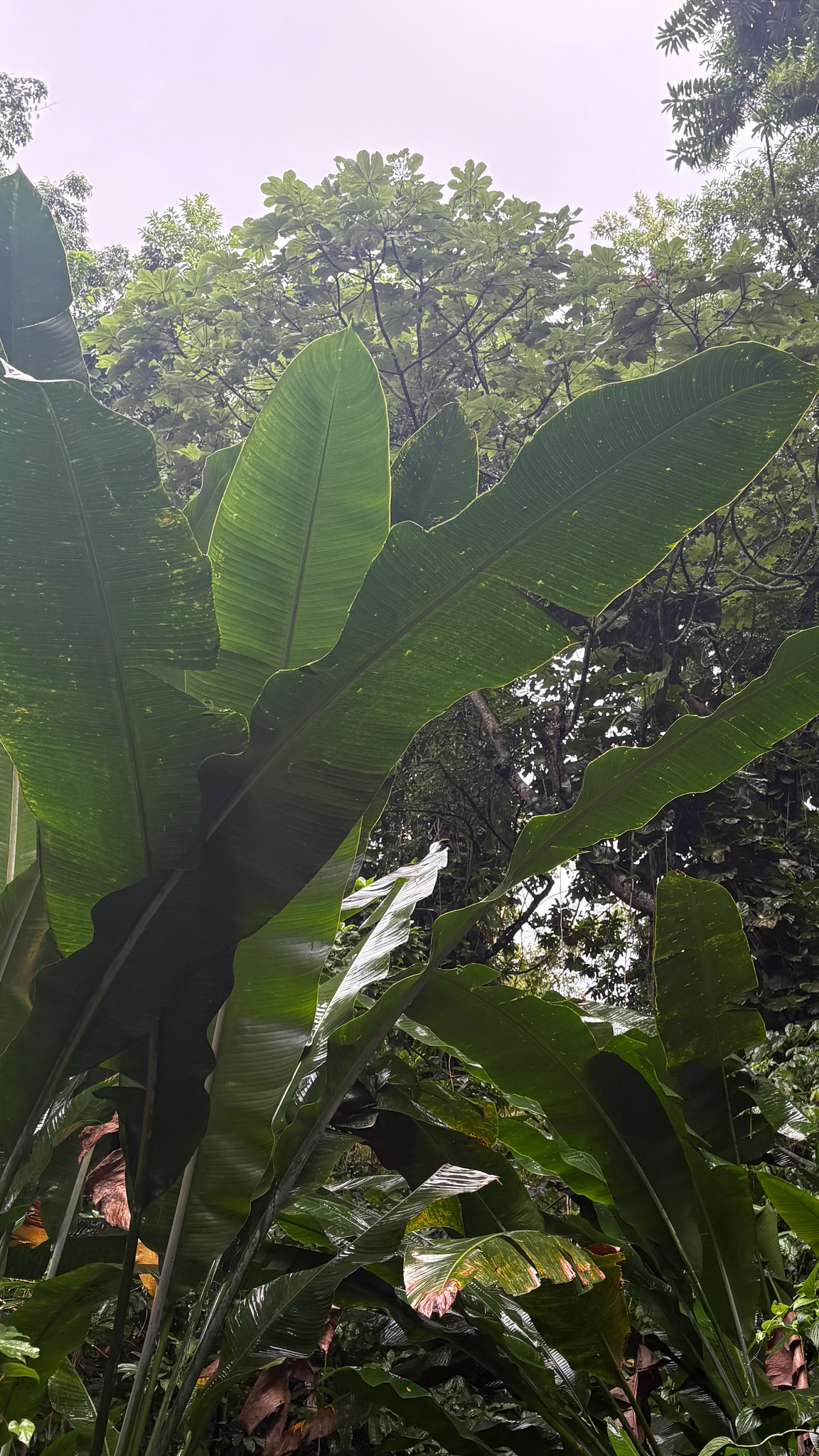
Hanging lobster claw (Heliconia rostrata) is an evergreen tropical herbaceous perennial native to rainforest habitats in Peru, Bolivia, Colombia, Ecuador, and El Salvador. It produces pendulous, claw-shaped red and yellow flower bracts that hang downwards from sturdy leaf stalks.
Landscape plantings require frost-free conditions above 15 °C (60 °F) and steady soil moisture to sustain broad banana-like leaves. Protect plants from strong winds to prevent leaf splitting.
Key Facts
- Light: Partial shade to bright indirect sun
- Water: Keep soil moist with 2.5–5 cm water weekly
- Soil: Rich, well-draining loam at pH 5.5–6.5
- Hardiness: USDA zones 10 to 12
- Height: 1.5 to 3.5 m (5 to 11.5 ft)
- Toxicity: Non-toxic to cats and dogs
Where Lobster Claw Fits in the Garden
Hanging lobster claw thrives in frost-free tropical and subtropical landscapes where temperatures stay above 15 °C (60 °F). It forms dense clumps of upright pseudostems that reach heights between 1.5 and 3.5 m (5 and 11.5 ft) with a spread of 1 to 2 m (3.3 to 6.6 ft).
This species functions well in border plantings, courtyard gardens, or as a focal point near patios where the hanging blooms can hang unobstructed. Planting near structures or under open tree canopies shields the broad foliage from high winds that tear the leaf blades.
- Min Temperature: 10 °C (50 °F) before foliage damage occurs
- Ideal Setting: Humid garden beds, woodland borders, or heated greenhouses
- Wind Tolerance: Low; foliage shreds easily in gusts over 25 km/h (15 mph)
What Hanging Lobster Claw Looks Like
Hanging lobster claw is identifiable by its pendulous inflorescences measuring 30 to 60 cm (12 to 24 in) long that hang downward with claw-shaped red and yellow bracts. The true flowers are small, greenish-yellow, and hidden inside the boat-shaped bracts, producing concentrated nectar that attracts hummingbirds.
The plant grows from underground rhizomes, producing smooth, paddle-shaped leaves that range from 60 to 120 cm (24 to 47 in) in length and 20 to 30 cm (8 to 12 in) in width. Unlike upright heliconia species whose bracts hold pools of rainwater, the downward orientation of hanging lobster claw keeps its nectar undiluted by precipitation.
- Foliage: Deep green, banana-like leaves arranged on erect pseudostems
- Bract Color: Crimson red edged with bright yellow and greenish tips
- Bloom Orientation: Strictly pendulous (hanging vertically downward)
Light and Soil Requirements for Lobster Claw
Plant hanging lobster claw in partial shade or bright morning sunlight paired with rich, well-draining soil at a pH of 5.5 to 6.5. Full afternoon sun in arid climates causes leaf tip burn and bleaches the vivid colors of the flower bracts.
The soil structure must remain loose and rich in organic material to allow rapid rhizome spreading while preventing stagnant water accumulation. Heavy clay soils require modification with coarse sand, compost, or leaf mould prior to planting.
- Sun Exposure: 4 to 6 hours of filtered light or morning sun daily
- Soil Type: Organically rich loam amended with compost
- Soil Moisture: Consistently moist; never completely dried out or waterlogged
How to Plant Lobster Claw Heliconia
Space lobster claw rhizomes 1 to 1.5 m (3.3 to 5 ft) apart during early spring to allow room for underground spreading. Dig a planting hole twice as wide as the root mass and equal to its depth, incorporating aged manure or garden compost into the backfill soil.
Position the top of the rhizome 5 cm (2 in) below the soil surface, firming the earth gently around the stem bases to eliminate air pockets. Water thoroughly immediately after planting and maintain consistent soil moisture for 4 to 6 weeks while new roots establish.
- Hole Depth: 30 cm (12 in) deep by 60 cm (24 in) wide
- Soil Amendment: Mix 50% native soil with 50% organic compost
- Mulch Layer: Apply 5–7.5 cm (2–3 in) of organic wood bark around the base
Watering and Feeding Schedule
Provide hanging lobster claw with 2.5 to 5 cm (1 to 2 in) of water weekly during active growth to maintain moist root zones. Reduce irrigation frequency during cool winter months when growth slows, but do not let the soil dry out entirely.
Feed plants every 4 to 6 weeks from early spring through late summer using a balanced fertilizer such as NPK 10-10-10 or a formula higher in potassium (8-3-10). Adequate potassium levels support firm leaf stems and promote robust inflorescence development.
- Spring/Summer Water: Deep soaking 2 to 3 times per week
- Fertilizer Frequency: Monthly during active growth period
- Micronutrients: Apply iron and magnesium supplements if leaves display chlorosis
How to Prune Lobster Claw Plants
Prune spent flower stalks down to the ground using sharp shears immediately after the red bracts fade to brown. Individual pseudostems flower only once during their life cycle and should be removed after blooming to allow fresh shoots to emerge.
Regularly remove dead, torn, or yellowing leaves by cutting their leaf stalks near the base of the main stem cluster. Clearing away old growth opens the center of the plant to airflow and reduces insect shelter areas.
- Timing: Prune year-round as flowers fade and leaves brown
- Sanitation: Clean blades with 70% isopropyl alcohol between plants
- Technique: Slice stems flush with the soil line without damaging emerging suckers
Propagating Lobster Claw Heliconia by Division
Divide established clumps in early spring by severing rhizome sections that possess at least two active shoots or eyes. Lift the outer perimeter of an established clump using a sharp spade, taking care to keep root damage minimal.
Slice cleanly through the connecting underground rhizome using a sterilized knife. Replant the divided sections immediately at the same depth they grew previously, watering deeply to encourage quick root re-establishment in warm soil.
- Division Timing: Early spring when soil temperatures reach 18 °C (65 °F)
- Minimum Clump Size: 2 to 3 healthy stems per fresh division
- Establishment Time: 4 to 8 weeks for new root emergence
Common Lobster Claw Pests and Leaf Problems
Spider mites and scale insects represent the most frequent pests on lobster claw, appearing when relative humidity drops below 50 percent. Inspect the undersides of leaf blades and sheath crevices routinely for fine webbing or waxy brown spots.
Fungal leaf spot diseases occur in high-humidity environments with restricted air circulation. Avoid overhead watering late in the afternoon to keep leaf surfaces dry overnight, minimizing spore germination.
- Spider Mites: Treat infestations with insecticidal soap or neem oil spray
- Mealybugs: Remove small colonies with cotton swabs soaked in rubbing alcohol
- Browning Margins: Indicates dry soil, hot winds, or low ambient air humidity
Overwintering and Cold Protection
Protect hanging lobster claw from winter frost because foliage burns when ambient air drops below 10 °C (50 °F) and rhizomes freeze at 0 °C (32 °F). In USDA zone 9b, apply a thick organic mulch layer to preserve root heat during brief cold spells.
Potted specimens grown in cooler climates must be moved indoors to a heated sunroom or greenhouse before nighttime temperatures drop below 12 °C (54 °F). Reduce watering frequency indoors while keeping humidity levels high using a misting setup or humidifier.
- Mulch Layer: 10 to 15 cm (4 to 6 in) of straw or bark over root crowns
- Indoor Temperature: Maintain a minimum of 15 to 18 °C (60 to 65 °F)
- Indoor Light: Provide bright indirect sun near south-facing windows
How to Encourage Lobster Claw Flowers
Hanging lobster claw blooms reliably from late spring through autumn once stalks mature for 12 to 18 months under warm temperatures. Pseudostems must reach full vertical growth before initiating flower buds inside the leaf column.
Inadequate sunlight, crowded root systems, or low potassium levels prevent flower development. Ensure the plant receives consistent moisture and high-potassium fertilizer applications to encourage the production of large pendulous flower bracts.
- Stalk Maturity: Stems take 1 to 1.5 years of continuous growth before blooming
- Fertilizer Ratio: Use high-potassium formulas (e.g., NPK 8-3-10) during spring
- Bract Longevity: Hanging flower bracts remain colorful on the plant for 4 to 8 weeks
Year-Round Care for Lobster Claw
| Spring | Apply a 5 cm (2 in) layer of compost around the base and resume monthly applications of 10-10-10 fertilizer. Divide overcrowded rhizomes when soil temperatures exceed 18 °C (65 °F). |
|---|---|
| Summer | Provide 2.5 to 5 cm (1 to 2 in) of water weekly during heat waves. Inspect leaf undersides for spider mites and remove torn leaves damaged by summer storms. |
| Autumn | Prune spent flower stalks that have turned brown down to the soil line. Reduce fertilizer frequency as growth slows down and daytime lengths shorten. |
| Winter | Apply a 10 cm (4 in) organic mulch layer over root zones in marginal outdoor climates. Move potted specimens indoors to a room maintained above 15 °C (60 °F). |
Common Lobster Claw Problems Explained
| What you see | Likely cause | What to do |
|---|---|---|
| Crisp brown leaf margins | Low air humidity or insufficient soil moisture | Increase watering frequency and shelter the plant from dry, scorching winds. |
| Shredded or split leaves | Physical wind damage on broad foliage | Relocate the plant to a sheltered courtyard or build windbreaks nearby. |
| Yellow stems and soft rotting base | Waterlogged soil and poor root drainage | Improve drainage by incorporating coarse sand and organic material into the bed. |
| Absence of flower spikes | Stalks are under 12 months old or receive inadequate sunlight | Allow pseudostems time to mature while supplying 4 to 6 hours of morning light. |
Popular Lobster Claw Cultivars
- ‘Dwarf Lobster Claw’ – Compact growth habit reaching 1 to 1.5 m (3.3 to 5 ft) tall
- ‘Yellow Lobster Claw’ – Bright yellow bracts featuring minimal red coloration
- ‘Ten Day’ – Cultivar with long-lasting red bracts selected for cut flower production
Best Companion Plants for Lobster Claw
Pair lobster claw with shade-tolerant tropical species such as shell ginger (Alpinia zerumbet) and red passion flower (Passiflora coccinea). These companion plants share identical soil, watering, and light requirements while layering different foliage textures.
Lower-growing tropical groundcovers protect the soil surface from drying out under the canopy of lobster claw stalks. Plant split-leaf philodendron (Monstera deliciosa) or elephant ear (Alocasia macrorrhizos) nearby to create a dense layer of multi-tiered tropical foliage.
- Tall Neighbors: Bird-of-paradise (Strelitzia reginae)
- Foliage Contrast: Split-leaf philodendron (Monstera deliciosa)
- Understory Layer: Shell ginger (Alpinia zerumbet)
- Vine Companions: Red passion flower (Passiflora coccinea)
Frequently Asked Questions
Is lobster claw plant a succulent?
No, hanging lobster claw (Heliconia rostrata) is a tropical herbaceous perennial with high moisture needs, not a drought-tolerant succulent. Succulents store water in fleshy leaves, whereas lobster claw requires moist soil and high humidity.
Is hanging lobster claw toxic to cats and dogs?
Hanging lobster claw is non-toxic to cats, dogs, and horses according to ASPCA records. Unlike true bird of paradise (Strelitzia reginae), which causes mild digestive upset in pets, Heliconia rostrata poses no toxic threat.
What is the difference between lobster claw heliconia and bird of paradise?
Hanging lobster claw (Heliconia rostrata) features pendulous downward-facing red and yellow bracts, while bird of paradise (Strelitzia reginae) produces upright crane-like orange and blue blossoms. Additionally, lobster claw belongs to the family Heliconiaceae, whereas bird of paradise belongs to Strelitziaceae.
Can lobster claw heliconia be grown in containers indoors?
Yes, hanging lobster claw can be grown in large 40 to 50 cm (16 to 20 in) pots placed in bright indirect sunlight. Maintain indoor temperatures above 18 °C (65 °F) and keep relative air humidity above 50 percent.
Sources & Verification
Taxonomy and distribution are checked against the databases below. Care guidance is written for cultivated species only and reviewed by our editor. How We Build Plant Profiles →