
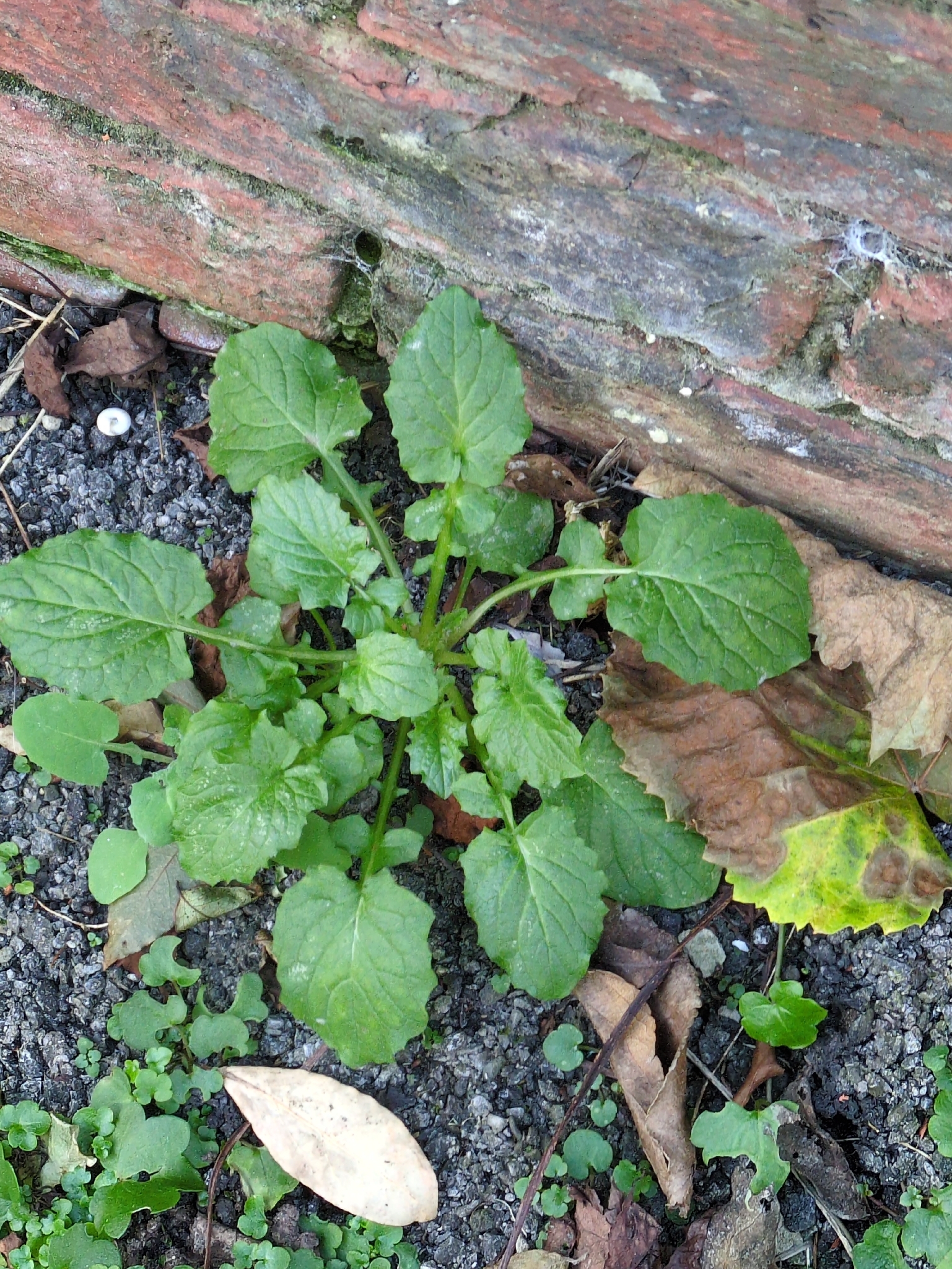
Common nipplewort (Lapsana communis) is an annual or biennial herbaceous plant belonging to the Asteraceae family. It is native across Europe and southwestern Asia, while also naturalized widely in North America.
You will typically find this plant thriving in shady woodland edges, hedgerows, and disturbed garden soils. It is easily distinguished from other yellow-flowered composites by its small flower heads and branching upper stems.
Key Facts
- Family: Asteraceae
- Native Range: Europe and southwestern Asia
- Plant Type: Herbaceous annual or biennial
- Flower Color: Yellow
- Habitat: Shady hedgerows and disturbed ground
What Is Common Nipplewort Like
Common nipplewort is an unfussy wild plant that often appears spontaneously in neglected garden beds and shaded borders. It suits naturalistic gardens where wildlife and self-seeding wildflowers are welcome. The single most important habit to watch is its prolific seed production, which can lead to quick spread if left unmanaged.
This plant behaves primarily as an annual or short-lived biennial. It forms a rosette of leaves near the ground before shooting up a slender, branching stem. You will see it pop up most frequently under the canopy of shrubs or along damp fence lines.
How to Identify Common Nipplewort
Common nipplewort grows up to 1.2 m (4 ft) tall with slender, upright stems that exude a milky sap when broken. The lower leaves are deeply lobed with a large terminal segment, resembling a fiddle shape.
- Flower heads are small, measuring about 1 cm (0.4 in) across.
- Each flower head contains 8 to 15 bright yellow ray florets.
- Stems are sparsely hairy near the base and completely smooth higher up.
- Seeds lack the feathery pappus found in many other members of the daisy family.
The tiny flower clusters bloom from June through September. They open only in morning sunlight and close by afternoon.
Where Does Common Nipplewort Grow
Common nipplewort naturally colonises woodland margins, scrub, and shady roadside verges. It prefers nitrogen-rich, damp soils that stay consistently moist through the spring and summer months.
- Look for it in partial to full shade under larger trees or hedges.
- It readily invades cultivated vegetable patches and flower beds with disturbed earth.
- It tolerates clay and loamy soil types as long as drainage remains adequate.
In North America, it acts as an introduced weed in forests and urban gardens. It seldom poses a severe ecological threat compared to aggressive invasive vines, but it establishes dense patches locally.
Ecological Role of Common Nipplewort
Common nipplewort provides nectar resources for various small pollinators during the peak summer months. Hoverflies, native bees, and small butterflies frequently visit the tiny yellow flower heads.
The seeds are consumed by small granivorous birds and ground-dwelling insects. Because it grows rapidly on bare earth, it also serves a minor role in covering soil and preventing erosion in disturbed patches.
Conservation Status of Common Nipplewort
Common nipplewort maintains a secure status across its native and naturalized ranges. It is classified as Least Concern globally due to its widespread distribution and high tolerance for human-disturbed habitats.
Agricultural weeding and urban development occasionally remove local populations, but the species rebounds rapidly through its massive annual seed bank. No special conservation measures are required to protect this resilient wild plant.
Traditional Uses of Common Nipplewort
Common nipplewort was traditionally used in European herbal medicine to treat skin ailments and swellings. The common name refers to its historical use against sore nipples in nursing mothers, though modern medical evidence for this application is absent.
- Young spring leaves were harvested before flowering and boiled as a potherb.
- The raw greens have a somewhat bitter taste that mellows slightly with cooking.
- Traditional herbalists prepared poultices from the crushed foliage for minor cuts and bruises.
Modern foragers occasionally add the tender basal leaves to spring salads alongside bitter greens like dandelion (Taraxacum officinale) and sow thistle (Sonchus oleraceus).
Plants Similar to Common Nipplewort
Common nipplewort is easily confused with other yellow-flowered members of the Asteraceae family. Careful inspection of the flower size and seed structure helps separate it from look-alikes.
- Smooth hawksbeard (Crepis capillaris) features similar yellow flowers but produces seed heads with feathery parachutes.
- Nipplewort can be distinguished from common groundsel (Senecio vulgaris) by its distinctly lobed lower leaves and branching stems.
- Dandelion (Taraxacum officinale) shares a yellow flower color but lacks an upright branching stem entirely, keeping all leaves in a basal rosette.
Checking for the milky sap and examining the small size of the individual flower heads will confirm a positive identification of nipplewort.
Frequently Asked Questions
Is common nipplewort edible?
Yes, the young leaves of common nipplewort are edible when harvested before the plant flowers. They can be cooked as a potherb or added raw to salads, though they carry a bitter flavor.
Is common nipplewort invasive?
Common nipplewort is considered an introduced naturalized weed in North America and parts of the Southern Hemisphere. While it spreads quickly in disturbed garden soil, it rarely dominates undisturbed native habitats.
Does common nipplewort flower?
Yes, common nipplewort produces clusters of small yellow flower heads from June to September. Each flower head consists of 8 to 15 ray florets that open in the morning.
What are the medicinal uses of common nipplewort?
Historically, common nipplewort was used in traditional herbalism to create poultices for skin irritations and nursing ailments. There are no modern clinical approvals for these traditional uses.
Information about traditional or historical uses is provided for educational interest only and is not medical advice. Do not use any plant to treat a condition without speaking to a qualified professional.
Sources & Verification
Taxonomy and distribution are checked against the databases below. Care guidance is written for cultivated species only and reviewed by our editor. How We Build Plant Profiles →