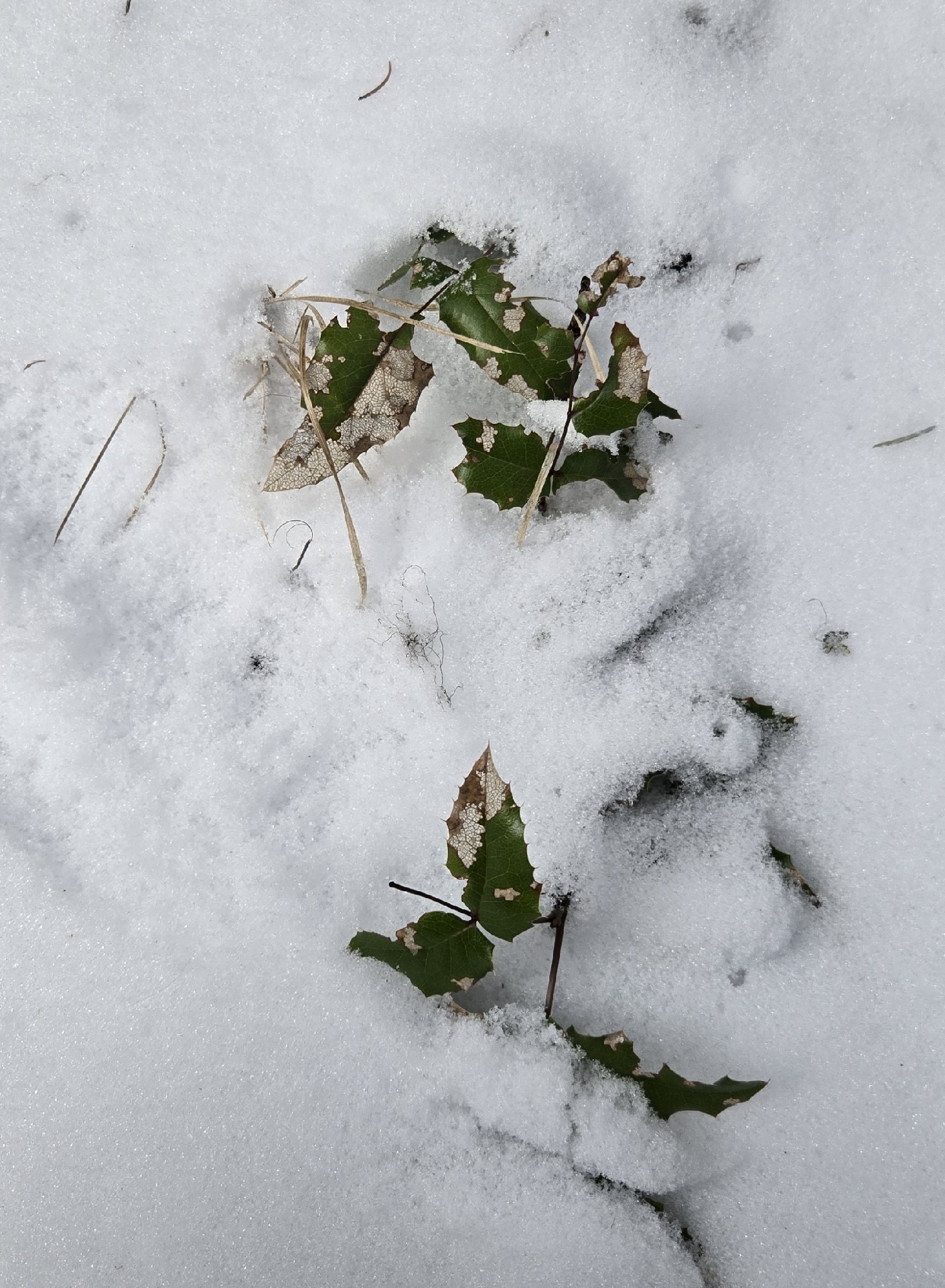
Leatherleaf Mahonia (Mahonia bealei) is a structural evergreen shrub native to China, recognized by its stiff, pinnate leaves and upright habit. It brings a distinct, architectural presence to shaded garden corners throughout the year.
You will find this shrub performs best when protected from harsh afternoon sun, which can scorch its leathery foliage. It is a reliable choice for winter interest, producing bright yellow flower racemes when most other plants remain dormant.
Key Facts
- Light: Partial to full shade
- Water: Moderate once established
- Height: Up to 3 m (10 ft)
- Bloom: Late winter to early spring
- Hardiness: USDA zones 6-9
Why Grow Leatherleaf Mahonia
Leatherleaf Mahonia is ideal for gardeners seeking a low-maintenance, evergreen structural element that thrives in shade. It suits those who want to add winter interest to their landscape without requiring constant attention.
The plant provides a formal look with its tiered, horizontal branches and holly-like leaves. It works well as a background shrub or a dramatic focal point in woodland-style gardens. You will appreciate its ability to persist in difficult, shaded spots where other shrubs fail to thrive.
How to Identify Leatherleaf Mahonia
You can identify this shrub by its large, leathery, pinnate leaves that can reach up to 45 cm (18 in) in length. Each leaf consists of 9 to 15 prickly, blue-green leaflets arranged in pairs along a central stem.
The plant grows in an upright, multi-stemmed habit reaching 3 m (10 ft) at maturity. In late winter, it produces 15-20 cm (6-8 in) long racemes of fragrant, lemon-yellow flowers. These are followed by clusters of grape-like, powdery blue berries that persist into late spring.
Where to Plant Leatherleaf Mahonia
The best site for Leatherleaf Mahonia is a spot with partial to full shade that offers protection from drying winds. Avoid planting in areas that receive intense, direct afternoon sun, as this often leads to leaf burn.
Choose a location with well-drained, slightly acidic soil that remains consistently moist but not waterlogged. If your site has heavy clay, amend it with organic matter to improve drainage before planting. It performs well under the canopy of deciduous trees, where it receives dappled light throughout the growing season.
How to Plant Leatherleaf Mahonia
You should plant your shrub in early spring or autumn when temperatures are mild. Dig a hole twice as wide as the root ball and just as deep to encourage outward root growth.
- Space multiple plants at least 1.5 m (5 ft) apart to allow for mature spread.
- Place the top of the root ball level with the surrounding soil surface.
- Backfill with a mix of native soil and compost to provide initial nutrients.
- Water thoroughly immediately after planting to settle the soil around the roots.
Watering and Feeding Requirements
Leatherleaf Mahonia requires regular moisture during its first two years while the root system establishes. Once mature, it develops moderate drought tolerance but performs best with consistent watering during dry spells.
Apply a balanced, slow-release granular fertilizer once in early spring just as new growth begins. Avoid over-fertilizing, as this can lead to excessive, weak growth that is more susceptible to pests. A 5 cm (2 in) layer of mulch applied around the base helps retain soil moisture and suppresses weeds.
How to Prune Leatherleaf Mahonia
You only need to prune this shrub to maintain its shape or remove damaged wood, as it naturally maintains a tidy, upright habit. Pruning is best performed immediately after the flowers fade in early spring.
- Cut back long, leggy stems to a lower leaf node to encourage bushier growth.
- Remove any dead or diseased branches to improve air circulation within the canopy.
- Use sharp, clean bypass pruners to make clean cuts that heal quickly.
- Wear thick gloves, as the leaflets have sharp, spine-tipped margins that can scratch skin.
Leatherleaf Mahonia Winter Care
This shrub is hardy in USDA zones 6-9 and generally requires no special winter protection. Its evergreen foliage remains intact throughout the winter months, providing a consistent green backdrop.
In colder regions near the edge of its hardiness range, you may notice some leaf dieback if temperatures drop significantly below -15 °C (5 °F). If this occurs, simply trim back the affected foliage in early spring once the threat of frost has passed. Ensure the soil does not dry out completely during winter thaws, as the plant continues to lose moisture through its leaves.
Common Problems and Troubleshooting
Leatherleaf Mahonia is generally resistant to most serious pests and diseases, though it can occasionally face minor issues. Most problems arise from improper site selection or extreme weather conditions.
- Leaf scorch: Caused by too much direct sun; move the plant to a shadier location.
- Yellowing leaves: Often a sign of poor drainage or root rot; ensure the soil is not waterlogged.
- Scale insects: Small bumps on stems; treat with horticultural oil during the dormant season.
- Powdery mildew: Occurs in poor air circulation; prune to thin the canopy.
Leatherleaf Mahonia Through the Year
| Spring | Prune back any dead wood after flowering ends. Apply a layer of mulch to conserve moisture for the coming summer. |
|---|---|
| Summer | Monitor for dry soil and provide supplemental water during periods of low rainfall. Check for signs of scale insects on the stems. |
| Autumn | Ensure the plant is well-hydrated before the first frost. This is an ideal time to transplant if the shrub is in an unsuitable location. |
| Winter | Enjoy the fragrant yellow flowers that appear late in the season. Keep the soil lightly moist if the winter is exceptionally dry. |
What Is Wrong With My Leatherleaf Mahonia
| What you see | Likely cause | What to do |
|---|---|---|
| Brown, crispy leaf edges | Sunburn or wind exposure | Transplant to a site with more shade and protection from drying winds. |
| Yellowing foliage | Poor soil drainage | Improve soil structure with organic matter or adjust irrigation frequency. |
| Stunted growth | Nutrient deficiency | Apply a balanced, slow-release fertilizer in early spring. |
Leatherleaf Mahonia Varieties Worth Knowing
- ‘Arthur Menzies’ – larger flower racemes and more vigorous growth
- ‘Winter Sun’ – a hybrid with fragrant flowers that bloom earlier
Frequently Asked Questions
Is Leatherleaf Mahonia edible?
While the berries are technically edible, they are very tart and contain alkaloids that can cause digestive upset in some people. It is generally grown for ornamental purposes rather than culinary use.
Is Mahonia bealei invasive?
In parts of the southeastern United States, it has escaped cultivation and can spread into woodland areas. Check your local invasive species list before planting.
How fast does Leatherleaf Mahonia grow?
It has a moderate growth rate, typically adding 20-30 cm (8-12 in) of height per year under ideal conditions.
What is the difference between Mahonia bealei and Mahonia japonica?
The two are closely related but differ in leaf and floral traits. Mahonia bealei typically has broader leaflets and more upright, stiffer flower racemes compared to the more drooping habit of Mahonia japonica.
Sources & Verification
Taxonomy and distribution are checked against the databases below. Care guidance is written for cultivated species only and reviewed by our editor. How We Build Plant Profiles →