
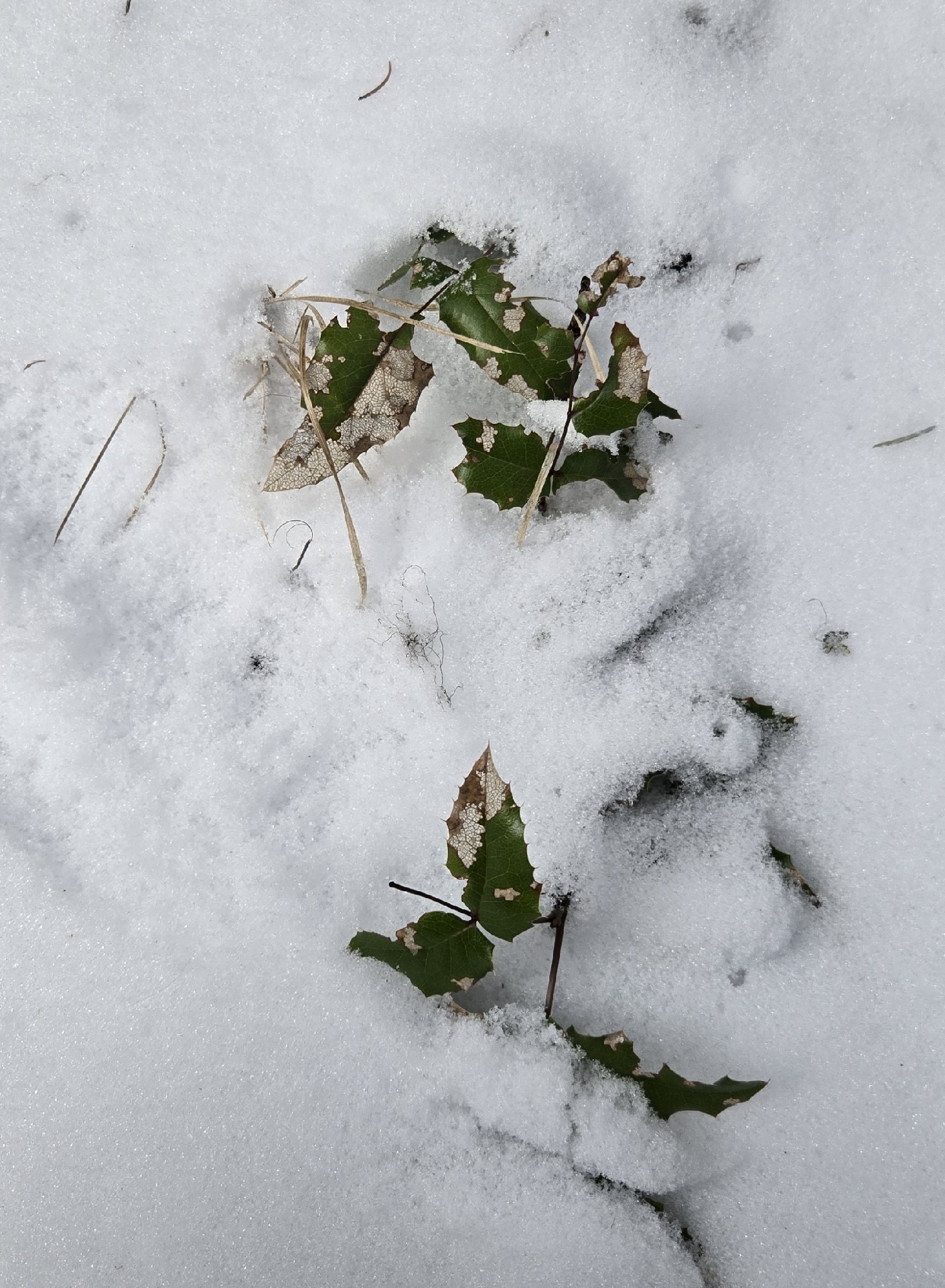
Oregon Grape (Mahonia aquifolium) is a hardy evergreen shrub native to western North America, recognized by its leathery, spiny leaflets that resemble holly. This species produces clusters of yellow flowers in early spring followed by edible, dusty-blue berries that attract birds.
While it thrives in the damp forests of the Pacific Northwest, it is widely planted elsewhere for its ability to grow in deep shade. It requires little maintenance once established but can spread via underground runners if not contained.
Key Facts
- Light: Partial shade to full shade
- Hardiness: USDA Zones 5 to 9
- Size: 1-3 m (3-10 ft) tall
- Soil: Moist, well-drained, slightly acidic
- Fruit: Edible but tart blue berries
Fitting Oregon Grape into Your Landscape
This shrub is a reliable choice for low-light garden corners where other evergreens struggle to thrive. It works well as a security hedge due to its prickly foliage or as a backdrop in woodland-style borders. Unlike many ornamental shrubs, it provides three distinct seasons of interest: bright spring blooms, summer fruit, and leaves that often turn purplish-bronze in winter.
It is particularly useful for gardeners looking to support local wildlife. The early yellow flowers provide nectar for bees and hummingbirds when few other plants are in bloom. The dense, spiny structure offers nesting sites for small birds, while the berries are a food source for robins and towhees.
How to Identify Mahonia aquifolium
Oregon Grape is identified by its pinnately compound leaves that consist of 5 to 9 stiff, holly-like leaflets. Each leaflet is 3-8 cm (1.2-3.1 in) long with sharp, spiny teeth along the margins. The upper surface is a dark, glossy green, while the underside is paler and duller.
- Flowers: Dense, upright racemes of 3-8 cm (1.2-3.1 in) long yellow blossoms.
- Fruit: Clusters of round, dark-blue berries covered in a waxy, grey-white bloom.
- Stems: Young stems are green or tan, while older wood develops a grey-brown, corky bark.
- Inner Wood: The roots and inner bark are a distinct, bright sulfur-yellow.
Mature Size and Growth Habits
In ideal conditions, this shrub reaches a mature height of 1.5 to 3 m (5 to 10 ft) with a spread of roughly 1.5 m (5 ft). It grows at a moderate rate, often producing suckers from the base that allow it to form a dense thicket over time. In very dry or exposed sites, it may remain a more compact, stunted bush under 1 m (3 ft) tall.
If you have a smaller space, look for compact cultivars like ‘Compactum’ which stays below 90 cm (3 ft). Because it spreads via underground rhizomes, it can slowly colonize an area. This makes it effective for erosion control on slopes but may require occasional root-pruning in small garden beds.
Choosing the Best Planting Site
Oregon Grape performs best in partial shade with protection from harsh winter winds. While it can tolerate full sun in cooler, coastal climates, the leaves will often scorch or turn yellow in hot, inland areas. In deep shade, the plant will still grow but may produce fewer flowers and fruit.
The soil should be rich in organic matter and slightly acidic, ideally with a pH between 5.0 and 6.5. It does not tolerate alkaline soils well, which can lead to chlorosis (yellowing of the leaves). Ensure the site is well-drained; Oregon Grape will not survive in waterlogged or boggy ground.
Planting and Establishing the Bush
The best time to plant is in early spring or autumn when temperatures are mild. Dig a hole twice as wide as the root ball but no deeper. If your soil is heavy clay, mix in leaf mold or compost to improve drainage and acidity before backfilling.
- Spacing: Space plants 90-120 cm (3-4 ft) apart for a hedge.
- Depth: Ensure the crown sits exactly at the soil line; planting too deep causes rot.
- Mulching: Apply a 5-7 cm (2-3 in) layer of pine bark or needles to retain moisture.
- Initial Care: Water deeply twice a week for the first growing season.
Watering and Feeding Requirements
Established Oregon Grape plants are moderately drought-tolerant but look best with consistent moisture during dry summer spells. If the leaves begin to droop or lose their gloss, it is a sign of water stress. During the first two years, ensure the soil remains moist to a depth of 15 cm (6 in).
Fertilizing is rarely necessary in nutrient-rich garden soils. If growth is slow or leaves are pale, apply a balanced, slow-release fertilizer for acid-loving plants in early spring. Avoid high-nitrogen fertilizers late in the summer, as this can encourage soft new growth that will be damaged by the first frosts.
Pruning Oregon Grape for Shape
Pruning should be done in late spring immediately after the flowers fade to avoid cutting off next year’s buds. Because the plant grows from the base, you can perform “renewal pruning” by cutting the oldest one-third of the stems down to ground level every few years. This encourages fresh, bushier growth and prevents the plant from becoming leggy.
If the shrub has become overgrown and bare at the bottom, it can tolerate a hard rejuvenation pruning. Cutting the entire plant back to 15 cm (6 in) from the ground in early spring will result in a flush of new stems. Always use sharp, sterilized loppers, as the wood is surprisingly tough.
Edible Berries and Medicinal Root Uses
The berries of Oregon Grape are edible but very tart, containing high levels of vitamin C and natural pectin. They were traditionally used by indigenous peoples of the Pacific Northwest and are now frequently made into jellies, preserves, or wines. The fruit is best harvested in late summer once it has turned a deep, dusty blue.
The bright yellow inner bark and roots contain berberine and have been traditionally used as a bitter tonic or a yellow dye. In historical herbalism, root extracts were used for digestive issues and skin conditions. Note that the berries contain large seeds and are generally too sour to eat raw without significant sweetening.
Common Pests and Leaf Diseases
The most frequent issue is rust (Puccinia graminis), which appears as orange or red spots on the undersides of the leaves. This fungus thrives in humid, still air. To prevent it, ensure good air circulation around the shrub and avoid overhead watering which keeps the foliage wet.
- Powdery Mildew: White dusty coating on leaves; treat with neem oil or sulfur.
- Leaf Scorch: Brown, crispy leaf edges caused by dry winter winds or too much sun.
- Aphids: Small insects on new growth; usually controlled by natural predators.
- Chlorosis: Yellow leaves with green veins; indicates soil pH is too high.
Year-Round Care for Oregon Grape
| Spring | Apply a balanced acidic fertilizer before new growth starts. Prune stems back after flowering to maintain a bushy shape. |
|---|---|
| Summer | Water deeply during dry spells, especially for young plants. Harvest ripe blue berries in late summer for jams. |
| Autumn | Clean up fallen leaves to prevent fungal spores from overwintering. Add a fresh layer of mulch to protect roots. |
| Winter | Protect from harsh winds with a burlap screen if planted in an exposed site. Minimize salt use near the plant’s root zone. |
Oregon Grape Health Problems Explained
| What you see | Likely cause | What to do |
|---|---|---|
| Orange spots on leaf undersides | Rust fungus (Puccinia) | Remove infected leaves and improve air circulation around the plant. |
| Yellow leaves with green veins | Iron deficiency/High pH | Apply chelated iron and mulch with acidic organic matter like pine needles. |
| Brown, crispy leaf margins | Winter desiccation or drought | Increase summer watering and provide a windbreak in winter. |
| Leggy, bare lower stems | Natural aging or low light | Cut the oldest stems to the ground in spring to encourage base growth. |
Best Oregon Grape Cultivars for Gardens
- ‘Compactum’ – Stays under 90 cm (3 ft), ideal for small gardens.
- ‘Apollo’ – A low-spreading variety with deep gold flowers.
- ‘King’s Ransom’ – Features blue-green foliage that turns deep bronze in winter.
- ‘Orange Flame’ – New growth emerges bronze-orange before turning green.
Frequently Asked Questions
Are Oregon Grape berries edible?
Yes, the berries are edible but very sour and tart when eaten raw. They are most commonly used in jellies, syrups, and wines where sugar is added to balance the acidity.
What are the benefits of Oregon Grape root?
Oregon Grape root contains berberine, which has been traditionally used in herbal medicine for its antimicrobial and anti-inflammatory properties. It was historically used as a digestive tonic and for skin ailments.
Can I grow Oregon Grape in full sun?
While it can tolerate sun in cool, moist climates, it generally prefers partial shade. In hot or dry areas, full sun will cause the leaves to scorch and turn a sickly yellow-brown.
How is Mahonia aquifolium different from 'Soft Caress'?
Oregon Grape has stiff, prickly leaflets like holly, while 'Soft Caress' (a cultivar of Mahonia eurybracteata) has narrow, thread-like leaves that are completely soft to the touch.
Is Oregon Grape invasive?
It is not considered invasive in its native North American range, though it can spread slowly via rhizomes. In some parts of Europe, it has naturalized and is monitored for its ability to displace native flora.
Information about traditional or historical uses is provided for educational interest only and is not medical advice. Do not use any plant to treat a condition without speaking to a qualified professional.
Sources & Verification
Taxonomy and distribution are checked against the databases below. Care guidance is written for cultivated species only and reviewed by our editor. How We Build Plant Profiles →
