Primulaceae: List of Primrose Family Plants and How to Tell Them Apart
10 plant profiles · Learn about the Primulaceae family, including primroses, cyclamens, and creeping Jenny. Discover key identification features, light needs, and moisture rules.
The primrose family, Primulaceae, consists of herbaceous perennials, annuals, and aquatic plants native mostly to temperate regions of the Northern Hemisphere. Plants in this family share distinct flower anatomy: blooms typically feature five fused petals opening into flat or recurved lobes, with stamens positioned directly opposite the petal lobes rather than alternating between them. Many species form low basal rosettes of leaves in late winter or early spring before flowering.
Choosing the right Primulaceae species depends on your garden environment and indoor space. Outdoor spring bloomers like the common primrose (Primula vulgaris), cowslip (Primula veris), and oxlip (Primula elatior) thrive in damp, shaded woodland beds. Groundcovers like creeping Jenny (Lysimachia nummularia) spread rapidly in moisture-retentive soils, while the aquatic water violet (Hottonia palustris) grows submerged in shallow ponds.
For container growing, tender indoor options include the florist’s cyclamen (Cyclamen persicum) and German primrose (Primula obconica), which offer bright winter flowers when kept between 10–16 °C (50–60 °F). Hardy outdoor tubers like the ivy-leaved cyclamen (Cyclamen hederifolium) provide autumn bloom under dry shade. Avoid handling Primula obconica bare-handed, as its glandular hairs secrete primin, a compound known to cause contact dermatitis.
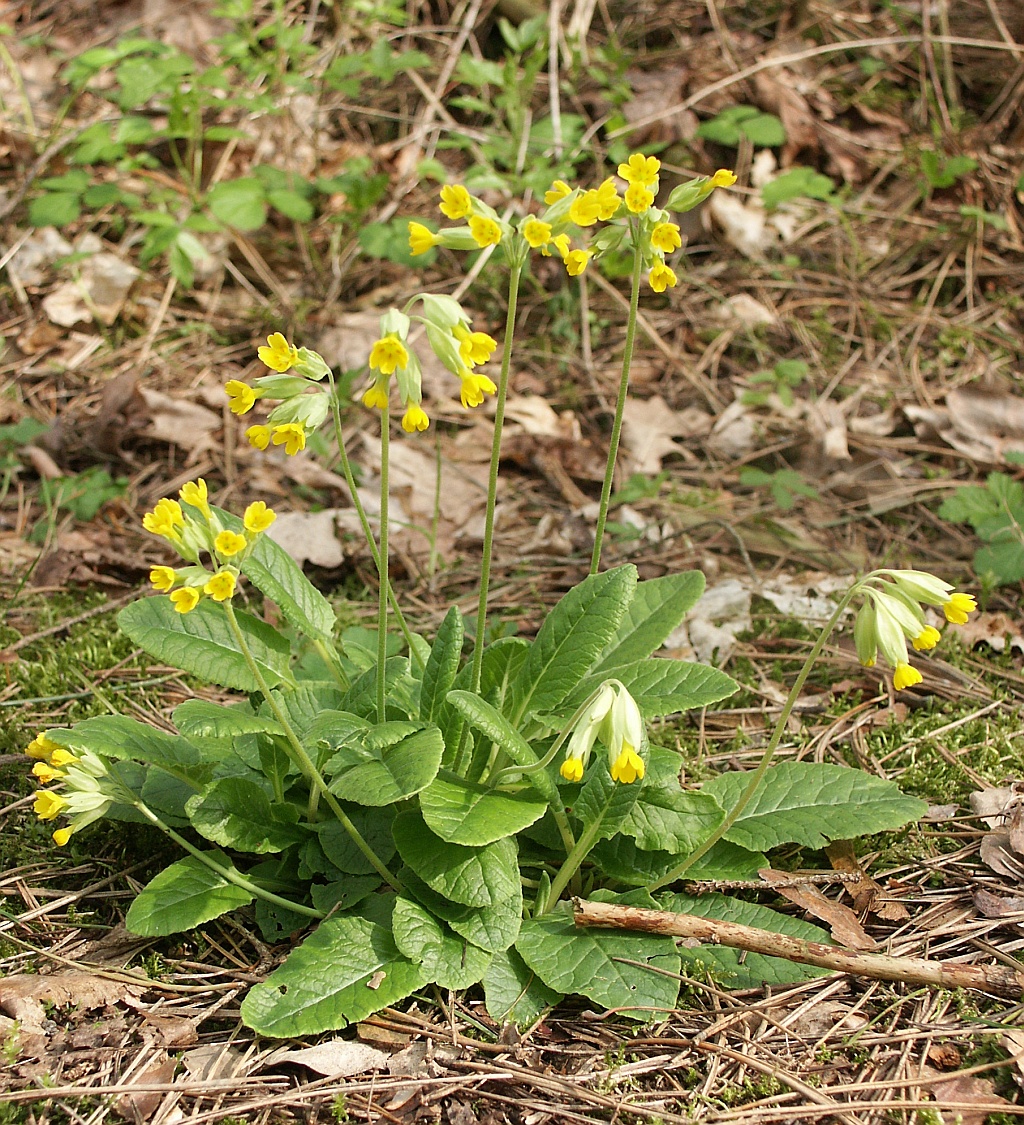
Cowslip
Primula veris
☀️ Partial Sun 💧 Moderate
Creeping Jenny
Lysimachia nummularia
☀️ Partial Sun 💧 High

Fairy Primrose
Primula malacoides
☀️ Partial Shade 💧 Moderate

Florist’s Cyclamen
Cyclamen persicum
☀️ Bright Indirect 💧 Moderate

German Primrose
Primula obconica
☀️ Partial Shade 💧 Moderate

Ivy-Leaved Cyclamen
Cyclamen hederifolium
☀️ Partial Shade 💧 Low
Oxlip
Primula elatior
☀️ Partial Shade 💧 Moderate
Primrose
Primula vulgaris
☀️ Partial Shade 💧 High
Scarlet Pimpernel
Lysimachia arvensis
☀️ Full Sun 💧 Moderate
Water Violet
Hottonia palustris
☀️ Partial Sun 💧 Aquatic
Common Questions
What are the main characteristics of plants in the Primulaceae family?
Plants in the Primulaceae family are primarily herbaceous perennials with five-lobed flowers, stamens attached directly opposite the petal lobes, and simple leaves often arranged in basal rosettes.
Are plants in the Primulaceae family toxic to pets?
Many Primulaceae species, including florist’s cyclamen (Cyclamen persicum), contain saponins in their tubers that are toxic to dogs and cats if ingested.
Do Primulaceae plants prefer shade or full sun?
Most Primulaceae species prefer partial to full shade alongside soil that remains consistently moist but well-drained.
Which Primulaceae plants bloom in winter?
Florist’s cyclamen (Cyclamen persicum) and fairy primrose (Primula malacoides) produce their main floral display during winter and early spring when grown indoors.