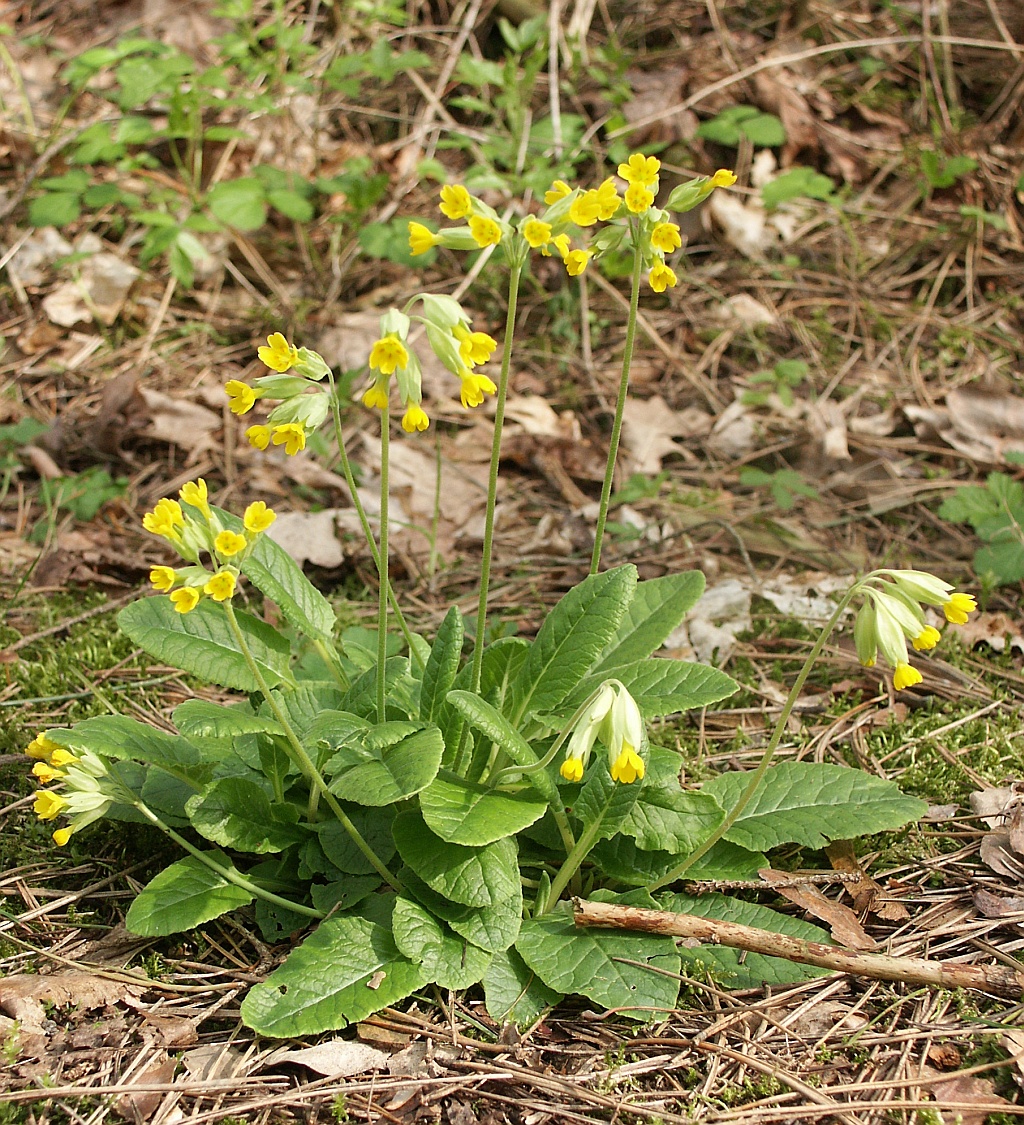
The common primrose, Primula vulgaris, is a hardy perennial native to Western and Southern Europe, Northwest Africa, and parts of Southwest Asia. It is recognized by its low-growing rosettes of crinkled, tongue-shaped leaves and five-petaled, pale yellow flowers that emerge in early spring.
This species requires consistently damp, humus-rich soil and fails quickly in hot, dry conditions or direct afternoon sun. While often confused with evening primrose (Oenothera biennis), this plant is a true woodland species that thrives in the cool temperatures of temperate gardens.
Key Facts
- Water: Keep soil moist; do not allow to dry out completely
- Light: Partial shade to dappled sunlight is ideal
- Bloom: Flowers appear from late winter to mid-spring
- Hardiness: USDA zones 4 to 8; survives -20 °C (-4 °F)
- Height: Typically reaches 10-15 cm (4-6 in)
Growing Primrose in Your Garden
The primrose is best suited for cool, damp garden spots that mimic its native woodland habitat. It is a reliable choice for north-facing borders, under-planting beneath deciduous trees, or filling gaps in rock gardens where moisture is retained. Because it blooms so early, it provides a critical nectar source for emerging queen bees and butterflies.
You should avoid planting it in areas with high foot traffic or reflected heat from stone walls. The plant forms tight clumps that gradually expand over several years, making it an effective groundcover for small, shady areas. It is particularly successful in heavy clay soils that stay wet during the summer months.
Identifying the Common Primrose
The common primrose is a low-growing herbaceous perennial that forms a basal rosette of leaves. The leaves are obovate to oblong, 5-25 cm (2-10 in) long, with a heavily wrinkled (rugose) surface and irregularly notched margins. They are dark green on top with a paler, slightly hairy underside.
The flowers are 2-4 cm (0.8-1.6 in) wide and held individually on slender, hairy stalks. Key identification features include:
- Five notched petals forming a flat face
- A deep yellow or orange center (the ‘eye’)
- A faint, sweet fragrance often described as ‘delicate’
- Flowers that appear directly from the center of the leaf rosette
Best Planting Site for Primula vulgaris
Select a location with partial shade or filtered sunlight, as full sun will scorch the leaves and cause the plant to go dormant prematurely. The soil must be rich in organic matter to hold moisture without becoming stagnant. If your soil is sandy, you must incorporate leaf mold or well-rotted compost before planting.
In warmer climates (USDA zone 8), a north-facing aspect is essential to keep the roots cool. In cooler regions, they can tolerate more light if the ground remains wet. Ensure the site has good air circulation to prevent fungal diseases like botrytis, which can affect the dense foliage in stagnant air.
How to Plant Primroses
Space your plants 15-20 cm (6-8 in) apart to allow for the spread of the leaf rosettes. The best time to plant is in early autumn or early spring when the soil is naturally moist and temperatures are mild. This allows the root system to establish before the stress of summer heat or winter freezes.
When planting, ensure the crown (where the leaves meet the roots) is level with the soil surface. Planting too deep can lead to crown rot, while planting too shallow may cause the roots to dry out. Firm the soil gently around the roots and water immediately with at least 2 liters (0.5 gallons) of water per plant.
Watering and Feeding Schedule
Keep the soil consistently moist throughout the growing season, especially during the flowering period in spring. If the leaves begin to wilt, the plant is under water stress and needs immediate irrigation. During dry summer spells, you may need to water 2-3 times per week to prevent the plant from dying back.
Apply a balanced, liquid fertilizer every 2-4 weeks during the spring. Avoid high-nitrogen fertilizers, which promote leaf growth at the expense of flowers. A mulch of leaf mold or composted bark applied in spring will help retain moisture and provide a slow release of nutrients to the root zone.
Pruning and Deadheading
Remove spent flower stalks at the base of the plant to encourage a longer blooming period and prevent the plant from putting energy into seed production. While primroses will self-seed in ideal conditions, deadheading keeps the plant looking tidy and prevents overcrowding. In late autumn, you should remove any yellowed or diseased leaves to reduce the risk of overwintering pests.
If you wish to collect seeds, leave a few healthy flower heads to dry on the plant until the seed capsules turn brown and split. For general maintenance, a light cleanup of the foliage in early spring before the new buds emerge is sufficient. Never prune the healthy green leaves, as they provide the energy for next year’s bloom.
Propagating Primrose by Division
The most effective way to propagate is to divide the clumps every 2-3 years immediately after flowering has finished. This prevents the center of the plant from becoming woody and unproductive. Lift the entire clump with a garden fork and gently pull the individual rosettes apart, ensuring each piece has a healthy section of roots.
Replant the divisions immediately into prepared soil and water them thoroughly. You can also grow them from seed, but they require a period of cold stratification (exposure to cold) to germinate. Freshly harvested seeds should be sown on the surface of seed-starting mix and kept at 10-15 °C (50-60 °F) in a bright spot.
Why Are My Primrose Leaves Turning Yellow?
Yellowing leaves are often a sign of iron chlorosis or water stress. If the veins remain green while the rest of the leaf turns yellow, the soil pH may be too high (alkaline), preventing nutrient uptake. Primroses prefer slightly acidic soil and may require an application of chelated iron or sulfur to correct the balance.
Other common issues include:
- Slugs and Snails: Large holes in leaves; use beer traps or organic pellets.
- Spider Mites: Fine webbing and mottled leaves; usually occurs in dry conditions.
- Vine Weevil: C-shaped notches on leaf edges; larvae eat the roots, causing sudden collapse.
- Botrytis (Grey Mold): Fuzzy grey patches on leaves in damp, still air.
Year-Round Care for Primrose
| Spring | Deadhead spent blooms and apply a balanced liquid fertilizer every 14 days. Monitor for slugs as new growth emerges. |
|---|---|
| Summer | Water deeply during dry spells to keep soil moist. Ensure plants are shaded from intense afternoon sun to prevent dormancy. |
| Autumn | Apply a 5 cm (2 in) mulch of leaf mold around the base. Divide overcrowded clumps to expand your collection. |
| Winter | Remove dead foliage to prevent rot. Check for frost heave after hard freezes and gently firm plants back into the soil. |
Common Primrose Problems and Fixes
| What you see | Likely cause | What to do |
|---|---|---|
| Yellow leaves with green veins | Iron deficiency / Alkaline soil | Apply chelated iron and mulch with acidic organic matter. |
| Sudden wilting of the whole plant | Vine weevil larvae | Check roots for white grubs and treat with parasitic nematodes. |
| Stunted growth and mottled leaves | Cucumber mosaic virus | Remove and destroy the infected plant to prevent spread. |
Popular Primrose Cultivars
- ‘Alba’ – pure white flowers with yellow eyes
- ‘Guinevere’ – pale pink flowers over bronze-purple foliage
- ‘Miss Indigo’ – double purple flowers with white edges
- ‘Belarina Nectarine’ – double flowers in shades of orange and yellow
Companion Plants for Primrose
Pair primroses with other shade-loving spring perennials that share their moisture requirements. They look most natural when planted in drifts alongside early bulbs and ferns. Because they are low-growing, they should be placed at the front of the border where they won’t be overshadowed by larger summer perennials.
Recommended companions include:
- Snowdrops (Galanthus nivalis) for very early spring interest.
- Lenten Rose (Helleborus orientalis) for contrasting foliage and height.
- Soft Shield Fern (Polystichum setiferum) to provide a green backdrop.
- Wood Anemone (Anemone nemorosa) for a classic woodland aesthetic.
Frequently Asked Questions
Is primrose oil made from this plant?
No, primrose oil is extracted from the seeds of the evening primrose (Oenothera biennis), which is an entirely different genus. Primula vulgaris does not produce the gamma-linolenic acid found in those supplements.
What is the meaning of the primrose flower?
Traditionally, the primrose symbolizes young love, eternal existence, and the arrival of spring. In some cultures, it was believed that leaving primroses on a doorstep would encourage fairies to bless the house.
Can I grow primroses as houseplants?
Primroses are temporary houseplants; they usually struggle indoors due to dry air and high temperatures. Keep them in a cool room near a bright window and move them to the garden once flowering has finished.
Are primroses toxic to cats and dogs?
Yes, they contain primulin, which can cause mild vomiting or skin irritation if ingested or touched. While rarely fatal, it is best to keep them out of reach of curious pets.
Information about traditional or historical uses is provided for educational interest only and is not medical advice. Do not use any plant to treat a condition without speaking to a qualified professional.
Sources & Verification
Taxonomy and distribution are checked against the databases below. Care guidance is written for cultivated species only and reviewed by our editor. How We Build Plant Profiles →