
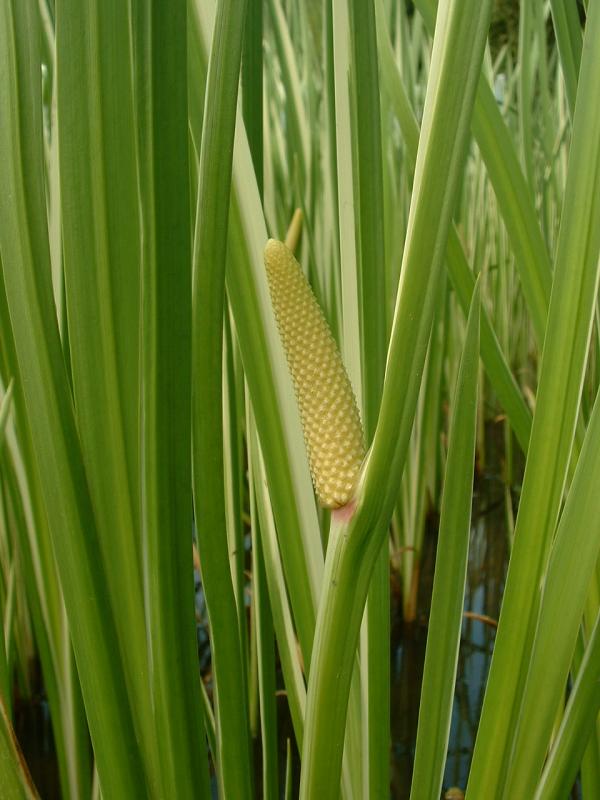
Sweet flag (Acorus calamus) is a rhizomatous wetland perennial native to temperate Eurasia, characterised by aromatic, iris-like foliage that releases a citrus-cinnamon scent when bruised.
Standing water up to 15 cm (6 in) deep provides ideal conditions, but the species fails rapidly in soils that dry out during summer.
Key Facts
- Water depth: Wet mud up to 15 cm (6 in) of standing water
- Light: Full sun to partial shade
- Mature height: 60–120 cm (24–48 in)
- Foliage aroma: Distinct spicy, sweet citrus scent when crushed
- Safety: Rhizomes contain beta-asarone; toxic if ingested
Growing Sweet Flag in Garden Ponds
Sweet flag is an obligate wetland perennial suited to bog gardens, naturalised pond margins, and slow-moving stream edges where the soil never dries out. It provides structural height at the water line without the invasive smothering habit common to bulrushes.
Because the roots spread horizontally beneath waterlogged muck, it works well for stabilising muddy banks against wave erosion. Keep it contained in an aquatic basket if your pond has a soft synthetic liner that rhizomes could wedge beneath.
Sweet Flag Appearance and Identification
Sweet flag produces dense fans of erect, linear leaves reaching 60 to 120 cm (2 to 4 ft) in height with an off-centre raised midrib and distinctly wavy margins. Its foliage closely mimics wild iris foliage, but crushing a leaf blade immediately releases a pungent, sweet tangerine fragrance that irises lack entirely.
Key identification features include:
- Foliage: Bright green, sword-like blades 1–2 cm (0.4–0.8 in) wide with undulating edges.
- Rhizome: Knobby, pale pink to white creeping underground stem up to 3 cm (1.2 in) thick with ringed leaf scars.
- Inflorescence: A solitary, semi-erect green-yellow spadix 5–10 cm (2–4 in) long emerging laterally from a leaf-like spathe.
- Flower Structure: Tiny, three-parted, bisexual florets packed along the spadix, lacking any showy petals.
Where to Plant Sweet Flag
Plant sweet flag in a position that receives at least six hours of direct sunlight daily to maintain sturdy, upright foliage. While plants tolerate light afternoon shade, deep shade causes the leaf fans to stretch, flop outward, and lose their dense clump form.
Choose an aquatic pond shelf, muddy swale, or slow-moving ditch. Avoid locations with turbulent or fast-flowing water, which can unseat the surface-creeping rhizomes before root networks anchor into the substrate.
How to Plant Sweet Flag
Set the horizontal rhizomes just beneath the surface with their growing tips angled upward and exposed slightly above the mud line. Burying the crowns deeply in heavy muck suffocates the growth points and invites fungal rot.
To plant in an artificial pond:
- Line a 5-litre (1.3 gal) aquatic mesh basket with a hessian liner or aquatic cloth.
- Fill with heavy loam or dedicated aquatic compost, omitting regular potting mixes that float away.
- Embed the rhizome horizontally, firm the soil, and top with a 2 cm (0.8 in) layer of washed pea gravel.
- Submerge the basket onto a shallow shelf so water covers the soil surface by 5–15 cm (2–6 in).
Water and Feeding Requirements
Sweet flag requires saturated mud or standing water between 0 and 15 cm (0 and 6 in) deep at all times throughout the growing period. Dropping the water line below the root crown during warm weather triggers rapid browning of leaf tips and premature dormancy.
In rich pond sediment, mature plantings need no supplemental fertilizer. In closed patio water features or newly lined ponds, press one aquatic fertilizer tablet into the basket soil once in late spring to sustain leaf growth.
Pruning and Maintenance
Cut the foliage down to 5 cm (2 in) above the water line in late autumn or early spring before fresh shoots emerge. Decaying leaves left in standing water reduce dissolved oxygen levels and foul closed pond systems through winter.
Remove damaged or yellowing outer blades through the summer by pulling them sharply downward from the rhizome. Spent flower spikes can be snipped off at their base in midsummer, though triploid Eurasian strains rarely set viable seed.
How to Propagate Sweet Flag
Propagate sweet flag by rhizome division in early spring just as the dormant pink shoot tips begin to swell. The naturalised European and North American populations are sterile triploids, making rhizome separation the only reliable method to produce new plants.
Follow these steps to divide an established clump:
- Lift the root ball from the water or mud using a garden fork.
- Rinse away the sediment to expose the thick, branching underground stems.
- Slice the rhizome into 10–15 cm (4–6 in) segments using a sterilised knife, ensuring each piece has at least two healthy green buds and several fibrous roots.
- Discard soft, discoloured, or hollow central segments from old growth.
- Replant divisions immediately into saturated soil or aquatic baskets so the roots never dry out.
Common Problems and Pests
Brown, desiccated leaf tips indicate insufficient moisture or excessive dissolved salts around the root zone. Move the basket deeper into the water column and replenish shallow containers with fresh, non-chlorinated water.
Watch for these common issues:
- Red spider mites: Cause stippled, pale foliage during dry, hot spells; rinse leaves thoroughly with pond water.
- Rhizome rot: Soft, foul-smelling root crowns caused by water stagnation and lack of water circulation in summer.
- Aphid infestations: Clustered on soft new inner blades; dislodge them with a firm water spray into the pond for fish to consume.
Winter Care
Sweet flag is cold-hardy down to USDA Zone 4 (-34 °C / -30 °F) and survives freezing winter conditions provided the rhizomes do not freeze completely dry. In natural ponds, leaves die back naturally after the first hard autumn frost while the submerged roots remain dormant.
For shallow container ponds that risk freezing solid, lower the planting basket to the pond floor below the ice line in late autumn. In containers smaller than 40 cm (16 in) across, move the pot into an unheated garage or greenhouse, keeping the compost wet until spring.
Seasonal Care for Sweet Flag
| Spring | Cut away lingering dead foliage from the crown. Lift and divide overcrowded rhizomes as the water warms, and submerge baskets back to 10 cm (4 in) depth. |
|---|---|
| Summer | Maintain water levels so the crown stays submerged beneath at least 5 cm (2 in) of water. Remove scorched leaf tips and snip withered flower spikes. |
| Autumn | Trim dying leaves down to 5 cm (2 in) above the waterline before they foul the pond. Move shallow baskets below the freeze line if your area experiences hard winter freezes. |
| Winter | Keep rhizomes submerged or saturated in their pots. Ensure outdoor containers do not freeze solid or dry out entirely during cold snaps. |
Sweet Flag Leaf and Root Problems Explained
| What you see | Likely cause | What to do |
|---|---|---|
| Brown or dry leaf tips | Water level dropped below the root crown | Raise the water level or sink the pot deeper so the soil stays submerged under 5 to 15 cm of water. |
| Soft, mushy rhizomes with foul odour | Bacterial soft rot in stagnant, low-oxygen water | Lift the plant, carve away rotted portions back to clean white tissue, and relocate to an area with gentle water circulation. |
| Flopping, weak leaf blades | Excessive shade | Shift the planting position to receive at least six hours of unobstructed direct sunlight daily. |
| Stippled yellow speckles on leaf blades | Red spider mites feeding in hot, dry air | Submerge the plant completely under water for thirty minutes or spray leaves daily with water to raise humidity. |
Sweet Flag Cultivars
- ‘Variegatus’ – cream and green striped leaves, 80 cm tall
- ‘Argenteostriatus’ – bold white longitudinal leaf striping
Pond Companions for Sweet Flag
Pair sweet flag with broad-leaved marginal aquatics to create contrast with its rigid, linear fans. Its firm roots help anchor banks alongside softer marginal herbs without outcompeting slower species.
Excellent planting companions include:
- Yellow flag iris (Iris pseudacorus): Provides matching water depth tolerance with broad yellow late-spring flowers.
- Marsh marigold (Caltha palustris): Offers rounded, dark green leaves and bright early-season buttercup blooms around the base.
- Water forget-me-not (Myosotis scorpioides): Weaves low-growing sky-blue flower clusters across the mud surrounding the upright blades.
- Pickerelweed (Pontederia cordata): Supplies bold, heart-shaped foliage and blue flower spikes that bloom concurrently in midsummer.
Frequently Asked Questions
What is sweet flag used for?
Sweet flag is used primarily as an ornamental marginal plant for ponds and water gardens. Its aromatic rhizomes were historically processed for fragrances and traditional folk remedies, though modern culinary use is restricted due to toxicity.
Is sweet flag poisonous?
Yes, sweet flag rhizomes contain beta-asarone, a toxic chemical compound that can cause gastrointestinal distress, organ irritation, and potential carcinogenic effects if ingested. The United States Food and Drug Administration (FDA) bans calamus and its derived oils from food and beverage products.
What is the difference between sweet flag and Japanese sweet flag?
Common sweet flag (Acorus calamus) grows up to 120 cm (48 in) tall with leaves up to 2 cm (0.8 in) wide, whereas Japanese sweet flag (Acorus gramineus) is a smaller dwarf species reaching only 15 to 30 cm (6 to 12 in) with very fine, grass-like leaves.
Can sweet flag grow out of water?
Sweet flag can grow in garden soil outside a pond only if the soil remains constantly moist to saturated, such as in a poorly drained depression or rain garden. It will wither and brown rapidly if the soil dries out even briefly.
What does sweet flag root smell like?
Sweet flag root produces a warm, spicy fragrance combining notes of cinnamon, nutmeg, and candied citrus peel when cut or bruised. The aromatic oils remain potent in dried rhizome segments for many months.
Information about traditional or historical uses is provided for educational interest only and is not medical advice. Do not use any plant to treat a condition without speaking to a qualified professional.
Sources & Verification
Taxonomy and distribution are checked against the databases below. Care guidance is written for cultivated species only and reviewed by our editor. How We Build Plant Profiles →
- Kew Plants of the World OnlineTaxonomic baseline, distribution, and synonymy
- Missouri Botanical GardenOrnamental cultivation details and water depths
- NC State ExtensionIdentification characteristics, toxicity, and landscape use
- GBIF — Global Biodiversity Information Facilitytaxonomy, synonyms, occurrence records
- Wikipediageneral reference
