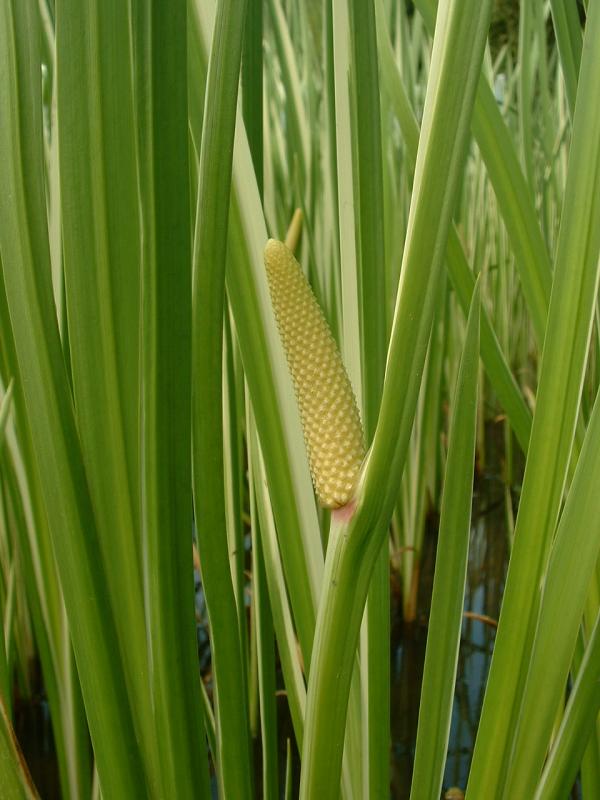
Japanese Sweet Flag is a semi-evergreen perennial native to the wetlands and stream banks of Japan, Korea, and Eastern Asia, belonging to the genus Acorus gramineus. It is often mistaken for a grass or sedge, but it is actually a member of its own ancient lineage, the Acoraceae, characterized by its aromatic, sword-shaped leaves.
This species is specifically adapted to environments where most garden plants fail due to waterlogged soil. It maintains its structure throughout the winter in milder climates, providing consistent texture to pond edges and bog gardens where temperatures stay above -15 °C (5 °F).
Key Facts
- Water: Keep soil constantly wet or submerged up to 10 cm (4 in)
- Light: Full sun to partial shade for best leaf colour
- Hardiness: Reliable in USDA zones 5 through 9
- Height: Reaches a mature height of 15-30 cm (6-12 in)
- Soil: Prefers heavy clay, silt, or mucky organic soils
Fitting Japanese Sweet Flag into Your Garden
Japanese Sweet Flag is the ideal choice for permanently wet sites where drainage is impossible to improve. It functions as a structural groundcover in bog gardens, rain gardens, or along the margins of freshwater ponds. Because it spreads via slow-growing rhizomes, it provides soil stabilization on muddy slopes without becoming an aggressive invader like some true grasses.
You can use this plant to fill the gaps between larger marginals or to soften the transition between water and land. It is particularly effective in small water features or containerized water gardens where its compact 30 cm (12 in) spread is easily managed. Unlike the larger Acorus calamus, this species remains low and tufted, making it suitable for foreground placement.
What Does Acorus gramineus Look Like?
Japanese Sweet Flag features narrow, leathery leaves that grow in flat, fan-like tufts emerging from a creeping rhizome. The leaves are roughly 0.5-1 cm (0.2-0.4 in) wide and lack the prominent midrib found in other sweet flags. When crushed, the foliage emits a distinctive citrus-like or spicy fragrance that is a hallmark of the Acoraceae family.
The flowers are inconspicuous and often hidden among the foliage. They consist of a 5-10 cm (2-4 in) long, finger-like spadix covered in tiny, greenish-yellow blossoms that appear in early summer. Key identification features include:
- Narrow, sword-shaped leaves arranged in a distinct fan shape
- Creeping, branched rhizomes that sit just at or below the soil surface
- Absence of a raised midvein on the leaf blade
- Small, cylindrical flower spikes (spadices) without a surrounding bract
Choosing the Best Planting Site
This plant requires a site that never dries out, preferably in partial shade if you are in a hot climate. While it can handle full sun in northern regions, the leaf tips will scorch if the soil moisture drops even slightly. In the southern United States or similar warm zones, filtered light or morning sun prevents the foliage from bleaching.
The soil should be heavy and moisture-retentive. Clay or silty loam is better than sandy soil, which drains too quickly for this species’ high water demand. It can be grown in standing water, provided the water level does not consistently rise more than 10 cm (4 in) above the crown of the plant.
How to Plant and Establish Sweet Flag
Set the rhizomes just below the soil surface, spacing individual plants 20-30 cm (8-12 in) apart. Planting too deeply can cause the crown to rot, even though the plant loves water. If you are planting into a pond margin, use a mesh aquatic basket filled with heavy loam to prevent the plant from floating away before its roots take hold.
Establishment takes one full growing season. During this time, ensure the water level remains consistent. If you are using it as a groundcover in a garden bed, follow these steps:
- Dig a hole twice as wide as the root ball but no deeper
- Amend the soil with leaf mould or compost to increase water retention
- Water the site daily for the first three weeks
- Apply a thin layer of organic mulch to keep the rhizomes cool
Watering and Feeding Requirements
The primary rule for Japanese Sweet Flag is to keep the soil saturated at all times. If the soil surface feels dry to the touch, the plant is already under stress. In garden beds, this may require daily watering during summer dry spells or the installation of a seep hose.
Fertilizer is rarely necessary if the plant is grown in organic-rich bog soil. However, if growth appears sluggish or the leaves are pale, apply a balanced, slow-release aquatic fertilizer in early spring. Avoid high-nitrogen fertilizers which can encourage soft growth that is more susceptible to winter damage and pests like slugs.
Pruning and Maintaining the Foliage
You should comb out dead leaves by hand in early spring to maintain a tidy appearance. Unlike many perennials, Japanese Sweet Flag should not be cut to the ground in autumn, as the foliage provides protection for the rhizomes during winter. If the leaf tips become brown and crispy during a dry spell, you can trim them back with sharp shears, but avoid cutting into the green tissue.
Every 3-4 years, the centre of the clump may become thin or woody. This is a signal that the plant needs rejuvenation. Digging up the entire clump and removing the oldest, leafless sections of the rhizome will encourage fresh, vigorous growth from the younger outer edges.
Propagating by Division
The easiest way to propagate Japanese Sweet Flag is by dividing the rhizomes in spring just as new growth begins. Use a sharp knife or spade to slice the creeping rhizomes into sections. Each section must have at least one healthy fan of leaves and a few vigorous roots to survive the transition.
Replant the divisions immediately to prevent the roots from drying out. If you cannot plant them right away, keep them in a bucket of shallow water. Follow these propagation tips:
- Divide during cool, overcast weather to reduce transplant shock
- Ensure each division is roughly 5-10 cm (2-4 in) long
- Trim the leaves by half to reduce water loss while the roots re-establish
- Keep the new divisions shaded for the first two weeks
Common Problems and Pests
The most frequent issue is leaf tip burn caused by insufficient soil moisture or low humidity. If the tips turn brown while the rest of the leaf remains green, increase your watering frequency. Slugs and snails are the most common pests, as they thrive in the same damp conditions as the plant, often hiding within the dense fans of foliage.
In stagnant water, the rhizomes may occasionally suffer from rot if there is no oxygen movement. Symptoms include a foul smell and yellowing leaves that pull away easily from the base. To prevent this, ensure the water is not completely still or move the plant to a slightly shallower position where the crown is above the water line.
Winter Care and Hardiness
Japanese Sweet Flag is hardy down to -15 °C (5 °F), but the foliage may turn brown and die back in the colder end of its range. In USDA zones 5 and 6, the plant usually goes dormant, while in zones 7-9, it remains evergreen. If you live in a region with harsh winters, a layer of evergreen boughs or a deep mulch of autumn leaves can protect the rhizomes from freezing and thawing cycles.
Plants grown in containers or shallow water are at higher risk of root death if the water freezes solid. To protect them, move pots to a deeper part of the pond below the ice line or sink the containers into the ground for the winter months. Do not prune the dead foliage until the risk of hard frost has passed in spring.
Year-Round Care for Japanese Sweet Flag
| Spring | Divide overgrown clumps every 3 years. Remove dead or winter-damaged foliage. Apply a slow-release aquatic fertilizer if growth is slow. |
|---|---|
| Summer | Ensure soil remains saturated or submerged. Monitor for leaf tip burn during heatwaves. Check for slug and snail damage within the leaf fans. |
| Autumn | Stop fertilizing. Leave the foliage intact to protect the crown from frost. Ensure the plant is well-watered before the ground freezes. |
| Winter | In cold zones, move potted specimens to deeper water. Do not trim back brown leaves until late winter. Protect rhizomes with mulch in zone 5. |
Why Is My Japanese Sweet Flag Browning? Quick Diagnosis
| What you see | Likely cause | What to do |
|---|---|---|
| Brown, crispy leaf tips | Dry soil or low humidity | Increase watering frequency and ensure the soil never dries out. |
| Yellowing leaves that pull off easily | Rhizome rot from stagnant water | Improve water circulation or move the plant to a shallower depth. |
| Foliage bleaching or turning white | Too much direct, harsh sun | Provide afternoon shade or move the plant to a filtered light location. |
Popular Acorus gramineus Cultivars
- ‘Ogon’ – bright yellow-gold variegated foliage, very popular
- ‘Variegatus’ – creamy white and green striped leaves
- ‘Minimus Aureus’ – tiny dwarf form, 5-10 cm tall, golden leaves
- ‘Oborozuki’ – yellow-green variegation, holds colour well in shade
- ‘Pusillus’ – very small, dark green leaves, ideal for terrariums
Companion Plants for Boggy Areas
Japanese Sweet Flag pairs well with other moisture-loving perennials that offer contrasting textures. Because of its fine, grass-like appearance, it looks best when set against plants with large, bold leaves. Consider the following companions for a cohesive wetland or pond-side display:
- Japanese Water Iris (Iris ensata) for vertical height and purple blooms
- Marsh Marigold (Caltha palustris) for early spring yellow flowers
- Golden Sedge (Carex elata ‘Aurea’) for a similar texture in a different hue
- Hostas (Hosta species) in shaded, damp spots
- Ligularia (Ligularia dentata) for its massive, rounded leaves
Frequently Asked Questions
What are the benefits of Acorus gramineus?
In traditional Chinese medicine, the rhizome (known as Jin Qian Pu) was historically used to treat digestive issues and cognitive decline. However, it contains asarone, which is considered toxic in high doses, so it should not be consumed.
Can Japanese Sweet Flag grow in an aquarium?
It is often sold as an aquarium plant, but it is actually a semi-aquatic marsh plant that will eventually rot if kept fully submerged for many months. It performs much better in a paludarium where its leaves are above the water line.
What is the difference between Acorus gramineus and Acorus calamus?
Acorus gramineus is much smaller, reaching only 30 cm (12 in), and lacks the prominent midrib on the leaf that is found on the 1-metre (3 ft) tall Acorus calamus.
Can I grow Japanese Sweet Flag as a houseplant?
Yes, provided you keep the pot sitting in a saucer of water at all times to simulate its native wetland habitat. It requires very high humidity and bright, indirect light to thrive indoors.
Information about traditional or historical uses is provided for educational interest only and is not medical advice. Do not use any plant to treat a condition without speaking to a qualified professional.
Sources & Verification
Taxonomy and distribution are checked against the databases below. Care guidance is written for cultivated species only and reviewed by our editor. How We Build Plant Profiles →