
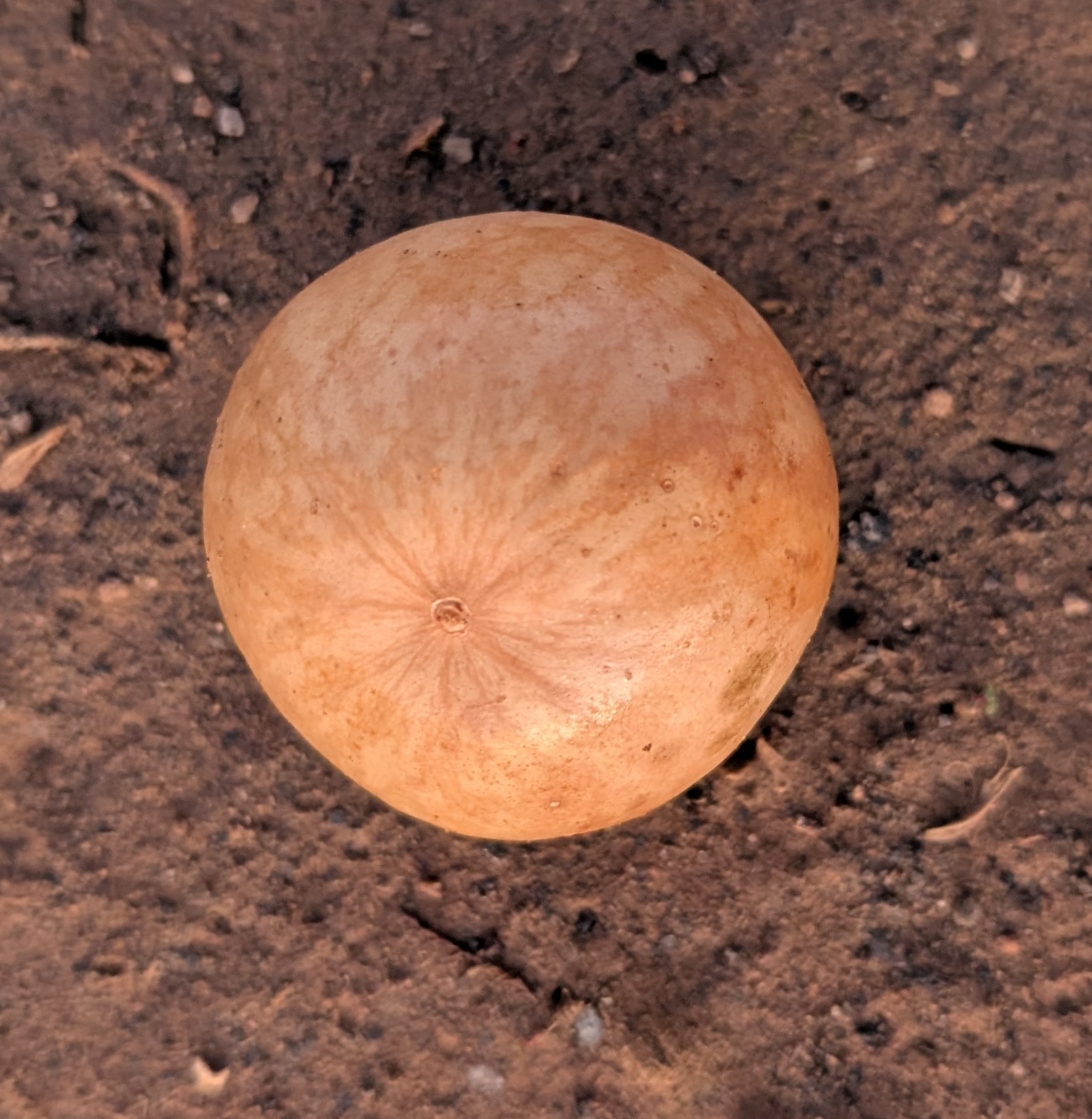
Colocynth (Citrullus colocynthis) is a sprawling desert vine native to arid regions of the Mediterranean Basin and West Asia. You will recognise it by its rough, hairy leaves and hard, yellow-green mottled gourds that dry into lightweight balls.
This plant thrives in harsh, sandy soils where few other species survive. Every part of the plant contains intense purgative compounds, making it strictly a wild specimen rather than a backyard crop.
Key Facts
- Plant Type: Viny perennial
- Native Range: Mediterranean Basin and West Asia
- Fruit: Spherical gourd, 5-10 cm wide
- Toxicity: Highly toxic to humans and pets
- Habitat: Arid dunes and desert wadis
What Is a Colocynth and Who Does It Suit?
Colocynth is a wild-growing desert perennial that suits desert botanists and researchers rather than casual foragers or home gardeners. The plant produces creeping stems that extend up to 3 m (10 ft) across barren ground.
You will encounter this vine in extreme heat zones where temperatures regularly exceed 40 °C (104 °F). It is not suited for standard gardens because its vigorous root system and toxic fruits pose hazards to livestock and children. The plant commands attention for its ability to produce fruit without summer rainfall.
How to Identify Colocynth Plants in the Wild
Colocynth is identified by its deeply lobed, rough-textured leaves and spherical fruits that measure 5 to 10 cm (2 to 4 in) in diameter.
- Leaves alternate along the stem, featuring 3 to 7 deeply cut lobes covered in coarse hairs.
- Flowers are small and yellow, with separate male and female blossoms appearing on the same vine.
- Fruits start green with pale yellow stripes, turning hard and yellow when fully ripe.
- Stems are angular, rough, and trail directly along the sand or rocks.
When cut open, the interior pulp is spongy, white, and intensely bitter. The seeds are small, smooth, and light brown.
Natural Habitat and Desert Conditions
Colocynth grows naturally in arid scrublands, coastal sand dunes, and dry wadis across North Africa, the Middle East, and parts of South Asia. It requires full sun and absolute minimal moisture to thrive.
The root system features a deep taproot that penetrates several metres into the ground to reach subterranean moisture. Soil conditions must be coarse, sandy, and exceptionally well-drained. Any standing water or heavy clay soil causes the roots to rot rapidly.
Desert Ecology and Pollination
Colocynth plays a specific role in arid ecosystems by providing sustenance and shelter for desert-adapted insects. Solitary bees and desert ants are the primary pollinators for the yellow blossoms.
While mammalian herbivores generally avoid the fresh leaves and bitter fruit due to toxic cucurbitacins, certain desert rodents consume the seeds. The dried shells of the fruit sometimes serve as natural shelters or nesting sites for small ground-dwelling invertebrates after the pulp decays.
Traditional Uses and Homeopathy
Colocynth has a long history in traditional pharmacopoeias and modern alternative preparations. Traditional healers historically used extracted fruit pulp as a powerful purgative and cathartic agent.
In modern homeopathy, highly diluted preparations such as colocynthis 30 and colocynthis 200 are sold for abdominal cramps and neuralgic pains. Because raw plant material contains potent cucurbitacin glycosides, historical extraction led to frequent poisonings when doses were miscalculated.
Similar Desert Species to Colocynth
Colocynth shares its arid habitat with several other viny members of the Cucurbitaceae family that can cause confusion.
- Citrullus lanatus (wild watermelon) has similar lobed leaves but features sweet edible fruit pulp and softer stems.
- Cucumis prophetarum (prophet’s cucumber) produces smaller, spiny fruits that rarely exceed 4 cm (1.5 in) across.
- Bryonia dioica (white bryony) features red berries and palmate leaves, preferring temperate scrub rather than desert dunes.
Checking the smooth rind and intense bitterness of the pulp separates true colocynth from its edible or less toxic relatives.
Frequently Asked Questions
What is a colocynth?
Colocynth is a wild desert vine producing bitter, spherical gourds known scientifically as Citrullus colocynthis.
Is colocynthis safe?
No, raw colocynth is highly toxic and causes severe vomiting, diarrhea, and kidney irritation when ingested.
How to use colocynthis 30 and colocynthis 200?
Colocynthis 30 and 200 are homeopathic remedies prepared as ultra-diluted pellets, typically taken under the tongue according to specific homeopathic guidelines rather than herbal recipes.
What are the homeopathy uses for colocynthis?
Homeopathic practitioners traditionally recommend colocynthis dilutions for spasmodic abdominal colic, shooting neuralgic pains, and cramping pains relieved by bending double.
How do you pronounce colocynth?
Colocynth is pronounced KOLO-sinth, with the stress placed firmly on the first syllable.
Information about traditional or historical uses is provided for educational interest only and is not medical advice. Do not use any plant to treat a condition without speaking to a qualified professional.
Sources & Verification
Taxonomy and distribution are checked against the databases below. Care guidance is written for cultivated species only and reviewed by our editor. How We Build Plant Profiles →
