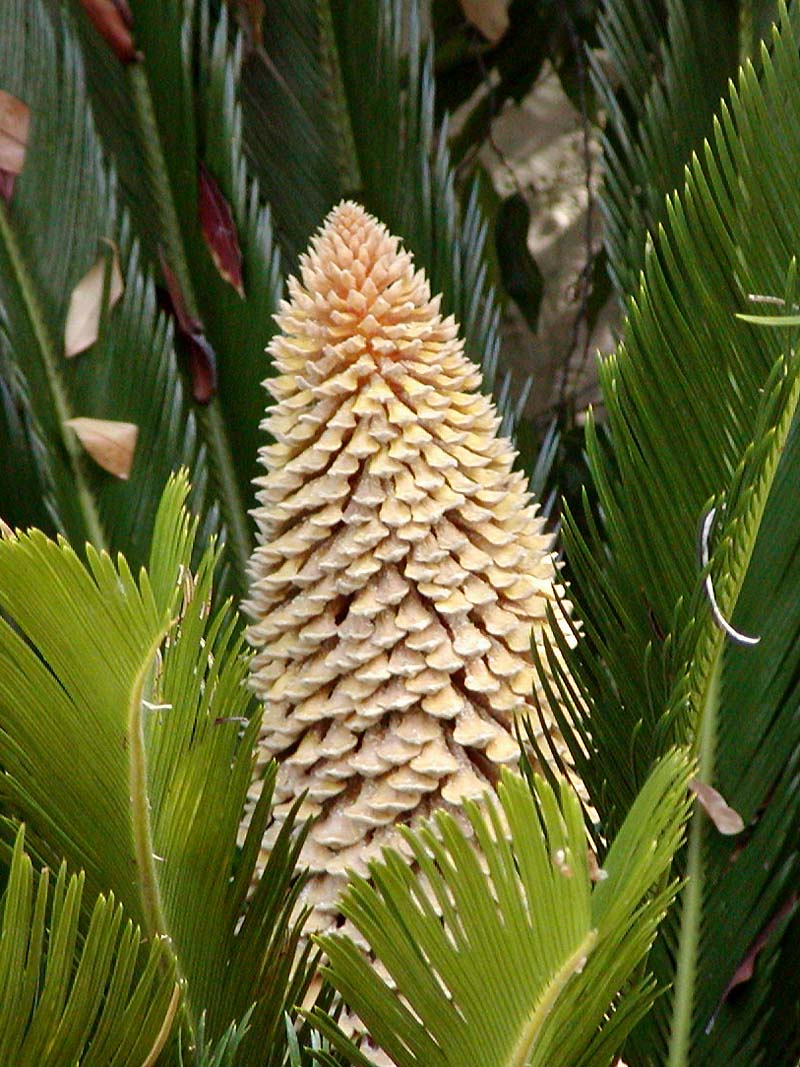
Queen sago (Cycas circinalis) is an ancient gymnosperm tree native to the Western Ghats of southern India and coastal forests of Sri Lanka. It forms a thick woody trunk topped by a rosette of bright green, pinnate leaves.
All plant parts contain dangerous neurotoxins including cycasin, requiring extreme care around pets and livestock. This species thrives in warm, frost-free climates and tolerates prolonged dry periods once established.
Key Facts
- Plant Type: Evergreen cycad tree
- Native Range: Southern India and Sri Lanka
- Hardiness: USDA Zones 10 to 11
- Height: 3 to 6 m (10 to 20 ft)
- Toxicity: Severe toxicity to humans, dogs, and livestock
- Water: Low to moderate; let soil dry between waterings
Landscape Fit and Requirements for Queen Sago
Queen sago thrives in warm USDA hardiness zones 10 to 11, making it suitable for frost-free coastal gardens and warm climate landscapes. It grows at a rate of 3 to 5 cm (1 to 2 in) per year, filling structural landscape spaces without quickly outgrowing its position.
This cycad suits large landscape beds, courtyard focal points, and dry shade gardens. Because of its large thorn-tipped fronds and toxic seeds, position it away from high-traffic footpaths and children’s play areas.
Identifying Queen Sago Foliage and Form
Queen sago produces an upright trunk 3 to 6 m (10 to 20 ft) tall with a dense canopy of leaves reaching 1.5 to 2.5 m (5 to 8 ft) in length. The leaves are pinnate with 80 to 100 pairs of bright green leaflets attached along a main central stalk.
Unlike other cycads, the leaflets of Cycas circinalis are flat and relatively soft to the touch when young. Key structural traits include:
- Trunk: Cylindrical trunk measuring 20 to 40 cm (8 to 16 in) in diameter with diamond-shaped leaf scars
- Leaflets: Flat, lanceolate leaflets measuring 20 to 30 cm (8 to 12 in) long with smooth margins
- Emerging fronds: Coiled brown croziers that unroll like fern fronds during spring flushes
Choosing the Best Planting Site
Position queen sago in partial shade to full sun with soil that drains within 2 hours of heavy rain. In hot inland climates with summer temperatures above 35 °C (95 °F), afternoon shade prevents foliar yellowing and leaf margin scorching.
Choose a site with deep, sandy or loamy soil. Standing water around the root crown causes rapid root decay and stem rot during cooler winter months.
How to Plant Queen Sago Palms
Plant container-grown queen sago in a hole twice as wide as the root ball and at the exact same soil depth as its previous container. Burying the root crown too deep traps moisture against the stem tissue and triggers fungal rot.
Follow these steps when establishing a new specimen in the garden:
- Dig a hole 60 to 90 cm (24 to 36 in) wide and test drainage by filling it with water
- Mix coarse sand or horticultural grit into native clay soil to improve aeration
- Place the root ball so the upper trunk flare rests level with surrounding soil
- Backfill gently, firming the soil to eliminate air pockets around fibrous roots
- Water thoroughly with 15 to 20 L (4 to 5 gal) of water to settle the root zone
Watering and Feeding Schedule
Water deeply once every 10 to 14 days during active growth, allowing the top 5 cm (2 in) of soil to dry completely. Established specimens possess high drought tolerance due to their thick trunk tissues.
Apply a slow-release palm fertilizer containing an 8-2-12 ratio twice per year, once in early spring and once in mid-summer. Ensure the fertilizer formulation includes magnesium and manganese to prevent yellow leaf speckling.
Pruning Queen Sago Fronds
Prune only brown, completely dead leaves by cutting them within 2 cm (0.8 in) of the trunk base. Removing yellow or discolored fronds prematurely deprives the trunk of stored potassium reserves, forcing yellowing onto upper foliage.
Sterilize hand pruners or folding saws with a 10% bleach solution before trimming. Cut clean across the petiole base without nicking adjacent trunk bark.
Propagating Cycas circinalis from Seeds and Offsets
Propagate queen sago by harvesting ripe seeds in autumn or detaching basal offsets during early spring. Seeds require hand pollination or natural insect vectors to form viable embryos.
To propagate from basal offsets (pups), follow these steps:
- Sever the offset from the main trunk using a sharp, disinfected knife
- Allow the cut surface to dry in a shaded area for 5 to 7 days to form a callous
- Pot the offset into a free-draining mix of equal parts perlite and coarse sand
- Water sparingly until new roots emerge, typically within 8 to 12 weeks
Queen Sago Flower Cones and Seeds
As a dioecious gymnosperm, queen sago does not produce true flowers, forming large male pollen cones or female megasporophylls instead. Cones emerge from the center of the leaf crown in late spring once plants reach 10 to 15 years of age.
Male cones grow up to 30 to 50 cm (12 to 20 in) tall, emitting a pungent scent to attract pollinating insects. Female plants produce a cluster of buff-colored, feathery leaves called megasporophylls that hold large, oval seeds measuring 4 to 5 cm (1.5 to 2 in) across.
Winter Care and Frost Hardiness
Queen sago suffers foliar damage at temperatures below -2 °C (28 °F) and requires physical protection during freeze events. Prolonged temperatures below -5 °C (23 °F) kill the growing apex and stem tissue.
Wrap the upper trunk and crown with frost cloth or burlap prior to severe cold snaps. Reduce watering to once per month throughout winter to keep roots dry while the plant is dormant.
Queen Sago Pests and Diseases
Cycad aulacaspis scale and root rot caused by poor drainage represent the primary threats to queen sago health. Inspect the undersides of leaflets monthly for crusty white scale insects.
Manage common pests and symptoms using targeted treatments:
- White crusting on foliage: Cycad aulacaspis scale; treat with systemic insecticide and horticultural oil spray
- Yellowing lower fronds: Manganese or potassium deficiency; apply balanced palm micronutrient fertilizer
- Soft stem base: Phytophthora root rot from overwatering; drench with fungicide and reduce irrigation
Companion Plants for Cycas circinalis
Combine queen sago with companion plants that share its warm temperature requirements and well-drained soil preferences. Its upright trunk habit pairs well with low groundcovers and contrasting foliage textures.
Effective companion choices include:
- King Sago (Cycas revoluta) for contrasting compact leaf structure
- Cardboard Cycad (Zamia furfuracea) for low, horizontal foliage layers
- Queen Palm (Syagrus romanzoffiana) to create an overarching canopy layer
- Saw Palmetto (Serenoa repens) for fan-shaped textural contrast
Frequently Asked Questions
What is the difference between King Sago and Queen Sago?
Queen sago (Cycas circinalis) grows taller up to 6 m (20 ft) and features flat, soft green leaflets. King sago (Cycas revoluta) remains shorter under 3 m (10 ft) with stiff, dark green leaflets that roll inward at the margins.
What is the difference between Queen Palm and Sago Palm?
Queen palm (Syagrus romanzoffiana) is a fast-growing true palm with feathery fronds, growing up to 15 m (50 ft). Queen sago (Cycas circinalis) is a slow-growing gymnosperm cycad that rarely exceeds 6 m (20 ft).
What are queen sago powder and flour used for?
Historically in southern India, starch extracted from the stem pith and seeds of Cycas circinalis was processed into flour or powder. However, raw parts contain potent cycasin neurotoxins, requiring extensive washing and drying before any traditional consumption.
Are queen sago fruits edible?
No, queen sago produces toxic seeds, not true botanical fruit. Raw seeds contain high concentrations of cycasin and BMAA toxins, which cause severe neurological damage and liver failure if ingested.
How fast does queen sago grow?
Queen sago grows slowly, adding roughly 3 to 5 cm (1 to 2 in) of height and one new flush of leaves per year under optimal conditions.
Information about traditional or historical uses is provided for educational interest only and is not medical advice. Do not use any plant to treat a condition without speaking to a qualified professional.
Sources & Verification
Taxonomy and distribution are checked against the databases below. Care guidance is written for cultivated species only and reviewed by our editor. How We Build Plant Profiles →
- Kew Plants of the World OnlineTaxonomic baseline for Cycas circinalis
- IUCN Red List of Threatened SpeciesEndangered assessment details
- University of Florida IFAS ExtensionCycad landscape care and pest guidance
- GBIF — Global Biodiversity Information Facilitytaxonomy, synonyms, occurrence records
- Wikipediageneral reference