
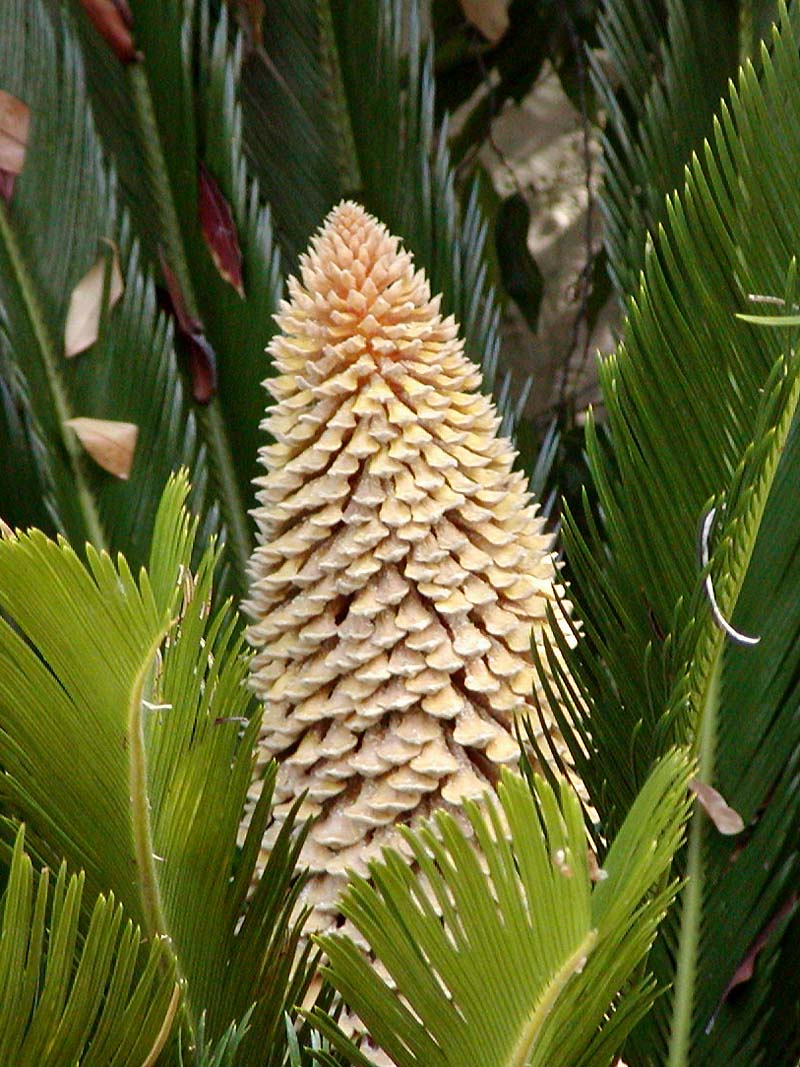
Sago palm (Cycas revoluta) is an ancient, slow-growing cycad native to southern Japan and the Ryukyu Islands. It features a thick trunk wrapped in fibrous leaf bases and topped with a whorl of stiff, glossy fronds.
Despite its common name, this species is not a true palm but a gymnosperm that requires high light and sharp soil drainage to survive indoors. All plant parts contain cycasin, making it severely poisonous to household pets.
Key Facts
- Light: Bright indirect to 4 hours direct sun
- Water: Allow top 75% of soil to dry
- Growth rate: Slow, 1–3 new fronds yearly
- Toxicity: Severe toxicity to dogs, cats, humans
- Hardiness: USDA zones 8–11
Is Sago Palm Easy to Grow Indoors?
Sago palm is manageable indoors if you provide bright light and avoid overwatering. Its compact footprint and slow growth rate mean it remains in the same pot size for several years without root binding.
Because it produces only one flush of leaves annually, physical damage to existing fronds takes a long time to grow out. It fits home environments with south-facing windows, wide plant stands, or warm sunrooms where winter temperatures remain above 10 °C (50 °F).
Sago Palm Appearance and Identification
A mature potted sago palm reaches 60 to 150 cm (2 to 5 ft) in height with a central trunk up to 20 cm (8 in) wide. Stiff, dark green fronds measuring 50 to 120 cm (20 to 47 in) long arch outward in a symmetrical crown.
Key identification traits include:
- Trunk: Covered in persistent, rough leaf bases and dark brown fibers
- Leaflets: Narrow, sharp-tipped, with edges that roll slightly downward (revolute)
- Frond structure: Rigid, feather-like pinnate leaves emerging from a central growing tip
- Root system: Thick taproots paired with specialized coralloid roots that fix nitrogen
How Much Light Does Sago Palm Need?
Sago palms require 4 to 6 hours of bright light daily to maintain firm leaf structure and vibrant green coloration. Indoors, place the container within 1 m (3 ft) of an unobstructed south- or west-facing window.
In low light conditions, newly emerging fronds stretch out long, weak, and pale green, a condition that cannot be reversed once the foliage hardens. In hot outdoor summer climates, provide light afternoon shade to prevent scorch marks on the lower fronds.
Sago Palm Care and Watering Schedule
Water sago palm containers only when the top 75% of the potting mix dry completely. Indoors, this typically means watering every 2 to 3 weeks during summer and every 4 to 6 weeks in winter.
When watering, observe these steps:
- Pour water directly onto the soil surface until it drains freely from the base
- Empty the drainage saucer after 15 minutes to prevent standing water
- Never pour water into the central crown, as trapped moisture rots the growing tip
- Reduce frequency during rainy, overcast, or cold spells
Best Soil Mix and Planter for Sago Palms
Select a potting mix composed of 50% coarse sand or perlite mixed with cactus potting soil to ensure rapid drainage. Standard potting soils retain too much moisture around the fibrous root system, leading to stem rot.
Choose heavy unglazed terracotta pots with generous bottom drainage holes. Terracotta allows moisture to evaporate through the container walls, keeping the root zone dry. Select a pot only 5 to 8 cm (2 to 3 in) wider than the root ball, as excess soil volume stays wet for too long.
Humidity and Plant Food Requirements
Apply a balanced liquid fertilizer twice per year in May and July diluted to half strength. Sago palms grow slowly and consume minimal nutrients compared to standard tropical foliage plants.
They tolerate ambient household humidity levels of 30% to 50% without requiring misting or humidifiers. Look for fertilizers containing micronutrients, as a deficiency in manganese (Mn) causes yellow spotting on young foliage.
How to Propagate Sago Palm from Pups and Seeds
Propagate sago palm by removing 5 to 10 cm (2 to 4 in) lateral offsets (pups) from the base of mature trunks in spring.
Follow this procedure to plant offsets successfully:
- Slice the pup off the main trunk using a sharp, clean knife
- Allow the cut base of the pup to dry and callus in a shady area for 7 days
- Insert the lower third of the pup into a pot filled with clean sand or perlite
- Keep the potting medium slightly damp at 21–24 °C (70–75 °F) until roots form in 3 to 6 months
Growing from seeds requires manual pollination between male and female plants, with seed germination taking up to 6 months.
Troubleshooting Sago Palm Care and Yellow Leaves
Yellowing leaves on a sago palm indicate overwatering, dark placement, or natural frond aging. Inspect the position of the yellowing fronds to pinpoint the exact issue.
- Bottom leaves turning yellow: Natural aging if limited to 1 or 2 outer fronds; cut them off near the trunk
- New crown leaves turning yellow: Overwatering or poor soil drainage; let soil dry completely before watering
- Yellow speckling across foliage: Manganese deficiency; apply a micronutrient plant food spray
- Soft, spongy trunk: Root rot from stagnant water; unpot the plant, cut away black mushy roots, and repot in dry sand mix
Is Sago Palm Toxic to Dogs and Cats?
Every part of Cycas revoluta contains toxic cycasin compounds that cause severe poisonings and liver failure in pets. The reddish seeds contain the highest concentration of toxins and are attractive to dogs due to their size and shape.
Clinical signs of ingestion include severe vomiting, diarrhea, dark stools, drooling, weakness, seizures, and liver damage developing within 15 minutes to 12 hours. If you suspect a pet chewed any part of a sago palm, contact an emergency veterinarian immediately, as mortality rates exceed 50% without fast intervention.
Sago Palm Cones, Fruit, and Seeds
Sago palms are dioecious, producing either male or female reproductive structures only after reaching 15 to 20 years of age. Flowers appear in late spring from the central growing crown.
Male plants form a tall, cone-shaped golden structure measuring 30 to 60 cm (12 to 24 in) tall that produces pollen. Female plants form a rounded, feathery yellow-tan basket that holds bright orange-red seeds about 3 to 4 cm (1.2 to 1.5 in) long once pollinated. Potted indoor specimens rarely bloom due to light limitations.
Frequently Asked Questions
Are sago palms easy to care for indoors?
Yes, sago palms are simple to care for indoors if given strong light and sparse watering. Their extremely slow growth rate means they need minimal pruning and rare repotting.
Why are my sago palm leaves turning yellow?
Sago palm leaves turn yellow primarily from overwatering, low light levels, or manganese deficiency. Older lower fronds also yellow naturally as part of the plant's normal growth cycle.
Is sago palm toxic to dogs?
Yes, sago palm is exceptionally toxic to dogs, cats, and humans because all parts contain cycasin. Ingesting even a single seed can lead to acute liver failure and death.
Can sago palms grow in pots outdoors?
Yes, sago palms grow very well in pots outdoors in USDA zones 8 through 11 or as summer outdoor plants in cooler climates. Move pots indoors before nighttime temperatures fall below 10 °C (50 °F).
How often should you water a sago palm in a pot?
Water a potted sago palm every 2 to 3 weeks during spring and summer, allowing the top 75% of the soil mix to dry out. In winter, reduce watering frequency to once every 4 to 6 weeks.
Sources & Verification
Taxonomy and distribution are checked against the databases below. Care guidance is written for cultivated species only and reviewed by our editor. How We Build Plant Profiles →
