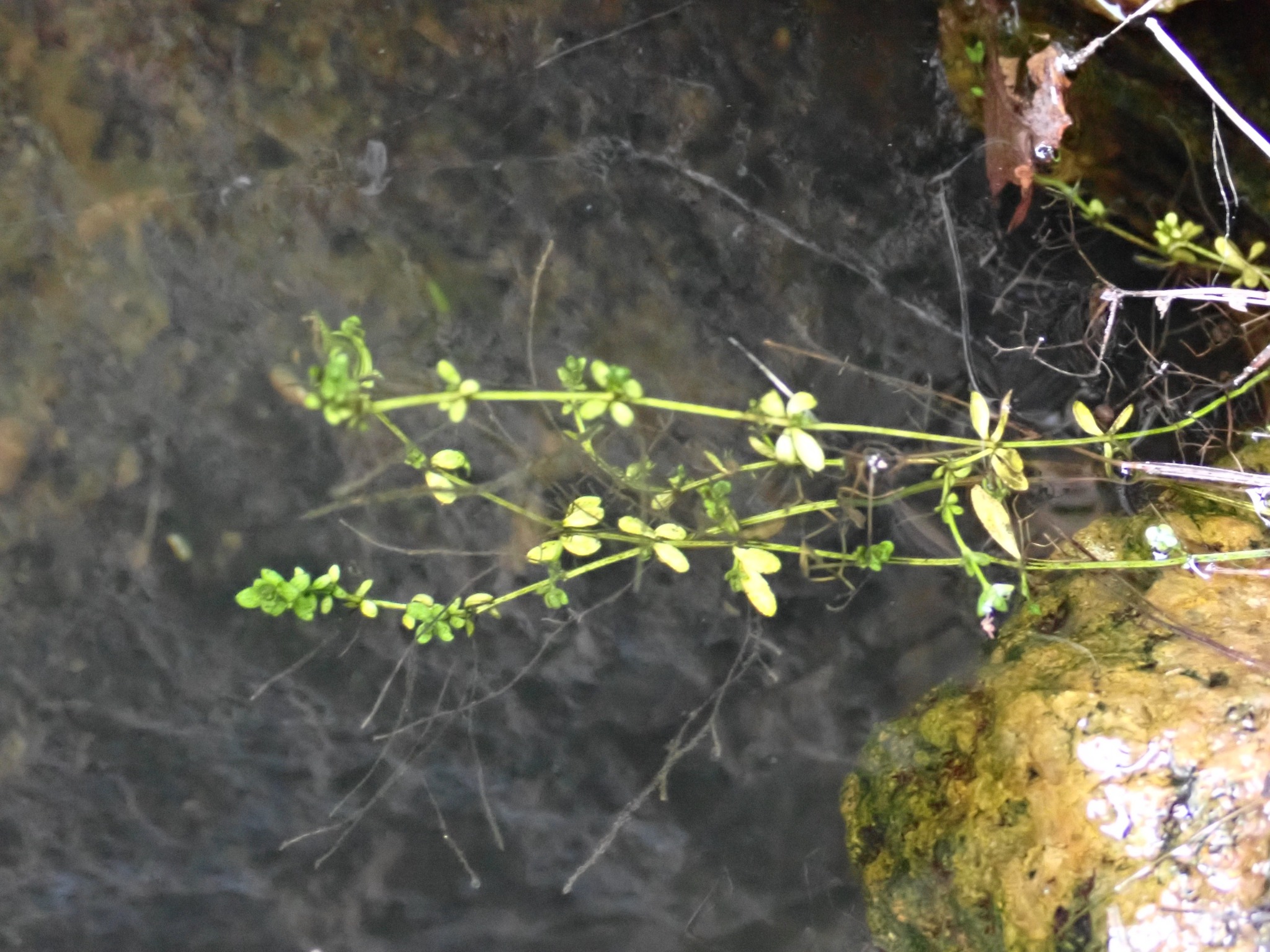
Cleavers (Galium aparine) is a sprawling, annual herb in the Rubiaceae family, widely recognised for the tiny, hooked hairs that allow it to cling to clothing and animal fur. It is a common, vigorous grower that thrives in hedgerows, gardens, and disturbed soils across temperate regions.
You will most likely encounter this plant as an opportunistic scrambler that rapidly colonises damp, shaded sites during the spring and early summer. It is not cultivated as an ornamental, though it plays a distinct role in local ecosystems.
Key Facts
- Type: Annual herbaceous climber
- Identification: Leaves in whorls of 6-8
- Sticky factor: Hooked hairs (trichomes) on stems and leaves
- Habitat: Hedgerows, gardens, and moist, fertile soil
- Range: Native to Eurasia, widely naturalised elsewhere
How to Identify Cleavers
You can identify Cleavers by its whorls of 6 to 8 narrow leaves arranged around a square, scrambling stem. The entire plant is covered in minute, downward-pointing hooked hairs that make it feel sticky to the touch.
- Stems grow 30–120 cm (12–47 in) long, often tangling with other vegetation.
- Leaves are lance-shaped, typically 1–4 cm (0.4–1.6 in) long.
- Flowers are tiny, white, and star-shaped, appearing in small clusters from leaf axils.
- Fruits are small, globular, and covered in dense, hooked bristles that aid in dispersal.
Habitat and Natural Range
Cleavers prefers damp, nitrogen-rich, and shaded sites, which is why it is frequently found in hedgerows, woodland edges, and neglected garden borders. It is a highly adaptable species that thrives in disturbed soil.
The plant is native to a broad range spanning Eurasia and North Africa, though it has naturalised globally. It is commonly associated with moist, shaded environments where it can climb over surrounding shrubs and tall grasses to reach sunlight.
Ecology and Pollinators
Cleavers provides essential habitat and food sources for a variety of insects and small mammals throughout the growing season. Its presence in hedgerows supports biodiversity by providing structural cover.
- The flowers attract small bees, hoverflies, and beetles.
- The seeds are an important food source for birds, including finches.
- The dense growth provides shelter for ground-nesting insects and small garden mammals.
- It serves as a larval host for specific moth species, such as the Bedstraw Hawk-moth (Hyles gallii).
Traditional Uses and Medicinal History
Cleavers has been traditionally used in herbal medicine for centuries, though its efficacy remains largely undocumented by modern clinical standards. Historically, it was consumed as a spring tonic or used in infusions.
The plant was also used as a natural dye, with its roots capable of producing a reddish pigment similar to that of its relative, Madder (Rubia tinctorum). In the past, the dried, matted stems were sometimes used as makeshift sieves for straining milk due to their dense, interlocking structure.
How to Control Cleavers in the Garden
You can control Cleavers by pulling the plants before they set seed, which usually occurs by mid-summer. Because they are annuals, preventing seed production is the most effective way to manage their population.
- Hand-pulling is easy because the roots are shallow and fragile.
- Ensure you remove the entire plant, including the root base, to prevent regrowth.
- Clear surrounding debris to reduce the nitrogen-rich, damp conditions they prefer.
- Mulch areas where they frequently emerge to suppress seedling germination.
Similar Species to Identify
While Cleavers is distinct, it is sometimes confused with other members of the Rubiaceae family, such as Lady’s Bedstraw (Galium verum) or Hedge Bedstraw (Galium mollugo). You can tell them apart by looking at their growth habit and leaf structure.
- Lady’s Bedstraw (Galium verum) has bright yellow flowers and non-sticky foliage.
- Hedge Bedstraw (Galium mollugo) grows in clumps and lacks the aggressive, hooked hairs of Cleavers.
- Marsh Bedstraw (Galium palustre) typically inhabits wetter, boggy ground and has a much smoother, less aggressive appearance.
Frequently Asked Questions
Is Cleavers poisonous to dogs or cats?
No, Cleavers is not considered toxic to pets, though the plant's hooked hairs can sometimes cause minor mechanical irritation.
What are the benefits of the Cleavers plant?
Traditionally, Cleavers has been used in herbal medicine as a diuretic or for skin conditions, and it serves as a host plant for various insects.
How can I tell the difference between Cleavers and Lady's Bedstraw?
Cleavers has white flowers and sticky, hooked hairs, whereas Lady's Bedstraw (Galium verum) has distinct yellow flowers and lacks the sticky texture.
Why is my garden full of sticky weeds?
Your garden likely has the ideal moist, nitrogen-rich conditions that allow Cleavers to germinate and spread rapidly during the spring.
Information about traditional or historical uses is provided for educational interest only and is not medical advice. Do not use any plant to treat a condition without speaking to a qualified professional.
Sources & Verification
Taxonomy and distribution are checked against the databases below. Care guidance is written for cultivated species only and reviewed by our editor. How We Build Plant Profiles →