
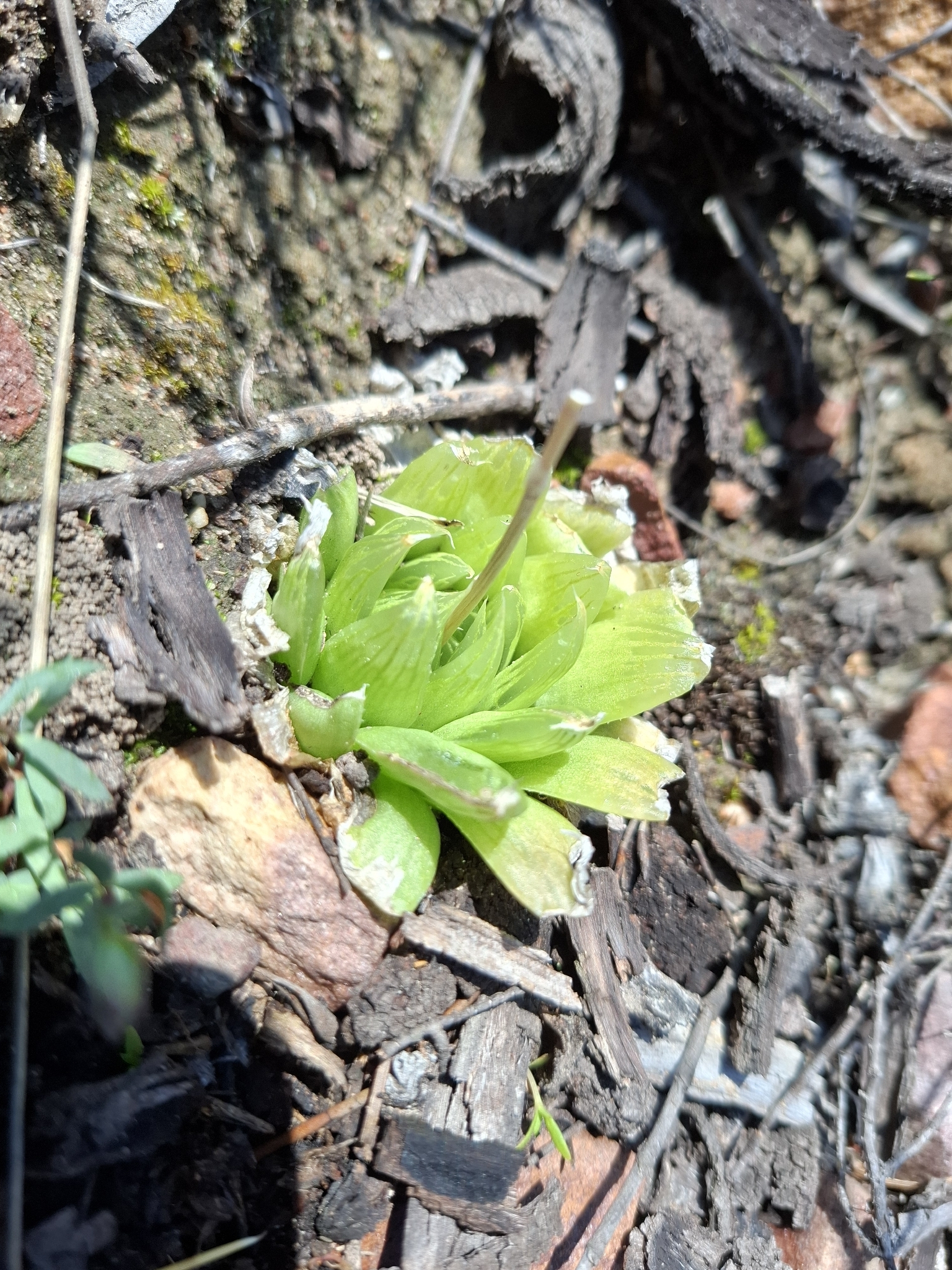
Bristle Haworthia (Haworthia cooperi) is a small, leaf-succulent perennial native to the quartz-rich hills of the Eastern Cape Province in South Africa. Its swollen, semi-translucent leaf tips act as light-harvesting windows that allow sunlight to reach chlorogenous tissues subterraneanly when buried in gravel.
This plant forms tight clusters 5-12 cm (2-5 in) tall and grows slowly indoors without outgrowing narrow windowsills. It requires bright indirect sunlight, gritty soil that drains rapidly, and a dry winter resting period to thrive.
Key Facts
- Light: Bright indirect sunlight or 4-6 hours filtered light
- Water: Soak deeply only when soil is 100% dry
- Soil: 50% inorganic grit, pumice, or coarse sand
- Temperature: 18-26 °C (65-78 °F); minimum 5 °C (41 °F)
- Toxicity: Non-toxic to cats, dogs, and humans
- Origin: Eastern Cape Province, South Africa
Living with Haworthia cooperi Indoors
Haworthia cooperi grows best on bright windowsills that receive indirect morning sunlight rather than direct mid-day rays. It fits shallow 8-10 cm (3-4 in) pots on desks, shelves, or plant stands without sprawling over surrounding furniture.
Because it expands through subterranean offsets rather than vertical branching, a single rosette slowly fills out a small pot over 2 to 3 years. You will need a container with drainage holes and a gritty potting mixture that dries quickly after watering.
Unlike sun-hungry desert cacti like the golden barrel cactus (Echinocactus grusonii), this species tolerates the lower ambient light levels typical of east-facing indoor windows.
Identifying Haworthia cooperi Features and Leaf Windows
Haworthia cooperi forms dense rosettes measuring 5 to 12 cm (2 to 5 in) tall with translucent leaf tips known as epidermal windows. The leaves are swollen, turgid, and pale blue-green, holding moisture reserves designed to endure South African droughts.
The upper surface of each leaf apex lacks opaque pigment, creating clear glass-like cells that direct light downward into internal photosynthetic layers. Fine bristles or soft hair-like teeth edge the leaf margins on many wild forms, giving rise to its common name.
- Height and Spread: Rosettes grow 5-12 cm (2-5 in) tall and 8-15 cm (3-6 in) wide.
- Leaf Structure: Softly translucent, bulbous to cylindrical, ending in a brief awn with 1-3 mm bristles.
- Root System: Thick, fleshy yellow-white taproots built to store water and pull the plant deeper into rocky quartz soil during drought.
- Growth Habit: Compact, stemless rosette clustering through basal offsets.
Haworthia cooperi Light Requirements
Provide Haworthia cooperi with 4 to 6 hours of bright, indirect sunlight daily to keep leaf tips clear without scorching the foliage. Native plants grow tucked under low shrubs or rock overhangs in the Eastern Cape, shielded from full noon sun.
An east-facing window gives gentle morning light, while south- or west-facing glass requires a sheer white curtain during summer heat spikes above 30 °C (86 °F). If light levels drop below 1,000 lux for extended periods, the central leaves stretch outward and lose their tight globular shape.
When exposed to harsh unfiltered direct sun, the transparent leaf windows change color from light green to reddish-brown or dark purple as a stress defense.
- Ideal Exposure: East-facing window sill within 0.5 m (1.5 ft) of glass.
- Grow Lights: Full-spectrum LED lights positioned 20-30 cm (8-12 in) above leaves for 12 hours daily.
- Sunstress Symptoms: Reddish-purple pigment, sunken windows, and brown leaf margins.
- Low Light Symptoms: Pale green centers, elongated leaves, and open rosette shape.
How Often to Water Haworthia cooperi
Water Haworthia cooperi only when the potting soil dries completely to a depth of 5 cm (2 in), typically every 10 to 14 days during spring and autumn. Use the soak-and-dry method by drenching the soil until water pours from the bottom drain hole, then dumping out excess standing water.
Reduce watering frequency to once every 3 to 4 weeks during mid-summer heat and winter cold when root absorption slows down. Overwatering causes moisture accumulation around the thick taproots, creating ideal conditions for fungal pathogens.
Shrinkage, concavity, or fine wrinkling on the translucent window tips signals that internal water reserves are low and the root zone needs moisture.
- Spring & Autumn: Water every 10-14 days after checking that potting medium is dry.
- Summer Heat (Above 32 °C / 90 °F): Water lightly every 21 days while the plant is semi-dormant.
- Winter Rest (10-15 °C / 50-59 °F): Water sparingly every 3-4 weeks to prevent root shriveling.
- Application Method: Direct water to the surrounding soil; avoid pouring water inside the central rosette crown.
Best Soil Mix and Potting for Haworthia cooperi
Plant Haworthia cooperi in a gritty soil mixture containing at least 50% inorganic material like pumice, perlite, or coarse quartz grit. Standard indoor potting soils hold moisture too long, causing root decay within weeks.
Mix 1 part standard cactus potting soil with 1 part pumice (3-6 mm size) and 1 part akadama or sharp coarse sand. Select shallow unglazed terracotta pots measuring 2 to 3 cm (1 in) wider than the rosette cluster to allow rapid evaporation through the container walls.
Repot every 2 years in early spring to replace compacted minerals, inspect the thick root structure, and separate crowded offsets.
Temperature and Humidity Needs for Haworthia cooperi
Keep indoor temperatures between 18 °C and 26 °C (65 °F to 78 °F) during the active growing season, with relative humidity below 50%. This species tolerates brief winter drops down to 5 °C (41 °F) provided the soil remains bone dry.
Sub-zero temperatures below 0 °C (32 °F) cause the stored water inside the transparent leaf cells to freeze, rupturing cell walls and turning the foliage into soft mush. Household humidity of 30% to 40% is suitable.
High humidity combined with low airflow encourages fungal leaf spot and stem rot. Avoid placing pots inside humid terrariums or unventilated bathrooms.
- Active Season Range: 18-26 °C (65-78 °F) from spring through autumn.
- Winter Minimum: 5 °C (41 °F) in dry substrate; shield from frost exposure.
- Target Humidity: 30-50% relative humidity; clear air circulation required.
- Air Movement: Gentle room air motion prevents lingering moisture around the low rosette base.
Propagating Haworthia cooperi Offsets and Leaves
Propagate Haworthia cooperi by removing rooted offsets from around the parent plant during spring repotting. Gently unpot the cluster and brush away substrate to locate the tissue connecting the pup to the main stem.
Sever the connection using a clean razor blade, ensuring the offshoot keeps several thick roots intact. Allow the cut ends to dry in a cool area for 48 hours to build a protective callous before planting in dry succulent grit.
Leaf propagation is possible with varieties like Haworthia cooperi var. truncata, though it takes 6 to 12 months to produce new plantlets. Gently twist a plump leaf from the stem, callous for 3 days, and rest it atop dry sand until small roots appear.
- Offset Step 1: Remove parent rosette from its pot in early spring and clean soil off roots.
- Offset Step 2: Slice offsets larger than 2 cm (0.8 in) using a sterile blade.
- Offset Step 3: Air-dry severed pups in shade for 48 hours to form callouses over cuts.
- Offset Step 4: Pot individually in dry grit; wait 7 days before applying the first drink of water.
Troubleshooting Haworthia cooperi Leaf Problems
Brown or reddish foliage on Haworthia cooperi indicates sun stress, whereas soft, yellow, translucent leaves signal root rot from overwatering. Inspect the leaf axils regularly for mealybugs (Pseudococcus longispinus), which resemble small white cotton dots.
Treat mealybug infestations by touching individual insects with a cotton swab dipped in 70% isopropyl alcohol. Deflated, wrinkled leaves mean the plant needs water or has lost its roots to soil fungi.
Test root health by gently tugging the rosette upward. If it lifts out without resistance, clip off rotten dark brown roots, let the stem base dry for 3 days, and re-root the top in dry pumice.
- Reddish-Brown Foliage: Excessive sun intensity; move 0.5 m (1.5 ft) back into indirect light.
- Yellow Soft Basal Leaves: Soil kept too wet; suspend watering and check root soundness.
- Flattened Wrinkled Windows: Prolonged underwatering or dead root system; verify soil moisture.
- White Cottony Tufts: Mealybugs in leaf crevices; dab with isopropyl alcohol immediately.
Is Haworthia cooperi Safe for Pets?
Haworthia cooperi is non-toxic to dogs, cats, and humans, as documented by the ASPCA. It contains no saponins or toxic latex compounds, making it a safer option for pet owners than aloe vera (Aloe vera) or jade plants (Crassula ovata).
Although consuming small amounts of leaf tissue causes no chemical poisoning, ingesting raw fibrous plant matter can trigger mild indigestion or vomiting in small cats and dogs. Place pots on elevated shelves to prevent pets from knocking over small containers or unearthing root systems.
Encouraging Haworthia cooperi Flowers
Haworthia cooperi flowers in late spring or early summer, producing slender peduncles 20 to 30 cm (8 to 12 in) long with small white blossoms. The thin bloom stalks rise from the center of rosettes that are at least 2 to 3 years old.
Each stalk carries 10 to 20 small, tubular white flowers marked with light green or brown central stripes on the petals. Triggering blooms requires a winter cooling period at 10-15 °C (50-59 °F) with reduced watering, followed by bright spring sunlight.
After the blossoms fade and dry out, cut the peduncle near its base using sterile snips to save energy for foliage growth and offset development.
Frequently Asked Questions
How do you care for Haworthia cooperi indoors?
Place Haworthia cooperi in bright, indirect light near an east-facing window and water only when the potting mix is dry to 5 cm (2 in). Use a gritty soil blend made of 50% pumice or sand, keeping temperatures between 18 °C and 26 °C (65 °F to 78 °F).
What is Haworthia cooperi var. truncata?
Haworthia cooperi var. truncata is a variety known for its flat, square-cut leaf tips with translucent windows. It forms compact rosettes 4-8 cm (1.5-3 in) wide and requires gritty, well-draining soil with bright indirect light.
Why is my Haworthia cooperi turning brown?
Haworthia cooperi turns brown or dark reddish-purple from sun stress caused by high direct light or heat above 30 °C (86 °F). Move the plant to filtered light, and normal green translucency will return over a few weeks.
Is Haworthia cooperi toxic to cats and dogs?
No, Haworthia cooperi is completely non-toxic to cats, dogs, and horses according to the ASPCA. It does not produce the irritating latex compounds found in euphorbia or aloe species.
How often does Haworthia cooperi bloom?
Haworthia cooperi blooms once a year in late spring or early summer after reaching 2 to 3 years of age. It grows a slender 20-30 cm (8-12 in) tall stem with small white and pale pink flowers.
How do you propagate Haworthia cooperi Ice Lantern?
Propagate Haworthia cooperi 'Ice Lantern' by separating rooted offsets from the base of the main plant during spring repotting. Allow cut root surfaces to dry for 48 hours before planting in dry gritty soil.
Sources & Verification
Taxonomy and distribution are checked against the databases below. Care guidance is written for cultivated species only and reviewed by our editor. How We Build Plant Profiles →