
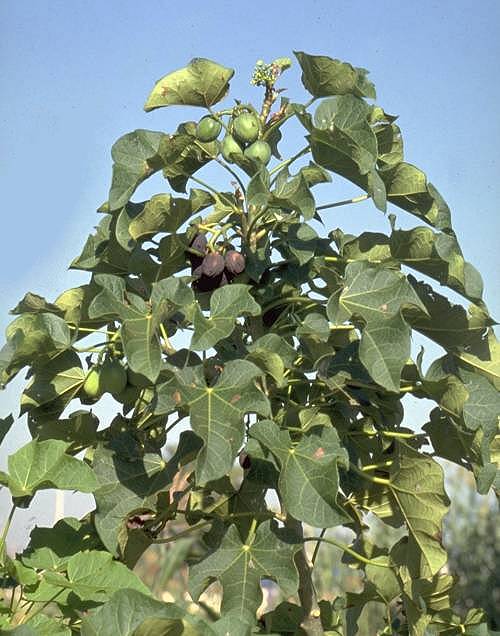
Physic Nut is a perennial deciduous shrub or small tree in the Euphorbiaceae family, native to the American tropics and now naturalised across Africa and Asia. It is widely recognised for its Jatropha curcas seeds, which contain 30-40% oil used for biodiesel production.
While often confused with the castor oil plant (Ricinus communis), this species is strictly non-edible and contains the toxin curcin. It thrives in arid regions where other crops fail, making it a common choice for living fences and erosion control in tropical climates.
Key Facts
- Toxicity: Seeds contain curcin and are highly toxic if ingested
- Light: Requires at least 6 hours of full sun daily
- Growth: Reaches 3-5 m (10-16 ft) in height within three years
- Water: High drought tolerance once the taproot is established
- Climate: Best suited for USDA hardiness zones 10 through 12
Fitting the Physic Nut into a Tropical Garden
The Physic Nut fits best in large, sunny landscapes or as a boundary hedge where its toxic nature will not pose a risk to children or pets. Because it is unpalatable to cattle and goats, it is frequently used in rural areas to protect other crops from grazing animals. This shrub is an excellent choice for stabilizing loose soil on slopes due to its deep taproot and lateral root system.
You should only plant this species if you have a tropical or subtropical environment with temperatures rarely dipping below 10 °C (50 °F). It is not suitable for indoor growth as a houseplant because it requires high light intensity and significant space to develop its woody structure. Its ability to grow in poor, gravelly soil makes it useful for land reclamation projects where more delicate species struggle.
What Does a Physic Nut Tree Look Like?
You can identify the Physic Nut by its smooth, greyish-green bark that peels in thin flakes and its large, heart-shaped leaves. The leaves are typically 10-15 cm (4-6 in) long and wide, often featuring 3 to 5 shallow lobes and arranged alternately along the stems. When any part of the plant is cut, it exudes a white, milky latex that can be irritating to the skin.
The flowers are small, greenish-yellow, and grow in clusters called cymes at the ends of branches. These develop into ellipsoid fruits that are approximately 2.5-4 cm (1-1.5 in) long. The fruit starts green, turns yellow as it ripens, and eventually dries to a dark brown or black colour, splitting into three valves to reveal three large, black, oily seeds. It is often confused with:
- Castor oil plant (Ricinus communis): Has deeply palmate leaves and spiny seed pods.
- Peregrina (Jatropha integerrima): Features bright red flowers and is grown mainly for ornament.
- Bellyache bush (Jatropha gossypiifolia): Has dark purple or bronze young foliage and smaller leaves.
Ideal Growing Conditions for Jatropha curcas
This species requires full sun exposure and well-drained soil to reach its full productive potential for seed oil. While it can survive in partial shade, seed yields will drop significantly and the plant may become leggy. It is highly adaptable to soil types, growing in everything from pH 5.0 acidic sands to pH 8.5 alkaline limestone, provided the site does not hold standing water.
Temperature is the most restrictive factor for the Physic Nut. It thrives between 20-28 °C (68-82 °F) and will drop its leaves if temperatures fall below 12 °C (54 °F). Light frosts will kill the soft green growth, though the woody base can sometimes survive a brief dip to 0 °C (32 °F) if the soil remains dry.
Sowing and Propagating Physic Nut
Propagate Physic Nut by sowing seeds 2-3 cm (1 in) deep in moist, sandy soil or by taking large woody cuttings during the dormant season. Seeds germinate within 7 to 10 days if kept at temperatures above 25 °C (77 °F). Cuttings should be at least 30 cm (12 in) long and taken from two-year-old wood for the best success rate.
If you are growing for oil production, space the plants 2-3 m (6.5-10 ft) apart to allow for lateral branch development. For a living fence, reduce the spacing to 50-100 cm (20-40 in). Plants grown from cuttings tend to flower earlier, often within six months, whereas seed-grown plants may take one to two years to produce their first significant crop.
Routine Care and Maintenance
Once established, the Physic Nut requires very little supplemental water and can survive several months of drought. During the first year, water once a week if there is no rain to help the taproot establish. Over-watering is a common mistake that leads to root rot, especially in heavy clay soils that do not drain quickly.
Apply a balanced fertilizer only if the soil is extremely nutrient-deficient, as excessive nitrogen promotes leaf growth at the expense of seed production. Pruning is necessary to maintain a manageable height and to encourage the growth of lateral branches where flowers form. Cut back the main leader at 1 m (3.3 ft) to force branching, and remove dead or diseased wood every spring.
Harvesting and Processing Seeds
Harvest the seeds when the seed capsules turn from green to yellow or yellow-brown. If you wait until the pods are completely black and dry, they may split open and drop the seeds on the ground. In most tropical regions, the main harvest occurs 4-5 months after the flowering season, though some fruit may be produced year-round.
Wear gloves during harvest to protect your skin from the irritating milky sap. After picking, remove the outer hulls and spread the black seeds in a thin layer to dry in the sun for 2-3 days. The seeds are ready for oil extraction when their moisture content drops below 7%, which prevents the oil from turning rancid during storage.
Traditional Medicinal Uses and Biofuel
The Physic Nut was traditionally used as a potent purgative, though modern medicine warns against this due to the high risk of poisoning. The sap has been used historically in folk medicine as a topical dressing for wounds and skin infections because of its antimicrobial properties. In some cultures, the leaves were boiled to create a wash for treating fevers or rheumatism.
Today, the plant is primarily a source of crude oil for biodiesel and soap manufacturing. The oil is non-edible but burns with a clear, smokeless flame, making it a traditional fuel for lamps in rural communities. After the oil is pressed out, the remaining “seed cake” is rich in nitrogen and is used as a high-quality organic fertilizer, though it remains too toxic for use as animal feed.
Common Pests and Growth Problems
The most frequent problem for Physic Nut is root rot caused by excessive moisture or poor soil drainage. If you notice the stem turning soft at the base or leaves turning yellow and dropping prematurely, reduce watering immediately. The plant is also susceptible to the scutellerid bug (Pachycoris klugii), which sucks sap from the developing fruits, causing them to wither.
Other common issues include:
- Powdery mildew: White fungal spots on leaves during humid, cool weather.
- Collar rot: Fungal infection at the soil line, often fatal to young plants.
- Termite damage: Can occur in very dry regions if the plant is already stressed.
- Leaf spot: Small brown lesions caused by Cercospora fungi during the rainy season.
Safe Handling and Toxicity Warnings
Every part of the Physic Nut is highly toxic and should never be eaten. The seeds contain curcin, a toxalbumin similar to ricin, which inhibits protein synthesis in human cells. Ingestion of just 3-5 seeds can cause severe abdominal pain, burning in the throat, and violent vomiting, which may lead to dehydration and cardiovascular collapse.
The milky latex found in the stems and leaves contains phorbol esters that act as a skin irritant. Always wear gloves and eye protection when pruning or harvesting to avoid contact dermatitis or temporary blindness if the sap enters the eyes. Ensure that any hedges grown near residential areas are clearly marked or fenced off to prevent accidental ingestion by children who might mistake the seeds for edible nuts.
Year-Round Maintenance for Physic Nut
| Spring | Apply a light layer of compost around the base. Prune back any frost-damaged tips and take cuttings for propagation when the first new leaves appear. |
|---|---|
| Summer | Monitor for pests like the scutellerid bug during the peak flowering period. Water young plants if the dry season is particularly severe to ensure fruit set. |
| Autumn | Harvest yellowing seed capsules before they dry completely. Reduce watering as the plant enters its slower growth phase or deciduous period. |
| Winter | Protect the base of the plant with mulch if temperatures are expected to drop below 10 °C (50 °F). Keep the soil dry to prevent root rot during dormancy. |
Why Is My Physic Nut Dying? Common Issues
| What you see | Likely cause | What to do |
|---|---|---|
| Yellowing leaves and soft stem base | Root rot from over-watering | Stop watering and improve soil drainage or move the plant to a drier site. |
| Shriveled or dropping fruit capsules | Sap-sucking insects | Apply neem oil or an appropriate insecticide to the developing fruit clusters. |
| Sudden leaf drop in autumn | Natural deciduous response | No action needed; the plant is entering dormancy to survive the dry or cool season. |
Physic Nut Cultivars for Oil Production
- ‘CPN’ – A high-yielding Mexican variety with lower phorbol ester content.
- ‘Ghana’ – Known for its high drought resistance and fast growth in arid soils.
- ‘Thailand’ – A cultivar bred for consistent seed size and high oil percentage.
Frequently Asked Questions
Is Physic Nut edible?
No, the Physic Nut is highly toxic and cannot be eaten. The seeds contain curcin, which causes severe gastrointestinal distress and can be fatal if ingested in large quantities.
What is the difference between Physic Nut and Castor Bean?
Physic Nut (Jatropha curcas) has heart-shaped, lobed leaves and smooth seed pods, while Castor Bean (Ricinus communis) has deeply divided, star-shaped leaves and spiny, prickly seed pods.
What is Physic Nutrition pre-workout?
Physic Nutrition is a commercial supplement brand and is not related to the Jatropha curcas plant. You should never consume any part of the Physic Nut plant as a health supplement, as it is poisonous.
What are the benefits of Physic Nut leaves?
Traditionally, the leaves were used in poultices for wounds or fevers due to their antimicrobial properties. However, they should only be used topically and with extreme caution, as the sap is a known skin irritant.
How fast does a Physic Nut tree grow?
It is a fast-growing shrub that can reach a height of 3 meters (10 ft) in its first year under ideal tropical conditions. It typically begins producing seeds within 12 to 24 months of planting.
Information about traditional or historical uses is provided for educational interest only and is not medical advice. Do not use any plant to treat a condition without speaking to a qualified professional.
Sources & Verification
Taxonomy and distribution are checked against the databases below. Care guidance is written for cultivated species only and reviewed by our editor. How We Build Plant Profiles →