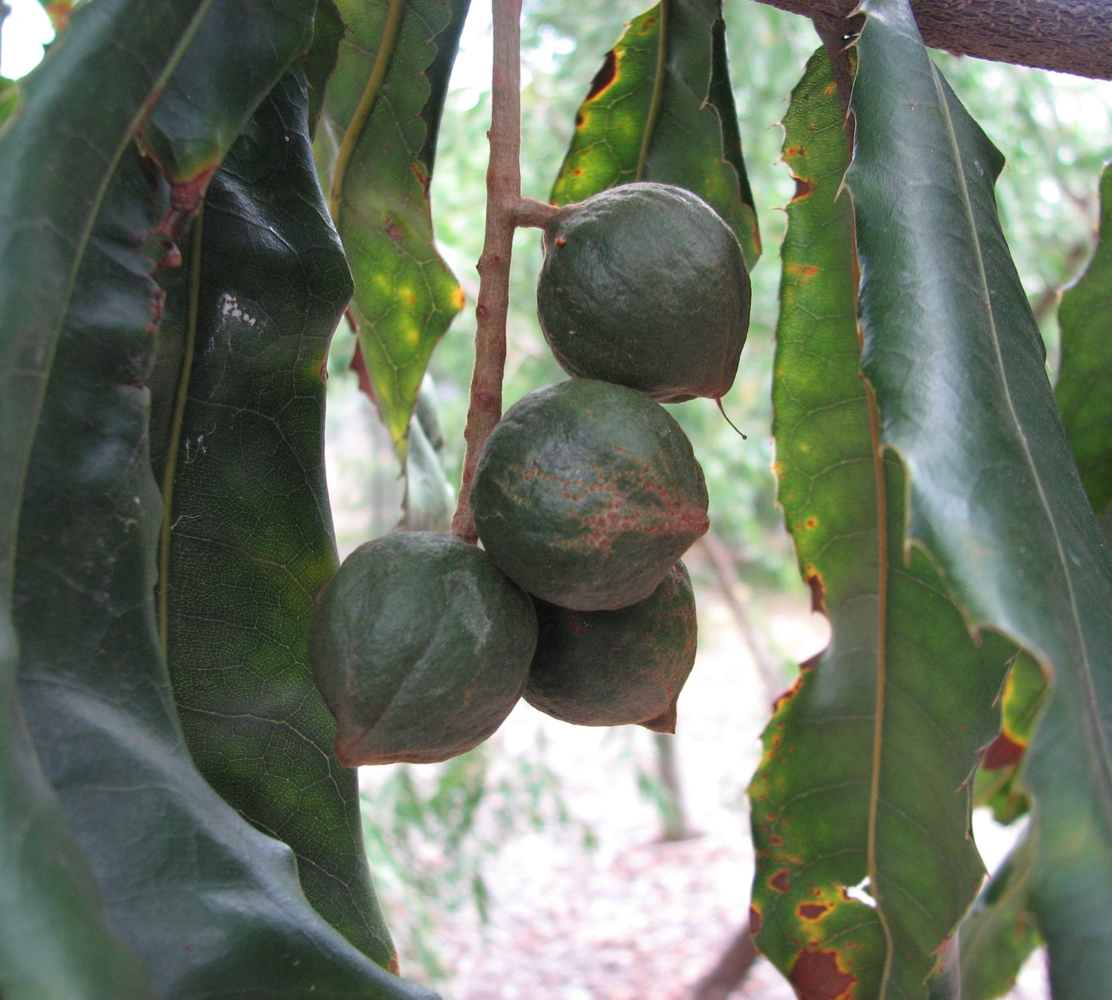
Smallfruit bushnut (Macadamia ternifolia) is a small tree native to the subtropical rainforests of southeast Queensland, Australia. It produces pink spring flowers and small, hard nuts that contain bitter cyanogenic glycosides.
While inedible compared to commercial macadamia species, seed oil listed under this botanical name is widely processed for use in moisturising skincare formulations.
Key Facts
- Native Range: Southeast Queensland, Australia
- Plant Type: Small evergreen tree
- Mature Height: 2 to 8 m (6.5 to 26 ft)
- Conservation Status: Vulnerable (EPBC Act)
- Seed Toxicity: Bitter seeds contain toxic cyanogenic glycosides
- Skincare Comedogenic Rating: 2 (low risk of clogging pores)
Understanding Smallfruit Bushnut
Smallfruit bushnut is a specialized sub-canopy tree suited strictly to native habitat preservation and scientific study rather than backyard nut production. Unlike edible commercial macadamias, this species produces bitter seeds containing cyanogenic glycosides that render raw kernels toxic to humans and domestic animals.
Its primary relevance outside Australian conservation circles stems from international cosmetics nomenclature. Cosmetic labels frequently list macadamia seed extract as Macadamia ternifolia seed oil, making it a familiar name in hair care and facial serum ingredients lists.
Identifying Macadamia ternifolia in the Field
Smallfruit bushnut grows as a small evergreen tree reaching 2 to 8 m (6.5 to 26 ft) in height with slender, dark brown branches. Leaves occur in whorls of 3 around the stems, measuring 5 to 15 cm (2 to 6 in) long with finely serrated margins when young.
In late winter to spring, hanging floral racemes measure 4 to 20 cm (1.5 to 8 in) long, carrying pink to reddish flowers. The round fruit has a green outer husk surrounding a hard, smooth shell 10 to 16 mm (0.4 to 0.6 in) in diameter containing a single bitter seed kernel.
Native Range and Growing Conditions
Native populations occur exclusively in subtropical remnant rainforests between Gympie and the Sunshine Coast hinterland in southeast Queensland. Trees inhabit moist, sheltered gullies along stream banks at elevations between 30 and 400 m (100 and 1,300 ft).
The species requires deep, acidic loam soils rich in organic matter with rainfall exceeding 1,200 mm (47 in) annually. Canopy shade protects young saplings from frost and direct scorching sun during dry spring spells.
Ecological Role and Seed Chemistry
Flowers attract native Australian bees and nectar-feeding birds during peak blooming in August and September. Small mammals such as bush rats feed on mature fruits, though the bitter compounds deter broader seed predation.
The kernels store cyanogenic glycosides that release hydrogen cyanide when cells break during mastication. This chemical defense mechanism protects developing seeds from insect larvae and mammalian herbivores in native forest habitats.
Vulnerable Status and Conservation
Smallfruit bushnut is classified as Vulnerable under Australia’s Environment Protection and Biodiversity Conservation (EPBC) Act. Fewer than 1,000 mature wild individuals remain across fragmented populations in Queensland.
Primary threats facing wild populations include:
- Land clearing for agricultural development and housing
- Invasive weed encroachment by lantana and wild tobacco
- Increased frequency and intensity of bushfires
- Low genetic diversity due to population isolation
Macadamia ternifolia Seed Oil in Skincare
Pressed oil extracted from macadamia seeds contains high concentrations of palmitoleic acid (14-22%) and oleic acid (50-60%), matching human sebum composition. Skincare products utilize refined cold-pressed oil as an emollient in facial creams, body oils, and hair conditioners.
Key properties for cosmetic application include:
- Comedogenic Rating: Rated 2 out of 5, indicating low risk of clogging pores
- Skin Benefits: Absorbs rapidly to restore moisture barrier without heavy residues
- Pregnancy Safety: Generally safe for topical use during pregnancy when refined
- Nut Allergy Risk: Topical application can trigger reactions in individuals with severe tree nut allergies
Comparing Macadamia ternifolia to Related Species
Disambiguating smallfruit bushnut from related Australian native trees requires observing leaf arrangements, seed size, and kernel taste across species.
- Smooth-shelled macadamia (Macadamia integrifolia): Grows larger to 15 m (50 ft), bears leaves in whorls of 4, and produces sweet edible nuts 20-30 mm wide.
- Rough-shelled bushnut (Macadamia tetraphylla): Features spiny leaf margins, pink flowers, and edible nuts with wrinkled shells.
- Bulburin nut (Macadamia jansenii): Endemic to Bulburin National Park, has smaller smooth leaves and creamy white flowers.
Frequently Asked Questions
Is Macadamia ternifolia seed oil safe for nut allergies?
People with known tree nut allergies should exercise caution with Macadamia ternifolia seed oil. While refined cosmetic oils remove most allergenic proteins, topical exposure can still trigger contact dermatitis or allergic reactions in sensitive individuals.
What is the comedogenic rating of Macadamia ternifolia seed oil?
Macadamia ternifolia seed oil has a low comedogenic rating of 2 on a scale of 0 to 5. This means it is unlikely to clog pores for most skin types, making it suitable for dry and combination skin.
Is Macadamia ternifolia seed oil safe during pregnancy?
Topical application of Macadamia ternifolia seed oil is considered safe during pregnancy. As a non-toxic natural emollient, it is commonly added to stretch mark creams and body lotions, though a 24-hour patch test is always recommended.
Can you eat Macadamia ternifolia nuts?
No, you should not eat wild Macadamia ternifolia nuts. Unlike commercial macadamias, the seeds contain bitter cyanogenic glycosides that release toxic hydrogen cyanide when ingested.
What are the main skin benefits of Macadamia ternifolia seed oil?
Macadamia ternifolia seed oil is rich in palmitoleic acid and oleic acid, which replenish the skin's lipid barrier. It softens dry skin, reduces trans-epidermal water loss, and absorbs quickly without leaving a heavy film.
Information about traditional or historical uses is provided for educational interest only and is not medical advice. Do not use any plant to treat a condition without speaking to a qualified professional.
Sources & Verification
Taxonomy and distribution are checked against the databases below. Care guidance is written for cultivated species only and reviewed by our editor. How We Build Plant Profiles →