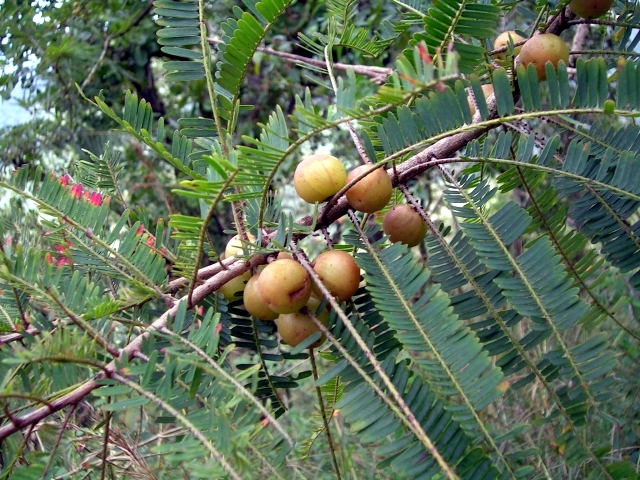
Carry me seed is a slender, erect annual herb from the Phyllanthus amarus species, widely distributed across the tropical regions of the Americas, Africa, and Asia. It is most easily recognized by the perfectly straight rows of tiny, round seed capsules that hang from the underside of its delicate, leaf-like branches.
While often treated as a common garden weed, this plant is a staple of traditional medicine systems from India to the Caribbean. It thrives in disturbed soil and can go from a seedling to a seed-producing adult in as little as six weeks.
Key Facts
- Type: Tropical annual herb
- Height: 10-60 cm (4-24 in)
- Seeds: Arranged under leaves in rows
- Habitat: Disturbed soils and roadsides
- Status: Widespread, non-threatened weed
Finding Carry Me Seed in the Wild
Carry me seed thrives in disturbed tropical soils and often appears as a common garden weed. It prefers open, sunny areas with moderate moisture, frequently colonizing roadsides, cultivated fields, and waste grounds. Because it matures quickly and produces thousands of seeds, it can rapidly cover bare earth in warm climates.
You will often find it growing in the cracks of pavements or as a persistent volunteer in vegetable patches. In the United States, it is most prevalent in the coastal plains of the Southeast, particularly in Florida and Georgia, where the humidity mimics its native tropical range.
How to Identify Phyllanthus amarus
The most distinct feature of the plant is the row of tiny, round fruits attached directly to the underside of the leaf-like branchlets. It is an erect annual herb that typically reaches a height of 30-60 cm (12-24 in). The stems are smooth and green, often branching out to create a feather-like appearance.
- Leaves: Small, oblong-elliptic, 5-15 mm (0.2-0.6 in) long, arranged in two rows.
- Flowers: Minute, pale green or yellowish, hidden under the foliage.
- Fruits: Smooth, globose capsules about 1.5-2 mm (0.06-0.08 in) in diameter.
- Stems: Slender, herbaceous, and usually hairless.
Habitat and Growing Conditions
This species is native to the tropical Americas but has naturalized across Africa and Asia. It is highly adaptable to various soil types, including sandy, loamy, and even rocky substrates. While it tolerates partial shade, it reaches its full reproductive potential in areas with direct sunlight and consistent tropical warmth.
In its native habitat, it is often found in areas receiving 1,000-2,000 mm (40-80 in) of annual rainfall. It is not frost-tolerant and will die back completely if temperatures drop below 0 °C (32 °F). The plant is particularly common in areas where the soil has been recently turned or cleared.
Ecology and Seed Dispersal
The name “carry me seed” refers to the explosive dispersal mechanism of the mature capsules. When the tiny green fruits dry out, they split open to fling seeds a short distance from the parent plant. This allows the species to spread efficiently through gardens and agricultural land, often hitchhiking in the soil of potted plants or on farm machinery.
The seeds are incredibly small, often less than 1 mm (0.04 in) long, and can remain dormant in the soil until the next rainy season. This seed bank ensures the plant returns year after year, even in areas with distinct dry seasons. Birds and small mammals may also inadvertently move the seeds through mud attached to their feet.
Traditional Medicinal Uses of Carry Me Seed
In various tropical cultures, carry me seed was traditionally used to treat jaundice and kidney stones. It earned the name “stonebreaker” due to its historical reputation for helping to dissolve or pass urinary calculi. The entire plant, including the roots and leaves, was often dried and brewed into a bitter tea or ground into a paste for skin conditions.
- Kidney health: Historically used to support the urinary tract and manage stones.
- Liver support: Traditionally applied in cases of hepatitis or jaundice.
- Digestive aid: Used in Ayurvedic medicine for stomach ailments and dysentery.
- Skin care: Pastes were applied to sores, ulcers, and itchy rashes.
Safety and Potential Side Effects
While used in traditional medicine, this plant can cause stomach upset or diarrhea if consumed in large quantities. It may also interact with medications for diabetes or high blood pressure by lowering blood sugar or heart rate unexpectedly. Pregnant or breastfeeding women were traditionally advised to avoid the plant due to its potential effects on the uterine muscles.
Because it is a wild-growing weed, there is a risk of contamination from pesticides or heavy metals if harvested from roadsides or industrial areas. The plant contains various phytochemicals, including lignans like phyllanthin, which are the subject of ongoing pharmacological research but should be handled with caution.
Conservation Status and Environment
This plant is classified as Least Concern (LC) by the IUCN in many regions due to its status as a widespread weed. It is not currently threatened and often thrives in areas where native vegetation has been cleared. In some parts of the United States, such as Florida, it is considered an introduced or invasive species that competes with local flora.
Its ability to grow in poor soils makes it a pioneer species in many tropical ecosystems. However, its dominance in agricultural fields can reduce crop yields, leading many farmers to view it solely as a nuisance rather than a resource. It does not provide significant forage for large livestock but may be eaten by small goats or sheep.
Phyllanthus amarus vs Phyllanthus Niruri
Distinguishing carry me seed from Phyllanthus niruri requires a close look at the seeds and flower stalks. While they look nearly identical to the naked eye, the seeds of P. amarus have longitudinal ribs, whereas P. niruri seeds are often described as having different textures or markings. Many herbal products labeled as one species actually contain the other due to this confusion.
Other similar species include Phyllanthus urinaria (Chamberbitter), which has rough, warty fruits, and Phyllanthus debilis, which features a more woody base. Phyllanthus tenellus is another common look-alike often found in nursery pots, but it has much longer, thinner flower stalks (pedicels) that allow the fruit to dangle further from the branch.
Frequently Asked Questions
What is carry me seed used to cure?
Traditionally, it was used to treat kidney stones, jaundice, and liver ailments. However, it is not a medically approved cure, and you should consult a doctor before using it.
Is Phyllanthus amarus the same as Phyllanthus niruri?
They are closely related but distinct species. Phyllanthus amarus is more common globally as a weed, while Phyllanthus niruri has specific botanical differences in its seed ribbing and flower stalk length.
Are there side effects to carry me seed tea?
Yes, it can cause diarrhea, stomach cramps, and may lower blood sugar levels. It should be avoided by pregnant women and those on diabetes medication.
Where does carry me seed grow?
It grows in tropical and subtropical regions worldwide, usually in disturbed soil, gardens, and along roadsides. It requires warm temperatures and moderate moisture to thrive.
How do you identify carry me seed?
Look for a small green herb with feather-like branches and a single row of tiny, round green fruits hanging directly under each branchlet.
Information about traditional or historical uses is provided for educational interest only and is not medical advice. Do not use any plant to treat a condition without speaking to a qualified professional.
Sources & Verification
Taxonomy and distribution are checked against the databases below. Care guidance is written for cultivated species only and reviewed by our editor. How We Build Plant Profiles →