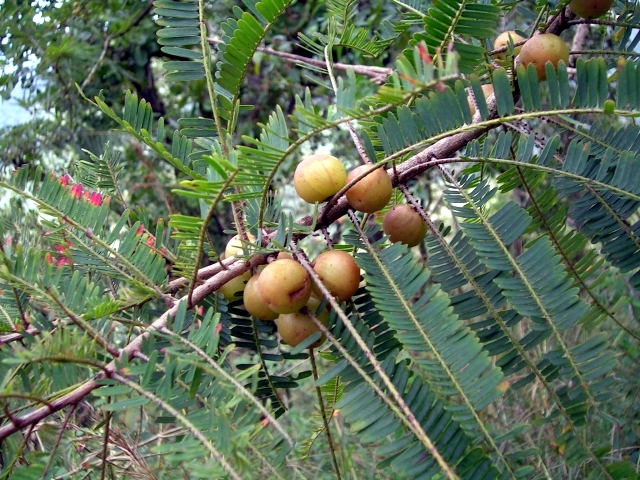
Stonebreaker (Phyllanthus niruri) is a tropical annual herb native to warm coastal areas of the Americas and Asia. It is identified by its small foliage arranged along slender stems and tiny seed capsules hanging beneath its branches.
Herbal gardeners grow Stonebreaker to harvest its leafy stems for brewing traditional tea infusions. Maintaining ambient heat above 18 °C (64 °F) and keeping the soil consistently moist are key to producing high leaf yields.
Key Facts
- Light: Full sun to light partial shade
- Water: Water when top 2.5 cm (1 in) dries
- Height: 30–60 cm (12–24 in) tall
- Life Cycle: Warm-season annual herb
- Soil pH: 5.5–7.0 well-drained loamy soil
- Toxicity: Non-toxic to pets and humans
Growing Stonebreaker in Your Herb Garden
Stonebreaker grows as a warm-season annual herb in sunny garden beds or containers. It requires frost-free conditions and reaches harvestable size within 60 to 90 days from germination.
Because it self-seeds readily in warm climates, plant it in controlled raised beds or pots if you want to prevent unwanted spreading. Gardeners in temperate climates should grow this species in containers outdoors during summer or inside under bright grow lights.
How to Identify the Stonebreaker Plant
The Stonebreaker plant forms an upright structure reaching 30 to 60 cm (12 to 24 in) tall with a spread of 15 to 30 cm (6 to 12 in). Stem branchlets resemble pinnate compound leaves, holding 15 to 30 alternate, smooth, oblong leaflets measuring 7 to 12 mm (0.28 to 0.47 in) long.
Tiny, greenish-white unisexual flowers bloom along the undersides of the branchlets from summer to early autumn. Small, smooth, spherical seed capsules measuring 2 mm (0.08 in) in diameter hang underneath the leaf petioles, giving rise to its traditional nickname seed-under-leaf.
- Height: 30–60 cm (12–24 in) upright branching habit
- Leaflets: Light green, oblong, 7–12 mm (0.28–0.47 in) long
- Flowers: Greenish-white, under 1.5 mm (0.06 in) wide, underneath leaf axis
- Fruit: Smooth round seed capsules, 2 mm (0.08 in) wide, hanging under stems
Ideal Soil and Light for Stonebreaker Herb
Stonebreaker requires 6 to 8 hours of direct sunlight daily and loose, well-draining soil with a pH between 5.5 and 7.0. Soil temperatures must remain consistently above 20 °C (68 °F) for vigorous vegetative growth.
Potted plants thrive in standard organic potting mixes amended with 20% perlite or coarse sand to prevent root saturation. Protect young stems from strong winds, as slender branches can break under heavy rain.
How to Sow Stonebreaker Seeds
Sow Stonebreaker seeds indoors 4 to 6 weeks before your last spring frost or direct-sow outdoors once soil reaches 21 °C (70 °F). Press seeds lightly onto the soil surface or cover with 3 mm (0.12 in) of fine mix, as light promotes germination.
Keep the germination medium moist at 22 to 28 °C (72 to 82 °F) until seedlings emerge. Transplant young plants outdoors once they display 4 true leaves and outdoor night temperatures remain above 15 °C (59 °F).
- Sowing Depth: 3 mm (0.12 in) or light surface press
- Germination Time: 7 to 14 days at warm temperatures
- Seedling Spacing: 15 to 20 cm (6 to 8 in) apart
How Often to Water and Feed Stonebreaker
Water Stonebreaker whenever the top 2.5 cm (1 in) of soil feels dry, keeping the root zone evenly moist without saturating it. Container-grown plants require watering every 2 to 3 days during midsummer heat.
Apply a balanced liquid organic fertilizer diluted to half-strength every 4 weeks during active growth. Avoid high-nitrogen commercial fertilizers, which stimulate excess stem length over foliage density.
Harvesting Stonebreaker Leaves and Stems
Harvest whole Stonebreaker plants or upper branches 60 to 75 days after sowing when stems reach 25 to 30 cm (10 to 12 in) tall. Cut stems early in the morning after dew dries for highest leaf aroma retention.
Harvest before heavy seed formation begins if you plan to dry the leaves for tea, as mature seeds reduce leaf density. Cut stems 5 cm (2 in) above ground level to promote secondary stem growth before autumn frosts arrive.
How Stonebreaker Tea and Leaves Are Used
Stonebreaker leaf tea is traditionally prepared by steeping 1 to 2 teaspoons of dried leaves in 250 ml (8.5 fl oz) of boiling water for 10 minutes. In South American and Ayurvedic traditions, whole plant decoctions were used for digestive comfort, gallstones, liver support, and urinary stone passage.
The herbal infusion produces a mildly bitter, astringent, earthy profile often sweetened with honey or lemon. Fresh or dried leaves are used in herbal preparations, though individuals with pre-existing medical conditions or those taking blood pressure medications should speak with a health professional before consuming herbal teas.
- Tea Ratio: 1–2 tsp dried herb per 250 ml (8.5 fl oz) hot water
- Traditional Uses: Urinary tract wellness, liver support, digestive comfort
- Flavor Profile: Herbaceous, astringent, mildly bitter
Pest and Disease Prevention for Stonebreaker
The main cultural issue with Stonebreaker is damping off in cool, waterlogged seedling soil. Keep soil warm above 20 °C (68 °F) and avoid overwatering to prevent root decay.
Inspect leaf undersides regularly for spider mites (Tetranychus urticae) or cotton aphids (Aphis gossypii) during hot, dry weather. Treat outbreaks with direct applications of insecticidal soap or neem oil spray.
- Damping Off: Stem collapses at soil line; increase air movement and heat
- Spider Mites: Fine webbing under leaves; rinse foliage with warm water
- Powdery Mildew: White dusting on leaves; avoid overhead leaf watering
Drying and Storing Stonebreaker Leaves
Store dried Stonebreaker leaves in an airtight glass jar in a dark cabinet for up to 12 months. Ensure the leaves are completely crisp before packaging to prevent mold development.
To dry fresh cuttings, bundle 5 to 8 stems together with twine and suspend them upside down in a warm, dark, well-ventilated room for 7 to 10 days. Strip the dried leaves away from stiff fibrous stems before storing.
Frequently Asked Questions
Is Stonebreaker good for kidney stones?
Stonebreaker, known in traditional South American herbalism as chanca piedra, was historically used to support kidney stone clearance. Phytochemical research indicates compounds in the plant may hinder crystal aggregation, but medical treatments for kidney stones must be directed by a doctor.
How do you make Stonebreaker tea?
Steep 1 to 2 teaspoons of dried Stonebreaker leaves in 250 ml (8.5 fl oz) of freshly boiled water for 10 minutes, then strain. Add honey or lemon juice to balance its naturally bitter taste.
How do you take Stonebreaker leaves?
Stonebreaker leaves are most commonly taken as a hot tea infusion, liquid tincture, or dried encapsulated powder. Fresh whole stems can also be simmered in water as a traditional herbal decoction.
Is Stonebreaker good for liver health?
Traditionally, Stonebreaker was used in Ayurvedic and South American herbal practices to support liver function and digestion. Modern studies have documented antioxidant properties in its leaf extract, though clinical research remains ongoing.
How do you tell Stonebreaker apart from chamberbitter?
Stonebreaker has smooth seed capsules attached by tiny individual stalks hanging below its stems. Chamberbitter (Phyllanthus urinaria) features bumpy, stalkless seed capsules attached directly along the undersides of its leaves.
Information about traditional or historical uses is provided for educational interest only and is not medical advice. Do not use any plant to treat a condition without speaking to a qualified professional.
Sources & Verification
Taxonomy and distribution are checked against the databases below. Care guidance is written for cultivated species only and reviewed by our editor. How We Build Plant Profiles →