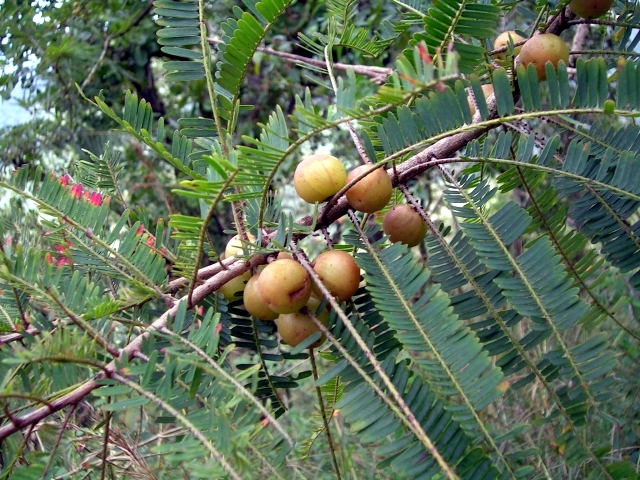
Otaheite gooseberry (Phyllanthus acidus) is a tropical fruit tree in the Phyllanthaceae family, recognized by its clusters of pale yellow, star-shaped berries. It is often confused with the Indian gooseberry (Phyllanthus emblica), but the Otaheite variety has larger, more deeply ribbed fruit and broader, ovate leaves.
You will find this tree producing fruit directly on its woody branches in a display called cauliflory. It thrives in humid environments where temperatures rarely drop below 10 °C (50 °F), making it a staple in Southeast Asian and Caribbean gardens.
Key Facts
- Water: keep soil consistently moist during fruiting
- Light: requires at least 6 hours of full sun daily
- Soil: prefers acidic to neutral, well-drained loams
- Height: reaches 2-9 m (6-30 ft) at maturity
- Fruit: harvest when pale yellow and crisp
Is the Otaheite Gooseberry Right for Your Garden?
Growing an Otaheite gooseberry is best suited for those in USDA zones 10 through 11 who have space for a medium-sized tree. You should choose this species if you enjoy tart, acidic fruits used in preserves rather than sweet, fresh-eating berries. It works as a specimen tree in a tropical garden or can be kept in a large container for the first few years before being transplanted.
This tree is a heavy producer and can drop a significant amount of fruit, so place it away from paved walkways or patios to avoid a mess. It is a choice for gardeners who want a fast-growing shade provider that also offers a harvest. If your region experiences frost, you will need a greenhouse or a large indoor space to protect it during the winter months.
- Ideal for coastal gardens in Florida, Hawaii, or Southern California
- Suits gardeners who make their own jams, chutneys, and pickles
- Requires a frost-free environment year-round for fruit production
Identifying Phyllanthus acidus by Leaf and Fruit
You can identify Otaheite gooseberry by its alternate, ovate leaves that grow in two ranks along thin, deciduous branchlets. These leaves measure 2-8 cm (0.8-3 in) long and give the tree a feathery, compound appearance despite being simple leaves. The bark is light grey and relatively smooth, while the flowers appear in small, reddish clusters directly on the older wood.
The fruit is the most distinctive feature, appearing as 6-8 ribbed drupes about 1-2.5 cm (0.4-1 in) in diameter. They transition from green to a waxy, pale yellow or nearly white color when ripe. Each fruit contains a single hard stone that is difficult to separate from the crisp, juicy, and very sour flesh. Unlike the smooth fruit of the Indian gooseberry (Phyllanthus emblica), these are distinctly star-shaped when viewed from the end.
Expected Height and Spread of the Gooseberry Tree
The Otaheite gooseberry typically reaches a mature height of 2 to 9 meters (6 to 30 feet) depending on local soil quality and pruning habits. In its native tropical habitat, it often leans toward the taller end of the spectrum, while in garden settings, it is usually kept at a manageable 4-5 meters (13-16 feet). The canopy is generally upright and compact, with a spread of 2-4.5 meters (6-15 feet).
Because the growth rate is relatively fast, you may see a young sapling reach several meters in just a few seasons. The wood is somewhat brittle, so the tree maintains a relatively narrow profile compared to wider-spreading tropical fruit trees like the mango (Mangifera indica). Regular pruning can keep the tree at a height that allows for easy hand-harvesting of the fruit clusters.
Choosing the Best Planting Site
Select a location that receives at least six to eight hours of direct sunlight every day to ensure maximum fruit production. While Otaheite gooseberry can tolerate partial shade, the fruit yield will be significantly lower and the tree may become leggy. A site with protection from strong winds is preferable, as the brittle branches can snap during heavy storms or high-wind events.
The soil at the site must be well-draining, as the roots are prone to rot in standing water. It performs best in loamy or sandy soils with a slightly acidic to neutral pH. If your garden soil is heavy clay, you should amend it with organic matter or plant the tree on a slight mound to improve drainage. Avoid sites near septic lines or structures, as the root system, while not aggressive, still needs space to expand.
How to Plant Your Gooseberry Tree
When planting, dig a hole twice as wide as the root ball and just as deep to encourage lateral root growth. You should avoid burying the trunk deeper than it was in its original nursery container, as this can lead to stem rot. Fill the hole with a mix of native soil and aged compost to provide a nutrient boost for the young sapling.
Once the tree is in the ground, water it thoroughly to settle the soil and remove air pockets around the roots. Applying a 5-10 cm (2-4 in) layer of organic mulch around the base will help retain moisture and suppress weeds. Ensure the mulch is kept a few centimeters away from the trunk itself to prevent fungal issues. For the first few months, you must monitor the soil moisture closely to help the tree establish its root system.
- Plant during the early spring or the start of the rainy season
- Space multiple trees at least 4 meters (13 feet) apart
- Staking may be necessary for young trees in windy areas
Watering and Fertilizing for Best Yield
You should water your Otaheite gooseberry two to three times per week during the dry season to keep the soil consistently moist. While the tree can survive short periods of drought once established, a lack of water will cause the developing fruit to shrivel and drop prematurely. During the rainy season, you can reduce or stop supplemental watering as long as the soil does not become waterlogged.
Fertilize the tree three times a year—typically in early spring, mid-summer, and late autumn—using a balanced fruit tree fertilizer. A 10-10-10 NPK ratio works well for general growth, but you can use a formula with higher potassium to encourage better fruit quality. Avoid heavy nitrogen applications late in the year, as this can stimulate soft new growth that is more susceptible to pests and cold damage.
Pruning Techniques for Fruit Production
Prune your gooseberry tree in the late winter or early spring before the main growth flush begins. The primary goal of pruning is to remove dead, damaged, or crossing branches to improve air circulation and light penetration into the canopy. Since the tree fruits on older wood and the main trunk, you should avoid over-pruning the interior of the tree where the berries form.
You can also head back the main vertical branches to maintain a lower height, which makes harvesting the star-shaped fruit much easier. If the tree becomes too dense, thin out some of the deciduous branchlets to reduce the weight on the main limbs. Always use sharp, sterilized bypass pruners to make clean cuts and prevent the spread of disease between your garden plants.
Managing Pests and Common Growth Issues
The Otaheite gooseberry is frequently targeted by leaf-eating caterpillars and scale insects that can weaken the tree if left unchecked. You should inspect the undersides of the leaves and the fruit clusters regularly for signs of infestation. Scale insects appear as small, stationary bumps on the stems and can be managed with neem oil or insecticidal soap applications during the cooler parts of the day.
Fungal leaf spot can also occur during periods of high humidity and poor air circulation. To prevent this, ensure the tree is properly spaced and pruned to allow wind to pass through the canopy. If you notice yellowing leaves, it may be a sign of iron chlorosis, which is common in alkaline soils; applying a chelated iron supplement can usually resolve this issue. Sudden fruit drop is often a symptom of inconsistent watering or extreme temperature fluctuations.
Winter Care and Cold Sensitivity
You must protect Otaheite gooseberry from temperatures below 0 °C (32 °F), as even a light frost can cause significant leaf drop and branch dieback. In marginal climates like USDA zone 9b, the tree may survive a brief freeze if protected with burlap wraps or frost blankets, but it will likely lose its leaves. If you are growing it in a container, move it indoors to a bright, sunny room when night temperatures consistently fall below 10 °C (50 °F).
During the winter, the tree’s growth slows down significantly, and its water requirements decrease. You should allow the top 5 cm (2 in) of soil to dry out before watering again to prevent root rot. Do not fertilize during the winter months, as the tree is not actively growing and cannot utilize the nutrients effectively. If the tree does suffer frost damage, wait until spring to prune away the dead wood so you can clearly see where new growth is emerging.
Harvesting and Using Otaheite Gooseberry Fruit
Harvest the berries when they reach 1-2 cm (0.4-0.8 in) in diameter and turn from green to a pale, waxy yellow. The fruit is naturally very sour and is rarely eaten fresh without some form of sweetener or salt. Because of its high pectin content, the Otaheite gooseberry is excellent for making jellies, jams, and preserves, often turning a bright red or pink color when cooked with sugar.
In many cultures, the fruit is pickled or used as a souring agent in soups and meat dishes, similar to how one might use tamarind (Tamarindus indica). The leaves are also edible and are occasionally used as a cooked green in Southeast Asian cuisine. To store the harvest, keep the fruit in a cool, dry place or refrigerate them for up to two weeks; for longer storage, the fruit can be salted or dried.
- High in Vitamin C and antioxidants
- Commonly used for making spicy chutneys and relishes
- Fruit turns from yellow to reddish-orange when cooked in syrup
Year-Round Care for Otaheite Gooseberry
| Spring | Apply a balanced 10-10-10 fertilizer and prune away any dead or crossing branches. Monitor for new growth and increase watering frequency as temperatures rise. |
|---|---|
| Summer | Ensure consistent moisture during the peak fruiting period to prevent fruit drop. Check for scale insects and caterpillars regularly. |
| Autumn | Harvest ripe yellow fruit clusters from the branches. Reduce watering slightly as the weather cools and apply a final light dose of fertilizer. |
| Winter | Protect the tree from frost using blankets or move container-grown plants indoors. Water only when the top few centimeters of soil are dry. |
Common Otaheite Gooseberry Problems
| What you see | Likely cause | What to do |
|---|---|---|
| Fruit dropping prematurely | Inconsistent watering or drought stress | Maintain a regular watering schedule to keep the soil evenly moist during the fruiting season. |
| Yellow leaves with green veins | Iron deficiency (chlorosis) | Apply chelated iron and check if the soil pH is too alkaline. |
| Sticky residue on leaves | Scale insects or aphids | Treat the tree with neem oil or insecticidal soap, ensuring coverage on the undersides of leaves. |
| Brittle branches snapping | Wind damage or heavy fruit load | Prune the tree to reduce canopy density and provide windbreaks in exposed areas. |
Frequently Asked Questions
What does Otaheite gooseberry taste like?
The fruit is extremely sour, crisp, and juicy, with a tartness comparable to a very green apple or a lemon. It is usually eaten with salt and chili or cooked with sugar to balance the acidity.
What are the health benefits of Otaheite gooseberry?
The fruit is a rich source of Vitamin C and antioxidants. Traditionally, various parts of the tree were used to treat liver disorders, bronchitis, and as a digestive aid, though it should not replace modern medical care.
How do you pronounce Phyllanthus acidus?
It is pronounced fil-AN-thus a-SID-us. The common name Otaheite is pronounced oh-ta-HAY-tee.
Can you grow Otaheite gooseberry from seed?
Yes, it grows easily from the hard stone found inside the fruit, though it may take 4 or more years to produce fruit. For faster results, many gardeners prefer air-layering or purchasing grafted saplings.
How is Otaheite gooseberry different from Indian gooseberry?
Otaheite gooseberry (Phyllanthus acidus) has ribbed, star-shaped fruit and larger leaves, while Indian gooseberry (Phyllanthus emblica) has smooth, round fruit and very fine, feathery foliage.
Information about traditional or historical uses is provided for educational interest only and is not medical advice. Do not use any plant to treat a condition without speaking to a qualified professional.
Sources & Verification
Taxonomy and distribution are checked against the databases below. Care guidance is written for cultivated species only and reviewed by our editor. How We Build Plant Profiles →