Sorghum (Sorghum bicolor) is a tall annual grass native to sub-Saharan Africa, recognized by its thick, corn-like stalks and dense seed heads. It produces gluten-free cereal grain, livestock fodder, and sweet juice extracted for boiling into table syrup.
This crop requires hot soil above 18 °C (65 °F) to germinate and survives dry spells that kill maize (Zea mays). Young shoots and frost-stressed ratoon growth contain cyanogenic glycosides that pose a poisoning hazard to grazing animals.
Key Facts
- Soil temperature: Sow when soil reaches 18 °C (65 °F)
- Sunlight: Needs full sun with 6 to 8 hours daily
- Water: Low water demand once roots establish
- Maturity: 90 to 120 days from emergence
- Plant spacing: 10 to 15 cm (4 to 6 in) apart
- Grain use: Gluten-free flour, whole grain, or popped snack
Is Sorghum Right for Your Garden?
Sorghum suits growers with at least three to four months of hot, sunny weather and open garden beds. Because stalks reach 1.2 to 4 m (4 to 13 ft) depending on the cultivar, you need space where tall foliage will not cast unwanted shade on smaller crops.
It provides an alternative to sweet corn in regions prone to summer drought or water restrictions. The plant uses water one-third more efficiently than maize. A small 3 x 3 m (10 x 10 ft) patch yields roughly 4 to 7 kg (9 to 15 lb) of grain or several litres of raw sweet juice for boiling.
Identifying the Sorghum Plant
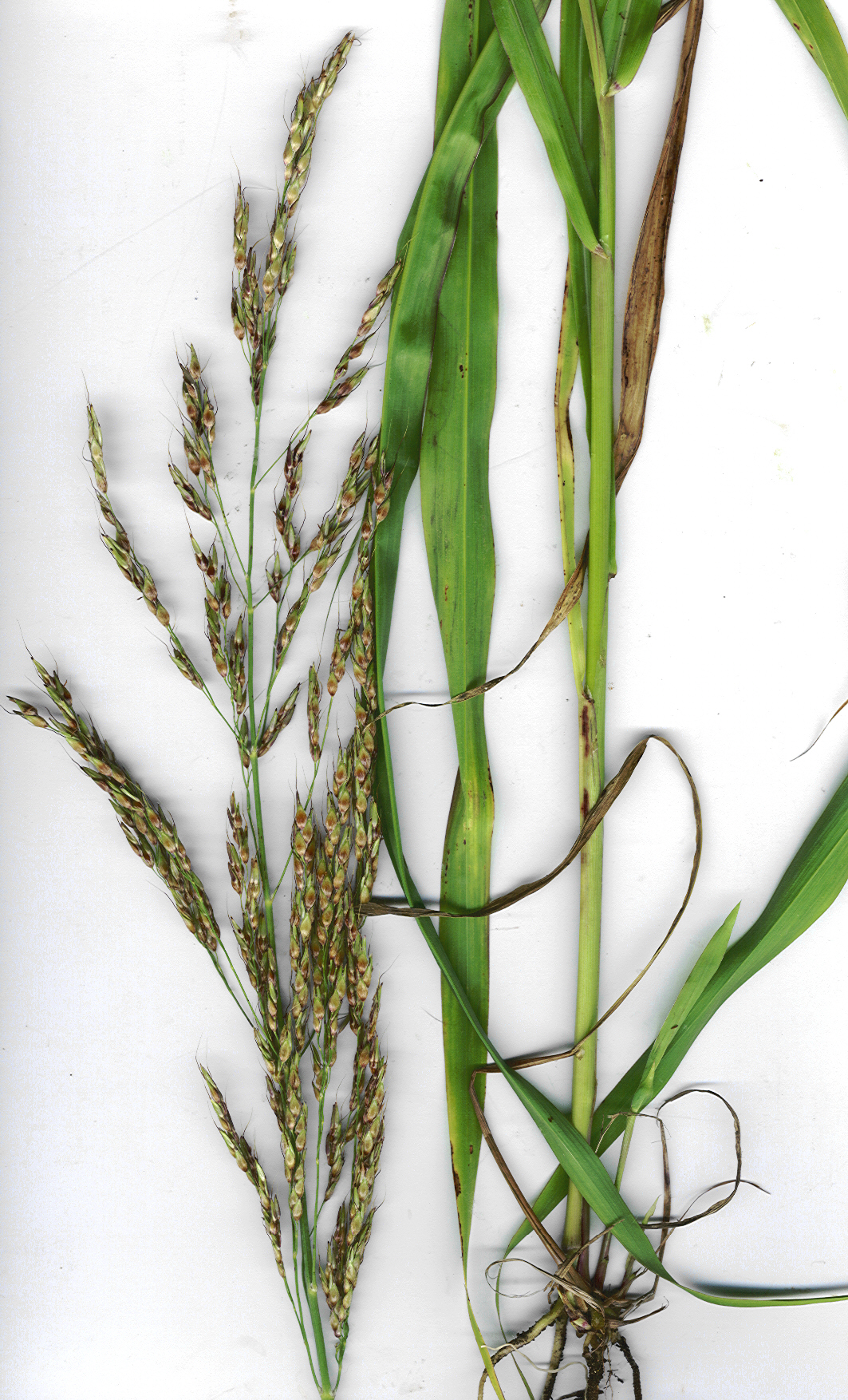
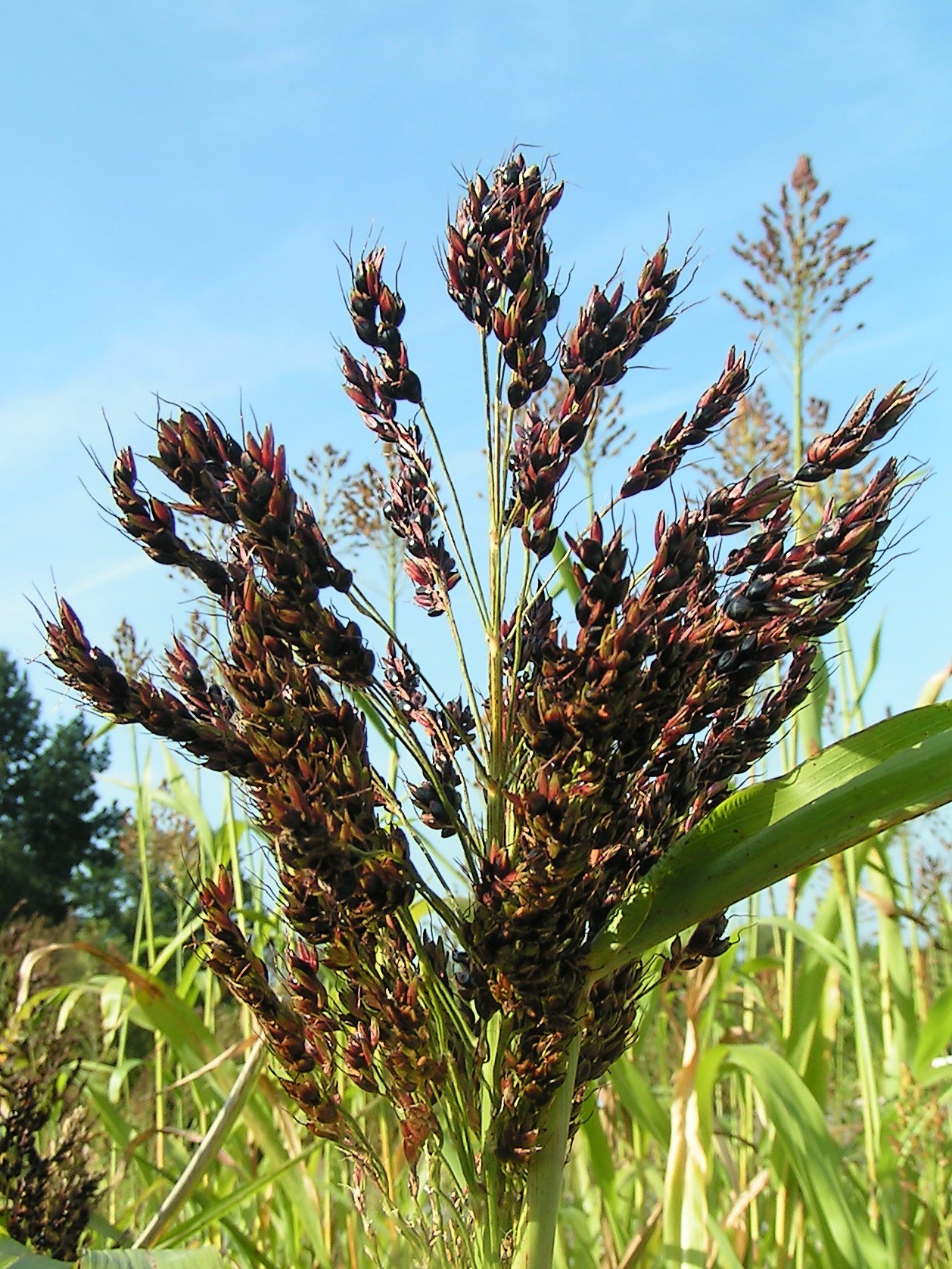
A mature sorghum plant appears as a tall, cane-like grass topped with a dense terminal panicle carrying hundreds of rounded seeds. The stems measure 1 to 5 cm (0.4 to 2 in) in diameter and feature prominent nodes resembling sugar cane (Saccharum officinarum).
Its leaves are flat, waxy, and alternate along the stalk, measuring 30 to 100 cm (12 to 39 in) long and 5 to 10 cm (2 to 4 in) wide with saw-toothed margins. The terminal flower head ranges from open and loose to tightly compact, holding spherical seeds 3 to 4 mm (0.12 to 0.16 in) across in shades of white, pale yellow, bronze, deep red, or dark purple.
Soil and Sun Requirements for Growing Sorghum
Plant sorghum in full sun with at least six to eight hours of uninterrupted light per day. Shaded plants produce weak, thin stalks that lodge in high winds and fail to fill their seed heads properly.
The root system tolerates variable soils, including heavy clay and poor sandy loams, provided water does not pool around the crown.
- pH range: 5.5 to 7.5, performing best near 6.5
- Drainage: Prefers loose, well-draining ground over waterlogged soil
- Fertility: Moderate soil nitrogen; excess nitrogen causes rapid, weak stem growth that falls over
How to Plant Sorghum Seeds
Sow seeds directly into the garden 2.5 cm (1 in) deep once soil temperatures exceed 18 °C (65 °F). Sowing into cold ground causes seeds to rot before emergence, which typically takes 5 to 10 days in warm soil.
Space seeds 10 to 15 cm (4 to 6 in) apart in rows spaced 60 to 90 cm (24 to 36 in) apart. Thin crowded seedlings when they reach 10 cm (4 in) tall to allow adequate airflow around the base.
In northern climates with short seasons, start seeds indoors in biodegradable peat or paper plugs 3 weeks before the final frost date. Transplant them without disturbing the taproot once spring weather settles.
Sorghum Plant Care and Feeding
Provide 25 mm (1 in) of water per week during early vegetative growth, then reduce watering once the root system establishes. The root system reaches up to 1.8 m (6 ft) into the subsoil, enabling the plant to enter dormancy during dry spells and resume growth when rain returns.
Keep the surrounding area clear of weeds for the first 30 days after emergence. Once sorghum reaches knee height, its broad canopy shades the ground and suppresses weed competition naturally.
Apply a balanced organic fertilizer or aged compost at planting time. Avoid high-nitrogen synthetic feeds midway through the season, as excess nitrogen leads to lodging and elevates toxic nitrate levels in the stalk tissue.
When and How to Harvest Sorghum
Harvest grain varieties when seeds reach the hard-dough stage and cannot be dented with a fingernail. For sweet syrup varieties, harvest stalks when the seeds in the upper head reach the soft-dough milk stage.
- Grain harvest: Cut seed heads off the stalk with pruning shears leaving 15 cm (6 in) of stem, then hang them in a dry shed for 10 to 14 days.
- Threshing: Rub dried heads against a wire screen or beat them inside a clean burlap bag to dislodge the grains.
- Winnowing: Pour the collected seed between two buckets in front of a box fan to blow away chaff.
- Syrup harvest: Strip all leaves from the standing stalks, cut stems at soil level, and press them through a roller mill within 24 hours to collect juice.
Cooking with Sorghum: Grain, Syrup, and Popping
Cook whole grain sorghum by boiling one part dry grain in three parts water for 50 to 60 minutes. The grain stays intact and chewy, providing an alternative to brown rice or pearled barley (Hordeum vulgare).
Milling dry grain produces fine, gluten-free flour suited for pancakes, flatbreads, and cookies. Sweet varieties yield cane juice that boils down at a 10:1 ratio into golden-amber syrup, commonly termed sorghum molasses.
You can pop small-seeded grain sorghum just like popcorn. Heat a dry, heavy skillet over medium-high heat, add 2 tablespoons of dry grain, cover tightly, and shake constantly until the popping stops; the result is a miniature white hull-less puffed grain with a nutty flavor.
Pests, Diseases, and Spraying Sorghum
Control pests early by scouting the undersides of leaves weekly for sugarcane aphids and armyworms. Young seedlings face severe damage if infestations go untreated before plants reach 45 cm (18 in) in height.
- Sugarcane aphid: Feeds on sap and covers leaves in sticky honeydew; wash off small colonies with insecticidal soap or neem oil spray.
- Corn earworm: Larvae tunnel through developing seed heads; treat with targeted applications of Bacillus thuringiensis (Bt) at heading.
- Anthracnose: Fungal lesions on leaves and stalks during humid spells; prevent by planting resistant varieties and rotating crops every 2 seasons.
- Bird damage: Birds feed on ripening seed heads; protect small home plots by tying mesh exclusion bags over maturing panicles.
How to Store Sorghum Grain and Stalks
Store cleaned sorghum grain at a moisture level below 13 percent in airtight glass jars or food-grade bins. Damp grain above 14 percent moisture heats quickly and develops Aspergillus mold within weeks.
Whole dry grains keep for two to three years in a cool, dark pantry between 10 and 20 °C (50 and 68 °F). Ground whole-grain flour contains active oils; keep it in the refrigerator for up to 3 months or freeze it for up to 1 year.
Boiled sweet sorghum syrup requires no refrigeration. Stored in sanitized glass bottles at room temperature, finished syrup with a Brix reading of 76 to 78 preserves its flavor and consistency for years without spoiling.
Frequently Asked Questions
What is the difference between grain sorghum and sweet sorghum?
Grain sorghum is bred to grow short (1 to 1.5 m) to yield dense, dry seed heads for milling or cooking. Sweet sorghum grows 2.5 to 4 m tall with juicy, sugar-rich stalks crushed to boil down into table syrup.
What can you spray on sorghum for weed and pest control?
Home growers can spray insecticidal soap or horticultural oil for aphids, and Bacillus thuringiensis (Bt) for caterpillars. Commercial farmers use labeled post-emergence herbicides such as atrazine or s-metolachlor alongside approved systemic aphicides.
How do you pop sorghum seeds?
Heat a heavy, dry skillet over medium-high heat for 2 minutes, add 2 tablespoons of dry grain sorghum, cover with a lid, and shake continuously until popping slows to 2 seconds between pops. Remove immediately to prevent burning.
What are the health benefits of sorghum?
Sorghum is naturally gluten-free, high in dietary fiber, and contains copper, magnesium, and polyphenolic antioxidants. It has a lower glycemic response than refined white wheat or white rice.
What is sorghum sudangrass?
Sorghum sudangrass is a fast-growing hybrid of Sorghum bicolor and Sudan grass (Sorghum drummondii) grown as a high-biomass cover crop, green manure, or summer livestock forage rather than for grain.
Sources & Verification
Taxonomy and distribution are checked against the databases below. Care guidance is written for cultivated species only and reviewed by our editor. How We Build Plant Profiles →