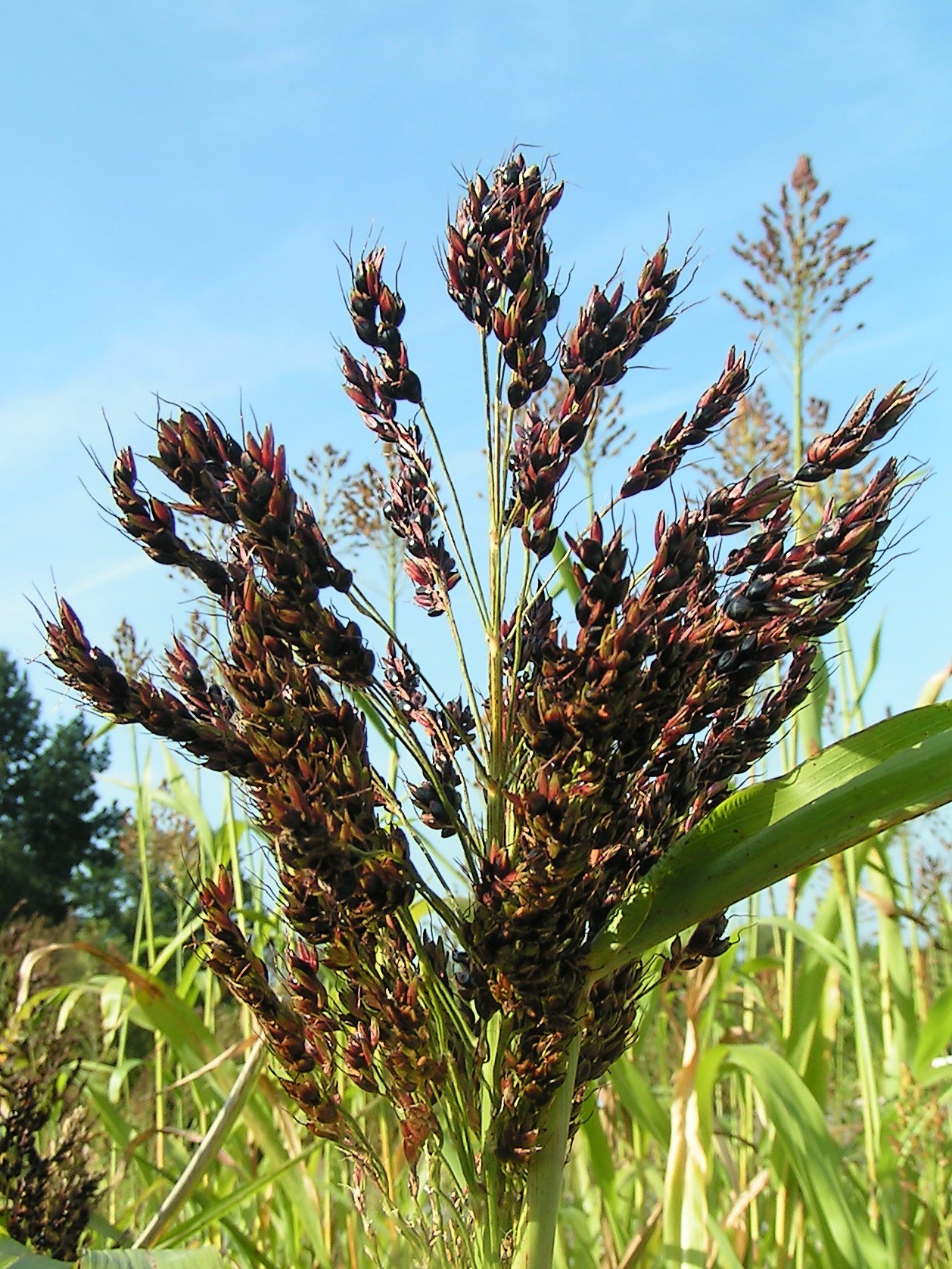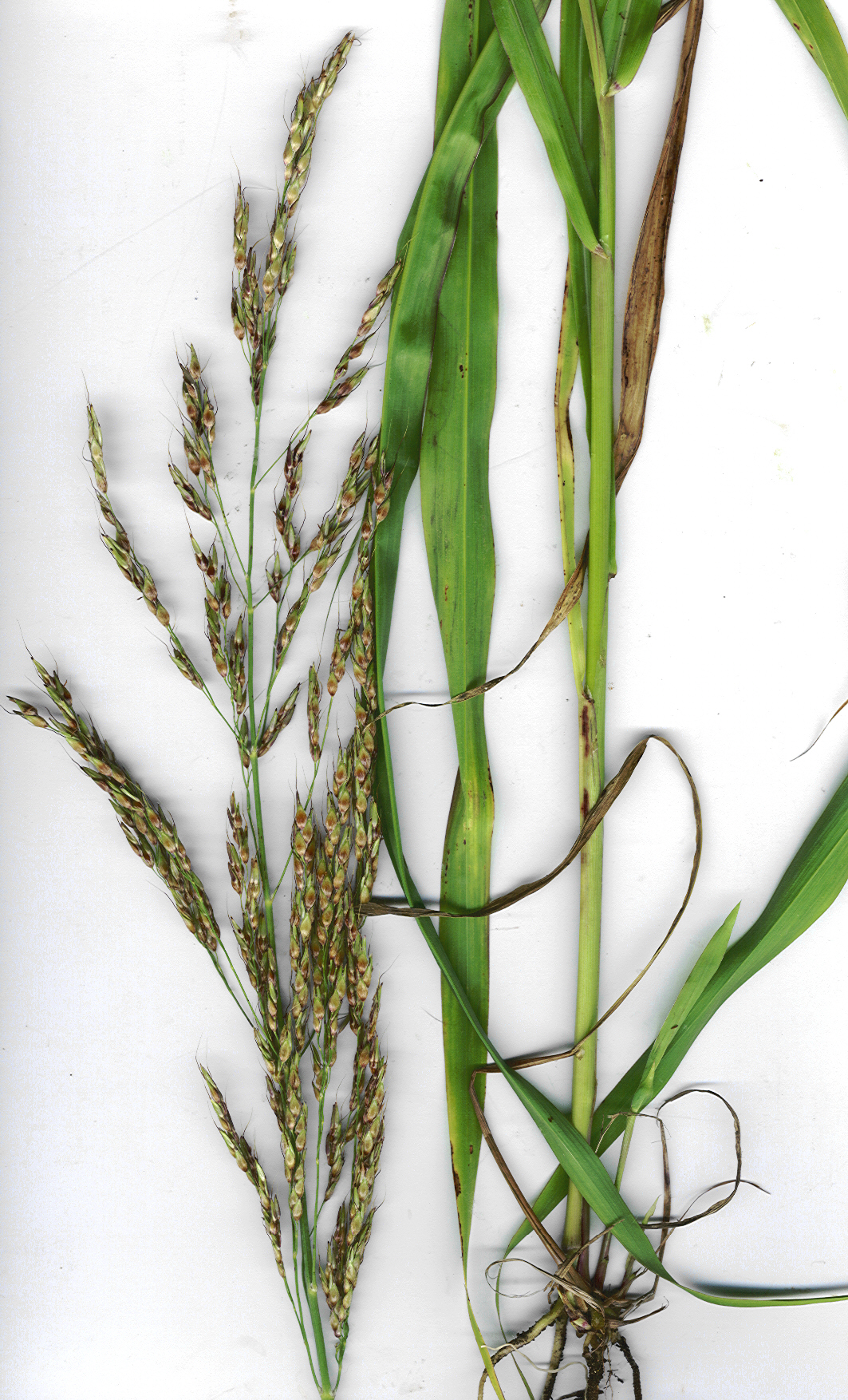
Johnson grass (Sorghum halepense) is a warm-season perennial grass native to the Mediterranean region, Asia, and Northern Africa. It spreads aggressively across agricultural land through an extensive network of creeping rhizomes and prolific seed head production.
A single plant produces up to 28,000 seeds per season, which remain viable in soil for over 5 years. Effective control requires active rhizome disruption and seed head removal before flowering.
Key Facts
- Plant Type: Perennial warm-season rhizomatous grass
- Native Range: Mediterranean region, Northern Africa, Western Asia
- Family: Poaceae (grass family)
- Height: 0.5–2.5 m (20–98 in) tall
- Toxicity: Toxic to livestock under drought or frost stress
Living with Johnson Grass: Agronomic Impact and Management
Johnson grass ranks among the ten most invasive agricultural weeds globally due to its rapid rhizome growth and crop competition. Farmers must implement multi-year management plans to protect yields in crops such as maize, cotton, and sugarcane.
The root system releases allelopathic chemicals that directly inhibit seed germination in surrounding vegetation. Shallow tilling can exacerbate infestations by cutting rhizomes into smaller viable segments that generate individual shoots.
Johnson Grass Identification and Botanical Characteristics
Johnson grass grows 0.5 to 2.5 m (20 to 98 in) tall with thick, woody stems and distinct white-veined leaf blades. Classified within the Poaceae family as Sorghum halepense (L.) Pers., it forms dense, upright colonies.
Key diagnostic features include:
- Leaves: Smooth blades up to 60 cm (24 in) long with a prominent white midrib.
- Ligule: Membranous structure with a fringe of fine hairs.
- Flowers: Open, pyramidal panicles 15–50 cm (6–20 in) long, shifting from green to purplish-red at maturity.
- Rhizomes: Fleshy, white, jointed underground stems with scaly brown nodes extending up to 2 m (6.5 ft) deep.
Habitat and Global Distribution
Johnson grass establishes in disturbed, warm-climate soils exposed to full sun. The species originated across Western Asia and North Africa, taking its alternative name Aleppo grass from Aleppo, Syria.
In India, where it was introduced from Mediterranean trade networks, the grass heavily colonizes river basins, irrigation ditches, and arable land. Across North America and Australia, it invades highway margins, railway rights-of-way, and orchards.
Ecology, Reproduction, and Seed Production
An individual Johnson grass plant produces up to 28,000 seeds in a single growing season. Wind, irrigation runoff, and harvesting equipment carry these hard-coated seeds across large distances.
Subterranean rhizomes store carbohydrates that survive soil freezing down to -6 °C (21 °F). These rootstocks begin sprouting early in spring when soil temperatures reach 15 °C (59 °F).
Invasive Status and Herbicide Control Options
Managing established stands requires foliar systemic herbicides combined with scheduled mowing. Chemical options such as glyphosate, fluazifop-P-butyl, and clethodim work best when applied before panicle emergence.
Because dormant seed banks persist in the soil for up to 10 years, eradication demands repeated treatments over multiple seasons. Key control steps include:
- Mowing: Cutting shoots every 2–3 weeks reduces rhizome starch storage.
- Chemical Application: Spraying selective grass herbicides when plants reach 30–45 cm (12–18 in) height.
- Cover Cropping: Planting dense winter rye (Secale cereale) to shade out emerging spring shoots.
Agricultural Uses and Forage Risks
Johnson grass was traditionally used as livestock pasture and hay, but severe toxicity concerns limit its safety. Stress from frost, drought, or high-nitrogen fertilizers triggers the formation of hydrocyanic acid (prussic acid) and nitrates in young shoots.
Grazing livestock on stressed plants leads to hydrocyanic acid poisoning, causing rapid asphyxiation in cattle and horses. Curing the plant completely into dry hay breaks down the prussic acid, making it safe for feed.
Similar Species and Look-Alikes
Johnson grass is commonly confused with cultivated sorghums and wild tall grasses during early growth stages. Root structures and flower panicles provide clear differentiation.
Notable look-alike plants include:
- Grain sorghum (Sorghum bicolor): Lacks creeping rhizomes and forms compact, heavy seed clusters.
- Shattercane (Sorghum drummondii): An annual grass lacking persistent underground rhizome networks.
- Sudan grass (Sorghum x drummondii): Lacks spreading rhizomes and features narrower stems.
- Barnyard grass (Echinochloa crus-galli): Lacks the distinct white leaf midrib and has awned spikelets.
Frequently Asked Questions
What is the common name of Sorghum halepense?
The primary common name of Sorghum halepense is Johnson grass, though it is also known as Aleppo grass, Columbus grass, and Cuba grass.
Why is Aleppo grass called Johnson grass?
Aleppo grass gained the name Johnson grass after Colonel William Johnson imported it to fertile river bottomlands in Alabama during the 1840s to cultivate forage.
Where was Sorghum halepense introduced in India from?
Sorghum halepense was introduced to India from the Mediterranean region and Western Asia via historic agricultural trade routes.
What herbicide kills Johnson grass effectively?
Systemic graminicides such as fluazifop-P-butyl, clethodim, and glyphosate effectively kill Johnson grass when applied to active foliage 30–45 cm (12–18 in) high.
Is Johnson grass toxic to cattle and horses?
Yes, Johnson grass is toxic to cattle and horses when environmental stress causes prussic acid and nitrate accumulation in green shoots. Ingestion of wilting leaves can cause fatal cyanide poisoning.
Sources & Verification
Taxonomy and distribution are checked against the databases below. Care guidance is written for cultivated species only and reviewed by our editor. How We Build Plant Profiles →