Types of Grasses: Identification and Care Guide
88 plant profiles · Learn how to choose and identify ornamental, turf, and wild grasses. Compare clump-forming and running types, hardiness zones, and sun needs.
True grasses in the Poaceae family share hollow, round stems with distinct swollen nodes and narrow, parallel-veined leaves. They span an enormous range of scale, from ground-hugging turf species under 10 cm (4 in) to woody giant bamboos surpassing 15 m (50 ft). Choosing the right grass depends primarily on growth habit and active growing season: cool-season species thrive in temperatures between 15 and 24 °C (60 and 75 °F), while warm-season types require heat above 27 °C (80 °F) to produce foliage.
For mixed borders and naturalistic gardens, clumping grasses remain where you plant them and expand slowly from a central crown. Species such as sideoats grama (Bouteloua curtipendula) and sandberg bluegrass (Poa secunda) tolerate drought and stay compact. In contrast, running grasses spread horizontally through underground rhizomes or stolons; vigorous types like gardener’s garters (Phalaris arundinacea) work well for stabilizing banks but quickly outcompete neighboring perennials in fertile garden soil.
Soil moisture and sun exposure narrow your choices further. Moisture-tolerant selections like tufted hairgrass (Deschampsia cespitosa) and glaucous sedge (Carex flacca) thrive in damp, partially shaded hollows where turf struggles. For open, sun-baked plots, heat-adapted choices like bahia grass (Paspalum notatum), umbrella bamboo (Fargesia murielae), and sugarcane (Saccharum officinarum) provide reliable summer cover and vertical structure.
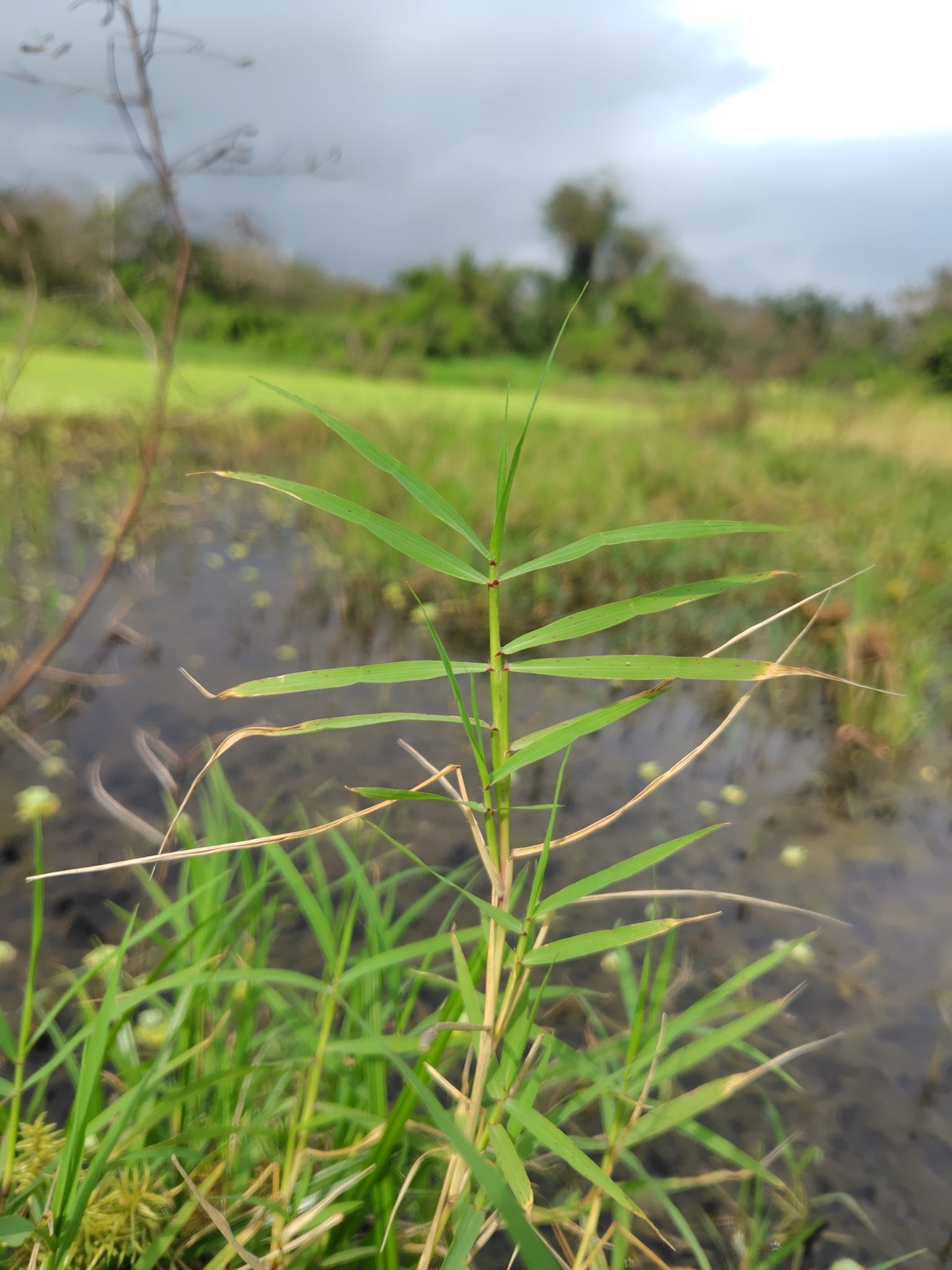
African Bermuda Grass
Cynodon nlemfuensis
☀️ Full Sun 💧 Moderate

Alpine Meadow-Grass
Poa alpina

Animated Oat
Avena sterilis
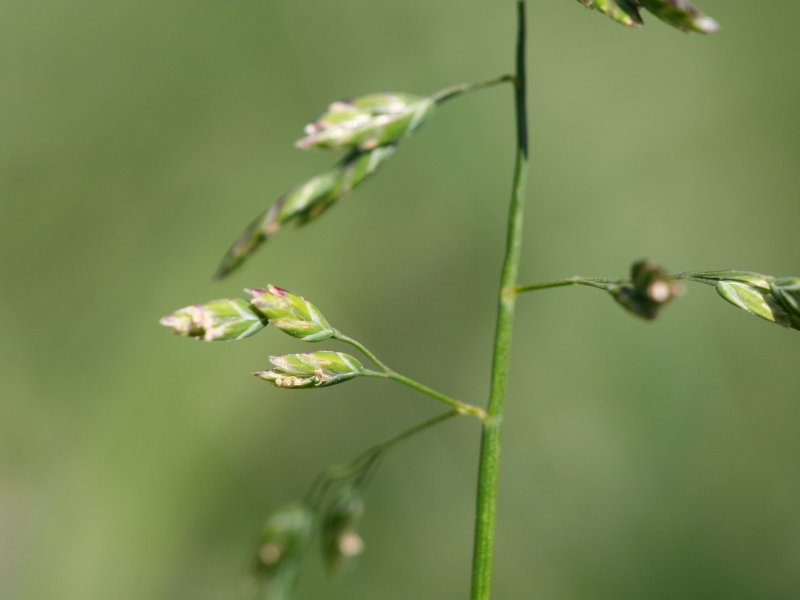
Annual Bluegrass
Poa annua
Annual Ryegrass
Lolium multiflorum
☀️ Full Sun 💧 Moderate
Bahia Grass
Paspalum notatum
☀️ Full Sun 💧 Low

Barley
Hordeum vulgare
☀️ Full Sun 💧 Moderate

Barnyard Grass
Echinochloa crus-galli
☀️ Full Sun 💧 High

Bermuda Grass
Cynodon dactylon
☀️ Full Sun 💧 Moderate

Big Bluestem
Andropogon gerardi
☀️ Full Sun 💧 Low

Big Quaking Grass
Briza media
☀️ Full Sun 💧 Low

Black Bamboo
Phyllostachys nigra
☀️ Full Sun 💧 Moderate

Black Bent
Agrostis gigantea
☀️ Full Sun 💧 Moderate

Black Spear Grass
Heteropogon contortus
☀️ Full Sun 💧 Low

Blue Fescue
Festuca glauca
☀️ Full Sun 💧 Low

Bread Wheat
Triticum aestivum
☀️ Full Sun 💧 Moderate

Buffalo Grass
Bouteloua dactyloides
☀️ Full Sun 💧 Low

Burgu
Echinochloa stagnina
☀️ Full Sun 💧 Aquatic
Carpet Grass
Axonopus compressus
☀️ Partial Sun 💧 High
Centipede Grass
Eremochloa ophiuroides
☀️ Full Sun 💧 Moderate

Chinese Silver Grass
Miscanthus sinensis
☀️ Full Sun 💧 Moderate
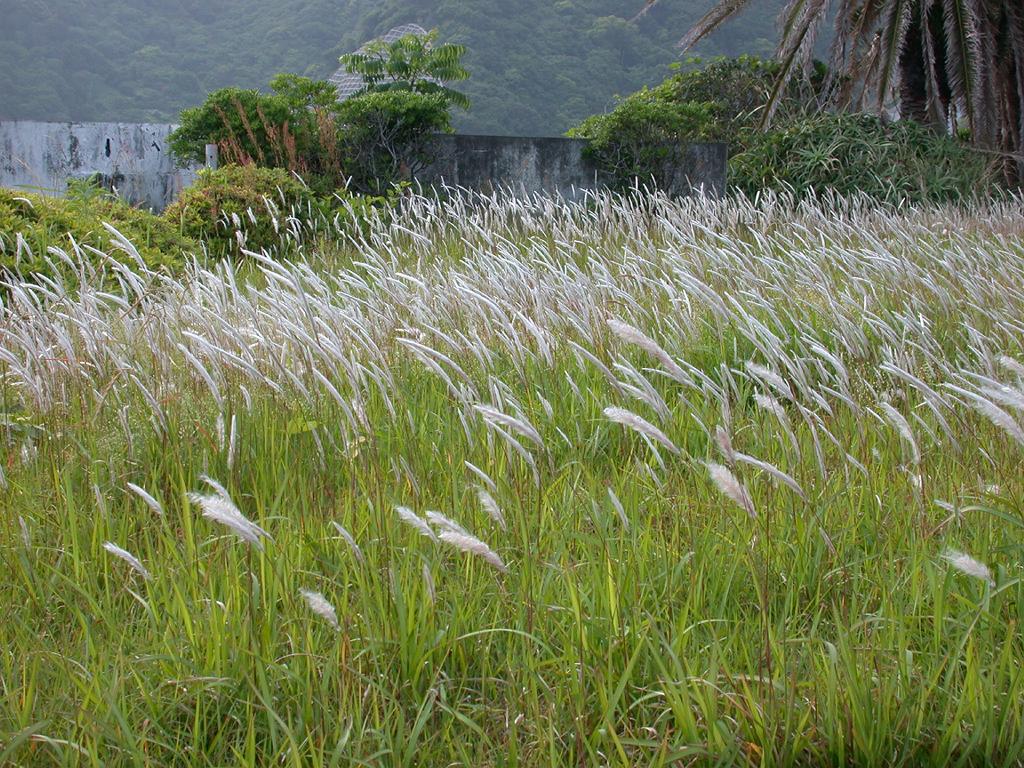
Cogon Grass
Imperata cylindrica
☀️ Full Sun 💧 Moderate

Common Bamboo
Bambusa vulgaris
☀️ Full Sun 💧 Moderate

Common Couch
Elymus repens
Common Questions
What is the difference between cool-season and warm-season grasses?
Cool-season grasses grow actively in spring and autumn between 15 and 24 °C (60 and 75 °F), while warm-season grasses put on growth in summer above 27 °C (80 °F). Cool-season species green up early in the year and stall during midsummer heat. Warm-season species remain dormant until late spring and turn straw-brown after the first autumn frost.
How do you tell clumping grasses apart from running grasses?
Clumping grasses grow outward in tight, expanding tussocks from a central root crown, whereas running grasses spread outward via underground rhizomes or surface stolons. Clump-forming species stay contained within garden beds and need dividing every 3 to 5 years. Running grasses spread horizontally without boundaries and require physical barriers to prevent invasion.
When should you cut back perennial grasses?
Cut back perennial ornamental grasses in late winter to early spring to a height of 5 to 10 cm (2 to 4 in) above the crown. Pruning before new shoots emerge prevents you from damaging the fresh growth. Leaving the dried foliage and seedheads in place throughout winter protects the root crown against freezing temperatures.
How can you tell a true grass apart from a sedge?
True grasses have round, hollow stems with solid jointed nodes, while sedges have solid, triangular stems with no nodes. An easy field mnemonic is that sedges have edges. Sedges also carry leaves arranged in three distinct vertical rows along the stem, whereas true grass leaves alternate in two rows.