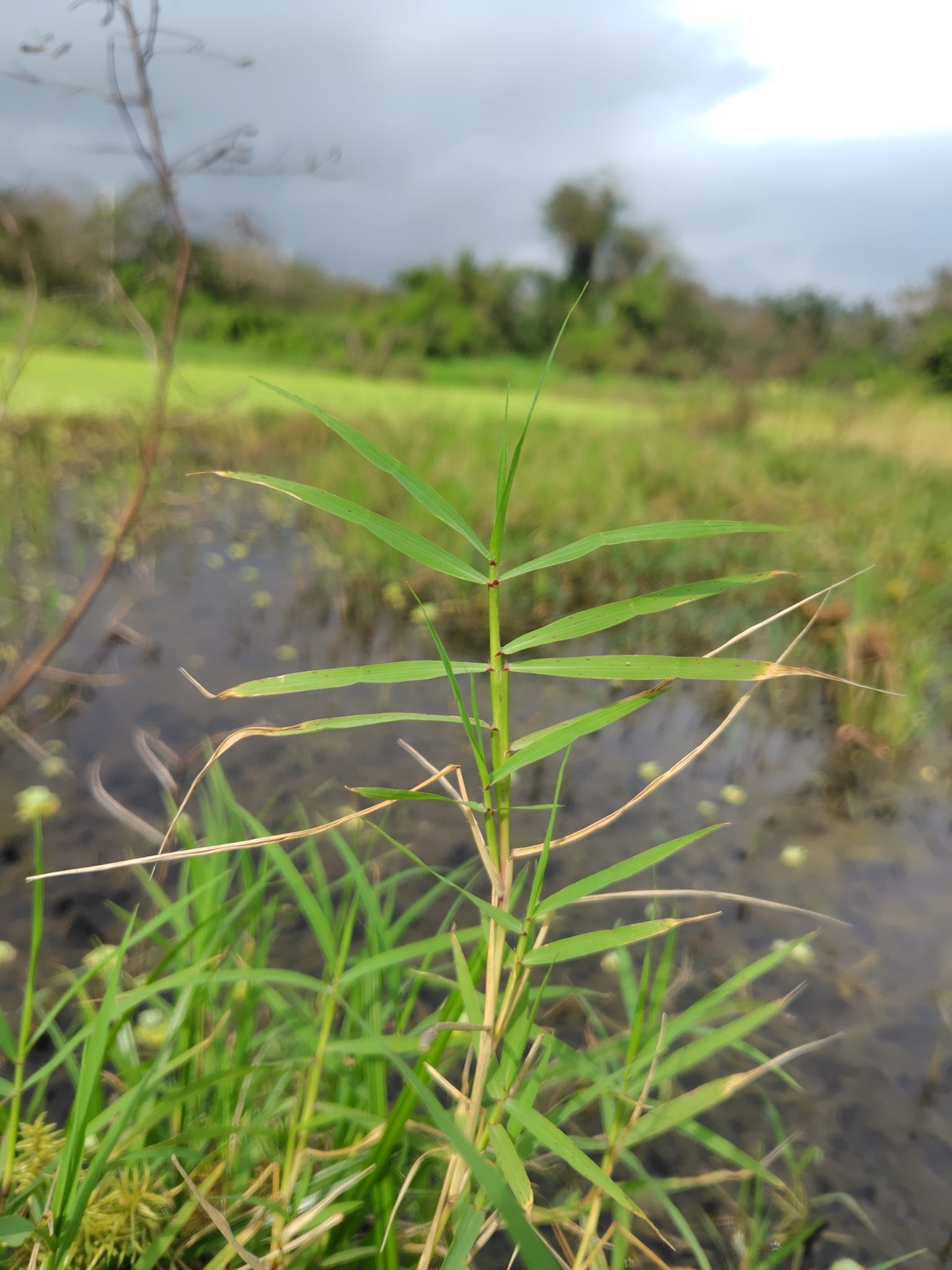
Bermuda grass (Cynodon dactylon) is a warm-season perennial grass native to Africa, southern Europe, and Asia that forms a dense, grey-green sod. It spreads aggressively via both surface stolons and underground rhizomes.
It survives high heat and heavy foot traffic on athletic fields, but it thins out quickly and fails completely in deep shade.
Key Facts
- Mowing height: 2.5 to 5 cm (1 to 2 in)
- Sun requirement: at least 6 to 8 hours direct sun
- Watering: 2.5 cm (1 in) per week during active growth
- Soil pH: 6.0 to 7.5 in well-drained soil
- Feeding: 1.5 to 2 kg nitrogen per 100 sq m yearly
Is Bermuda Grass Right for Your Lawn?
Bermuda grass suits high-traffic sunny sites in USDA zones 7 through 11 where summer temperatures regularly exceed 30 °C (86 °F). It recovers rapidly from wear, which is why municipal parks, golf fairways, and sports stadiums rely on it.
The trade-off is its aggressive growth habit. The running stems climb into flower beds, vegetable plots, and paved paths if you do not maintain physical edging barriers buried at least 10 cm (4 in) deep. If your yard receives substantial shade from mature trees or buildings, choose a different species.
How to Identify Bermuda Grass
You can identify Bermuda grass by its narrow, pointed leaf blades and dual-spreading stolons and rhizomes. The flat leaf blades measure 2 to 15 cm (0.8 to 6 in) long and 2 to 4 mm wide, with a distinctive ring of short white hairs at the ligule.
Key structural traits to inspect include:
- Stems: Wiry, slightly flattened runners that root at nodes every 2 to 8 cm (0.8 to 3 in).
- Leaf colour: Muted grey-green to deep blue-green, turning pale straw-tan during winter dormancy.
- Flower cluster: A digital arrangement of 3 to 7 slender spikes radiating from one point like bird claws.
- Roots: Fibrous root networks that descend 1.5 to 2.4 m (5 to 8 ft) deep in loose soils.
Sunlight and Soil Requirements
Bermuda grass requires a minimum of 6 to 8 hours of direct sunlight daily to maintain dense turf coverage. When shaded by dense tree canopies, the internodes stretch, the canopy thins, and opportunistic broadleaf weeds invade.
It tolerates varied soil types from heavy clay to pure sand, provided drainage is swift. Standing surface water for longer than 24 hours induces root rot and fungal decline. The optimal soil reaction is neutral to slightly acidic, between pH 6.0 and 7.0, though it continues growing between pH 5.5 and 8.0.
How to Plant Bermuda Grass Seed and Sod
Sow seed or lay sod in late spring or early summer when soil temperatures consistently register above 18 to 21 °C (65 to 70 °F). Planting earlier in cold soil delays germination and invites competition from spring annual weeds.
Follow these steps to establish an even lawn:
- Soil prep: Till the top 10 to 15 cm (4 to 6 in) of soil and level out low spots.
- Seeding rate: Broadcast hulled Bermuda grass seed at 0.5 to 1 kg per 100 sq m (1 to 2 lb per 1,000 sq ft).
- Raking: Cover seed lightly with 3 to 6 mm (0.1 to 0.25 in) of fine topsoil or compost.
- Rolling: Press down with a lawn roller to ensure uniform seed-to-soil contact.
- Moisture: Mist the seeded surface 2 to 3 times daily for the first 14 days.
Watering and Fertilizer Schedule
Established turf requires approximately 2.5 cm (1 in) of water per week, delivered in one or two deep soakings rather than frequent shallow sprinklings. Deep watering encourages roots to penetrate down to subsoil moisture reservoirs.
Active growth demands regular nitrogen from May through August. Apply 0.5 kg of actual nitrogen per 100 sq m (1 lb per 1,000 sq ft) every 4 to 6 weeks using a slow-release granular lawn fertiliser. Cease nitrogen feeding 4 to 6 weeks before your region’s average first autumn frost date to let the grass harden off for winter dormancy.
Mowing Height and Frequency
Mow standard common Bermuda grass to a height of 2.5 to 5 cm (1 to 2 in), and hybrid turf varieties down to 1.3 to 2.5 cm (0.5 to 1 in). During peak summer heat, you will need to mow every 4 to 7 days to keep the canopy tight.
Always follow the one-third rule: never remove more than one-third of the total leaf blade height in a single mowing. Removing too much leaf material scalps the lawn, exposes brown stem tissue to scorching sun, and temporarily halts root growth. Keep mower blades sharp to avoid frayed, brown leaf tips.
How Bermuda Grass Spreads and Propagates
Bermuda grass reproduces by seed, above-ground stolons, and underground rhizomes. This triple reproductive system makes it one of the quickest turf species to cover bare ground, but also one of the hardest to eradicate from garden borders.
To patch thin or damaged patches manually:
- Sprigging: Cut runners with 2 to 3 rooted nodes, press them into shallow trenches 5 cm (2 in) deep, and water daily.
- Plugging: Extract 7 to 10 cm (3 to 4 in) core plugs from healthy areas and insert them into holes spaced 30 cm (12 in) apart.
- Overseeding: Scratch open patches in early June and rake in hulled seed lightly.
Lawn Weeds, Pests, and Bermuda Grass Killer
The most persistent insect pest of this turf is the Bermudagrass mite (Eriophyes cynodoniensis), which causes stunted, rosetted shoots called witch’s brooms. Armyworms and white grubs also chew foliage and roots between midsummer and early autumn.
When this grass invades landscape beds where it is unwanted, standard broadleaf weed killers will not harm it. To eradicate escaped patches, gardeners apply a non-selective systemic herbicide containing glyphosate during active summer growth, or use grass-selective herbicides such as sethoxydim and fluazifop around ornamental broadleaf shrubs. Mechanical removal requires sifting soil at least 20 cm (8 in) deep to catch every white rhizome segment.
Bermuda Grass Winter Dormancy and Fall Care
Bermuda grass enters full winter dormancy and turns completely tan once soil temperatures drop below 10 to 12 °C (50 to 54 °F). This discoloration is normal and shields the crown from freezing injury down to -12 °C (10 °F).
In autumn, lower your mowing height slightly on your final cut to clear old canopy debris. Reduce irrigation by half as growth slows in October. If you require green turf throughout winter, overseed dormant turf in mid-autumn with annual ryegrass (Lolium multiflorum), which fades naturally when warm summer temperatures return.
Seedheads and Flowering Habits
Bermuda grass produces flowering seedheads on slender upright stems 10 to 30 cm (4 to 12 in) tall from late spring through early autumn. Each inflorescence consists of 3 to 7 spikes arranged like fingers at the stem tip.
Flowering accelerates when the turf experiences moisture stress, nutrient deficiency, or extended intervals between mows. Frequent mowing removes these spikes before they mature, which redirects the plant’s photosynthetic energy back into lateral leaf and stolon density.
Bermuda Grass Care Schedule by Season
| Spring | Scalp dormant turf to 2.5 cm (1 in) in late March to remove dead matter. Apply a pre-emergent herbicide when soil hits 13 °C (55 °F) to stop crabgrass. Begin monthly nitrogen fertilising once turf is 50 percent green. |
|---|---|
| Summer | Mow every 4 to 6 days at 2.5 to 4 cm (1 to 1.5 in). Apply 2.5 cm (1 in) of water weekly during dry spells. Treat active grub or armyworm infestations if you detect turf pulling up like loose carpet. |
| Autumn | Apply an autumn pre-emergent herbicide in September before winter broadleaf weeds sprout. Apply a high-potassium fertiliser to strengthen roots. Cease all nitrogen inputs 4 weeks prior to the first expected frost. |
| Winter | Water dormant turf once a month during prolonged dry spells to protect the root crown. Keep heavy vehicles off frozen lawns to prevent crown crush. Sharpen and service mower blades for spring. |
Diagnosing Bermuda Grass Lawn Problems
| What you see | Likely cause | What to do |
|---|---|---|
| Lawn turns pale straw-tan in autumn | Natural winter dormancy triggered by temperatures below 10 °C (50 °F) | No action needed; grass re-greens spontaneously in spring as soil warms. |
| Grass stems stretch and canopy thins | Insufficient daily sunlight from trees or structures | Prune lower tree branches to allow 6 or more hours of direct sun, or transition shaded areas to a shade-tolerant groundcover. |
| Dense clustering of stunted dwarf shoots (witch’s broom) | Bermudagrass mite infestation inside leaf sheaths | Scalp lawn low, bag and discard clippings, and apply an approved miticide or bifenthrin. |
| Circular dead patches 30 to 60 cm across in spring | Spring dead spot fungus (Ophiosphaerella species) | Aerate compacted soil, avoid excess late-season nitrogen, and apply a targeted fungicide in late autumn. |
| Turf pulls up easily like sod carpet with severed roots | White grubs feeding on root system | Apply a soil-drench grub insecticide in mid-summer when young larvae hatch. |
Bermuda Grass Cultivars for Lawns and Sports Turf
- ‘Tifway 419’ – sterile hybrid for sports fields and fairways
- ‘TifTuf’ – drought-tolerant hybrid using 38% less water
- ‘Celebration’ – deep blue-green leaf colour with shade tolerance
- ‘Yukon’ – seeded variety bred for superior cold hardiness
- ‘Monaco’ – high density seeded turfgrass for home lawns
Turf Companions and Look-Alikes
Bermuda grass looks similar to St. Augustine grass (Stenotaphrum secundatum), but St. Augustine features much broader, blunter leaf blades 6 to 10 mm wide and lacks underground rhizomes. St. Augustine also tolerates moderate shade where Bermuda grass fails.
Other lawn and groundcover comparisons include:
- Zoysia grass (Zoysia japonica): Possesses stiffer, pricklier leaf blades and tolerates partial shade, but establishes much slower than Bermuda grass.
- Centipede grass (Eremochloa ophiuroides): Demands lower soil pH (5.0 to 5.5) and far less nitrogen fertiliser.
- White clover (Trifolium repens): Occasionally interseeded into lower-maintenance turf to fix atmospheric nitrogen and green dormant winter lawns.
Frequently Asked Questions
What is the difference between Bermuda grass and St. Augustine grass?
Bermuda grass has fine, narrow leaf blades (2 to 4 mm wide) and spreads by both stolons and underground rhizomes, whereas St. Augustine grass (Stenotaphrum secundatum) has coarse, broad blades (6 to 10 mm wide) and spreads only by above-ground stolons. St. Augustine tolerates moderate shade, while Bermuda grass requires full direct sun to survive.
How do you kill Bermuda grass in garden beds?
Spray unwanted runners during hot, active summer growth with a systemic grass herbicide containing fluazifop or sethoxydim around broadleaf landscape shrubs. For bare beds, apply a non-selective glyphosate spray or dig out the soil 20 cm (8 in) deep to remove all underground rhizomes.
Why does Bermuda grass turn brown in winter?
Bermuda grass enters winter dormancy and halts chlorophyll production when soil temperatures drop below 10 to 12 °C (50 to 54 °F). The brown straw colour is a natural survival mechanism that protects root crowns from frost until spring temperatures trigger new growth.
How often should you water a Bermuda grass lawn?
Water an established lawn with 2.5 cm (1 in) of water once every 5 to 7 days during dry summer weather rather than sprinkling daily. Deep, infrequent soakings force roots deep into the soil and improve heat endurance.
Why is Bermuda grass used for football and sports stadiums?
Stadium managers use hybrid Bermuda grass because its interlocking network of stolons and rhizomes recovers from cleat tearing faster than cool-season grasses. It withstands intense summer heat and creates a uniform playing surface when cut short.
Sources & Verification
Taxonomy and distribution are checked against the databases below. Care guidance is written for cultivated species only and reviewed by our editor. How We Build Plant Profiles →
- Kew Plants of the World OnlineTaxonomic baseline and native distribution
- NC State Extension Gardener Plant ToolboxTurfgrass culture, mowing specifications, and identification
- Texas A&M AgriLife ExtensionCultivar performance, fertility guidelines, and irrigation scheduling
- University of California Statewide Integrated Pest ManagementWeed management, invasive control, and pest diagnosis
- GBIF — Global Biodiversity Information Facilitytaxonomy, synonyms, occurrence records
- Wikipediageneral reference