
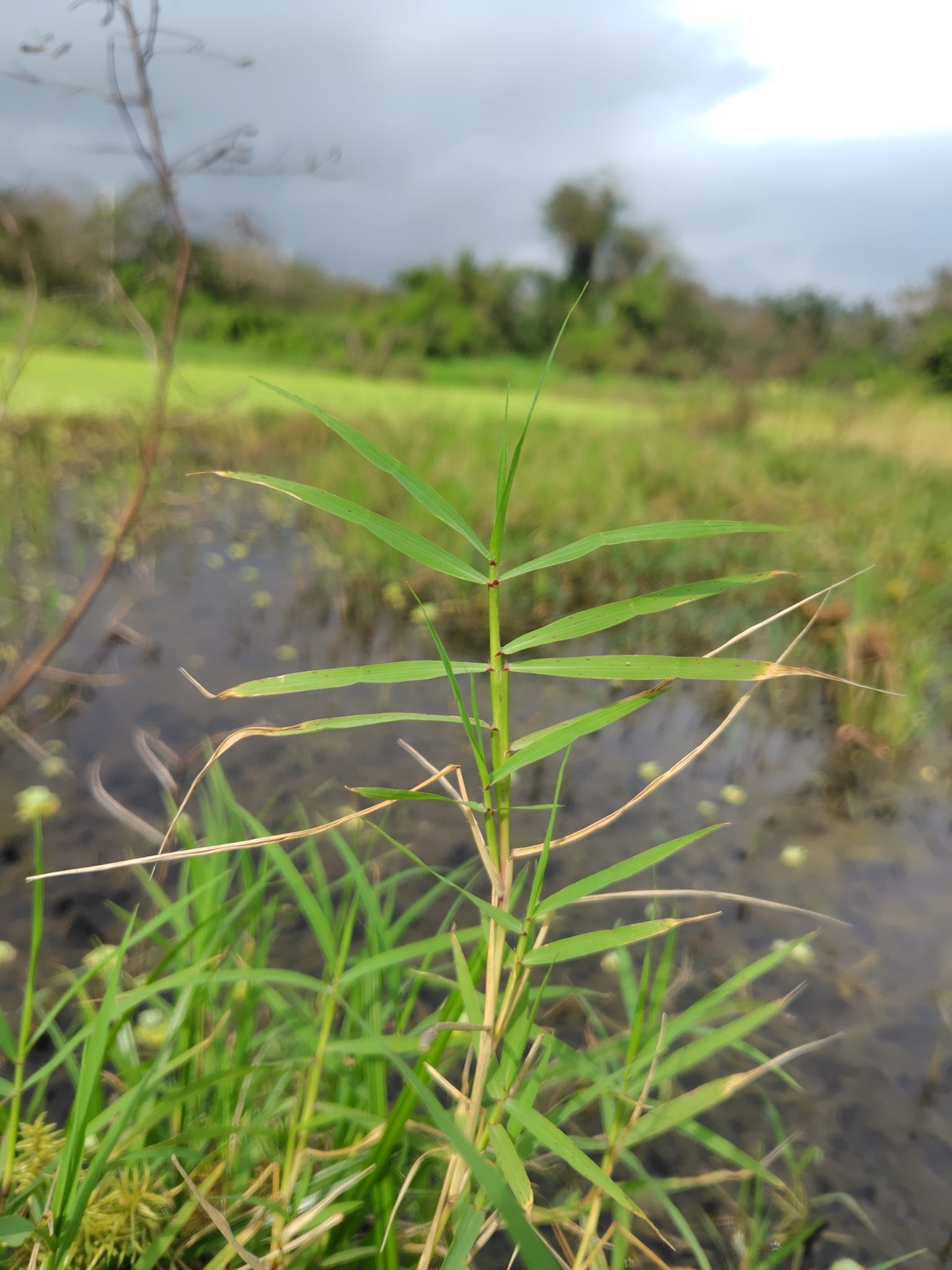
African Bermuda grass (Cynodon nlemfuensis) is a perennial warm-season grass native to East and Central Africa that spreads across open soil using thick, sprawling runners.
Unlike common Bermuda grass, it produces no underground rhizomes, making it fast to establish from vegetative sprigs while remaining sensitive to soil freezing below -4 °C (25 °F).
Key Facts
- Botanical family: Poaceae (grass family)
- Rooting type: Surface stolons only, without underground rhizomes
- Propagation: Vegetative sprigs or stem cuttings, rarely seed
- Sunlight: Full sun all day
- Cold limit: Foliage killed by light frost; crowns die at -4 °C (25 °F)
- Common Spanish name: Pasto estrella or estrella africana
The Agricultural Role of African Bermuda Grass
African Bermuda grass provides high-tonnage warm-season forage for livestock operations across frost-free tropical and subtropical lowlands. Pasture managers rely on its rapid horizontal expansion to blanket open paddocks and outcompete invasive broadleaf weeds.
Because it lacks the deep rhizomes of common lawn grasses, it requires dedicated rotational management rather than continuous overgrazing. It suits operations equipped to plant vegetative cuttings across prepared acreage.
Identifying African Bermuda Grass in the Field
African Bermuda grass forms coarse, open mats 30 to 60 cm (12 to 24 in) tall linked by thick, reddish-green surface stolons. These robust stolons routinely reach 2 to 5 m (6.5 to 16 ft) in length and root at every swollen node.
Key botanical characteristics help distinguish it from related pasture species:
- Stolon anatomy: Stout, circular surface runners up to 4 mm (0.15 in) thick, with zero subterranean rhizomes.
- Leaf blades: Flat, pale green to glaucous leaves measuring 5 to 16 cm (2 to 6.3 in) long and 2 to 6 mm wide.
- Inflorescence: A digitate cluster of 4 to 9 radiating spikes, each 4 to 10 cm (1.6 to 3.9 in) long and tinged with purple.
- Growth habit: Ascending flowering culms rising higher than turf-type bermudagrass varieties.
Ideal Soil and Climate Requirements
African Bermuda grass requires full sunlight and sustained temperatures above 20 °C (68 °F) to maintain active biomass production. Plant growth halts when temperatures drop below 10 °C (50 °F), and top growth browns after the first light frost.
The species thrives in areas receiving 800 to 2,000 mm (31 to 79 in) of annual rainfall. While it tolerates temporary standing water for 24 to 48 hours, prolonged waterlogging suffocates the shallow root system. It accepts diverse soils from acidic sands to heavy clays within a pH range of 5.5 to 7.5.
Planting African Bermuda Grass: Sprigs Versus Seed
Establish this pasture using fresh vegetative sprigs or green stem cuttings, as viable commercial seed is virtually nonexistent on the global seed market. The florets are generally sterile or produce irregular, low-viability seed heads.
Vegetative establishment succeeds by following these specific field steps:
- Prepare a clean, firm seedbed free of perennial weeds like bahiagrass (Paspalum notatum).
- Broadcast 1,000 to 1,500 kg per hectare (900 to 1,350 lb/acre) of freshly cut green stolons onto damp soil.
- Incorporate cuttings immediately 5 to 8 cm (2 to 3 in) deep using a tandem disc harrow set straight.
- Roll the field with a cultipacker to guarantee solid contact between the moist soil and the stem nodes.
Fertilizing and Routine Pasture Care
Maintain vigorous seasonal production by applying 100 to 200 kg of nitrogen per hectare annually, split into multiple applications across the rainy months. Phosphorus and potassium must match annual soil test recommendations to protect stand persistence.
Apply nitrogen shortly after cattle rotate out of a paddock or immediately following a hay cutting. Heavy nitrogen applications must always be balanced with adequate potassium, as potassium deficiencies reduce stolon cold tolerance and increase disease susceptibility.
Grazing Cycles and Hay Harvesting
Graze or mechanically harvest African Bermuda grass on a 4- to 5-week rotation cycle to optimize crude protein levels before fiber content spikes. Cutting or grazing at 30 to 40 cm (12 to 16 in) canopy height yields forage containing 11 to 16 percent crude protein.
Stubble management dictates stand survival:
- Leave a minimum post-grazing stubble height of 15 to 20 cm (6 to 8 in) to preserve photosynthetic leaf area.
- Avoid continuous grazing below 10 cm (4 in), which strips the crown reserves and exposes bare soil.
- Rest pastures for 28 to 35 days during warm, wet periods before introducing livestock again.
Agricultural Uses and Landscape Value
The grass serves primarily as warm-climate grazing and round-bale hay for beef cattle, dairy stock, and sheep. Its rapid horizontal growth also makes it effective for stabilizing bare soil on roadside embankments and ditch banks.
Compared to common Bermuda grass (Cynodon dactylon) or pangola grass (Digitaria eriantha), stargrass generates higher forage mass during midsummer. However, its coarser, thicker stems dry more slowly during haymaking.
Pests, Diseases, and Prussic Acid Safety
Never graze livestock on African Bermuda grass immediately following severe drought breaks, hard freezes, or high-nitrogen stress, because damaged tissue generates toxic hydrocyanic acid (prussic acid). Withhold ruminants for 7 to 10 days after a frost event to allow the toxin to dissipate.
Watch fields for common agronomic pressures:
- Fall armyworms: Strip leaf blades down to bare stems during late summer; treat when thresholds exceed 3 larvae per square foot.
- Spittlebugs: Inject phytotoxic saliva into lower leaf sheaths, causing leaves to turn brown and dry out.
- Leaf rust (Puccinia spp.): Generates orange-brown pustules during warm, humid weather; control by harvesting the canopy early.
Curing and Baling Stargrass Hay
Bale stargrass hay only after stem moisture drops below 15 percent in the swath to prevent internal heating and mold formation. The thick, juicy stolons dry substantially slower than fine-stemmed pasture grasses.
Use a mower-conditioner equipped with crushing rollers to crack the thick runners, accelerating field drying by 24 to 36 hours. Store cured round or square bales inside covered barns or under UV-resistant hay tarps, as unprotected bales left in humid climates spoil rapidly from external water absorption.
Frequently Asked Questions
Can you grow African Bermuda grass from seed?
Commercial seed for African Bermuda grass (Cynodon nlemfuensis) is virtually impossible to purchase because the plant produces low amounts of viable seed. Pastures are established almost entirely through vegetative sprigs, stolon pieces, or fresh top cuttings.
How does African Bermuda grass differ from common Bermuda grass?
African Bermuda grass lacks underground rhizomes, reproducing solely through surface stolons, whereas common Bermuda grass (Cynodon dactylon) produces both stolons and subterranean rhizomes. African Bermuda grass is also taller, coarser, and substantially more vulnerable to freezing temperatures.
What does pasto estrella mean for this grass?
Pasto estrella is the standard Spanish common name for Cynodon nlemfuensis, translating directly to 'star grass' in English. The name refers to the radiating, star-like finger spikes of its flowering seedhead.
Why is Cynodon nlemfuensis sometimes searched as wanderlust?
The term 'wanderlust' colloquially describes the species' aggressive habit of sending creeping stolons wandering meters across bare soil. These surface runners rapidly track outward in search of open ground and sunlight.
Is African Bermuda grass toxic to cattle?
Healthy, unstressed grass is non-toxic and provides quality livestock forage. However, sudden environmental stress—such as a sharp frost, severe prolonged drought, or excessive nitrogen—can trigger the accumulation of toxic prussic acid (cyanide), requiring growers to remove cattle until the grass recovers.
Sources & Verification
Taxonomy and distribution are checked against the databases below. Care guidance is written for cultivated species only and reviewed by our editor. How We Build Plant Profiles →
- Kew Plants of the World OnlineTaxonomic baseline, synonyms, and indigenous distribution across Africa.
- University of Florida IFAS ExtensionAgronomic recommendations for stargrass pasture establishment, fertilisation, and prussic acid risks.
- GBIF Backbone TaxonomyGlobal occurrence records and distribution documentation.
- Wikipediageneral reference
