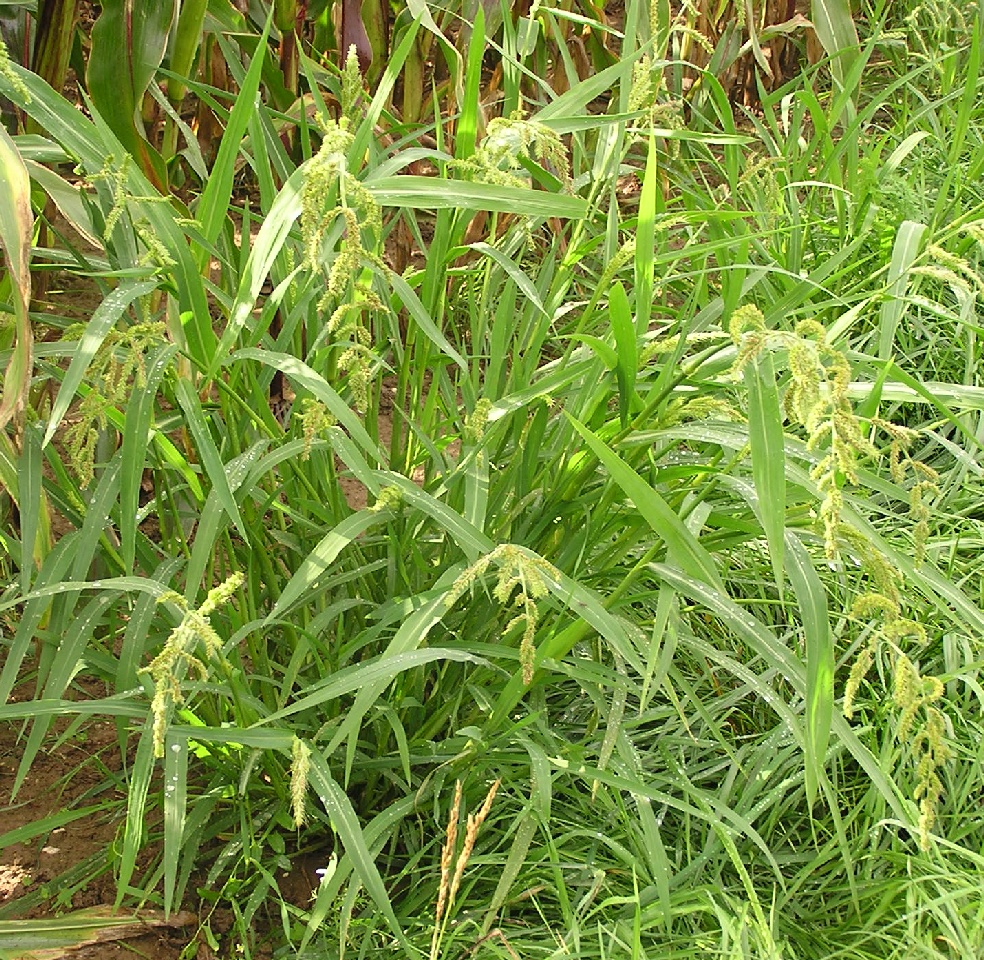
Burgu (Echinochloa stagnina) is a vigorous semi-aquatic perennial grass native to the floodplains and wetlands of tropical Africa and South Asia. It is most recognized for its ability to form dense, floating mats in deep water, with spongy stems that provide essential forage for livestock and wildlife.
While it was historically managed as a grain and sugar crop in the Inner Niger Delta, it is now often treated as a wild forage plant or an invasive species in regions like the Pacific islands. It requires seasonal flooding to survive, often growing in water several meters deep where other grasses fail to establish.
Key Facts
- Water: Requires standing or slow-moving water to thrive
- Stem Length: Reaches up to 4 m (13 ft) in deep floods
- Sugar Content: Stems contain approximately 10% sugar by weight
- Native Range: Widespread across tropical Africa and South Asia
- Habitat: Specialized for riverbanks, lakes, and seasonal floodplains
Growing Habit and Ecological Fit
Burgu is a specialist of seasonal floodplains that requires deep, slow-moving water to reach its full size. It is not suitable for standard residential gardens or small ponds because its aggressive growth habit allows it to quickly overwhelm smaller aquatic plants. In its native African range, it serves as a primary source of dry-season fodder when terrestrial grasses have withered.
The plant is highly adapted to fluctuating water levels, with stems that elongate rapidly as floodwaters rise. It can form floating meadows so thick they support the weight of aquatic birds and small mammals. However, in non-native environments like Australia or the Pacific, this same vigor allows it to block irrigation channels and displace native wetland flora.
How to Identify Hippo Grass
Hippo Grass is a robust perennial that produces spongy, prostrate stems reaching lengths of 1 to 4 m (3 to 13 ft). These stems root at the lower nodes and are filled with a sweet, white pith that provides buoyancy. The leaf blades are typically 15–45 cm (6–18 in) long and often feature a distinctive purplish tinge or dark banding across the surface.
- Ligules: A prominent fringe of hairs 1–4 mm (0.04–0.15 in) long.
- Inflorescence: A dense panicle 10–25 cm (4–10 in) long with 5–15 racemes.
- Spikelets: Covered in stiff hairs with awns measuring 5–20 mm (0.2–0.8 in).
- Stems: Smooth, hairless, and roughly 1 cm (0.4 in) thick at the base.
Habitat and Water Requirements
Burgu thrives in water depths ranging from 1 to 4 meters (3 to 13 feet) during the peak flood season. It is commonly found in permanent swamps, stagnant pools, and along the margins of slow-flowing rivers like the Niger and the Nile. The plant prefers heavy clay or loamy soils that can retain moisture even after the surface water recedes.
During the dry season, the plant survives as a prostrate mat on the mud or through dormant rhizomes. It is highly sensitive to total dehydration and will die back if the water table drops too low for extended periods. In the Inner Niger Delta, the timing of the annual flood is the primary factor determining the productivity and survival of Burgu stands.
Historical and Culinary Uses
The stems of Burgu are traditionally harvested for their high sugar content, which can reach 10% total sugars during the growing season. In West Africa, the Fulani and Songhai people have historically pressed these stems to extract a sweet juice, which is then boiled down into a thick syrup or fermented into a beer-like beverage. The seeds are also edible and were once a major grain source in the Niger Delta.
The seeds are typically ground into flour to make porridge or mixed with other grains like pearl millet (Pennisetum glaucum). Beyond human food, the grass is a high-quality forage for cattle, providing up to 14% crude protein in its young shoots. It is also a vital food source for hippopotamuses, which graze on the floating mats at night.
The Burgu vs Burgundy Name Distinction
The name “Burgu” is a local linguistic term from the Sahel region of Africa and is entirely unrelated to the color Burgundy. While searchers often look for “burgundy care,” those queries typically refer to hair dye, leather goods, or healthcare services in the United Kingdom. There is no botanical connection between this aquatic grass and the French wine region or the dark red color associated with it.
In the context of West African ecology, “Bourgou” refers not just to the species Echinochloa stagnina, but to the entire ecosystem of floating grass meadows. These meadows are critical for regional biodiversity and traditional pastoralist cycles. If you are searching for information on the color burgundy, this plant profile will not provide relevant maintenance or styling advice.
Similar Grasses and Lookalikes
Burgu is most frequently confused with barnyard grass (Echinochloa crus-galli), which is a shorter, terrestrial annual that rarely exceeds 1.5 m (5 ft). While both species have awned spikelets, barnyard grass lacks the floating, spongy stems and high sugar content of Hippo Grass. Another relative, antelope grass (Echinochloa pyramidalis), grows in similar habitats but is distinguished by the absence of long awns on its flowers.
- Para Grass (Urochloa mutica): Lacks the long awns and has noticeably hairier nodes.
- Jungle Rice (Echinochloa colona): A much smaller weed with shorter, awnless spikelets.
- Wild Rice (Oryza barthii): Has a different ligule structure and lacks the spongy floating stems.
Frequently Asked Questions
Is Burgu grass edible for humans?
Yes, the seeds of Burgu can be ground into flour for porridge, and the stems are pressed for their sweet juice. Historically, this juice was used to make syrup and fermented beverages in West Africa.
Why is Echinochloa stagnina called Hippo Grass?
It is called Hippo Grass because hippopotamuses frequently graze on its dense, floating mats in African rivers and lakes. The grass provides a high-protein food source for these large aquatic mammals.
Is Burgu related to the color Burgundy?
No, the name Burgu (or Bourgou) is a local African term and has no connection to the color Burgundy or the French wine region. Search results for 'burgundy care' usually refer to hair color or healthcare services rather than this plant.
Can I grow Burgu in a garden pond?
It is not recommended for garden ponds because it grows up to 4 m (13 ft) long and spreads aggressively. It is best suited for large-scale wetland restoration or its native floodplain habitats.
Is Burgu grass invasive?
Yes, Burgu is considered invasive in several Pacific islands and parts of Australia. Its ability to form thick floating mats allows it to block waterways and outcompete native aquatic vegetation.
Sources & Verification
Taxonomy and distribution are checked against the databases below. Care guidance is written for cultivated species only and reviewed by our editor. How We Build Plant Profiles →