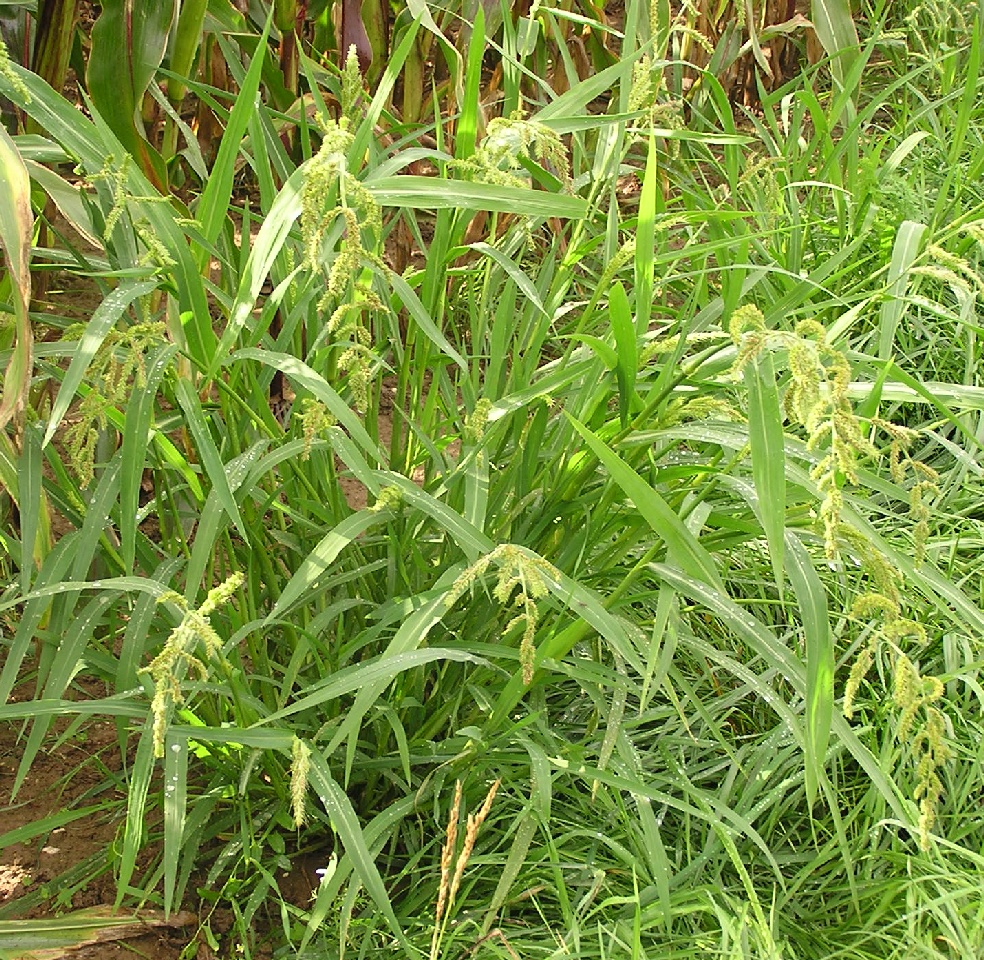
Indian barnyard millet is a warm-season annual grass in the family Poaceae, domesticated from the wild tropical grass Echinochloa colona. Grown widely across India, Pakistan, and Nepal, it produces small edible grains used during religious fasting periods and as a staple cereal.
You can harvest the grain within 45 to 60 days of sowing, making it one of the quickest cereal crops available. It thrives in waterlogged or marginal soils where rice (Oryza sativa) and wheat (Triticum aestivum) fail to grow.
Key Facts
- Type: Annual cereal grass
- Harvest: 45-60 days from sowing
- Sun: Full sun
- Soil: Tolerates waterlogged conditions
- Height: 60-120 cm (2-4 ft)
What Is Indian Barnyard Millet
Indian barnyard millet is a cereal crop known scientifically as Echinochloa frumentacea within the family Poaceae. It shares the common name Japanese millet with its close relative Echinochloa esculenta, though Echinochloa frumentacea is specifically adapted to the hot climates of South Asia.
The plant serves as an important subsistence crop on marginal soils where traditional cereals cannot survive. In India, people frequently consume the seeds during religious fasting periods under Hindi names such as vrat ke chawal or samak rice. Communities also know it locally as oodalu in Kannada, jhangora in the Garhwal Hills, bhagar in Marathi, and kuthiraivaali in Tamil.
Indian Barnyard Millet Plant Appearance and Look
The plant grows upright to a height of 60 to 120 cm (2 to 4 ft) with slender, branching stems and flat, linear green leaves measuring up to 30 cm (12 in) long. The inflorescence consists of dense, crowded racemes that carry small green or purplish spikelets containing the edible grains.
- Stem: Erect, hollow culms that tiller freely from the base.
- Leaves: Smooth green blades with rough margins and a prominent midrib.
- Seed heads: Compact, nodding panicles bearing tiny oval grains tightly enclosed in husks.
Growing Conditions for Indian Barnyard Millet
Indian barnyard millet requires full sun and temperatures between 25-35 °C (77-95 °F) to reach its maximum yield potential. It tolerates poor fertility and heavy clay soils that stay waterlogged, making it uniquely suited to low-lying areas.
- Light: Unshaded open positions receiving at least 6 hours of direct sun daily.
- Soil pH: Adapts well to acidic to neutral soils ranging from 5.5 to 7.5.
- Moisture: Thrives in wet, saturated soils and can withstand temporary flooding.
How to Sow Echinochloa frumentacea Seeds
Sow seeds directly in the ground after the last spring frost when soil temperatures exceed 20 °C (68 °F). Broadcast the seeds over a prepared seedbed and rake them in lightly at a depth of 1 to 2 cm (0.4 to 0.8 in).
- Spacing: Space plants 10 to 15 cm (4 to 6 inches) apart in rows spaced 30 cm (12 inches) apart.
- Germination: Seeds sprout within 5 to 7 days under warm, moist conditions.
- Thinning: Thin dense seedling patches once they reach 10 cm (4 inches) tall to prevent overcrowding.
Care and Maintenance
Maintain consistent soil moisture throughout the growing season because drought stunts the grass and reduces grain size. Hand-weed the plots during the first three weeks until the rapid canopy closure shades out competing weeds.
- Watering: Irrigate frequently if seasonal rainfall is low; standing water does not harm this crop.
- Fertilizing: Apply a low-rate nitrogen fertilizer at planting time if soil is severely depleted.
- Support: Staking is rarely required because the short stems resist lodging.
How to Harvest and Store the Grain
Harvest the seed heads when the grains turn firm and golden brown, usually 45 to 60 days after sowing. Cut the panicles by hand using sickles or shears before birds consume the ripening crop.
- Drying: Spread the harvested seed heads on tarps in the sun for 3 to 5 days until completely dry.
- Threshing: Rub the dried panicles between your hands or stomp gently in sacks to separate grains from the glumes.
- Storage: Store winnowed, clean grains in airtight glass jars or food-grade containers in a cool, dark pantry for up to 12 months.
How to Cook Barnyard Millet Indian Style
Cook barnyard millet in water using a 2:1 liquid-to-grain ratio, exactly like cooking white rice. Simmer the grains for 12 to 15 minutes until tender and the liquid is absorbed.
- Vrat Pulao: Sauté cumin seeds, green chilies, and boiled potatoes in ghee, then stir in cooked samak rice with rock salt (sendha namak).
- Kheer: Boil the grains in whole milk with cardamom and sugar until creamy for traditional fasting desserts.
- Porridge: Simmer cracked grains with extra water or milk for a warm breakfast dish.
Problems and Pests
The crop experiences few serious pest pressures, but growers should monitor for stem borers and grain-eating birds. Protect ripening seed heads with fine netting if local bird populations threaten the harvest.
- Stem Borers: Larvae tunnel into stems; remove and destroy infested plants immediately.
- Leaf Blight: Fungal spots appear during prolonged humid weather; ensure adequate row spacing.
- Grain Smut: Dark powdery masses replace seeds; use certified clean seed stock to prevent recurrence.
Indian Barnyard Millet Through the Seasons
| Spring | Prepare the soil by clearing weeds and till the earth. Sow seeds directly outdoors once the danger of frost has passed and soil warms up. |
|---|---|
| Summer | Provide regular irrigation if natural rainfall is lacking. Weed between rows during the first month and monitor for early signs of stem borers. |
| Autumn | Harvest golden seed heads before heavy autumn rains damage the crop. Dry, thresh, winnow, and store the cleaned millet grains. |
| Winter | Clear away leftover crop residue from the field to break pest life cycles. Plan crop rotation schedules for the upcoming spring planting. |
Diagnosing Indian Barnyard Millet Crop Problems
| What you see | Likely cause | What to do |
|---|---|---|
| Stunted growth and yellowing leaves | Severe nitrogen deficiency or prolonged drought | Apply a balanced organic fertilizer and ensure the soil stays consistently moist. |
| Seed heads eaten before harvest | Local birds feeding on ripening grains | Cover the panicles with agricultural bird netting or mesh bags. |
| Black powdery powder in place of seeds | Smut fungal infection | Discard infected plants and source disease-free seeds for the next planting season. |
Frequently Asked Questions
What is Indian barnyard millet?
Indian barnyard millet is a fast-growing cereal grass (Echinochloa frumentacea) cultivated in South Asia for its edible seeds, which are eaten during religious fasts.
What are the health benefits of Indian barnyard millet?
Indian barnyard millet is rich in dietary fiber, iron, and low in glycemic index, making it a nutritious gluten-free alternative to rice.
How do you cook indian barnyard millet rice indian style?
You cook it by simmering one part millet with two parts water for 12 to 15 minutes, or by preparing a spiced pulao with cumin, ghee, and potatoes.
Is Indian barnyard millet the same as kodo millet?
No, Indian barnyard millet (Echinochloa frumentacea) belongs to a different genus than kodo millet (Paspalum scrobiculatum), possessing smaller grains and faster maturity.
What is the scientific name of Indian barnyard millet?
The scientific name of Indian barnyard millet is Echinochloa frumentacea.
Sources & Verification
Taxonomy and distribution are checked against the databases below. Care guidance is written for cultivated species only and reviewed by our editor. How We Build Plant Profiles →