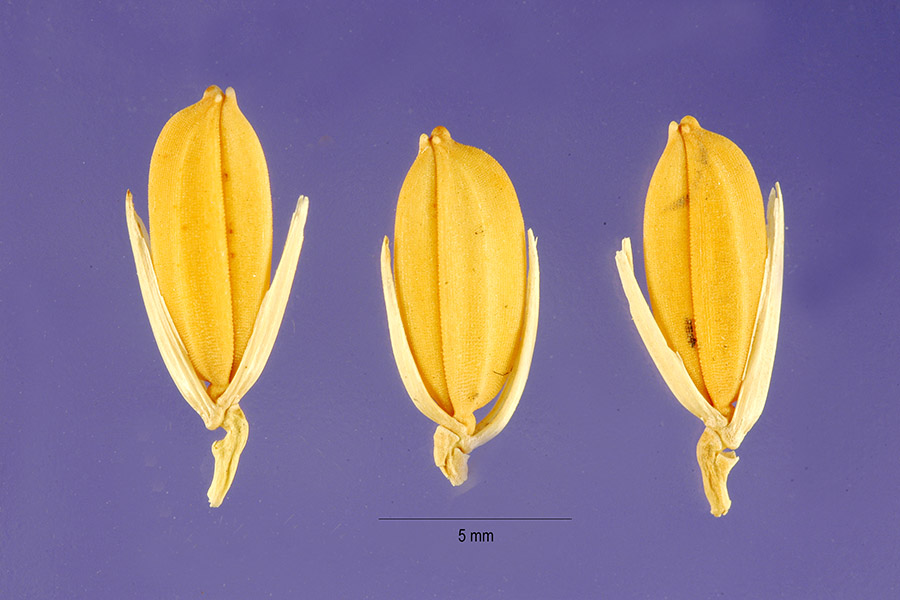
Rice (Oryza sativa) is an annual cereal grass originating in tropical and subtropical Asia, grown primarily for its edible carbohydrate-dense grains. Plants produce upright, hollow culms ending in arching seed panicles that yield the primary dietary staple for over half the world’s human population.
Crop success requires a minimum of 105 to 150 frost-free days with average temperatures above 20 °C (68 °F). In home gardens and smallholdings, growers raise rice successfully in sealed containers or raised beds lined with pond liner to replicate paddy conditions.
Key Facts
- Growing cycle: 105–150 days from germination to mature harvest
- Water depth: 5–10 cm (2–4 in) standing water for lowland varieties
- Sunlight: Minimum 6 to 8 hours of direct sun daily
- Soil type: Heavy clay or clay loam holding moisture reliably
- Germination temperature: Optimal at 25–30 °C (77–86 °F)
Growing Rice on Small Plots
You can grow a productive crop of rice in non-draining containers, barrels, or plastic-lined raised beds if your local summer offers three to five months of heat. The plant tolerates typical garden soils, but it demands continuous moisture that would drown conventional vegetables.
Small-scale growers divide rice into two production styles:
- Lowland (paddy) cultivation: plants stand in 5–10 cm (2–4 in) of still water, which controls weeds and stabilizes root temperatures.
- Upland cultivation: grown in ordinary garden soil that is watered daily to stay consistently damp without permanent standing water.
- Tub and bucket culture: 20-litre (5-gallon) buckets or livestock troughs provide controlled water reservoirs on patios or urban plots.
For household harvests, roughly 4 m² (43 sq ft) of planted area yields between 1.5 and 2.5 kg (3.3 to 5.5 lb) of unmilled grain under warm summer conditions.
Identifying Rice Plants and Grains
A mature rice plant forms a dense cluster of 10 to 30 upright tillers reaching 80 to 180 cm (31 to 71 in) in height depending on the cultivar. Stems are round, hollow between the nodes, and wrap inside smooth leaf sheaths.
Key botanical characteristics include:
- Foliage: flat, linear leaf blades measuring 30–60 cm (12–24 in) long and 1–2 cm (0.4–0.8 in) broad, with rough margins and a distinct papery ligule at the collar.
- Inflorescence: an open, terminal panicle 15–30 cm (6–12 in) long that stands erect during pollination and arches downward as grains swell.
- Spikelets: single-flowered units containing six stamens rather than the three typical of other grasses like wheat (Triticum aestivum).
- Grain: a caryopsis tightly enclosed in a hard silica-rich hull (lemma and palea) that turns golden-brown or straw-coloured at maturity.
Soil, Sun, and Temperature Requirements
Rice plants require full direct sunlight for at least six hours each day and daytime temperatures sustained between 22 and 32 °C (72 and 90 °F). Growth stops when temperatures fall below 12 °C (54 °F), and prolonged cold during flowering causes empty spikelets.
Soil selection focuses on moisture retention rather than porosity:
- Texture: heavy clay or silty clay loam prevents water from percolating downward through the bed.
- Reaction: target a pH between 5.5 and 6.5, although plants manage ranges from 5.0 to 7.0.
- Organic material: well-rotted compost worked into the top 15 cm (6 in) provides early season nitrogen and holds dissolved nutrients.
Do not plant rice in coarse sand or gravelly soils unless you install a continuous pond liner beneath the planting zone.
How to Sow and Transplant Rice
Start rice seeds indoors four to six weeks before your last spring frost by soaking unhulled seed in clean water for 24 to 36 hours. Discard seeds that float, as hollow seeds lack viable embryos.
Follow this procedure to establish healthy seedlings:
- Incubation: drain soaked seeds, wrap them in damp paper towels, and hold them at 28–30 °C (82–86 °F) until white radical tips emerge.
- Seedling trays: sow germinated seeds 1 cm (0.4 in) deep into potting mix, keeping trays saturated in a warm sunny greenhouse or under grow lights.
- Hardening off: move 10–15 cm (4–6 in) tall seedlings outdoors once night temperatures reliably exceed 15 °C (59 °F).
- Field spacing: transplant seedlings into flooded beds at 15–20 cm (6–8 in) spacing, planting clumps of 2–3 seedlings per hill.
Paddy Water Management and Feeding
Maintain a standing water depth of 5 cm (2 in) from seedling establishment until two weeks before harvest. Adding water gradually as plants grow prevents young leaves from submerging entirely.
Nutrient management centers on targeted applications:
- Basal feeding: incorporate a balanced organic fertilizer or decomposed animal manure into the soil bed prior to flooding.
- Mid-tillering feed: apply a nitrogen supplement, such as diluted fish emulsion or blood meal, 30 days after transplanting when side shoots form.
- Panicle initiation: add a final potassium and moderate nitrogen feeding when the reproductive swelling becomes visible inside the main stems.
- Floating companions: cultivate mosquito fern (Azolla caroliniana) on the water surface; it fixes atmospheric nitrogen through symbiotic cyanobacteria and suppresses weeds.
When and How to Harvest Rice
Harvest rice when 85 percent of the panicles turn golden-yellow and the lower grains have hardened past the milk and dough stages. This stage typically arrives 30 to 45 days after peak flowering.
Harvesting follows these sequential steps:
- Draining: drain standing water from the bed 10 to 14 days before harvest to let the ground firm and accelerate uniform seed drying.
- Cutting: slice the culms 10–15 cm (4–6 in) above soil level using a serrated sickle or clean bypass shears.
- Bundling: bind stems into sheaves using twine and hang them in a dry, ventilated room for 7 to 10 days until grain moisture drops below 14 percent.
- Threshing: strike the dried panicles against the inside of a clean plastic tub or beat them on a tarp to separate the rough grains (paddy) from the straw.
Culinary Uses and Processing
Raw harvested rice grain consists of the outer hull, bran layer, germ, and starchy endosperm. Processing dictates the final kitchen product:
The two primary subspecies produce distinct textures:
- Japonica: short to medium grains rich in amylopectin, producing sticky, cohesive cooked rice common in East Asian cuisine and molded dishes.
- Indica: long slender grains with high amylose content that cook dry and separate cleanly, standard for pilafs and curries.
- Puffed and pressed products: whole grains puff under heat and pressure to yield rice cakes and crispy cereal bases.
- Flour: milled broken grains grind into gluten-free flour for rice noodles, flatbreads, and translucent spring roll wrappers.
Threshed rice straw serves as winter mulch around companion crops like soybean (Glycine max) or sweet potato (Ipomoea batatas).
Managing Pests, Diseases, and Weeds
The fungal disease rice blast (Magnaporthe oryzae) poses the primary threat, producing diamond-shaped lesions with gray centres on foliage and breaking panicle stems. Avoid overhead watering and space clumps at least 15 cm (6 in) apart to ensure air movement.
Common management responses include:
- Rice water weevil: larvae feed on submerged roots; draining the bed for 3–5 days suffocates larvae without killing established plants.
- Armyworms: pick off feeding larvae by hand on small garden beds during early morning inspections.
- Sheath blight (Rhizoctonia solani): remove infected lower leaves immediately and thin dense tillers.
- Weed control: maintain unbroken water depth of 5–8 cm (2–3 in), which prevents seeds of terrestrial grass competitors from germinating.
Drying, Dehulling, and Grain Storage
Store cleaned rice at a grain moisture content of 12 to 13 percent to stop fungal growth and prevent insect infestation. If a test grain cracks cleanly between your teeth rather than flattening, it is dry enough for storage.
Follow standard home-processing methods:
- Dehulling: run dry grain through a hand-crank rubber-roller grain dehuller, or rub batches vigorously between wooden mortar blocks to strip the inedible outer hull.
- Winnowing: pour the cracked grain from one bucket to another in front of an electric fan or stiff breeze to blow away light chaff.
- Brown rice storage: retains the bran layer and oil-rich germ; store in airtight glass jars in a cool pantry for 6 months, or freeze for 12 months.
- White rice storage: polished grain lacking bran and germ keeps for up to 10 years in sealed containers with oxygen absorbers.
Seasonal Tasks for Rice Cultivation
| Spring | Soak seeds indoors in late spring. Germinate at 28 °C (82 °F) and grow in seedling trays. Transplant into flooded beds once night temperatures remain above 15 °C (59 °F). |
|---|---|
| Summer | Maintain standing water at 5–10 cm (2–4 in) throughout the vegetative phase. Apply balanced nitrogen fertilizer at mid-tillering, and scout for leaf blast lesions. |
| Autumn | Drain water 10 to 14 days before harvest when panicles turn golden. Cut stalks, hang sheaves to dry for 7–10 days, then thresh, dehull, and store grains. |
| Winter | Clear dead stubble from beds to eliminate overwintering stem borers. Incorporate finished compost into dry soil beds to prepare organic fertility for the coming year. |
Diagnosing Common Rice Growing Problems
| What you see | Likely cause | What to do |
|---|---|---|
| Panicles stand erect with white, empty husks | Cold temperatures below 15 °C (59 °F) during flowering, or stem borer damage | Shield container plantings with horticultural fleece during unexpected cold snaps during mid-summer flowering. |
| Yellowing leaves starting from the tips down | Nitrogen deficiency in waterlogged soil | Apply diluted fish emulsion or top-dress with composted manure around tiller bases. |
| Seedlings rot or float to water surface | Water level too deep immediately after transplanting | Reduce water to a shallow film of 1–2 cm (0.5–0.8 in) until seedlings establish firm root contact. |
| Oval spindle-shaped gray spots on leaf blades | Rice blast fungus (Magnaporthe oryzae) | Increase spacing between hills, eliminate overhead spraying, and avoid excessive high-nitrogen feeding. |
Cold-Tolerant and Garden Rice Cultivars
- ‘Duborskian’ – Russian upland short-grain, cold-hardy, drought-tolerant
- ‘Koshihikari’ – classic Japanese short-grain, sticky, high-yield paddy type
- ‘Carolina Gold’ – heirloom long-grain, non-sticky, rich nutty flavour
- ‘Yukihikari’ – northern cool-climate short-grain, matures in 100 days
- ‘Black Madras’ – dark purple ornamental foliage with edible grain
Frequently Asked Questions
Can you grow rice without a flooded paddy?
Yes, upland rice cultivars grow in standard garden soil as long as they receive at least 2.5 to 5 cm (1 to 2 in) of water per week through consistent irrigation. Flooding is used in commercial farming primarily to control weeds and maintain temperature stability, not because the roots require standing water.
What is the difference between rice gardening care and RICE care for injury?
Horticultural rice care involves moisture and nutrient management for the cereal crop Oryza sativa. Medical RICE is an unrelated first-aid acronym for soft-tissue injuries that stands for Rest, Ice, Compression, and Elevation.
How does Asian rice differ from wild rice?
Asian rice belongs to Oryza sativa, whereas North American wild rice belongs to an entirely separate aquatic grass genus, Zizania aquatica. Wild rice produces longer, darker grains with an earthy flavour and requires deep aquatic habitats rather than shallow controlled paddies.
How long does rice take to grow from seed to harvest?
Most garden varieties require 105 to 150 days from seed sowing to harvest. Short-season cultivars bred for northern regions mature closer to 100 days under warm, sunny conditions.
Can you eat rice straight from the plant?
No, raw rice harvested from the plant is protected by a tough, fibrous silica hull that is indigestible to humans. You must dry and thresh the seed heads, then mechanically crack and winnow off the hulls before boiling the grains.
Sources & Verification
Taxonomy and distribution are checked against the databases below. Care guidance is written for cultivated species only and reviewed by our editor. How We Build Plant Profiles →
- Kew Plants of the World OnlineTaxonomy, native distribution, and morphology
- University of California Agriculture and Natural ResourcesPest management, seedling transplanting, and nutrient guidelines
- GBIF — Global Biodiversity Information Facilitytaxonomy, synonyms, occurrence records
- Wikipediageneral reference