

The potato is a starchy tuberous vegetable native to the Americas, classified botanically as Solanum tuberosum in the nightshade family Solanaceae. Cultivated worldwide as a dietary staple, it produces underground tubers that swell from modified stems known as stolons.
Successful potato harvests require loose, well-draining soil and consistent moisture during tuber bulking. Watch out for foliar blights and ensure seed potatoes are disease-free before planting in early spring.
Key Facts
- Soil pH: 4.8 to 5.5 for scab prevention
- Water: 2.5 cm (1 in) per week
- Planting Depth: 10 cm (4 in) initial trench
- Harvest: 70 to 120 days post-planting
- Hardiness: Annual crop grown in zones 3-10
What to Expect When Growing Potato Plants
Growing potatoes suits gardeners who have loose, fertile soil and adequate space for mounding plants. Expect a high yield of up to 4.5 kg (10 lb) of tubers per seed piece under optimal conditions. The key to success is keeping developing tubers completely covered with soil or mulch to prevent greening.
- Choose a sunny patch receiving at least 6 hours of direct light daily.
- Prepare planting beds by loosening soil down to 30 cm (12 in).
- Rotate crops yearly to prevent soil-borne pathogens from building up.
When selecting a potato planter or garden bed, ensure drainage is rapid because standing water rots seed pieces quickly. Companion plants like sweet potato (Ipomoea batatas) or carrots (Daucus carota) can be integrated into your vegetable layout if space is managed carefully.
How to Identify Potato Foliage and Tubers
The potato is an herbaceous perennial treated as an annual crop, featuring compound green leaves and angular stems. Mature plants reach heights of 60 to 100 cm (24 to 39 in) before the foliage naturally yellows and dies back. Flowers are star-shaped, measuring 3 cm (1.2 in) across, and appear in shades of white, pink, or purple.
- Leaves are pinnately divided with alternating large and small leaflets.
- Underground stolons swell at the tips to form starchy tubers with eyes.
- Small, green, tomato-like toxic fruits occasionally follow spent flowers.
Tubers vary greatly by skin color, ranging from white and yellow to red, blue, and purple. The interior flesh is typically white or yellow, possessing high starch content that varies depending on the specific cultivar.
Ideal Soil and Climate Conditions for Potatoes
Potatoes thrive in cool climates with daytime temperatures between 15 °C and 20 °C (59 °F to 68 °F). Soil temperatures must reach at least 7 °C (45 °F) before seed tubers are placed in the ground. Excess heat above 28 °C (82 °F) severely inhibits tuber development.
- Maintain a strongly acidic soil pH between 4.8 and 5.5 to deter common scab.
- Amend heavy clay with compost to improve aeration and tuber expansion.
- Avoid overly compacted earth that produces deformed, stunted crops.
Good drainage is non-negotiable for this crop. Standing water leads directly to fungal rots that destroy both roots and developing tubers before harvest time.
When and How to Plant Potato Seed Pieces
Plant your seed potatoes 2 to 4 weeks before the last expected spring frost date. Cut larger seed tubers into chunks weighing 50 g (1.8 oz), ensuring each piece has at least 2 distinct eyes. Allow cut surfaces to callus over in a dry room for 24 hours prior to planting.
- Dig trenches 10 cm (4 in) deep in rows spaced 75 cm (30 in) apart.
- Place seed pieces eye-side up every 30 cm (12 in) along the trench.
- Cover pieces with 8 cm (3 in) of soil to start the growing cycle.
As green shoots emerge and reach 20 cm (8 in) tall, pull soil up around the stems in a process called hilling. Repeat hilling every 3 weeks until the plants begin to flower.
Watering and Feeding Schedule for Potato Crops
Consistent moisture is the single most important factor for preventing misshapen tubers. Deliver 2.5 cm (1 in) of water per week through rainfall or deep irrigation. Irrigation must remain steady, especially during the critical tuber-bulking phase when flowers appear.
- Soak the soil deeply rather than giving frequent shallow sprinkles.
- Reduce watering slightly as the foliage begins to turn yellow in late summer.
- Apply a balanced organic fertilizer rich in phosphorus and potassium at planting time.
Avoid excessive nitrogen fertilizers, which spur lush green foliage at the expense of underground tuber growth. Mulching heavily with straw helps retain soil moisture through dry summer weeks.
How and When to Harvest Potatoes
Harvest timing depends on whether you want tender new potatoes or fully stored maincrop tubers. New potatoes are ready 70 to 90 days after planting, just as the plants finish flowering. Maincrop potatoes are harvested 120 to 140 days out, after the green foliage dies back completely.
- Stop watering 10 days before harvesting maincrop tubers to toughen their skins.
- Use a garden fork to lift the soil 30 cm (12 in) away from the stem base.
- Brush off loose dirt by hand, avoiding scrubbing with water.
Never leave freshly dug tubers exposed to bright sunlight for more than an hour, as UV rays turn their skins green and bitter. Handle every tuber gently to prevent bruising that ruins long-term storage potential.
Common Uses: from Potato Chips to Potato Carrot Soup
Potatoes are a culinary cornerstone used globally in baking, frying, boiling, and roasting. High-starch russet cultivars are ideal for french fries and potato chips, while waxy varieties hold their shape in salads. They also process into potato starch used for thickening soups and gravies.
- Slice thin rounds for crisp homemade potato chips or baked wedges.
- Combine diced roots with carrots, celery, and onions for a hearty potato carrot soup.
- Mash boiled tubers with butter and warm milk for a classic side dish.
Beyond human consumption, processed starch and industrial derivatives serve non-food manufacturing purposes. Traditional herbal applications historically used raw slices externally for minor skin irritations.
Troubleshooting Potato Pests and Diseases
Potato crops face several persistent threats that can ruin foliage and underground yields if left unchecked. Colorado potato beetles (Leptinotarsa decemlineata) can strip foliage rapidly if manual removal is ignored. Crop rotation and certified disease-free seed stock are your primary lines of defense.
- Symptom: Brown water-soaked leaf spots. Cause: Late blight (Phytophthora infestans). Fix: Remove and destroy infected foliage immediately.
- Symptom: Chewed leaves and defoliation. Cause: Potato beetles. Fix: Handpick adults or apply spinosad spray.
- Symptom: Scabby pits on tuber skin. Cause: Soil bacteria. Fix: Lower soil pH below 5.5 using elemental sulfur.
Wireworms can also bore tunnels directly into developing tubers underground. Avoid planting potatoes in newly turned sod where wireworm populations are naturally high.
How to Store Potatoes Through the Winter
Proper storage prevents sprouting and rotting, keeping your harvest edible for months. Store cured tubers in a dark, well-ventilated space maintained at 4 °C to 7 °C (39 °F to 45 °F). Never store raw potatoes inside a household refrigerator, as cold temperatures convert their starches into sugars.
- Cure freshly dug tubers in a dark room at 15 °C (60 °F) for 10 days.
- Discard any bruised or cut specimens before placing them in storage crates.
- Check bins monthly to remove any sprouting or decaying tubers.
Keep your storage area humid at around 85 to 90 percent to prevent the tubers from shriveling. Exposure to light must be strictly blocked to stop greening and solanine accumulation.
Potato Care Through the Seasons
| Spring | Prepare garden beds by mixing in compost and plant certified disease-free seed potatoes 2 to 4 weeks before the last frost date. |
|---|---|
| Summer | Hill soil around growing stems every 3 weeks, supply 2.5 cm (1 in) of water weekly, and monitor plants for beetle activity. |
| Autumn | Cease watering as foliage yellows, harvest mature tubers after vines die back, and move cured crops into cold dark storage. |
| Winter | Inspect stored potatoes monthly, discard any soft or sprouting tubers, and plan crop rotation layouts for the upcoming season. |
Diagnosing Potato Crop Problems
| What you see | Likely cause | What to do |
|---|---|---|
| Yellowing lower leaves | Natural aging or nitrogen deficiency | Apply a balanced side-dressing of organic fertilizer if foliage is pale. |
| Green skin on harvested tubers | Exposure to sunlight during growth | Hill soil higher around plant bases to keep all developing tubers buried. |
| Black hollow centers in tubers | Rapid uneven growth from erratic watering | Maintain a steady, consistent weekly irrigation schedule. |
Popular Potato Cultivars Compared
- ‘Russet Burbank’ – high starch content, excellent for baking and frying
- ‘Yukon Gold’ – buttery yellow flesh, versatile for boiling and mashing
- ‘Kennebec’ – high-yielding maincrop, resistant to late blight
- ‘Fingerling’ – small elongated tubers, firm texture for roasting
- ‘Red Pontiac’ – thin red skin, holds shape well in potato salads
Frequently Asked Questions
Are green potatoes safe to eat?
No, green potatoes contain high levels of toxic solanine and should be discarded. Never consume tubers that have turned green from sun exposure.
Can you grow potatoes from grocery store potatoes?
It is possible, but grocery store potatoes are often treated with anti-sprouting agents and may carry plant viruses. Always plant certified disease-free seed potatoes for best results.
How do you make potato crackers or chips at home?
Slice starchy potatoes paper-thin with a mandoline, soak out excess surface starch in cold water, and fry or bake them until crisp. Season immediately with salt after cooking.
What causes potato plants to flower?
Flowering is a natural part of the plant lifecycle triggered by day length and maturity. Not all cultivars produce flowers, and the presence of blooms does not impact underground tuber formation.
Information about traditional or historical uses is provided for educational interest only and is not medical advice. Do not use any plant to treat a condition without speaking to a qualified professional.
Sources & Verification
Taxonomy and distribution are checked against the databases below. Care guidance is written for cultivated species only and reviewed by our editor. How We Build Plant Profiles →
More in Solanum

Black Nightshade
Solanum nigrum
☀️ Full Sun 💧 Moderate

Jerusalem Cherry
Solanum pseudocapsicum
☀️ Full Sun 💧 Moderate

Tamarillo
Solanum betaceum
☀️ Full Sun 💧 Moderate
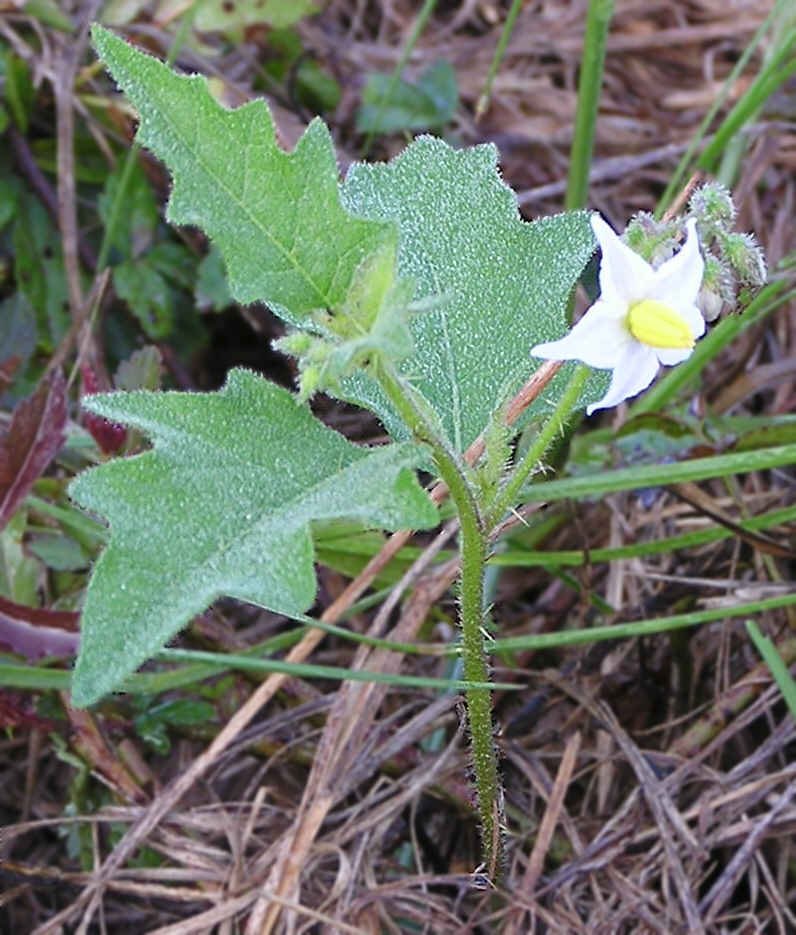
Carolina Horsenettle
Solanum carolinense
☀️ Full Sun 💧 Low

Apple of Sodom
Solanum campylacanthum
☀️ Full Sun 💧 Low

Gboma Eggplant
Solanum macrocarpon
☀️ Full Sun 💧 High