

Black nightshade (Solanum nigrum) is a globally distributed annual herb recognized by its clusters of small white flowers and pea-sized berries that turn from green to black. While often found growing wild in disturbed soils, it is cultivated across Africa and Asia as a source of nutrient-dense leafy greens and ripe fruit.
Confusion with the highly toxic deadly nightshade (Atropa belladonna) is common, but the two are easily separated by their flower color and fruit arrangement. You must ensure berries are fully ripe and leaves are properly cooked to minimize the risk from naturally occurring alkaloids like solanine.
Key Facts
- Light: Full sun to partial shade
- Soil: Nitrogen-rich, well-drained loams
- Height: 30–80 cm (12–31 in)
- Safety: Unripe green berries are toxic
- Harvest: Pick leaves before flowering occurs
Growing Black Nightshade in Your Garden
Black nightshade is a fast-growing annual that thrives in disturbed soil and sunny spots. It is an excellent choice for those interested in traditional African leafy vegetables or “lost” crops that provide high yields with minimal intervention. You will find it grows much like a cherry tomato (Solanum lycopersicum) but requires less support or specialized pruning to thrive. It suits low-maintenance vegetable patches where it often reappears as a volunteer plant from seeds dropped in previous seasons.
Because it spreads quickly via prolific seed production, you must be prepared to manage its expansion to prevent it from outcompeting slower-growing herbs. If you have small children or pets that graze on plants, ensure you can identify the berries at every stage of ripeness to avoid accidental ingestion of green fruit. The plant is surprisingly resilient to poor soil but rewards the gardener with much larger, more succulent leaves when grown in a dedicated, fertilized bed.
How to Identify Black Nightshade
You can identify black nightshade by its small white flowers and clusters of pea-sized black berries. The plant typically reaches 30–80 cm (12–31 in) in height with an upright or sprawling habit depending on the light levels. Its leaves are ovate to lance-shaped, measuring 4–10 cm (1.6–4 in) long, with wavy or slightly toothed margins that distinguish it from the smoother leaves of bittersweet nightshade (Solanum dulcamara). The flowers appear in groups of 3 to 10, featuring five white petals that recurve to reveal a prominent cone of yellow anthers.
Unlike deadly nightshade (Atropa belladonna), which produces single berries, black nightshade fruit grows in distinct clusters called umbels. Identifying features include:
- White star-shaped flowers with bright yellow centers
- Berries that turn from green to a dull or glossy black when mature
- A small, green calyx at the base of the berry that does not wrap around the fruit
- Stems that are mostly smooth but may have small, soft hairs in certain subspecies
- Alternate leaf arrangement along the main and lateral stems
Ideal Conditions for Solanum nigrum
This plant requires full sun and soil with high nitrogen levels to produce the lush, edible foliage sought by growers. While it can tolerate partial shade, the fruit production and leaf size will decrease significantly in lower light. It prefers a temperature range between 15–30 °C (59–86 °F) for optimal growth and fast maturation. If your soil is heavy clay, you should incorporate organic matter to improve drainage, as waterlogged roots will quickly kill the plant.
It is frequently found in USDA zones 4 through 11, behaving as a summer annual in cooler climates that experience frost. High fertility is the secret to producing the tender leaves used in culinary applications; without enough nitrogen, the leaves can become tough and overly bitter. In wild settings, it often colonizes the edges of compost heaps or manure piles where nutrient levels are naturally elevated.
Sowing and Planting Guide
Sow seeds on the soil surface in late spring once the danger of frost has passed and soil temperatures reach 18 °C (64 °F). Because the seeds are tiny, they should only be lightly pressed into the medium rather than buried deep, as they require some light to trigger germination. You can start them indoors 6–8 weeks before the last frost, using a method similar to growing bell peppers (Capsicum annuum). Space the plants 30–45 cm (12–18 in) apart to allow for their bushy spread.
- Use a sterile seed-starting mix for indoor trays to prevent damping off
- Keep the soil consistently moist but not saturated during the germination phase
- Expect sprouts to appear within 7 to 14 days in warm conditions
- Thin seedlings to the strongest individual once they have two sets of true leaves
- Hardening off is necessary over 7 days before outdoor transplanting to prevent shock
Caring for Your Nightshade Crop
Provide moderate water at the base of the plant, keeping the soil moist but never soggy to avoid root rot. During the peak of summer, you may need to water every 2 to 3 days to prevent the large leaves from wilting and becoming scorched. Mulching with straw or bark helpfully retains moisture and suppresses competing weeds that might steal nutrients from the shallow root system. Avoid high-potassium fertilizers if you are growing it primarily for its leaves, as this encourages early flowering and fruit set at the expense of foliage.
Instead, apply a balanced organic liquid feed every 4 weeks to sustain growth throughout the season. If the plant becomes too leggy or tall, you can pinch back the growing tips to encourage a more compact, branching habit that yields more harvestable material. This species is generally self-supporting, but in very windy locations, a small stake can prevent the main stem from snapping when loaded with fruit.
Harvesting Berries and Leaves Safely
Only harvest berries that have turned completely black and fall easily into your hand when touched. Green, unripe berries contain high concentrations of solanine and must never be consumed raw or cooked. For the leaves, pick the young, tender growth before the plant begins to flower to ensure the mildest flavor and lowest alkaloid content. Many cultures boil the leaves in two changes of water to remove any bitter compounds before final preparation.
- Wear gloves if you have sensitive skin, as the sap can be a mild irritant for some
- Harvest leaves in the early morning when their moisture content is highest
- Discard any berries that show hints of green, yellow, or brown
- Use a small pair of snips to remove berry clusters without damaging the brittle stems
- Wash all harvested parts thoroughly in cold water to remove soil and insects
Culinary and Traditional Uses
Black nightshade leaves are traditionally used as a potherb in many parts of Africa, Greece, and India. In Kenya, the leaves are known as managu and are often sautéed with onions or cooked in milk to soften their slightly bitter edge and increase nutrient absorption. The fully ripe berries are sometimes used to make jams or preserves, provided they are cooked thoroughly with sugar to balance their earthy flavor. It is vital to remember that toxicity levels can vary based on the local soil conditions and the specific subspecies being grown.
Historically, the plant was used in traditional medicine to treat skin conditions and inflammation, though this is no longer recommended without professional medical guidance. The plant also serves as a host for various pollinators, including hoverflies and bees, making it a functional addition to a biodiversity-focused garden. Never consume this plant if you are unsure of its identity or if it has been growing in soil contaminated with heavy metals.
Managing Pests and Common Diseases
Watch for flea beetles and aphids, which are the most common pests affecting black nightshade. Flea beetles leave tiny “shotholes” in the leaves, which can stunt the growth of young plants if not managed early in the season. You can control these by using fine mesh row covers or applying neem oil in the evening. As a member of the Solanaceae family, this plant is also prone to early blight, which manifests as dark, concentric rings on the lower leaves.
- Remove and destroy infected leaves immediately to stop the spread of fungal spores
- Ensure good air circulation by spacing plants at least 30 cm (12 in) apart
- Avoid overhead watering to keep the foliage dry and reduce disease risk
- Rotate crops annually to prevent soil-borne pathogens from building up
- Check the undersides of leaves weekly for aphid colonies or whitefly eggs
Storage and Preservation
Fresh leaves should be used within 2 days of harvest for the best nutritional value and texture. You can store them in a perforated plastic bag in the refrigerator’s crisper drawer to maintain turgidity. For longer preservation, the leaves can be blanched for 2 minutes in boiling water and then frozen for up to 6 months. Ripe berries are best used immediately but can be kept in a single layer in the fridge for 3 to 5 days.
- Do not wash leaves or berries until right before you intend to use them
- Dried leaves lose much of their flavor but are sometimes used in traditional herbal infusions
- Frozen berries should be used for cooking or jams rather than raw consumption
- Label all stored parts clearly to avoid confusion with other garden produce like blueberries
Year-Round Management of Black Nightshade
| Spring | Sow seeds indoors or directly outside once soil is 18 °C (64 °F). Prepare beds with aged manure or compost. |
|---|---|
| Summer | Water every 2-3 days during dry spells. Harvest young leaves before flowers appear to maintain flavor. |
| Autumn | Collect fully ripe black berries for seed saving or cooking. Remove spent plants to prevent excessive self-seeding. |
| Winter | In frost-prone areas, the plant will die back. Clear debris to prevent pests from overwintering in the soil. |
Common Black Nightshade Growing Problems
| What you see | Likely cause | What to do |
|---|---|---|
| Tiny round holes in leaves | Flea beetles | Apply neem oil or use floating row covers on young plants. |
| Yellowing lower leaves | Nitrogen deficiency | Apply a high-nitrogen organic liquid fertilizer every two weeks. |
| Sticky residue on stems | Aphids | Blast the insects off with a strong stream of water or use insecticidal soap. |
| Wilting despite moist soil | Root rot | Improve soil drainage by adding grit or organic matter and reduce watering frequency. |
Regional Varieties of Black Nightshade
- ‘Managu’ – Kenyan landrace with large, succulent leaves.
- ‘Svecha’ – Russian variety bred for high berry yield.
- ‘Zolotistaya’ – A selection known for more uniform ripening.
Frequently Asked Questions
Is black nightshade the same as deadly nightshade?
No, they are different species; black nightshade (Solanum nigrum) has white flowers and clustered berries, while deadly nightshade (Atropa belladonna) has purple flowers and single berries.
Are the berries of black nightshade poisonous?
The unripe green berries contain toxic solanine, but fully ripe black berries are eaten in many cultures after being cooked. Always exercise caution and verify ripeness.
How do I get rid of black nightshade in my garden?
You can remove it by pulling the plants before they set seed or by using a hoe to cut the taproot at least 5 cm (2 in) below the soil surface.
What are the benefits of black nightshade?
Traditionally, it is valued for its high vitamin A and C content in the leaves, though it must be boiled properly to be safe for consumption.
Is black nightshade invasive?
It is considered a weed in many regions because it grows rapidly in disturbed soil and can produce up to 10,000 seeds per plant.
Information about traditional or historical uses is provided for educational interest only and is not medical advice. Do not use any plant to treat a condition without speaking to a qualified professional.
Sources & Verification
Taxonomy and distribution are checked against the databases below. Care guidance is written for cultivated species only and reviewed by our editor. How We Build Plant Profiles →
More in Solanum
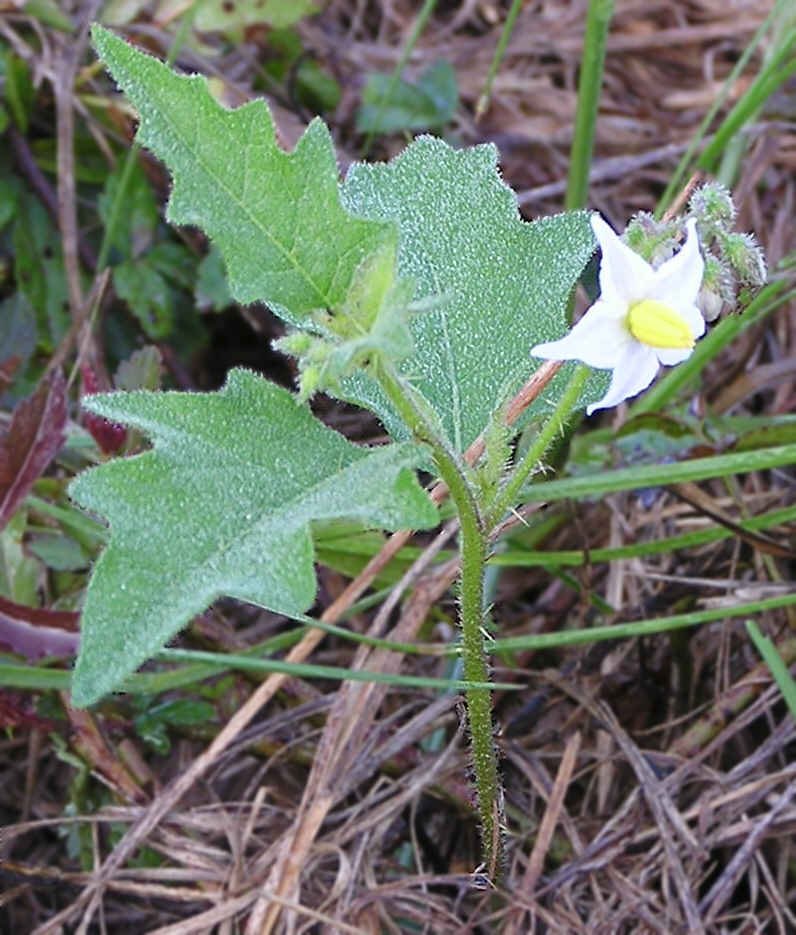
Carolina Horsenettle
Solanum carolinense
☀️ Full Sun 💧 Low

Eggplant
Solanum melongena
☀️ Full Sun 💧 Moderate

Potato
Solanum tuberosum
☀️ Full Sun 💧 Moderate

Gboma Eggplant
Solanum macrocarpon
☀️ Full Sun 💧 High

Jerusalem Cherry
Solanum pseudocapsicum
☀️ Full Sun 💧 Moderate

Turkey Berry
Solanum torvum
☀️ Full Sun 💧 Moderate