

Eggplant (Solanum melongena) is a warm-season tender perennial grown as an annual for its thick-skinned, spongy fruits. Originating from tropical Asia, this member of the nightshade family requires consistent summer warmth and fertile soil to set a heavy crop.
You will need a minimum summer temperature of 21 °C (70 °F) and at least 6 hours of direct sun to harvest bitter-free fruit. Keep moisture steady because drought pauses fruit development and turns leaves pale yellow.
Key Facts
- Light: Full sun
- Water: 2.5 cm (1 inch) weekly
- Soil pH: 6.0 to 6.8
- Spacing: 45 cm (18 inches) apart
- Harvest: 60 to 80 days from transplant
Why Grow Eggplant in Your Garden
Growing eggplant (Solanum melongena) suits gardeners with warm summers who want a high-yielding, attractive vegetable plant that doubles as an ornamental. You get a productive bush featuring lobed green leaves, star-shaped purple flowers, and glossy heavy fruits. The most critical rule to remember is never let the roots dry out completely during dry spells.
- Produces up to 10 to 15 fruits per healthy plant in a single season.
- Fits well into raised beds, traditional vegetable patches, or large containers.
- Attracts beneficial pollinators when its five-petaled purple blooms open in mid-summer.
If you live in a cooler climate, starting seeds indoors 8 weeks before the last spring frost is necessary. Pair them alongside bell peppers (Capsicum annuum) and tomatoes (Solanum lycopersicum) for a unified nightshade bed.
What Eggplant Looks Like
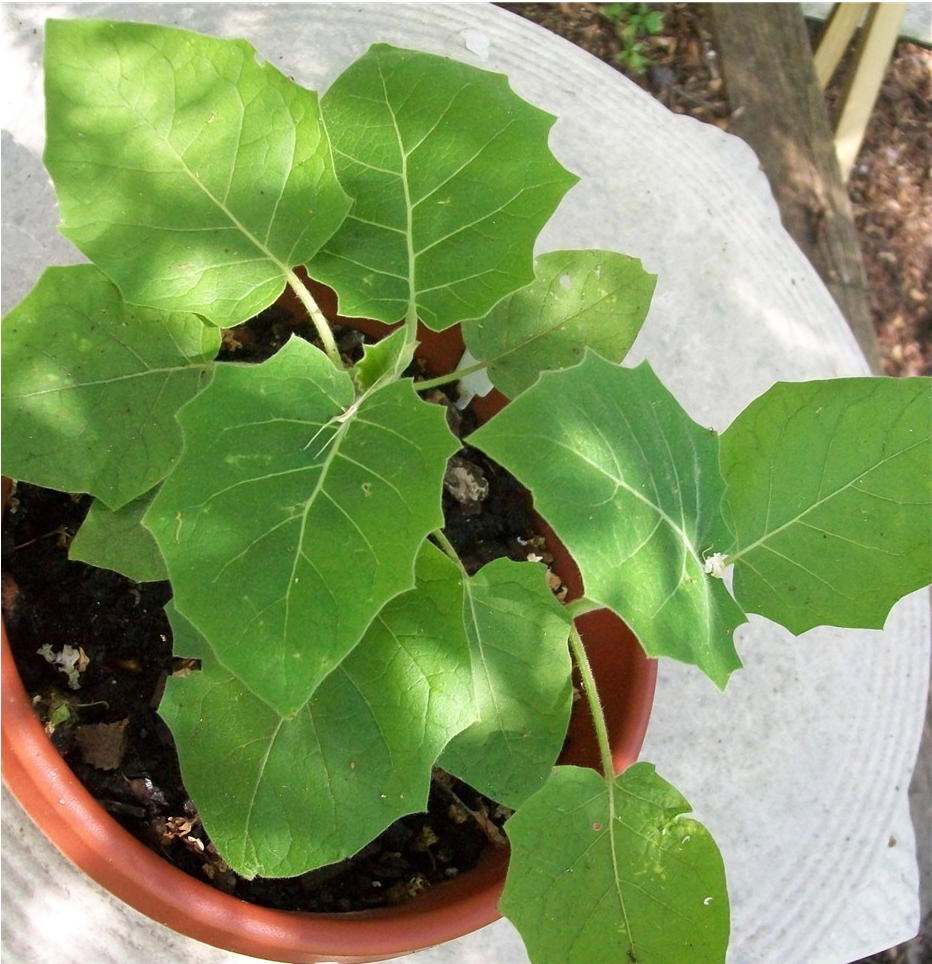
An eggplant (Solanum melongena) stands between 60 cm to 120 cm (2 to 4 ft) tall with a bushy, semi-woody branching habit. The stems are frequently tinged with purple and feature coarse, ovate leaves that grow up to 20 cm (8 inches) long with slightly lobed margins.
- Flowers: Solitary or clustered blooms measuring 3 cm (1.2 inches) across with violet-to-white petals and prominent yellow anthers.
- Fruit: A fleshy berry ranging from 5 cm (2 inches) to over 30 cm (12 inches) long, varying from pear-shaped to slender cylinders.
- Color: Classic glossy deep purple, but certain cultivars display white, striped pink, or bright yellow skins.
As fruits mature, the calyx directly beneath the stem expands and becomes spiky or prickly on many traditional varieties. The interior flesh is spongy, white to pale cream, and packed with hundreds of tiny edible seeds.
Ideal Growing Conditions for Eggplant
Eggplant (Solanum melongena) thrives when provided with daytime temperatures consistently above 24 °C (75 °F) and full, unobstructed sunshine. Planting them in a sheltered, south-facing spot protects the brittle branches from strong summer winds.
- Provide 6 to 8 hours of direct sunlight daily for maximum fruit set.
- Amend garden beds with well-rotted compost to achieve a rich, loamy soil texture.
- Maintain a soil pH between 6.0 and 6.8 to ensure proper nutrient uptake.
Avoid planting them in heavy, waterlogged clay where root rot can quickly destroy the crop. If growing in containers, select a pot that holds at least 19 liters (5 gallons) of potting mix per plant.
How to Sow and Plant Eggplant
Sow eggplant (Solanum melongena) seeds indoors 8 weeks before your region’s final average spring frost date. Keep the seed-starting trays at a warm 25 °C (77 °F) using a heating mat to ensure rapid germination within 7 to 14 days.
- Transplant seedlings outdoors only after night temperatures stay above 15 °C (59 °F).
- Space individual plants 45 cm (18 inches) apart in rows spaced 75 cm (30 inches) apart.
- Harden off indoor-grown plants over 10 days by gradually exposing them to outdoor conditions.
Bury the root ball slightly deeper than it sat in its nursery pot to encourage a sturdier root system. Apply a thick layer of organic mulch around the base to suppress weeds and retain soil moisture.
Eggplant Care and Feeding
Water eggplant (Solanum melongena) deeply at the soil level, supplying roughly 2.5 cm (1 inch) of water each week. Irregular watering causes blossom drop and results in misshapen, bitter-tasting fruits.
- Apply a balanced, low-nitrogen organic fertilizer every 3 to 4 weeks once flowering begins.
- Stake heavy-laden branches with bamboo canes to prevent the main stem from snapping under fruit weight.
- Prune away lower leaves touching the soil line to improve air circulation and prevent fungal splash.
Avoid excessive high-nitrogen fertilizers, which cause the plant to produce massive amounts of lush green foliage at the expense of flowers and fruit.
When and How to Harvest Eggplant
Harvest eggplant (Solanum melongena) 60 to 80 days after transplanting, depending on the specific cultivar. Pick fruits when they are about two-thirds of their maximum size and still possess a glossy, shiny outer skin.
- Press your thumb gently against the fruit skin; if the indentation springs back, it is ready.
- Cut the fruit stem using sharp pruners, leaving a 3 cm (1.2 inch) cap attached to the fruit.
- Never pull or twist the fruit off, as this tears the main stem and damages the plant.
If the skin appears dull, leathery, or yellow, the fruit is overripe, filled with hard seeds, and will taste bitter. Regular harvesting encourages the plant to produce another flush of flowers and fruit.
Culinary Uses and Benefits of Eggplant
Eggplant (Solanum melongena) is a versatile culinary ingredient featured extensively in Mediterranean, Middle Eastern, and Asian cuisines. The spongy flesh acts like a culinary sponge, absorbing flavors, oils, and spices during cooking methods like roasting, frying, grilling, or baking.
- Rich in dietary fiber, potassium, and antioxidant compounds like nasunin found in the purple skin.
- Can be salted and drained beforehand to remove excess moisture and reduce any mild bitterness.
- Core ingredient in classic dishes such as ratatouille, moussaka, baba ghanoush, and tempura.
Always cook eggplant thoroughly before eating, as raw fruit contains solanine compounds that cause digestive discomfort.
Troubleshooting Common Eggplant Problems
Inspect your eggplant (Solanum melongena) regularly for signs of pest damage or nutrient stress during peak summer heat. Catching issues early prevents minor leaf damage from ruining your harvest.
- Flea beetles: Tiny jumping insects chewing small round holes in leaves; cover young plants with floating row covers.
- Blossom end rot: Sunken dark patches on the bottom of fruits caused by inconsistent soil moisture and calcium deficiency.
- Powdery mildew: White powdery coating on leaves caused by high humidity; thin out crowded branches to improve airflow.
Remove severely damaged leaves immediately and dispose of them in the trash rather than the compost bin to break pest and disease cycles.
How to Store Eggplant After Harvest
Store fresh eggplant (Solanum melongena) in a cool area or the refrigerator crisper drawer for up to 4 to 7 days. Keep them unwashed in a breathable plastic bag until you are ready to prepare them for cooking.
- Store at temperatures between 10 °C to 12 °C (50 °F to 54 °F) if keeping them outside the refrigerator.
- Avoid temperatures below 8 °C (46 °F) for extended periods to prevent chilling injury and skin pitting.
- Slice and freeze blanched pieces if you need to preserve a large late-season harvest for winter soups.
Check stored fruits frequently and use them immediately if you notice soft spots or skin discoloration developing.
Eggplant Care Through the Seasons
| Spring | Sow seeds indoors 8 weeks before the last frost. Prepare garden beds with compost and warm the soil using black plastic mulch. |
|---|---|
| Summer | Water deeply every week, apply a balanced organic fertilizer monthly, and tie heavy branches to supportive stakes. |
| Autumn | Harvest remaining mature fruits before the first autumn frost arrives. Clear away spent plant debris to prevent overwintering pests. |
| Winter | Plan next year's crop rotation, order fresh seeds, and clean and sterilize gardening tools and containers. |
Diagnosing Eggplant Pests and Problems
| What you see | Likely cause | What to do |
|---|---|---|
| Small shot-hole punctures in leaves | Flea beetle infestation | Install floating row covers over young transplants or spray foliage with neem oil. |
| Blossoms drop off without setting fruit | Extreme heat or erratic watering | Maintain steady soil moisture and provide temporary afternoon shade cloth during heatwaves. |
| Sunken black patches on fruit bottoms | Blossom end rot from calcium imbalance | Water consistently and ensure soil pH is balanced to allow proper calcium uptake. |
| Leaves turning yellow and dropping | Overwatering or root rot | Let the top 3 cm (1 inch) of soil dry out between waterings and improve bed drainage. |
Popular Eggplant Cultivars to Grow
- ‘Black Beauty’ – classic large globe-shaped dark purple fruits
- ‘Ichiban’ – slender Japanese cultivar with dark purple skin and tender flesh
- ‘Rosa Bianca’ – Italian heirloom with teardrop shape and pink-white shading
- ‘Fairytale’ – compact plant bearing striped purple and white miniature fruits
- ‘Ghostbuster’ – unusual variety producing solid ivory-white, mild-flavored fruits
Frequently Asked Questions
What is the difference between eggplant and brinjal?
Eggplant and brinjal are the exact same plant species (Solanum melongena), just called by different names in different regions. 'Eggplant' is standard in North America, while 'brinjal' is widely used in South Asia and South Africa.
What does the eggplant emoji mean?
In digital communication and text messaging, the eggplant emoji is frequently used as a phallic symbol. In gardening contexts, people use it simply to refer to the vegetable itself.
What color is a natural eggplant?
A natural eggplant is typically a glossy, deep dark purple color due to anthocyanin pigments in the skin. However, different cultivars can be bright white, green, yellow, pink, or striped.
Can you grow eggplant in a pot?
Yes, you can easily grow eggplant in a container provided it holds at least 19 liters (5 gallons) of potting mix. Place the pot in a spot that receives at least 6 hours of direct sun daily.
What are the health benefits of eggplant?
Eggplant provides dietary fiber, potassium, and antioxidants such as nasunin found in the skin. Including it in a balanced diet supports general digestion and overall nutrition.
Sources & Verification
Taxonomy and distribution are checked against the databases below. Care guidance is written for cultivated species only and reviewed by our editor. How We Build Plant Profiles →
More in Solanum

Black Nightshade
Solanum nigrum
☀️ Full Sun 💧 Moderate

Jerusalem Cherry
Solanum pseudocapsicum
☀️ Full Sun 💧 Moderate

Tomato
Solanum lycopersicum
☀️ Full Sun 💧 Moderate
American Black Nightshade
Solanum americanum
☀️ Full Sun 💧 Moderate
Cocona
Solanum sessiliflorum
☀️ Full Sun 💧 High

Chilean Potato Vine
Solanum crispum
☀️ Full Sun 💧 Moderate