

Chilean potato vine (Solanum crispum) is a semi-evergreen, scrambling woody climber native to Chile and Peru. It produces clusters of star-shaped purple-blue flowers with pointed yellow centers from early summer through autumn.
Because stems lack twining tendrils, you must tie the branches to a wire trellis or wall framework. All parts of the plant, including the small autumn berries, contain toxic nightshade alkaloids.
Key Facts
- Plant Type: Semi-evergreen climbing shrub
- Height: 4–6 m (13–20 ft)
- Hardiness: USDA zones 8–11 (RHS H4)
- Light: Full sun
- Toxicity: Toxic to humans and pets
Where Chilean Potato Vine Fits in Your Garden
Chilean potato vine requires a sturdy wall, fence, or pergola support to accommodate its fast annual growth. It functions as a sprawling wall shrub rather than a self-attaching vine, making it ideal for covering south-facing brickwork.
In cooler maritime climates such as the UK, positioning against a sun-baked wall protects stems from damaging winter frosts. It suits cottage garden borders, urban courtyards, and large Mediterranean-style plantings.
What Does Chilean Potato Vine Look Like?
Chilean potato vine grows as a scrambling woody shrub reaching 6 m (20 ft) in height and 3 m (10 ft) in spread. Leaves are dark green, ovate to lanceolate, measuring 5–12 cm (2–5 in) long with slightly wavy margins.
Fragrant purple-blue flowers appear in dense terminal cymes from June to September. Each flower measures 2.5 cm (1 in) across, featuring five petals and a prominent cone of yellow anthers in the center. In autumn, flowers give way to round berries measuring 6 mm (0.25 in) wide that turn from green to yellow-orange and purple.
- Foliage: Semi-evergreen, dark green ovate leaves
- Flowers: Violet-blue, 2.5 cm (1 in) wide, yellow centers
- Fruit: Spherical berries changing green to orange to purple
- Stems: Green when young, maturing to pale brown woody canes
Sunlight and Soil Requirements for Chilean Nightshade
Plant Chilean nightshade in full sun with at least 6 hours of direct light daily for maximum flower production. Pale, leggy growth and sparse blooming occur when planted in partial or deep shade.
The plant adapts to neutral or mildly alkaline soil with a pH of 6.0 to 7.5. Good drainage is essential, as waterlogged roots rot rapidly during cold winter months.
- Light level: Direct full sunlight
- Soil texture: Fertile loam, chalk, or sandy loam
- Drainage: Free-draining; avoid heavy clay sumps
How to Plant Chilean Potato Vine in Beds and Containers
Space Chilean nightshade plants at least 1.5 m (5 ft) apart from adjacent walls or companion shrubs. Dig a hole twice as wide as the root ball and depth-equal to the container, incorporating well-rotted compost.
Growing Chilean nightshade in pots requires a container measuring at least 45 cm (18 in) wide with drainage holes. Secure horizontal support wires every 30 cm (12 in) along the wall before planting to tie in young shoots.
- Hole size: 50 cm (20 in) wide and deep
- Support spacing: Wires fixed 30 cm (12 in) apart
- Container size: 45–60 cm (18–24 in) diameter
Watering and Feeding Solanum crispum
Water newly planted vines with 10–15 L (2.5–4 gal) of water weekly during their first spring and summer. Established ground plants tolerate short dry spells but flower longer with regular moisture.
Apply a balanced general fertilizer in early spring, followed by a high-potassium liquid feed every 4 weeks from June to August. Container-grown specimens require watering twice weekly during warm summer weather.
How to Prune Chilean Potato Vine
Prune Chilean nightshade annually in early spring (March or April) before new shoots emerge. Cut back flowered side shoots from the previous season to within 2 to 3 buds of the main permanent woody frame.
Remove dead, winter-damaged, or overcrowded stems at ground level. If the vine becomes overgrown, perform renovation pruning by cutting main stems back to 1 m (3 ft) above ground level over a two-year period.
- Timing: Early spring after severe frosts pass
- Method: Cut side shoots to 2–3 buds (5–10 cm / 2–4 in)
- Tie-in: Secure main leaders to framework with soft twine
How to Take Solanum crispum Cuttings
Propagate Chilean potato vine using 7–10 cm (3–4 in) semi-ripe stem cuttings taken in late summer (August to September). Select non-flowering shoots with a firm base and soft tip.
Remove lower leaves and dip the cut stem base into hormone rooting powder. Insert cuttings into a pot filled with equal parts peat-free compost and horticultural grit, keeping them at 18–21 °C (65–70 °F) under cover.
- Cutting type: Semi-ripe stem cuttings in late summer
- Rooting medium: 50% compost and 50% grit
- Rooting time: 4–6 weeks to form root systems
Winter Care and Hardiness for Chilean Nightshade
Chilean nightshade survives winter temperatures down to -5 °C (23 °F), matching USDA zones 8 through 11. Prolonged temperatures below -7 °C (19 °F) cause leaf drop and stem dieback.
Apply a 7–10 cm (3–4 in) mulch of dry bark around the root crown in late autumn. Cover wall-trained plants with protective horticultural fleece during severe sub-zero frosts.
Common Solanum crispum Problems
Aphids and red spider mites are the most common pests attacking soft spring growth. Heavy aphid infestations cause distorted leaf tips and sticky honeydew deposits on foliage.
Poor root drainage causes phytophthora root rot, resulting in wilting green leaves and blackened stem bases. Whiteflies can infest container plants kept in warm greenhouse settings.
- Aphids: Spray off clusters with strong water streams
- Red spider mites: Increase humidity around foliage in dry spells
- Potato blight: Cut out infected yellow-brown stems immediately
Best Companion Plants for Chilean Potato Vine
Pair Chilean potato vine with lower-growing shrubs such as Lavandula angustifolia (English lavender) around its base. The silver foliage conceals sparse lower vine stems while enjoying identical full-sun conditions.
Climbing companions include late-flowering clematis species such as Clematis viticella, which weave through the woody branches. Drought-hardy Mediterranean perennials like Salvia rosmarinus (rosemary) and Buddleja davidii (butterfly bush) share similar soil and moisture demands.
Frequently Asked Questions
Is Chilean nightshade poisonous?
Yes, Chilean nightshade is toxic to humans, dogs, cats, and livestock. All parts contain solanine, and eating the autumn berries causes severe gastrointestinal distress.
Can you grow Chilean nightshade in a pot?
Yes, you can grow Chilean nightshade in a large pot measuring at least 45 cm (18 in) wide. Ensure the container has adequate drainage holes and attach stems to a wall trellis.
When should I prune Solanum crispum?
Prune Solanum crispum in early spring (March or April) before active growth starts. Trim back flowered side shoots to within two or three buds of the main framework.
How fast does Chilean potato vine grow?
Chilean potato vine is a fast grower, adding 1 to 1.5 m (3 to 5 ft) of stem length per season when planted in full sun.
Why are my Chilean potato vine leaves turning yellow?
Yellowing leaves typically indicate overwatering or poor soil drainage, leading to root stress. Check that soil dries slightly between waterings and does not hold standing water.
Sources & Verification
Taxonomy and distribution are checked against the databases below. Care guidance is written for cultivated species only and reviewed by our editor. How We Build Plant Profiles →
More in Solanum
American Black Nightshade
Solanum americanum
☀️ Full Sun 💧 Moderate

Potato
Solanum tuberosum
☀️ Full Sun 💧 Moderate

Apple of Sodom
Solanum campylacanthum
☀️ Full Sun 💧 Low
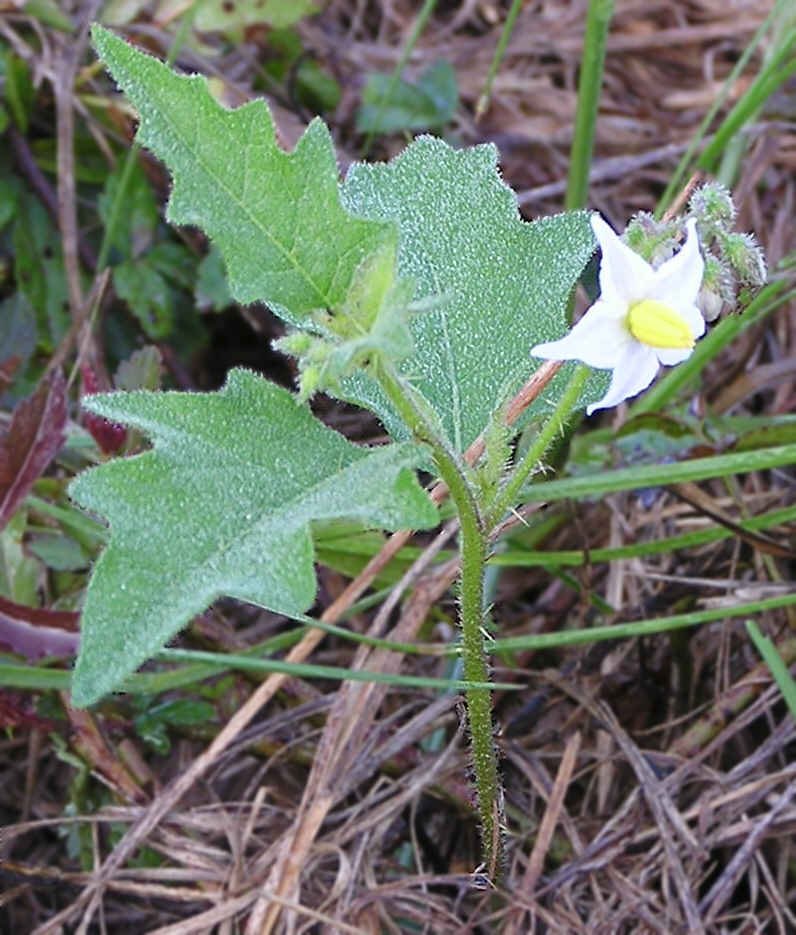
Carolina Horsenettle
Solanum carolinense
☀️ Full Sun 💧 Low

Turkey Berry
Solanum torvum
☀️ Full Sun 💧 Moderate
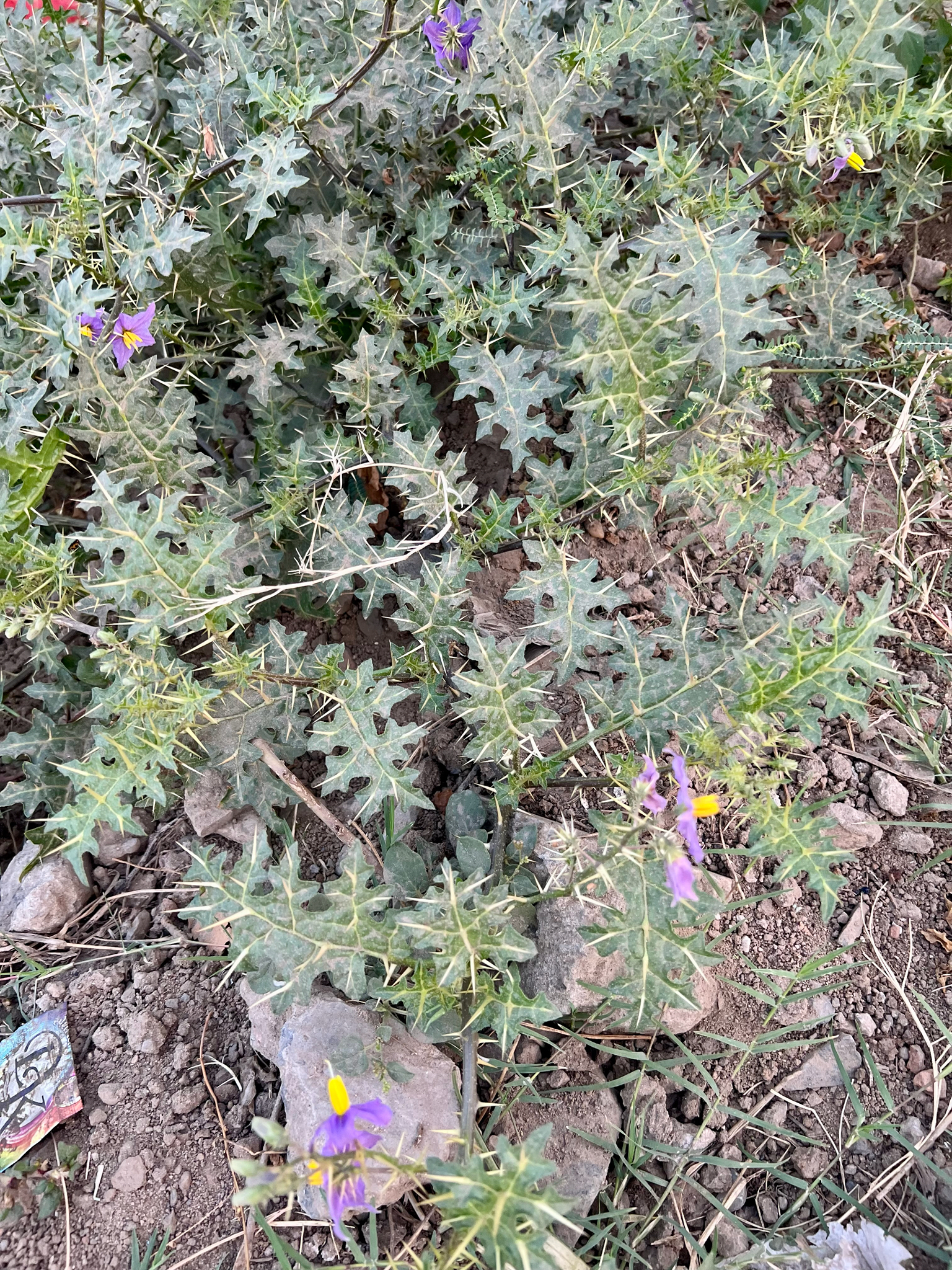
Surattense Nightshade
Solanum virginianum
☀️ Full Sun 💧 Low