
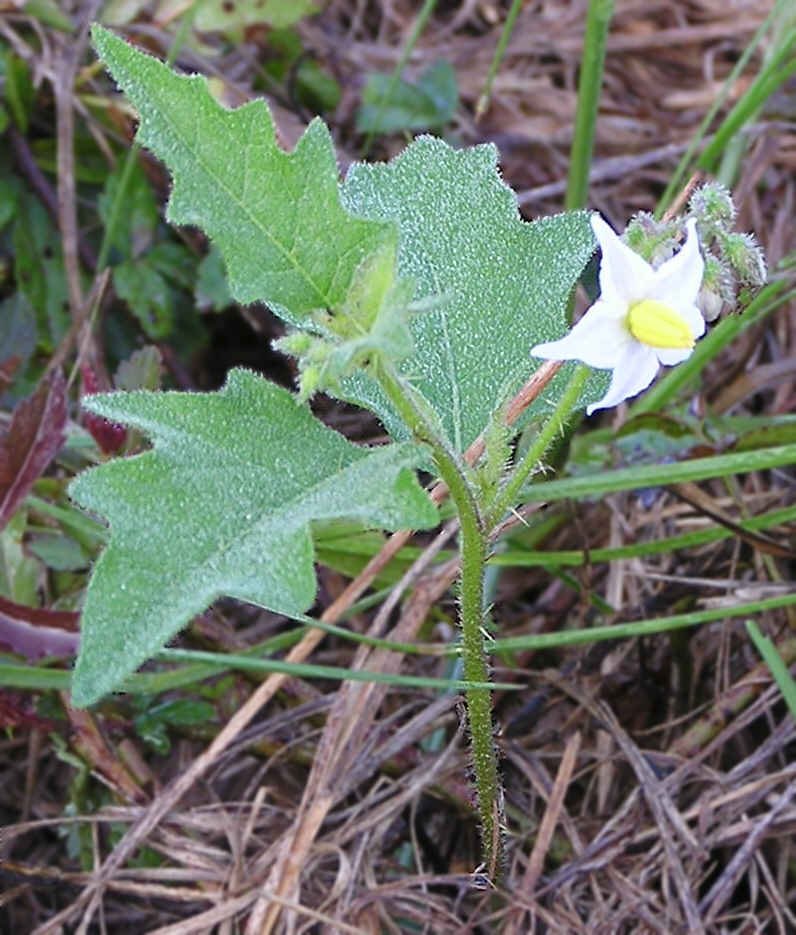
Carolina horsenettle (Solanum carolinense) is a perennial wild herb native to the southeastern United States, easily spotted by its spine-covered stems, pale violet blossoms, and yellow marble-like berries. Despite the common name, it belongs to the nightshade family (Solanaceae) rather than the true stinging nettle family.
Its creeping horizontal rhizomes can penetrate soils up to 2.5 m (8 ft) deep, making established colonies nearly impossible to pull out by hand. All parts of the plant carry dangerous levels of toxic glycoalkaloids, presenting a significant hazard in agricultural pastures.
Key Facts
- Plant family: Solanaceae (nightshade)
- Toxicity: Severe; contains solanine in all plant parts
- Root depth: Rhizomes reach up to 2.5 m (8 ft)
- Fruit size: 10–20 mm (0.4–0.8 in) across
- Flowering period: May through October
- Invasive status: Declared a noxious weed in multiple states
Living with Carolina Horsenettle
Carolina horsenettle is an aggressive agricultural weed that landowners almost universally seek to eradicate rather than preserve. Its stiff yellow spines readily pierce thin clothing, leather garden gloves, and grazing animal muzzles.
Because colonies spread primarily through horizontal rhizomes, running a tiller through a patch chops the roots and multiplies the infestation. Gardeners and farmers face an uphill battle if plants establish in vegetable plots or hayfields, where it quickly outcompetes desirable crops for moisture and nitrogen.
How to Identify Carolina Horsenettle
You can identify Carolina horsenettle by the sharp, yellowish spines lining its stems and the main veins on the undersides of its leaves. Mature plants stand 30–100 cm (1–3.3 ft) tall on branching stems covered in fine star-shaped hairs.
The plant features distinct botanical traits throughout the growing season:
- Leaves: Alternate, irregularly lobed, 7–12 cm (2.8–4.7 in) long, bearing straight prickles along the midrib.
- Flowers: Star-shaped, 2–3 cm (0.8–1.2 in) across, with five fused petals ranging from pale violet to white, surrounding a central beak of yellow anthers.
- Fruit: Smooth, round berries measuring 10–20 mm (0.4–0.8 in) in diameter, emerging green with dark veins and turning wrinkled, dull yellow in autumn.
- Stems: Green to tan, ribbed, and armed with stout, sharp thorns up to 5 mm (0.2 in) long.
Habitat and Range
Carolina horsenettle thrives primarily in disturbed, open ground with full sun exposure across North America. While native to the southeastern United States, it has naturalised across almost the entire continental United States and parts of southern Canada.
The species colonises pastures, roadsides, railway embankments, abandoned fields, and cultivated farmland. It tolerates poor, dry soils ranging from loose sand to heavy clay, though it develops its deepest root systems in well-drained, sandy loams.
Ecological Relationships and Wildlife
Carolina horsenettle relies strictly on buzz pollination by large native bees to release pollen from its tightly closed anthers. Bumblebees (Bombus spp.) grasp the yellow floral cone and vibrate their flight muscles at a specific frequency to dislodge the pollen grains.
While cattle and horses instinctively avoid grazing the thorny foliage, several specialist insects depend on the plant:
- Potato beetles: Both the Colorado potato beetle (Leptinotarsa decemlineata) and false potato beetle (Leptinotarsa juncta) feed extensively on the foliage.
- Hornworms: Tobacco hornworm caterpillars (Manduca sexta) consume the leaves, sequestering nightshade toxins.
- Fruit flies: Larvae of the picture-winged fly (Eurosta solidaginis) occasionally feed within the maturing berry pulp.
Is Apple of Sodom Poisonous?
All parts of Carolina horsenettle are dangerously toxic to humans, livestock, and domestic pets. The plant contains high concentrations of solanine and toxic glycoalkaloids, with the highest concentration found in the ripening autumn berries.
Livestock poisonings occur when horsenettle is accidentally baled into winter hay, as dried leaves retain their chemical toxicity. Ingestion symptoms across mammals include:
- Digestive distress: Severe salivation, vomiting, colic, and persistent bloody diarrhoea.
- Neurological symptoms: Muscle tremors, dilated pupils, lethargy, and loss of coordination.
- Severe reactions: Laboured breathing, dramatic drops in heart rate, and fatal respiratory failure.
Weed Status and How to Control It
Carolina horsenettle is classified as a prohibited or restricted noxious weed in dozens of agricultural jurisdictions due to its persistence. Mowing prevents seed set, but mechanical cutting stimulates new shoots from the underground rhizome crown.
For permanent removal in pasture or garden settings, employ systematic management:
- Do not till: Cultivating fragmented root segments spreads the plant into clean soil.
- Repeated cutting: Cut stems at soil level every 10–14 days throughout summer to deplete underground energy reserves.
- Targeted systemic treatment: Apply an agricultural herbicide such as glyphosate or triclopyr in late summer when the plant draws nutrients downward into its winter root system.
Historical and Documented Uses
Early North American folk practitioners traditionally used dried horsenettle berries as an antispasmodic and sedative remedy. Historical texts from the 19th and early 20th centuries note that preparations were administered for convulsive conditions, whooping cough, and epilepsy.
Because the therapeutic margin between mild sedation and toxic poisoning was dangerously narrow, modern medicine abandoned the plant entirely. It offers no safe culinary or recreational value today.
Similar Species and Look-Alikes
Several wild solanums and unrelated weedy species share prickly stems or yellow fruit with Carolina horsenettle. Check the flowers and prickle structure to confirm the species:
- Apple of Sodom (Solanum linnaeanum): A Mediterranean and African shrub featuring deeply lobed oak-like leaves, purple blooms, and larger, mottled yellow-green berries.
- Silverleaf nightshade (Solanum elaeagnifolium): Features narrower, silver-felted leaves covered in stellate hairs, slender red prickles, and vibrant blue-violet flowers.
- Giant milkweed (Calotropis procera): Also called Apple of Sodom, but is a massive milky-sapped shrub with large, spongy green air-filled pods rather than small berries.
- Bittersweet nightshade (Solanum dulcamara): A vine lacking prickles entirely, bearing purple flowers with reflexed petals and bright translucent red berries.
- Buffalobur (Solanum rostratum): Displays yellow flowers rather than pale violet, with berries fully encased in dense, needle-sharp spiny calyxes.
Frequently Asked Questions
What is the meaning behind the name Apple of Sodom?
The name refers to an ancient biblical legend describing fruit growing near the Dead Sea that looked tempting on the outside but dissolved into smoke and bitter ash when picked. Botanists applied the moniker to toxic nightshades like Carolina horsenettle because their attractive, tomato-like berries contain bitter, dangerous poisons instead of sweet flesh.
Is the fruit of Carolina horsenettle edible?
No, the fruit is not edible under any circumstances. Eating the berries causes severe gastrointestinal pain, vomiting, central nervous system depression, and can be fatal in large quantities.
How can you tell Carolina horsenettle apart from a wild tomato?
Look at the stems and spines. Carolina horsenettle bears sharp, stiff prickles along its stems and leaf midribs, whereas common tomato (Solanum lycopersicum) plants have soft glandular hairs and completely lack defensive thorns.
Will livestock eat Carolina horsenettle in a pasture?
Livestock will usually avoid grazing fresh Carolina horsenettle because the thorns and bitter alkaloids deter them. Danger arises primarily when fields are mowed for hay, as dried horsenettle loses its prickly warning while remaining fully toxic.
Why is Carolina horsenettle so difficult to pull out?
The plant anchors itself with deep vertical taproots and creeping lateral rhizomes that reach up to 2.5 m (8 ft) underground. Hand pulling merely snaps the stem at ground level, triggering dormant buds on the root system to generate multiple new stems.
Information about traditional or historical uses is provided for educational interest only and is not medical advice. Do not use any plant to treat a condition without speaking to a qualified professional.
Sources & Verification
Taxonomy and distribution are checked against the databases below. Care guidance is written for cultivated species only and reviewed by our editor. How We Build Plant Profiles →
More in Solanum

Nipplefruit
Solanum mammosum
☀️ Full Sun 💧 High

Tomato
Solanum lycopersicum
☀️ Full Sun 💧 Moderate

Naranjilla
Solanum quitoense
☀️ Partial Sun 💧 High

Tamarillo
Solanum betaceum
☀️ Full Sun 💧 Moderate
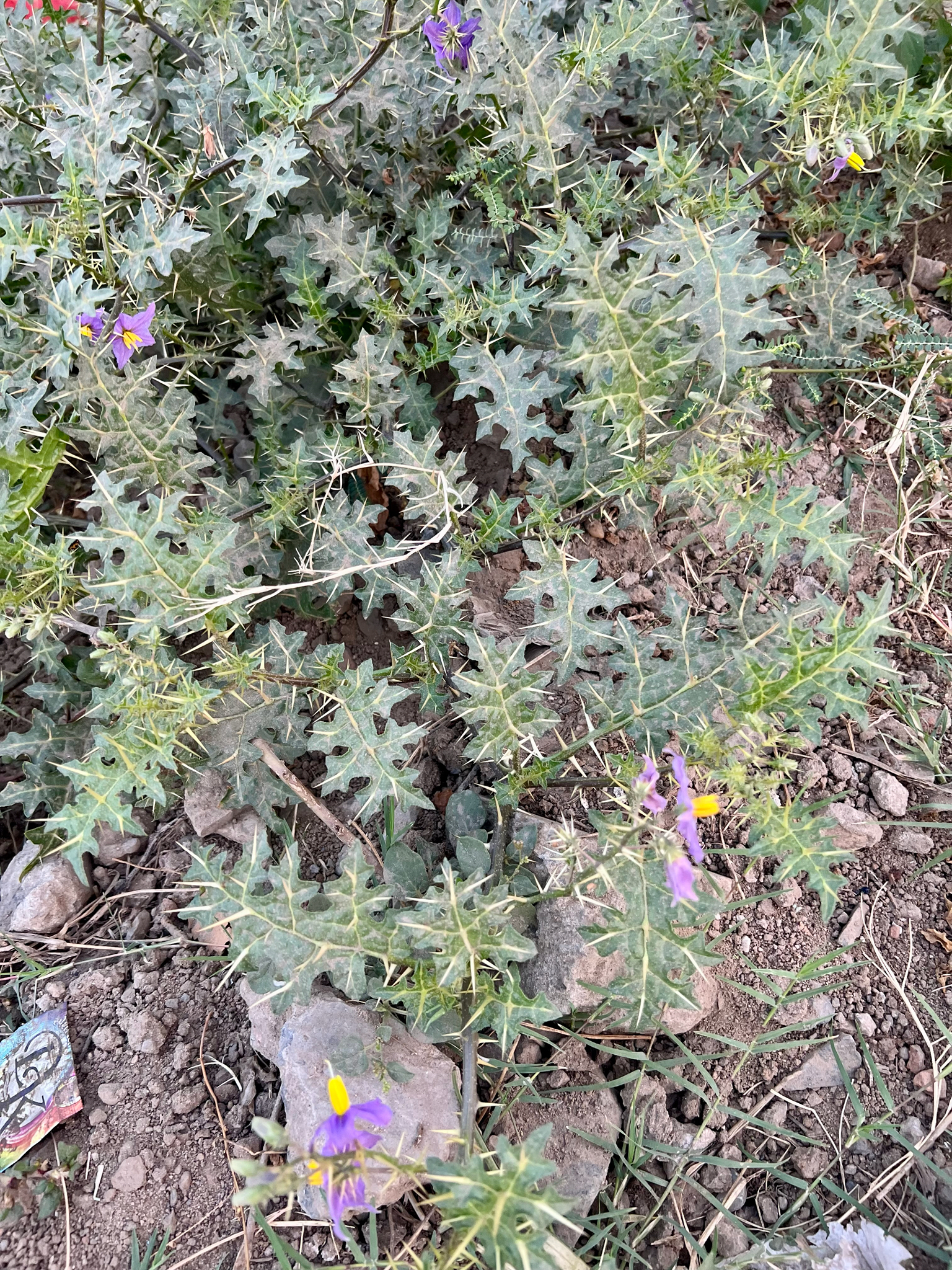
Surattense Nightshade
Solanum virginianum
☀️ Full Sun 💧 Low

Turkey Berry
Solanum torvum
☀️ Full Sun 💧 Moderate