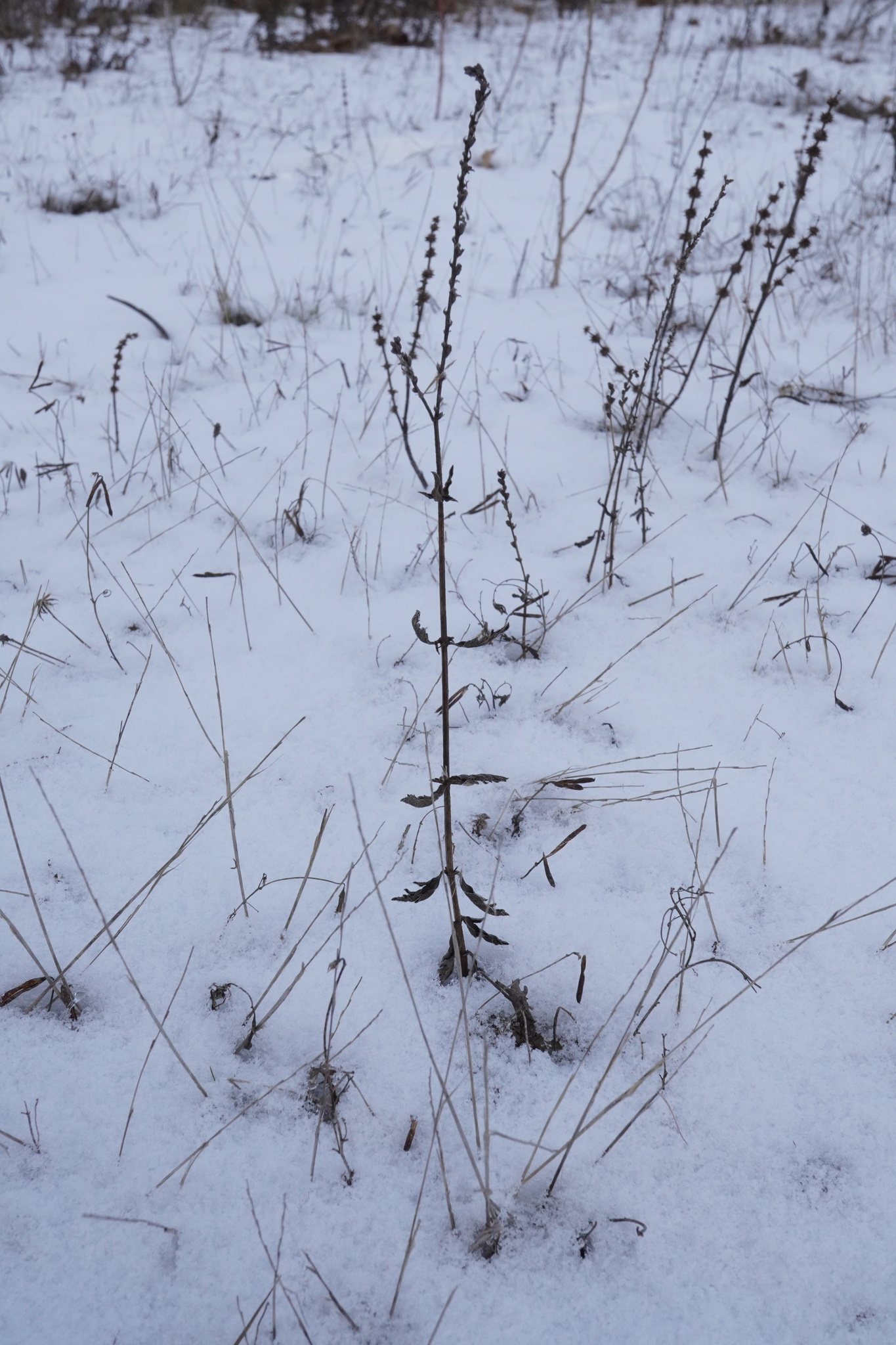
Purpletop vervain is a tall, slender perennial native to South America that produces clusters of small purple flowers on stiff, square stems. Known scientifically as Verbena bonariensis, it reaches heights of 1.8 m (6 ft) while maintaining a narrow footprint in the garden.
This species attracts butterflies and bees without blocking the view of other plants. It self-seeds vigorously, often appearing in gravel paths or gaps between other perennials where soil is disturbed.
Key Facts
- Height: up to 180 cm (6 ft)
- Sun: full sun (6+ hours)
- Water: low to moderate once established
- Hardiness: USDA zones 7 to 11
- Soil: well-drained, any pH
Fitting Purpletop Vervain into Your Garden
Purpletop vervain creates a transparent screen that allows you to see plants behind it while adding height to a border. Because the stems are thin and mostly leafless, you can plant it at the front, middle, or back of a flower bed without creating a solid wall of foliage.
It suits gravel gardens, prairie-style plantings, and cottage gardens where a relaxed, self-sown look is desired. In regions like California or parts of Australia, it is considered invasive because it spreads rapidly via wind-blown seeds, so check local regulations before planting.
- Ideal for filling gaps in new borders
- Creates vertical movement in the wind
- Attracts pollinators like the Hummingbird Hawk-moth
Identifying Purpletop Vervain
You can identify purpletop vervain by its rough, square stems that feel sandpaper-like to the touch. These stems are remarkably strong and rarely require staking, even when they reach their full height of 1.8 m (6 ft).
The leaves are sparse, dark green, and lance-shaped with serrated edges, measuring about 10-13 cm (4-5 in) long. The flowers are tiny, lavender-purple tubes held in dense, flattened clusters (cymes) that measure 5 cm (2 in) across.
- Stem: Square cross-section, 4-6 mm thick
- Leaf: Opposite arrangement, mostly at the base
- Flower: Scentless, purple, blooming mid-summer to frost
Best Site and Soil Conditions
Purpletop vervain requires full sun to prevent the tall stems from flopping over in search of light. Aim for a spot that receives at least 6 to 8 hours of direct sunlight daily to ensure the most prolific flowering.
It is not picky about soil pH but demands excellent drainage to survive wet winters. It thrives in poor, rocky, or sandy soils where other perennials might struggle, making it a reliable choice for drought-prone areas.
- Soil type: Sandy, loamy, or gravelly
- Drainage: Must be sharp to prevent root rot
- Exposure: Tolerates windy sites due to wiry stems
How to Plant Purpletop Vervain
Space your plants 45 to 60 cm (18 to 24 in) apart to allow for air circulation and the natural spread of the plant. While the base is narrow, the flowering tops spread out, so giving them room prevents the development of powdery mildew.
When planting from a pot, dig a hole twice the width of the root ball but no deeper. If you are starting from seed, sow them directly on the soil surface in autumn or early spring, as they require a period of cold (stratification) and light to germinate.
- Planting depth: Level with the soil surface
- Best time: Late spring after the last frost
- Initial care: Water twice weekly until new growth appears
Watering and Feeding Requirements
Established plants only need 2.5 cm (1 in) of water per week during the peak of summer. Purpletop vervain is highly drought-tolerant and often performs better in lean soil than in overly fertile ground.
Avoid using high-nitrogen fertilizers, as these encourage lush foliage at the expense of flowers and can make the stems weak. A thin layer of compost applied in the spring is usually sufficient to support a full season of growth.
- Watering: Focus on the base, not the foliage
- Fertilizer: None or low-phosphorus organic mulch
- Signs of overwatering: Yellowing lower leaves and soft stems
How to Prune Purpletop Vervain
Cut the dead stems back to 10 cm (4 in) above the ground in mid-spring once you see new green shoots appearing at the base. Leaving the old stems standing through the winter provides a habitat for beneficial insects and protects the crown from frost.
During the growing season, you can deadhead spent flower clusters to encourage a second flush of blooms, though this is not strictly necessary for the plant’s health. If you want the plant to self-seed, leave the final round of flowers to dry on the stalk.
- Spring prune: Remove all brown, woody growth
- Summer deadheading: Cut back to the first set of leaves below the flower
- Tool care: Use sharp bypass pruners to avoid crushing stems
Propagating from Seeds and Cuttings
The most effective way to propagate is by collecting seeds in the autumn once the flower heads turn brown and dry. You can also take softwood cuttings in early summer, which will root quickly in a mix of perlite and peat-free compost.
Seeds sown indoors should be kept at 18-24 °C (65-75 °F) after a two-week period in the refrigerator to simulate winter. Germination is often erratic and can take anywhere from 14 to 90 days, so patience is required when starting from scratch.
- Seed depth: Surface sow (requires light)
- Cutting length: 8-10 cm (3-4 in) non-flowering tips
- Success rate: High for self-sown volunteers
Common Problems and Pests
The most frequent issue is powdery mildew, which appears as a white, flour-like coating on the leaves during humid summer weather. This is usually a sign of poor air circulation or drought stress, rather than a fatal disease.
Aphids and spider mites may occasionally target the young shoots in spring, but they rarely cause significant damage to mature plants. If the plant flops over, it is likely receiving too much water, too much fertilizer, or not enough direct sunlight.
- Mildew fix: Improve spacing or apply a milk-water spray
- Pest fix: Blast with a garden hose to dislodge insects
- Root rot: Caused by heavy, waterlogged clay soil
Winter Care and Hardiness
Purpletop vervain is hardy down to -10 °C (14 °F), which corresponds to USDA zone 7. In colder climates (zones 6 and below), it is typically grown as an annual, though it often returns via self-sown seeds that survived the winter in the soil.
To help a perennial specimen survive, apply a 5 cm (2 in) layer of dry mulch, such as bark chips or straw, around the base of the plant in late autumn. Avoid cutting the stems back until spring, as the hollow tubes can funnel water into the crown and cause it to rot during freezes.
- Mulch: Apply after the first light frost
- Hardiness: Perennial in zones 7-11
- Cold protection: Use a cloche for young plants in zone 7
Year-Round Care for Purpletop Vervain
| Spring | Cut back old stems to 10 cm (4 in) in mid-spring. Apply a thin layer of compost and watch for emerging seedlings to transplant. |
|---|---|
| Summer | Water once weekly during dry spells. Deadhead spent blooms if you want to prevent excessive self-seeding or encourage more flowers. |
| Autumn | Collect dry seed heads for future planting. Leave the remaining stems standing to provide winter interest and insect habitat. |
| Winter | Apply a 5 cm (2 in) layer of mulch in zone 7 areas. Avoid watering unless the soil is completely dry and the ground is not frozen. |
Common Purpletop Vervain Problems Explained
| What you see | Likely cause | What to do |
|---|---|---|
| White powdery coating on leaves | Powdery mildew from humidity | Improve air circulation and water only at the base. |
| Stems flopping over | Too much shade or nitrogen | Move to a full sun location and stop fertilizing. |
| Plant fails to return in spring | Winter rot or extreme cold | Ensure sharp drainage or rely on self-sown seedlings. |
Popular Purpletop Vervain Cultivars
- ‘Lollipop’ – a dwarf variety reaching only 60 cm (24 in)
- ‘Cloud 9’ – taller and more vigorous than the species
- ‘Little One’ – compact habit suitable for containers
Best Companion Plants
Pair purpletop vervain with ornamental grasses like Mexican feather grass (Stipa tenuissima) to create a textured, meadow-like aesthetic. The airy purple flowers contrast well with the golden, wispy blades of the grass.
Yellow-flowered perennials such as black-eyed Susan (Rudbeckia fulgida) or tickseed (Coreopsis verticillata) provide a sharp color contrast. For a late-summer display, plant it alongside Echinacea purpurea or Helenium cultivars, which share its preference for full sun and well-drained soil.
- Grasses: Pennisetum alopecuroides, Miscanthus sinensis
- Perennials: Perovskia atriplicifolia, Salvia nemorosa
- Shrubs: Buddleja davidii for a dedicated butterfly garden
Frequently Asked Questions
Is purpletop vervain a perennial?
Yes, it is a short-lived perennial in USDA zones 7 to 11, typically living for 2 to 3 years. In colder climates, it is grown as an annual but often reappears from self-sown seeds.
Is purpletop vervain invasive?
It is considered invasive in parts of the southeastern United States and Australia due to its prolific seed production. Check local invasive species lists before planting in these regions.
Is purpletop vervain edible?
No, it is not considered edible. While it has been traditionally used in folk medicine for respiratory issues, it is not used as a culinary herb.
Is it toxic to cats and dogs?
Purpletop vervain is generally considered non-toxic to pets. However, ingestion of any garden plant can cause mild gastrointestinal upset in sensitive animals.
How do you stop it from spreading?
To prevent self-seeding, cut off the flower heads in late summer before they turn brown and release their seeds. Applying a thick mulch can also prevent seeds from reaching the soil.
Information about traditional or historical uses is provided for educational interest only and is not medical advice. Do not use any plant to treat a condition without speaking to a qualified professional.
Sources & Verification
Taxonomy and distribution are checked against the databases below. Care guidance is written for cultivated species only and reviewed by our editor. How We Build Plant Profiles →