
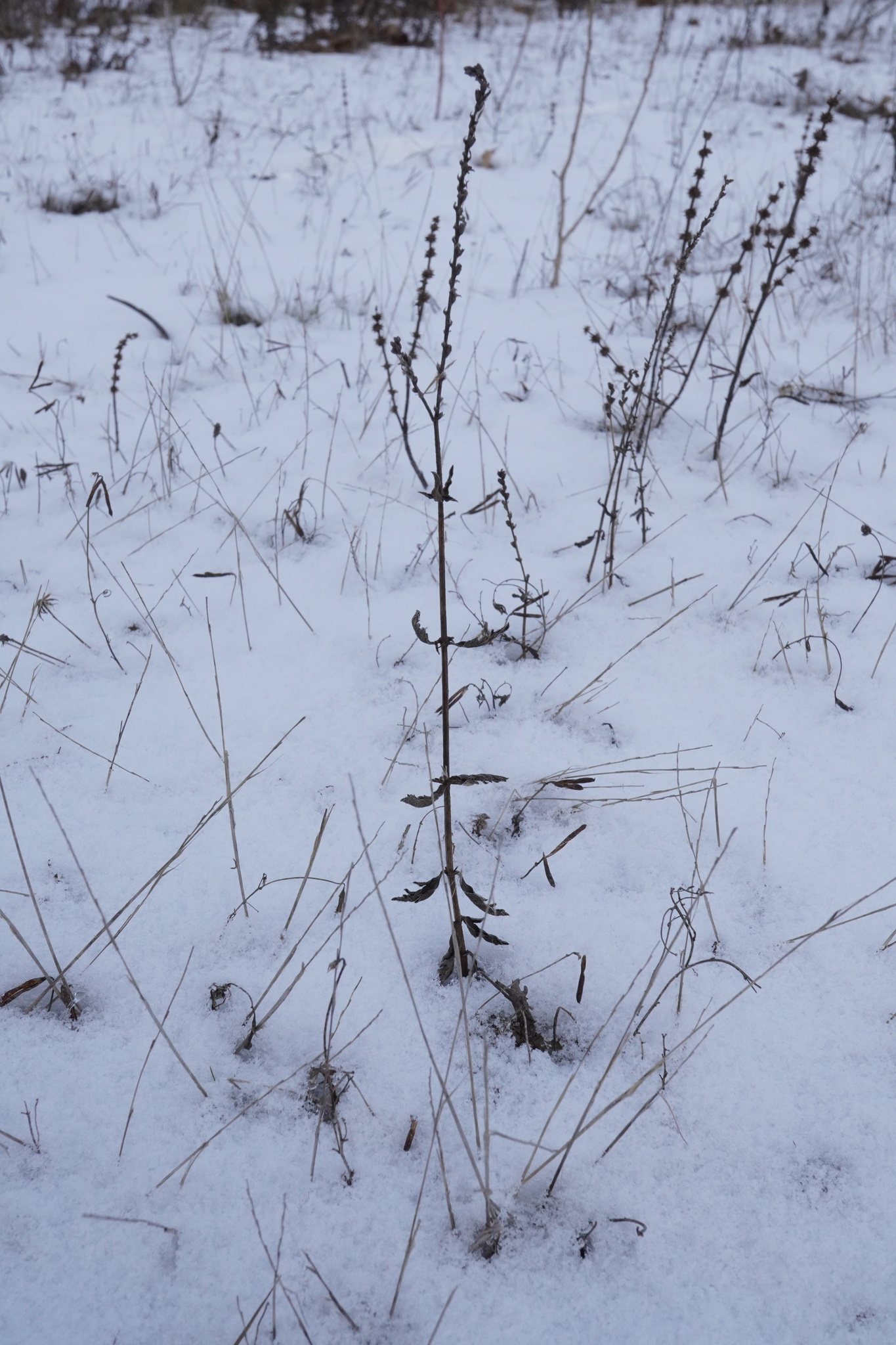
Common vervain (Verbena officinalis) is a slender, upright perennial herb native across Europe and parts of North Africa and Western Asia, known for its airy spikes of pale purple blooms. It has grown in herb gardens and open grasslands for centuries as both an ornamental and a traditional tonic.
This plant thrives in lean, fast-draining ground under full sun where richer soil causes the stems to flop. It withstands drought once established and self-seeds freely across gravel beds and dry borders.
Key Facts
- Plant type: herbaceous perennial herb
- Sunlight: full sun (at least 6 hours daily)
- Watering: low once established; soak during prolonged dry spells
- Hardiness: USDA zones 4 to 8 (hardy to -30 °C / -20 °F)
- Soil: dry, gritty or chalky soil with sharp drainage
Growing Common Vervain in the Garden
Common vervain suits cottage gardens, naturalistic meadows, and dry gravel plantings where you need airy structural height without dense foliage bulk. Because the foliage is low-set and the flower spikes are open and see-through, it integrates easily into mixed perennial plantings.
Grow this plant if you want a reliable pollinator magnet that requires minimal attention once its root system establishes. It demands poor to moderately fertile ground, as excess garden fertility leads to tall, weak stems that collapse in strong winds.
Identifying Common Verbena Stems, Leaves, and Flowers
Common vervain produces stiff, square-angled stems that reach 40–80 cm (16–31 in) in height and branch repeatedly into slender, wiry panicles. The base of the plant forms a loose rosette of rough, dark green foliage.
The basal leaves are oblong to ovate with deeply lobed or toothed margins, measuring 5–10 cm (2–4 in) long, whereas upper stem leaves become progressively smaller, narrower, and stalkless. The individual flowers measure only 4–5 mm (0.16–0.2 in) across, featuring five pale lilac to bluish-white petals arranged along slender, tapering terminal spikes that elongate as buds open from the base upward.
Choosing the Best Site and Soil
Plant common vervain in full sun and sharply draining soil with a neutral to alkaline pH between 6.0 and 8.0. It tolerates poor, stony, or chalky substrates where many ornamental perennials struggle.
Avoid heavy clay and waterlogged hollows, which quickly cause winter crown rot. If your garden has dense clay, improve the area with grit and coarse sand or plant the crown into a raised bed or gravel border.
Planting and Sowing Common Verbena Seeds
Sow common verbena seeds indoors 8 to 10 weeks before the last spring frost or sow directly outdoors in autumn. The seeds benefit from a cold, moist stratification period of 3 to 4 weeks at 2–5 °C (35–41 °F) to break dormancy.
- Sow seeds thinly on the surface of seed compost and cover with a fine dusting of vermiculite, as light aids germination.
- Maintain a temperature of 18–21 °C (65–70 °F) until seedlings emerge in 14 to 28 days.
- Harden off young plants over 7 to 10 days before transplanting into the ground.
- Space individual plants 30–40 cm (12–16 in) apart in the border.
Watering and Feeding Routine
Water young plants regularly until established, then provide no supplemental fertilizer and minimal irrigation. Mature plants survive extended dry periods thanks to their deep taproot system.
Give established clumps a deep soak only during severe summer droughts lasting more than three weeks without rain. Chemical fertilizers and nitrogen-heavy compost should be avoided, as rich feeding produces excessive soft foliage at the expense of floral spikes and structural rigidity.
Pruning and Deadheading Vervain
Cut stems back to basal rosettes in late winter or early spring rather than in autumn. Leaving the dead flower spikes through winter protects the crown and provides food for small seed-eating birds.
Deadhead faded flower stalks in midsummer if you wish to prolong the blooming window into autumn. If you do not want volunteer seedlings spreading into adjacent gravel or pavers, snip off flower heads as soon as the lilac petals drop.
How to Propagate Common Vervain
Propagate common vervain by collecting seed in autumn or taking basal cuttings in late spring. Division is difficult on mature plants due to their strong central taproot.
- Collect ripe seed spikes in September when the calyces turn brown and dry.
- Rub spikes between your palms to extract the tiny brown nutlets, then store them in a cool, dark envelope.
- For basal cuttings, slice 5–8 cm (2–3 in) shoots with a heel of root crown in May.
- Insert cuttings into gritty potting compost and keep them humid under a clear cover until rooted.
Winter Care and Cold Hardiness
Common vervain withstands winter temperatures down to -30 °C (-20 °F) without artificial protection in USDA zones 4 through 8. The root system easily survives freezing conditions as long as the surrounding soil does not hold standing water.
In regions with wet, cold winters, ensure the base remains clear of rotting autumn leaves or heavy mulches. A light layer of pea gravel around the collar prevents moisture from settling against the dormant crown.
Common Vervain Flowering Season
The flowering window opens in July and continues through September, producing a long sequence of micro-blooms along each wiry branch. The flowers open progressively from the bottom of each terminal spike upward.
Each tiny flower delivers nectar that draws bumblebees, solitary bees, and hoverflies throughout the hottest summer weeks. While the individual blossom is diminutive, dozens of branch tips flower simultaneously to create an open, hazy canopy.
Seasonal Tasks for Common Vervain
| Spring | Cut back old, dried stems from the previous year down to ground level in March. Sow seed trays indoors or transplant hardened seedlings outdoors once severe frosts pass. |
|---|---|
| Summer | Weed around the base of young plants and water deeply during prolonged dry spells. Snip spent central spikes if you want to stimulate secondary side flowering. |
| Autumn | Harvest mature seed heads in September for future sowing. Leave main seed stalks standing through the cold months to shelter overwintering beneficial insects. |
| Winter | Check that the soil around the crown drains freely after heavy rains or snowmelt. Avoid applying rich organic compost or wet bark mulch over the dormant crowns. |
Common Vervain Problems and Solutions
| What you see | Likely cause | What to do |
|---|---|---|
| Stems flopping and splaying outward | Excess soil fertility or insufficient daily direct sunlight | Relocate plants to full sun and stop adding fertilizers or rich compost. |
| White powdery coating on foliage | Powdery mildew during humid spells with stagnant airflow | Thin dense growth to improve ventilation and water exclusively at soil level. |
| Crown turns black and soft in spring | Crown rot caused by waterlogged winter soil | Replant fresh stock into gritty, elevated soil beds with sharp drainage. |
| Seedlings spreading aggressively across garden beds | Unchecked natural self-seeding from late summer flower spikes | Deadhead floral spikes before seeds ripen and weed out unwanted young rosettes. |
Notable Common Vervain Varieties and Cultivars
- ‘Bampton’ – dark metallic purple foliage with rosy-pink blooms
- ‘Oriental Magic’ – compact habit with dense violet-blue flower spikes
Best Companion Plants for Mixed Borders
Pair common vervain with drought-tolerant perennials and fine ornamental grasses that share its preference for open sun and lean soil. Its see-through architecture allows lower-growing companion foliage to show through clearly.
- Combine with purple coneflower (Echinacea purpurea) for bold daisy-shaped flower contrast.
- Interplant with Russian sage (Salvia yangii) to weave silver foliage alongside Vervain’s lilac spikes.
- Plant behind Mexican feather grass (Stipa tenuissima) for movement and soft texture.
- Contrast with yellow-flowering yarrow (Achillea millefolium) to highlight Vervain’s purple-toned calyces.
- Pair with wild marjoram (Origanum vulgare) along sunny herb garden perimeters.
Frequently Asked Questions
What is the difference between common verbena and lemon verbena?
Common verbena (Verbena officinalis) is a hardy European herbaceous perennial with scentless leaves and pale lilac flowers, whereas lemon verbena (Aloysia citrodora) is a tender woody shrub from South America prized for intensely lemon-scented foliage.
What are the traditional benefits and uses of common verbena tea?
Common verbena was traditionally used in European herbalism as a bitter tonic, mild astringent, and tea brewed to support relaxation, digestion, and respiratory comfort. Modern herbal preparations steep the dried flowering aerial parts in hot water, though the brew carries a distinctly bitter taste.
Is common vervain easy to grow from seeds?
Yes, common vervain grows reliably from seed, but germination is notably improved by giving the seeds 3 to 4 weeks of cold, moist stratification in a refrigerator before sowing at 18–21 °C (65–70 °F).
Can you grow common verbena in cold climates like Calgary?
Yes, common vervain is hardy down to USDA zone 4 (approximately -34 °C / -30 °F), meaning it can survive cold continental winters like those in Calgary if planted in a sunny, protected microclimate with fast-draining soil.
Is common vervain invasive?
Common vervain is not considered an ecological pest in most temperate gardens, but it produces abundant seed that readily colonizes dry gravel paths, rockeries, and bare borders if faded flower spikes are left untrimmed.
Information about traditional or historical uses is provided for educational interest only and is not medical advice. Do not use any plant to treat a condition without speaking to a qualified professional.
Sources & Verification
Taxonomy and distribution are checked against the databases below. Care guidance is written for cultivated species only and reviewed by our editor. How We Build Plant Profiles →
- Plants of the World Online (Kew)Native distribution and verified botanical classification
- Royal Horticultural SocietyHardiness ratings, garden cultivation, and cultivar profiles
- NC State Extension Gardener Plant ToolboxPlant attributes, soil preferences, and identification data
- GBIF — Global Biodiversity Information Facilitytaxonomy, synonyms, occurrence records
- Wikipediageneral reference
