Cyperaceae Family: Sedge Species, Identification, and Care
32 plant profiles · Learn how to identify and care for sedges (Cyperaceae), including papyrus, edible tiger nuts, Chinese water chestnuts, and ornamental Carex species.
Members of the sedge family, Cyperaceae, are grass-like flowering plants distinguished by their solid, three-sided stems—often summarized by the classic botanical rhyme 'sedges have edges.' Native primarily to wetlands, wet meadows, and riverbanks globally, these monocots thrive in saturated, anaerobic soils where true grasses struggle. Most species feature linear leaves arranged in three vertical ranks and produce wind-pollinated spikelet inflorescences.
Choosing the right sedge depends on whether you are stocking a garden pond, harvesting edible tubers, or planting low-maintenance shade groundcover. Aquatic species like papyrus (Cyperus papyrus) and umbrella papyrus (Cyperus alternifolius) need standing water and frost-free conditions above 10 °C (50 °F). Edible crops include Chinese water chestnut (Eleocharis dulcis), grown for crisp underwater corms, and tiger nut (Cyperus esculentus), grown for sweet tubers.
Landscape gardeners select clumping foliage plants such as Japanese sedge (Carex morrowii) and glaucous sedge (Carex flacca) for moist, shaded borders. Native pond margins benefit from bog-loving species like bottle sedge (Carex rostrata). Avoid planting aggressive agricultural weeds like purple nutsedge (Cyperus rotundus), which spreads rapidly through persistent underground tubers.

Bladder Sedge
Carex vesicaria
☀️ Full Sun 💧 High

Bottle Sedge
Carex rostrata
☀️ Full Sun 💧 High

Carnation Sedge
Carex panicea

Chinese Water Chestnut
Eleocharis dulcis
☀️ Full Sun 💧 Aquatic

Common Club-Rush
Schoenoplectus lacustris
☀️ Full Sun 💧 Aquatic
Common Cottongrass
Eriophorum angustifolium
☀️ Full Sun 💧 High

Common Sedge
Carex nigra
💧 High

Creeping Broad-Leaved Sedge
Carex siderosticta
☀️ Partial Shade 💧 High

Creeping Sedge
Carex chordorrhiza
💧 High

Creeping Spikerush
Eleocharis uniglumis

Cyperus Sedge
Carex pseudocyperus
☀️ Full Sun 💧 High
Dwarf Hairgrass
Eleocharis acicularis
☀️ Bright Indirect 💧 Aquatic

Few-Flowered Sedge
Carex pauciflora
☀️ Full Sun 💧 High

Few-Flowered Spike-Rush
Eleocharis quinqueflora
💧 High

Foxtail Flatsedge
Cyperus alopecuroides
💧 High

Fuzzy Flatsedge
Cyperus pilosus
💧 High

Glaucous Sedge
Carex flacca
☀️ Full Sun 💧 Moderate
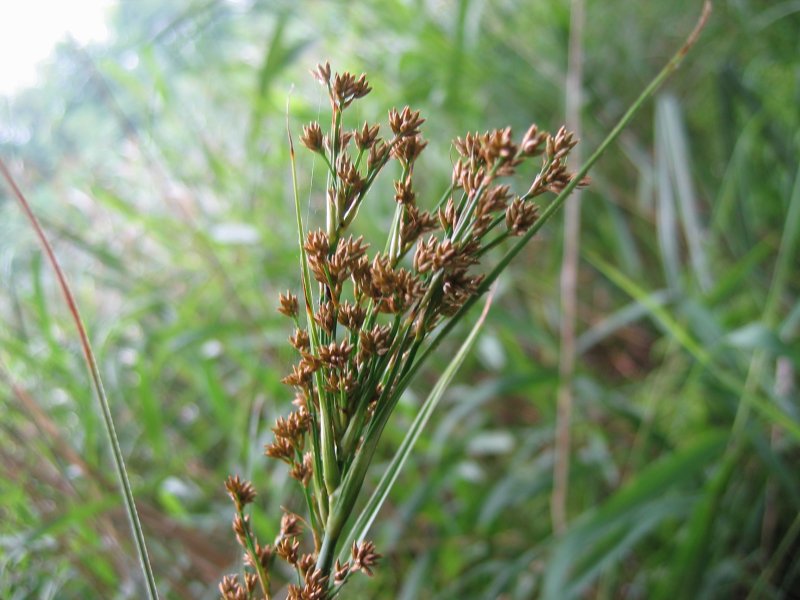
Great Fen-Sedge
Cladium mariscus
💧 High

Greater Tussock-Sedge
Carex paniculata
☀️ Partial Sun 💧 High
Hanging Sedge
Carex pendula
☀️ Partial Shade 💧 High

Japanese Sedge
Carex morrowii
☀️ Partial Shade 💧 High

Jointed Flatsedge
Cyperus articulatus
💧 Aquatic

Mud Sedge
Carex limosa
💧 Aquatic

Papyrus
Cyperus papyrus
☀️ Full Sun 💧 Aquatic
Common Questions
How do you tell a sedge from a grass?
Sedges have solid, triangular stems, whereas true grasses have hollow, round stems with swollen nodes. Look down the stem: sedge leaves extend out in three distinct directions rather than two.
Do sedges need to grow in water?
Most sedges require moist soil, but not all species grow submerged in standing water. While aquatic species like papyrus require saturated roots, ornamental groundcover species like Japanese sedge prefer damp, well-drained soil in partial shade.
Are sedge plants invasive?
Certain species like purple nutsedge are aggressive invasive weeds, while most ornamental sedges grow in tidy, manageable clumps. Purple nutsedge spreads through persistent underground tubers that remain dormant in soil for years.
How do you prune ornamental sedges?
Cut back evergreen sedges in early spring by 5–10 cm (2–4 in) above the crown using sharp shears before new growth begins. Deciduous sedges can be sheared completely down to ground level in late winter.