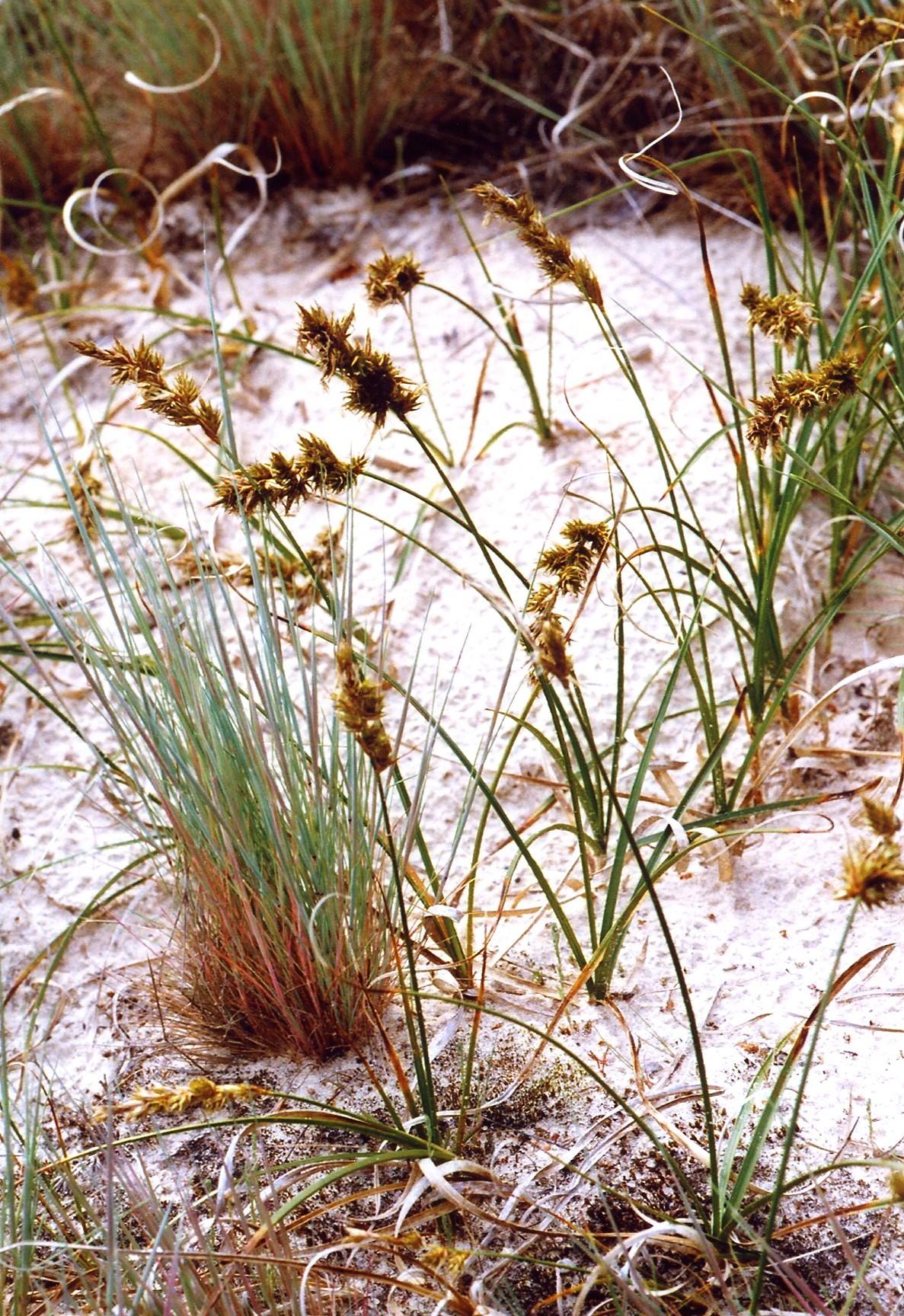
Mud sedge (Carex limosa) is a rhizomatous perennial sedge native to boreal bogs and nutrient-poor peatlands across Northern Europe, Asia, and North America. It forms glaucous, blue-green tufts that anchor saturated sphagnum mats and acidic lake shores.
This species thrives in submerged or waterlogged soils with a pH between 3.5 and 5.5. It acts as a bioindicator for undisturbed, nutrient-poor wetland habitats.
Key Facts
- Plant Type: Native wetland perennial sedge
- Height: 20–50 cm (8–20 in)
- Native Range: Circumboreal (North America, Europe, Asia)
- Soil Preference: Acidic peat or muck, pH 3.5–5.5
- Light Need: Full sun to light partial shade
- Hydrology: Submerged roots or waterlogged soil
Mud Sedge Fit for Naturalized Wetland Projects
Mud sedge functions as a specialized pioneer plant for saturated, low-nutrient peatland environments rather than typical garden beds. It spreads through underground rhizomes measuring 1 to 2 mm (0.04 to 0.08 in) in diameter, creating loose colonies across floating sphagnum mats.
You should consider mud sedge for dedicated native wetland restoration, bog gardens, or retention ponds with high acidity.
- Site Suitability: Saturated acidic peat bogs and bog pools
- Sun Exposure: Full sun to partial shade (at least 5 hours direct light)
- Establishment: Spreads slowly via slender stolons in wet substrate
How to Identify Carex limosa
Mud sedge produces slender, glaucous blue-green leaves measuring 1 to 3 mm (0.04 to 0.12 in) wide with distinct channelled surfaces. Its triangular stems reach heights of 20 to 50 cm (8 to 20 in) and bear solitary nodding pistillate spikes during the bloom season.
The leaf sheaths at the base display a reddish-purple hue, which distinguishes the species from several look-alikes.
- Stem Structure: Sharply triangular, smooth stems rising 20–50 cm (8–20 in)
- Foliage: Blue-green, canaliculate (channelled) leaves up to 30 cm (12 in) long
- Inflorescence: Terminal male spike above 1–3 drooping female spikes
- Perigynium: Ovate, glaucous green to brownish scales with short arise beaks
Carex limosa Habitat and Environmental Conditions
The natural Carex limosa habitat consists of oligotrophic bogs, quaking peat mats, and poor fens across USDA hardiness zones 2 through 7. Plants grow directly in waterlogged peat moss or shallow water up to 15 cm (6 in) deep.
Water levels must remain stable throughout the year, as drying out causes root mortality within days.
- Substrate: Deep, un-decomposed sphagnum peat or mucky organic soil
- Acidity Range: Strongly acidic soils with pH values from 3.5 to 5.5
- Water Depth: Moist surface soil up to 15 cm (6 in) standing water
- Nutrient Levels: Nitrogen- and phosphorus-poor aquatic environments
Ecological Role of Mud Sedge in Peatlands
Mud sedge stabilizes quaking sphagnum mats by weaving subterranean rhizomes through floating peat matrices in cold-temperate wetlands. The roots form micro-habitats for aquatic invertebrates and provide cover for waterfowl nesting near open bog pools.
The species produces seeds that feed wetland birds, while its root system sequesters carbon within anaerobic peat layers.
- Substrate Binding: Anchors floating peat carpets in peatland pools
- Wildlife Value: Provides cover for dragonflies and nesting waterfowl
- Carbon Storage: Contributes to long-term peat accumulation in cold bogs
Conservation Status and Native Distribution
Mud sedge maintains a wide circumboreal distribution across Northern Europe, Siberia, Canada, and the northern United States down to elevation lines of 2,500 m (8,200 ft). While classified as Least Concern globally on the IUCN Red List, localized populations face threats from wetland drainage and agricultural runoff.
In southern edges of its range, such as Illinois or Ohio, state forestry agencies list it as threatened due to habitat loss.
- Global Status: IUCN Least Concern (LC) with stable global populations
- Regional Vulnerability: Endangered or threatened in southern fringe states
- Primary Threats: Peat extraction, wetland drainage, and nitrogen pollution
Environmental Uses of Carex limosa
Mud sedge is utilized primarily in specialized ecological restoration projects aimed at re-establishing degraded fen and bog habitats. Restoration practitioners install nursery-grown plugs into saturated peat substrates at densities of 4 to 6 plants per square metre.
It is also incorporated into educational native plant displays featuring carnivorous bog flora.
- Bog Restoration: Re-vegetating harvested peatlands and drained fens
- Stormwater Filtration: Retaining heavy metals in specialized acidic bio-swales
- Companion Planting: Pairing with native pitcher plants and sun-dews
Carex limosa vs Similar Sedge Species
Mud sedge is distinguished from similar wetland sedges by its drooping female spikes, blue-green foliage, and dark reddish-purple basal sheaths. Several related species share overlapping peatland habitats and require close examination of flower scales to differentiate.
When identifying sedges in bog habitats, compare key structural traits against these closely related species:
- Livid Sedge (Carex livida): Features erect female spikes and paler foliage without nodding peduncles.
- Poor Sedge (Carex magellanica): Possesses broader leaves measuring 2–4 mm (0.08–0.16 in) wide and smooth green basal sheaths.
- Black Sedge (Carex nigra): Displays upright dark brown spikes and grows in higher-nutrient marshes rather than floating bogs.
- Water Sedge (Carex aquatilis): Reaches larger heights of 40–100 cm (16–39 in) with thick, rigid stems and non-nodding spikes.
Frequently Asked Questions
What is the common name for Carex limosa?
The primary English common name for Carex limosa is mud sedge, though it is also widely known as bog-sedge, shore sedge, and muck sedge.
What habitat does Carex limosa grow in?
Carex limosa grows in wet, acidic peat bogs, poor fens, and floating sphagnum mats across northern circumboreal regions. It requires full sun, perpetually waterlogged organic soils, and a soil pH between 3.5 and 5.5.
What does Carex limosa L. stand for in plant identification?
The 'L.' in Carex limosa L. refers to Carl Linnaeus, the Swedish botanist who officially named and published the botanical description of the species in 1753.
Is Carex limosa suitable for garden landscapes?
Mud sedge is generally unsuitable for standard garden beds because it requires perpetually saturated, highly acidic peat soils. It can only be grown in dedicated bog gardens or naturalized wetland margins that stay wet year-round.
How do you distinguish mud sedge from poor sedge?
Mud sedge (Carex limosa) has narrow channelled leaves up to 3 mm wide and reddish-purple basal leaf sheaths. Poor sedge (Carex magellanica) has flat leaves measuring 2 to 4 mm wide and light green basal sheaths.
Sources & Verification
Taxonomy and distribution are checked against the databases below. Care guidance is written for cultivated species only and reviewed by our editor. How We Build Plant Profiles →