Carex Species and Types of True Sedges
16 plant profiles · Learn how to choose, grow, and identify Carex species, from moisture-loving bog sedges to shade-tolerant variegated Japanese sedges.
Members of the genus Carex are true sedges, distinguished from grasses by their solid, three-sided stems and linear, grass-like foliage. Native to damp meadows, coastal dunes, woodlands, and bogs across temperate zones, these perennial plants range in height from 10 cm (4 in) groundcovers to tussocks exceeding 1 m (3.3 ft). Selecting the right sedge depends primarily on soil moisture levels and light exposure in your planting area.
For shade and ornamental borders, broad-leaved options like Japanese sedge (Carex morrowii) and creeping broad-leaved sedge (Carex siderosticta) offer dense foliage that tolerates dry soil once established. In contrast, wet soils and pond margins suit moisture-loving species such as Cyperus sedge (Carex pseudocyperus) and greater tussock-sedge (Carex paniculata), which naturally thrive in standing water or boggy ground.
Specialized environments require tailored selections: glaucous sedge (Carex flacca) handles chalky, dry turf, while sand sedge (Carex arenaria) stabilizes loose coastal sands using spreading underground rhizomes. Matching your garden's drainage and canopy cover to the natural habitat of each sedge ensures strong root establishment and consistent foliage structure.

Bladder Sedge
Carex vesicaria
☀️ Full Sun 💧 High

Bottle Sedge
Carex rostrata
☀️ Full Sun 💧 High

Carnation Sedge
Carex panicea

Common Sedge
Carex nigra
💧 High

Creeping Broad-Leaved Sedge
Carex siderosticta
☀️ Partial Shade 💧 High

Creeping Sedge
Carex chordorrhiza
💧 High

Cyperus Sedge
Carex pseudocyperus
☀️ Full Sun 💧 High

Few-Flowered Sedge
Carex pauciflora
☀️ Full Sun 💧 High

Glaucous Sedge
Carex flacca
☀️ Full Sun 💧 Moderate

Greater Tussock-Sedge
Carex paniculata
☀️ Partial Sun 💧 High
Hanging Sedge
Carex pendula
☀️ Partial Shade 💧 High

Japanese Sedge
Carex morrowii
☀️ Partial Shade 💧 High

Mud Sedge
Carex limosa
💧 Aquatic
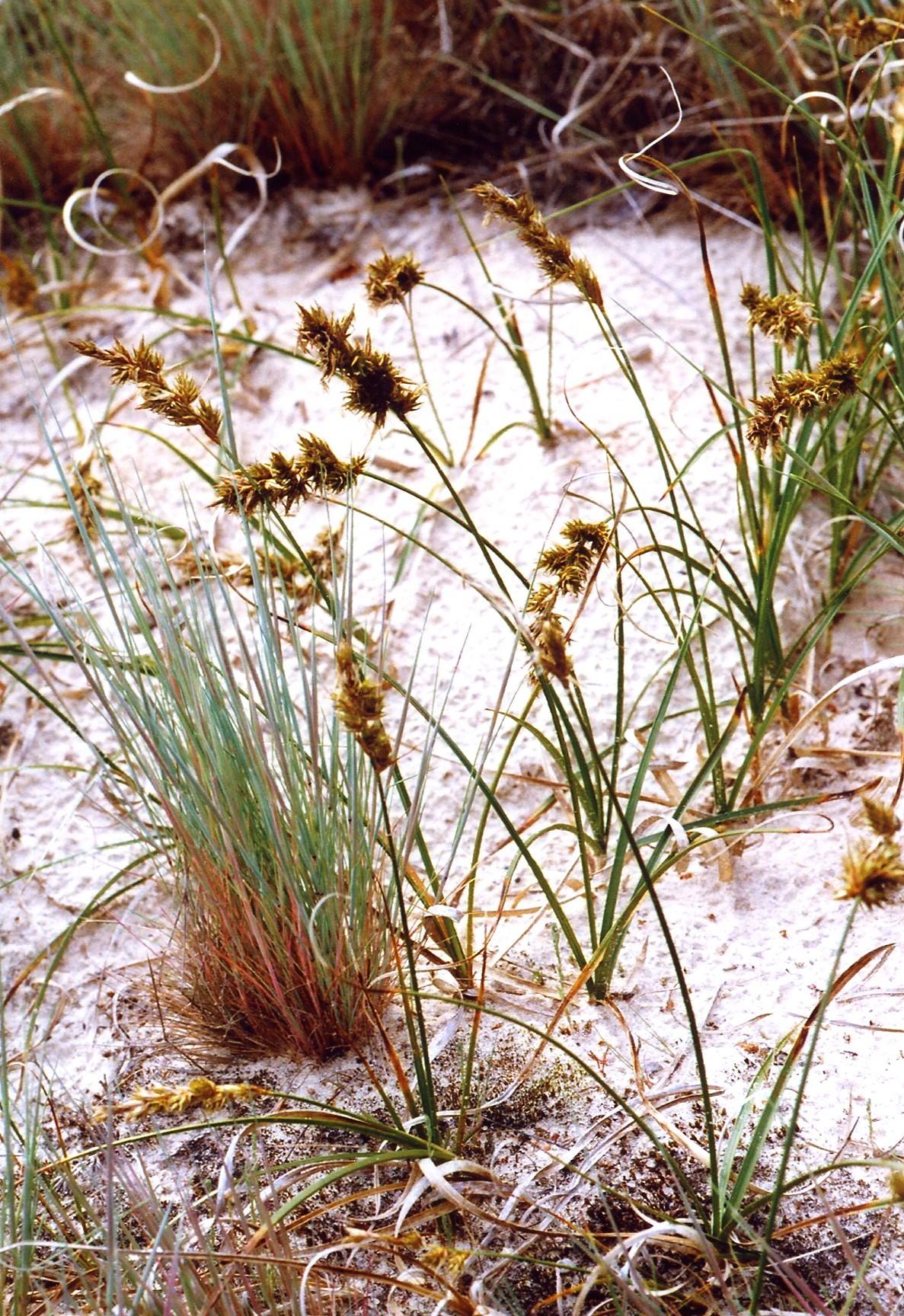
Sand Sedge
Carex arenaria
☀️ Full Sun 💧 Low

Spring Sedge
Carex caryophyllea
☀️ Full Sun 💧 Low

Tufted Sedge
Carex elata
☀️ Full Sun 💧 High
Common Questions
How do you tell Carex apart from true grasses?
You can tell Carex apart from true grasses by feeling the stems, as sedges have three-sided, solid stems with sharp edges rather than hollow, round stems.
Does Carex grow well in full shade?
Many Carex species grow well in full shade, particularly woodland species like Japanese sedge and creeping broad-leaved sedge, which thrive under canopy cover in USDA hardiness zones 5 through 9.
Should you cut back Carex sedges in spring?
You should cut back deciduous Carex species in late winter or early spring to 5 cm (2 in) above ground level, but evergreen species only require combing out dead foliage by hand.