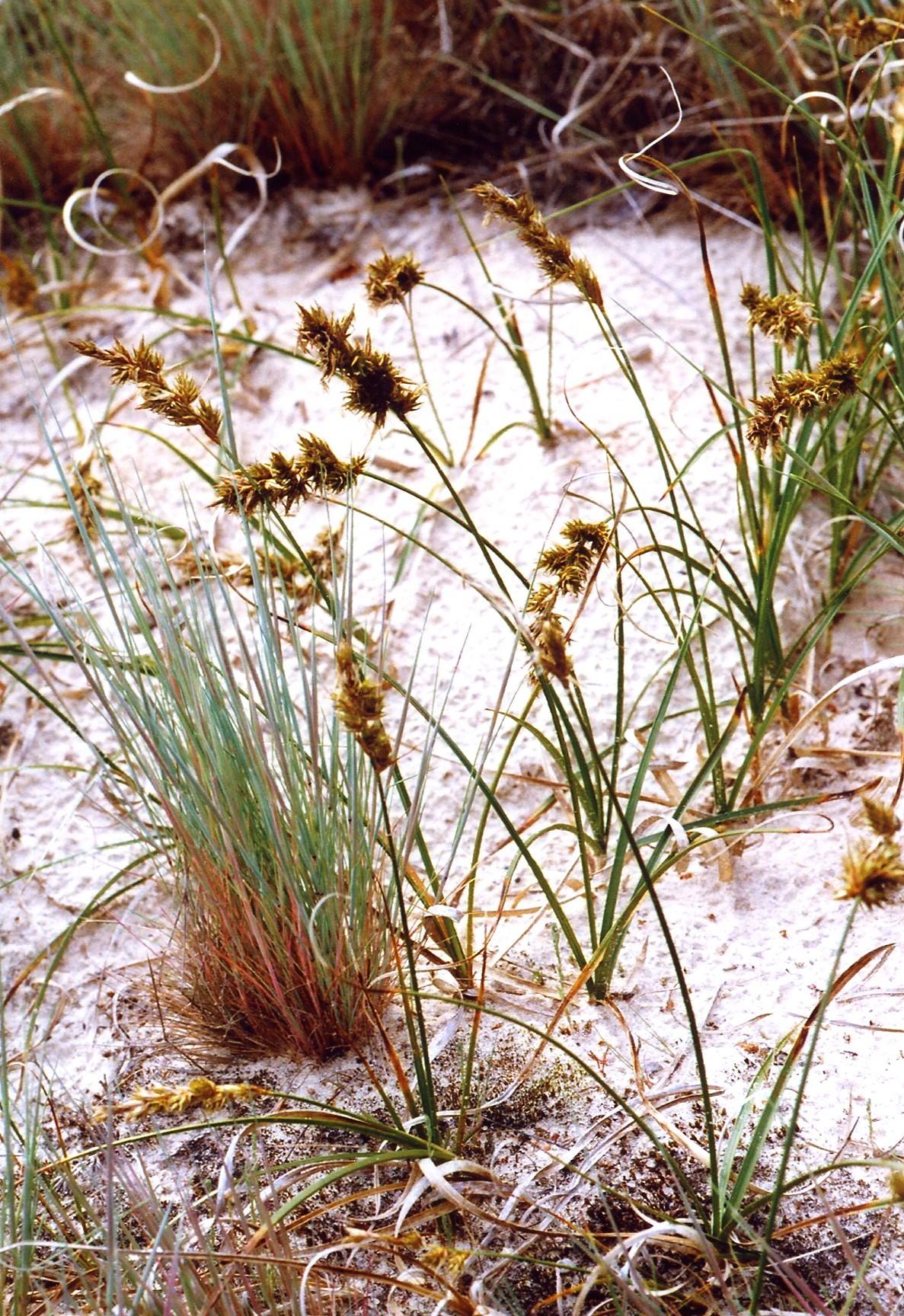
Greater Tussock-Sedge is a massive, architectural perennial native to the wetlands of Europe and Western Asia, known scientifically as Carex paniculata. It is most famous for its ability to build tall, peat-like stools that raise the plant above the water level in marshes.
This species is a specialist for permanently wet ground and pond margins where other grasses might rot. While it provides significant structural height, the leaf edges are notoriously sharp and can cause small cuts if handled without gloves.
Key Facts
- Water: Keep soil permanently saturated or submerged in shallow water
- Height: Reaches a mature height of 1.5 m (5 ft)
- Soil: Prefers heavy clay, silt, or organic peat-rich mud
- Light: Performs best in full sun to partial shade
- Hardiness: Fully hardy down to -20 °C (-4 °F)
Is Greater Tussock-Sedge Right for Your Garden?
Greater Tussock-Sedge is the right choice if you have a permanently wet bog garden or a pond margin that needs a vertical accent. It is not a plant for standard garden borders, as it will quickly decline if the soil dries out during the summer months. Because it forms large, dense mounds that can reach 1 m (3 ft) in diameter, it requires more space than smaller sedges like the orange New Zealand sedge (Carex testacea).
This plant is particularly useful for wildlife-focused gardens or large estates with natural water features. It provides essential nesting sites for birds and cover for amphibians. You should avoid planting it near narrow walkways where its sharp, saw-toothed foliage might brush against bare skin.
Identifying Carex paniculata
You can identify Greater Tussock-Sedge by its massive, elevated clumps called stools, which are composed of dead roots and accumulated organic matter. These stools can grow up to 1 m (3 ft) high over several decades, making the plant look like it is growing on a small pedestal. The stems are distinctive for being sharply triangular and rough to the touch near the top.
- Leaves are 4-7 mm wide, grey-green, and have extremely rough margins.
- Flower heads are large, branched panicles reaching 15 cm (6 in) in length.
- The fruit (utricles) are egg-shaped, brown, and roughly 3-4 mm long.
- The root system is incredibly dense, creating a solid peat-like mass.
Choosing the Best Planting Site
The ideal site for this sedge is a low-lying area with constant moisture, such as the edge of a stream or a marshy hollow. In the wild, it is frequently found in wet woodlands dominated by common alder (Alnus glutinosa), suggesting it handles dappled shade very well. It thrives in heavy, anaerobic soils where most other plants struggle to breathe.
If you are planting in a garden pond, place it in the “marginal” zone where the water is no deeper than 10 cm (4 in). While it can tolerate full sun in temperate climates, the foliage may scorch if the water level drops too low. In warmer regions, partial shade helps maintain the deep green colour of the leaves throughout the summer.
How to Plant and Establish Sedge
When planting Greater Tussock-Sedge, ensure the crown is level with or slightly above the soil surface to mimic its natural mounding habit. Dig a hole twice the width of the root ball but no deeper. If your soil is sandy, incorporate heavy compost or well-rotted manure to increase water retention before planting.
Space multiple plants at least 1 m (3 ft) apart to allow for their significant lateral spread. After planting, keep the area saturated for the first full growing season to help the deep root system establish. Once established, the dense tussock structure makes the plant very resilient to temporary flooding or heavy rain events.
Watering and Feeding Requirements
The primary rule for Greater Tussock-Sedge is to never let the soil dry out completely. In a garden setting, this usually means planting it in a spot that is naturally boggy or using a pond liner to create a permanent wetland. If the plant is in a container, it should sit in a saucer of water at all times.
Fertilizer is generally unnecessary for Panicled Sedge, as it is adapted to nutrient-poor wetland environments. Excessive nitrogen can actually lead to weak, floppy foliage that loses its upright architectural shape. If growth seems stunted in a pond environment, a single dose of aquatic plant food in late spring is sufficient.
Pruning and Maintaining Tussocks
You should prune Greater Tussock-Sedge by cutting back dead foliage in late winter, just before new growth emerges in March. Use sharp shears and wear thick gardening gloves to protect your hands from the serrated leaf edges. If the tussock has become too large or congested, you can remove the oldest, brownest outer leaves to tidy the appearance.
In large naturalistic settings, many people leave the dead foliage intact as it provides winter interest and habitat for beneficial insects. The old flower spikes should be removed if you want to prevent self-seeding, though the seeds are a valuable food source for local birds. Avoid “shaving” the top of the tussock too low, as this can damage the growing points located within the mound.
Propagating Panicled Sedge
The most reliable way to propagate this plant is through root division in early spring. Because the tussocks are extremely dense and woody, you may need a sharp spade or even a saw to cut through the root mass. Ensure each division has a healthy section of roots and at least three or four emerging green shoots.
You can also grow it from seed, which should be sown as soon as it is ripe in late summer. The seeds require a period of cold stratification to germinate effectively. Place them in a tray of wet, peat-free compost and leave them in a cold frame or unheated greenhouse over the winter months for spring emergence.
Common Pests and Environmental Problems
The most common problem for Greater Tussock-Sedge is foliage browning caused by dry soil. If the leaf tips turn brittle and brown, increase the water level immediately. While generally pest-resistant, it can occasionally be affected by rust fungi, which appear as orange or brown pustules on the undersides of the leaves during humid summers.
- Brown leaf tips: Sign of dehydration or low humidity.
- Yellowing leaves: Can indicate iron deficiency in highly alkaline soils.
- Lack of flowering: Usually caused by too much shade or the plant being too young.
- Flopping stems: Often a result of over-fertilization or excessive shade.
Winter Hardiness and Seasonal Changes
Greater Tussock-Sedge is a hardy perennial that remains semi-evergreen in milder winters. In colder regions, the foliage will turn a pale straw colour but the structure of the tussock remains standing, providing a strong vertical element in the winter landscape. It can withstand temperatures as low as -20 °C (-4 °F) without any additional protection.
The plant is particularly striking when covered in frost, as the fine textures of the panicles trap ice crystals. In spring, new bright green shoots emerge from the centre of the mound, quickly hiding the older, weathered foliage. If the winter has been particularly harsh, a harder prune in February will encourage a flush of fresh, vibrant growth.
Flower Spikes and Bloom Period
The flowers of Greater Tussock-Sedge appear in late spring, usually between May and June. They are held on stiff, upright stems that rise above the main foliage clump. The inflorescence is a large, branched panicle that starts green and matures into a deep, chocolate brown by mid-summer.
Unlike many ornamental grasses, the flowers of this sedge are not showy in terms of colour, but they provide excellent texture. The panicles are dense and can be up to 15 cm (6 in) long. They persist on the plant well into the autumn, eventually releasing small, shiny seeds that are easily dispersed by water or wind.
Year-Round Maintenance for Panicled Sedge
| Spring | Cut back any dead or tatty foliage from the previous year in March. Divide large clumps now if you want to create new plants. |
|---|---|
| Summer | Monitor water levels closely; ensure the soil remains saturated during heatwaves. Remove spent flower spikes if you wish to avoid self-seeding. |
| Autumn | Collect ripe seeds for sowing if desired. Clear away fallen leaves from other trees that may have become trapped in the dense tussock center. |
| Winter | Leave the structural mounds and seed heads in place for winter interest and bird foraging. Protect your hands when working near the sharp foliage. |
Common Greater Tussock-Sedge Problems
| What you see | Likely cause | What to do |
|---|---|---|
| Brown, crispy leaf tips | Soil drying out | Increase watering or move the plant to a deeper part of the pond margin. |
| Center of the clump dying | Natural aging or congestion | Divide the plant and replant younger sections from the outer edges. |
| Orange spots on leaves | Sedge rust fungus | Remove affected leaves and improve air circulation around the base of the plant. |
Best Companion Plants for Wet Soil
Pair Greater Tussock-Sedge with other moisture-loving perennials that offer contrasting leaf shapes. The broad, flat leaves of the yellow flag iris (Iris pseudacorus) provide a beautiful contrast to the fine, fountain-like texture of the sedge. For a splash of colour, marsh marigold (Caltha palustris) works well at the base of the tussock, blooming just as the sedge begins its spring growth.
Other excellent companions include the purple loosestrife (Lythrum salicaria) and water avens (Geum rivale). If you are creating a larger woodland edge, plant it near common alder (Alnus glutinosa) or crack willow (Salix fragilis), both of which share its natural habitat requirements. These combinations create a stable, multi-layered wetland ecosystem that supports a wide range of local biodiversity.
Frequently Asked Questions
How big does Greater Tussock-Sedge actually get?
It typically reaches 1.5 m (5 ft) in height when in flower, with the foliage mound itself sitting around 60-100 cm (2-3 ft) high. The base can grow into a massive 'stool' over 1 m wide over many years.
Is Carex paniculata invasive?
No, it is a native species in Europe and Asia that grows in specific wetland habitats. While it can self-seed in ideal conditions, it does not spread aggressively like some invasive grasses.
Can I grow Panicled Sedge in a normal garden border?
Only if the border is a dedicated bog garden with a liner to hold water. In standard garden soil, the plant will eventually wilt and die from lack of moisture.
What is the difference between Carex paniculata and Carex appropinquata?
Carex paniculata is much larger, reaching 1.5 m, whereas the fibrous tussock-sedge (Carex appropinquata) is smaller, usually under 80 cm, and has darker, almost blackish leaf sheaths at the base.
Where does Greater Tussock-Sedge grow naturally?
It is found in fens, marshes, and wet woodlands across Europe, often forming dominant stands in 'alder carr' ecosystems alongside Alnus glutinosa.
Sources & Verification
Taxonomy and distribution are checked against the databases below. Care guidance is written for cultivated species only and reviewed by our editor. How We Build Plant Profiles →