

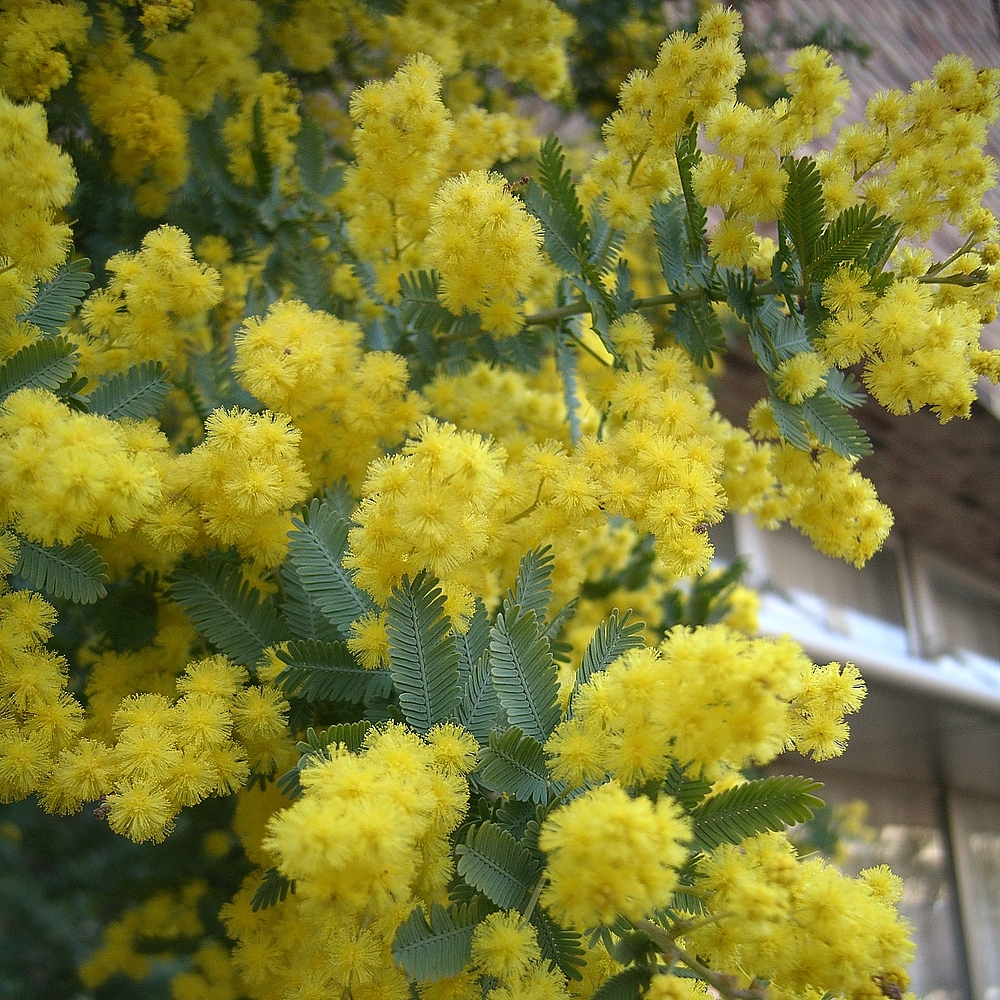
Golden wattle (Acacia pycnantha) is a small tree native to southeastern Australia that belongs to the Fabaceae family. It is widely recognised by its profuse, globe-shaped golden flower clusters that appear in late winter and spring.
You can grow this species in Mediterranean or temperate climates where winter temperatures do not drop below -5 °C (23 °F). It requires excellent drainage and full sun to prevent root rot and leggy growth.
Key Facts
- Height: Up to 8 m (26 ft)
- Flower: Yellow, fragrant heads
- Soil: Well-drained, sandy, or loamy
- Light: Full sun
- Hardiness: USDA zones 9 to 11
What It Is Like to Grow Golden Wattle
Golden wattle is a short-lived, fast-growing shrub or small tree that fits well into native Australian gardens and low-water landscapes. You get rapid screening and bright winter color, but you should expect the plants to decline after 15 to 20 years. The biggest challenge in cultivation is providing enough soil drainage so the root system stays healthy.
- Reaches flowering size within 2 to 3 years from seed
- Attracts nectar-feeding birds such as honeyeaters to your garden
- Responds poorly to heavy phosphorus fertilizers due to native adaptations
If you live in a region with high summer humidity and heavy clay soils, this plant rarely thrives over the long term. Choose an open, elevated spot where rainwater drains away from the root zone within a few hours.
Golden Wattle Botanical Description and Look
The golden wattle features bright green, sickle-shaped phyllodes rather than true leaves, measuring 10 cm to 15 cm (4 to 6 inches) in length. These leathery structures help the plant reduce water loss during hot, dry summer months in its native Australian understorey habitat.
- Bark is smooth when young, turning dark brown and furrowed on older trunks
- Flowers appear as fluffy, golden balls packed into dense racemes along the branches
- Seed pods grow up to 10 cm (4 inches) long, containing dark seeds with prominent arils
The mature habit is an open, spreading crown that reaches heights between 4 m and 8 m (13 to 26 ft). Pruning after flowering helps maintain a denser canopy and prevents the branches from becoming overly brittle in high winds.
Where to Plant Golden Wattle
Plant golden wattle in a location that receives at least 6 hours of direct sunlight daily for optimal flower production. Shady spots result in sparse, leggy growth and significantly fewer golden flower heads in spring.
- Ensure the soil is sandy, gravelly, or loamy with rapid drainage
- Avoid low spots in the garden where water pools after heavy rain
- Keep the tree away from underground pipes, as fast-growing roots seek out moisture
Because it tolerates coastal exposure and poor nutrient profiles, you can plant it on slopes or exposed embankments to help stabilize soil. Amend heavy clay with coarse sand and organic matter before planting to improve structure.
How to Plant Golden Wattle
Plant container-grown golden wattle in autumn or early spring when moderate temperatures reduce transplant shock. Dig a hole twice as wide as the root ball and just as deep to encourage outward root extension.
- Remove the nursery pot and gently tease out any encircling outer roots
- Set the plant so the root collar sits level with the surrounding soil surface
- Backfill with unamended native soil and tamp down gently to eliminate large air pockets
Water the newly planted tree thoroughly once to settle the soil around the roots. Apply a 5 cm (2 inch) layer of organic mulch around the base, keeping the mulch a few inches away from the trunk to prevent collar rot.
Golden Wattle Care and Watering Requirements
Water young golden wattle plants deeply once a week during their first dry season to establish a deep root system. Once established, the tree is remarkably drought-tolerant and survives on natural rainfall alone in most climates.
- Withhold all summer water once the plant is established to prevent root diseases
- Apply a low-phosphorus native plant fertilizer in spring if growth slows down
- Clear weeds and grass away from the root zone to reduce competition for moisture
Overwatering is the single most common reason cultivated specimens fail in residential yards. Check that the top 5 cm (2 inches) of soil is completely dry before applying supplemental water.
Pruning and Maintenance
Prune golden wattle immediately after the spring flowering period finishes to encourage dense branching and prevent the tree from becoming top-heavy. Never cut back into old, bare wood because the stems rarely produce new shoots from dormant buds.
- Trim off spent flower clusters and dead wood using sharp, sterilized bypass pruners
- Shorten long, unruly branches by up to one-third to maintain a balanced canopy
- Inspect the trunk and branches regularly for signs of borer insect activity
Regular light tip-pruning during the first two years of life establishes a strong central leader and an attractive multi-stemmed or standard form.
Common Golden Wattle Problems
Golden wattle is relatively trouble-free when grown in suitable conditions, but poorly drained soil quickly leads to fatal root rot caused by Phytophthora fungi. Powdery mildew can also appear on the phyllodes during humid weather.
- Yellowing phyllodes: Usually indicates waterlogged soil or iron deficiency in alkaline pH
- Sudden wilting: Often caused by collar rot or root damage from physical disturbance
- Borer holes: Look for sap or sawdust-like frass on the bark, indicating wood-boring beetle larvae
Prune out heavily infested branches immediately and dispose of them to keep wood-boring insects from spreading to healthy sections of the canopy.
Uses for Golden Wattle
Golden wattle serves primarily as an ornamental specimen in gardens and parks due to its striking winter bloom and silvery-green foliage. It also acts as an effective windbreak or informal hedge in large rural properties.
- Provides vital nectar resources for native bees, honeyeaters, and other beneficial pollinators
- Traditionally used by Indigenous Australians for gum exudates and fiber extraction
- Planted in land reclamation projects to stabilize degraded soils and fix atmospheric nitrogen
The timber is hard and dense, though rarely used for major woodworking due to the relatively small diameter of the trunk.
Golden Wattle Through the Seasons
| Spring | Prune back spent flower clusters after blooming finishes. Apply a slow-release, low-phosphorus native fertilizer if growth appears pale. |
|---|---|
| Summer | Withhold supplemental water from established trees to encourage drought hardiness. Monitor young plantings during extreme heat waves. |
| Autumn | Check soil drainage around the root zone before heavy seasonal rains begin. Clear away fallen debris to discourage fungal issues. |
| Winter | Enjoy the peak bloom period as golden flower heads open across the branches. Watch for frost damage on young, tender specimens. |
Golden Wattle Tree Problems Explained
| What you see | Likely cause | What to do |
|---|---|---|
| Leaves or phyllodes turning yellow | Waterlogged soil or root rot | Improve site drainage and reduce supplemental watering immediately. |
| Leggy growth with few flowers | Insufficient sunlight | Prune surrounding overhanging trees or transplant to a full-sun location. |
| Sudden branch dieback | Wood-boring insect attack | Prune affected branches back to healthy wood and destroy the clippings. |
Frequently Asked Questions
How fast does golden wattle grow?
Golden wattle is a fast-growing tree that can reach its mature height of 4 m to 8 m (13 to 26 ft) in just 3 to 5 years under optimal conditions.
Is golden wattle toxic to dogs and cats?
Golden wattle is non-toxic to dogs, cats, and humans. Pets can safely interact with the plant, though chewing on woody stems may cause mild digestive upset.
Why is golden wattle important in Australia?
Golden wattle is the national floral emblem of Australia, and its green and gold colors inspired the country's national sporting colors.
How do you grow golden wattle from seed?
Pour boiling water over the hard seeds and let them soak for 24 hours to soften the seed coat before planting them in a well-drained seed-raising mix.
Sources & Verification
Taxonomy and distribution are checked against the databases below. Care guidance is written for cultivated species only and reviewed by our editor. How We Build Plant Profiles →
More in Acacia

Australian Blackwood
Acacia melanoxylon
☀️ Full Sun 💧 Moderate
Cootamundra Wattle
Acacia baileyana
☀️ Full Sun 💧 Low

Shoestring Acacia
Acacia stenophylla
☀️ Full Sun 💧 Low

Black Wattle
Acacia mangium
☀️ Full Sun 💧 Moderate

Earleaf Acacia
Acacia auriculiformis
☀️ Full Sun 💧 Low

Knife-Leaf Wattle
Acacia cultriformis
☀️ Full Sun 💧 Low