

Acacia cultriformis is an evergreen Australian shrub or small tree, distinguished by its stiff, triangular foliage which are actually flattened stems called phyllodes. It originates from New South Wales and Queensland, where it grows naturally in rocky ridges and open woodlands.
This species is exceptionally drought-tolerant once established and thrives in Mediterranean-style climates. It maintains a dense, architectural shape that works for screens or specimen planting, provided it receives the full sun required for its heavy spring bloom.
Key Facts
- Water: only during extreme drought once established
- Light: full sun for maximum flowering
- Hardiness: survives temperatures down to -7 °C (20 °F)
- Bloom: masses of yellow flowers in late winter
- Growth: moderate rate reaching 2-4 m (6.5-13 ft)
Is Knife-Leaf Wattle Right for Your Garden?
Knife-leaf Wattle is a low-maintenance choice for gardens needing a drought-tolerant screen or silver-foliaged accent. It suits growers in dry climates who want a plant that requires little attention once its root system is established. Because it fixes its own nitrogen, it survives in nutrient-poor soils where other shrubs might struggle.
You should consider this plant if you have a sunny spot with excellent drainage, as it will fail in heavy, waterlogged clay. It is a functional choice for coastal gardens due to its tolerance of salt spray and wind. The dense growth habit provides shelter for small birds, while the flowers attract bees and other pollinators during the lean months of late winter.
How to Identify Acacia cultriformis
The most distinctive feature of Acacia cultriformis is its triangular, knife-shaped phyllodes that measure 1 to 3 cm (0.4 to 1.2 in) in length. These are not true leaves but flattened leaf stalks that are grey-green or silver in colour and spirally arranged along the stems. Each phyllode has a small, sharp point at the tip and a tiny gland located on the upper margin.
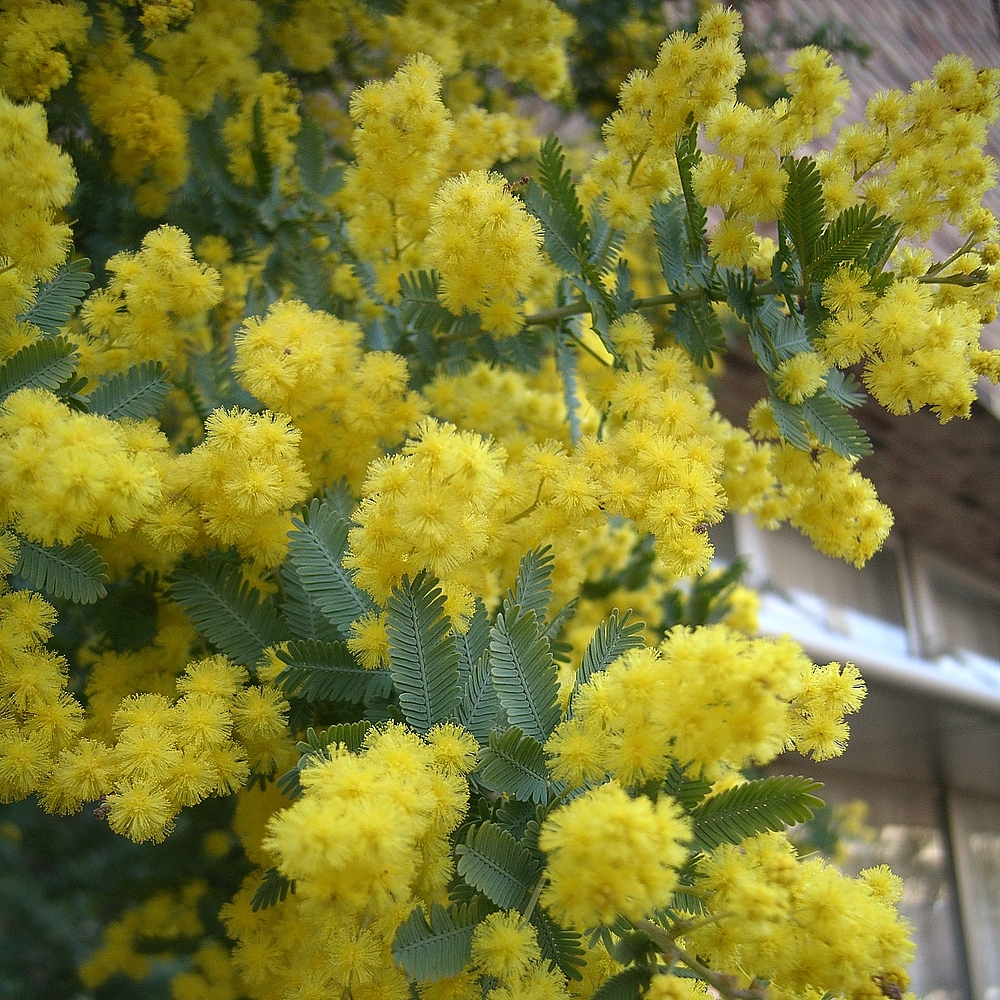
The flowers appear as bright yellow, spherical heads about 4-5 mm (0.15-0.2 in) in diameter, grouped into long clusters called racemes. Following the bloom, the plant produces brown, papery seed pods that are 5 to 10 cm (2 to 4 in) long and often twisted. The bark on older specimens remains relatively smooth and light grey, while the overall habit is typically a multi-stemmed, spreading shrub.
Acacia cultriformis Size and Growth Habit
A mature Knife-leaf Wattle typically reaches a height of 2 to 4 m (6.5 to 13 ft) with a similar spread. In its native habitat, it often forms a wide, bushy shape rather than a tall, narrow tree. Growth is fastest in the first three years, after which the plant settles into its mature form and focuses energy on flowering.
If you have limited space, look for the prostrate cultivar ‘Austraflora Cascade’, which grows only 0.5 m (1.6 ft) tall but can spread up to 3 m (10 ft) wide. This low-growing version is frequently used for covering embankments or spilling over retaining walls. Regular pruning is the most effective way to keep the standard upright form at a specific height in residential settings.
- Standard height: 2-4 m (6.5-13 ft)
- Prostrate height: 0.5 m (1.6 ft)
- Average spread: 2.5 m (8 ft)
- Growth rate: 30-60 cm (12-24 in) per year
Best Site and Soil Conditions
This species requires a site with full sun and exceptionally well-drained soil to prevent root issues. While it can tolerate partial shade, the foliage will become sparse and the flower production will be significantly reduced. It thrives in sandy or rocky soils but can adapt to loamy conditions if the site does not hold standing water during the winter months.
Soil pH is rarely an issue, though a slightly acidic to neutral range of 5.5 to 7.0 is ideal. If your garden has heavy clay, you must plant the Knife-leaf Wattle on a mound or in a raised bed to ensure the root crown remains dry. It is highly resistant to heat and can tolerate the reflected light from south-facing walls or paved surfaces without leaf scorch.
Planting and Establishing Dogtooth Wattle
Space your Dogtooth Wattle plants at least 2 m (6.5 ft) apart to allow for their naturally spreading, bushy habit. When planting, dig a hole twice the width of the root ball but no deeper, ensuring the stem sits at the same level it was in the nursery container. It is best to plant in autumn or early spring to give the roots time to develop before the heat of summer arrives.
Avoid adding heavy fertilizers or rich organic matter to the planting hole, as this can encourage soft growth that is prone to pests. Like many Australian wattles, this species has a symbiotic relationship with nitrogen-fixing bacteria in the soil. Be careful not to disturb the root ball during transplanting, as the fine roots are sensitive to movement and can cause the plant to go into shock.
Watering and Feeding Requirements
Established Knife-leaf Wattle plants require almost no supplemental water except during prolonged periods of extreme heat. For the first six to twelve months after planting, you should water once a week to help the roots penetrate deep into the soil. Once the plant shows new growth and has survived its first summer, irrigation can be reduced to once a month or stopped entirely in most climates.
Over-fertilizing is a common mistake that leads to a shortened lifespan for this species. Use a low-phosphorus fertilizer specifically formulated for Australian native plants once a year in early spring if the soil is particularly poor. High phosphorus levels can be toxic to the root system, causing yellowing of the phyllodes and eventual dieback.
When and How to Prune Knife-Leaf Wattle
Prune Acacia cultriformis immediately after the yellow flowers drop in late spring to maintain a dense shape. This timing prevents the plant from wasting energy on seed production and encourages the development of new flowering wood for the following year. You can safely remove up to one-third of the green growth to keep the shrub compact and prevent it from becoming leggy.
Never cut back into old, brown wood that lacks green phyllodes, as wattles generally do not have dormant buds on old stems and will not regrow from heavy hacking. If a branch has become completely bare at the base, it is better to leave it or remove the entire limb at the trunk. Regular light pruning from a young age is the best way to avoid the need for drastic measures later.
Common Problems and Pests
The primary threats to Dogtooth Wattle are root rot from overwatering and occasional infestations of scale insects. If you notice the silver phyllodes turning yellow or dropping prematurely, check the soil moisture levels immediately. Poor drainage is the most frequent cause of sudden death in this species, especially during wet winters.
You may also encounter these common issues:
- Scale insects: small bumps on stems that secrete honeydew; treat with horticultural oil.
- Gall rust: fungal growths on branches; prune out affected areas and dispose of them.
- Borer: larvae that tunnel into the trunk; usually only affects older or stressed trees.
- Leaf spot: dark spots on phyllodes caused by high humidity; improve air circulation.
Winter Protection and Hardiness
Knife-leaf Wattle is hardy down to temperatures of -7 °C (20 °F), making it suitable for USDA zones 9 through 11. In regions where light frosts occur, the plant usually suffers no damage, though young specimens may lose the tips of their new growth. If a severe freeze is predicted, you can protect small plants by wrapping them in horticultural fleece or burlap.
Winter is also the time when the flower buds develop, so avoiding heavy pruning in late autumn is essential. The plant is more susceptible to cold damage if the soil is waterlogged, so ensuring dry winter feet is the best form of protection. In colder zones, it can be grown in a large container and moved into a frost-free greenhouse or conservatory for the winter months.
Year-Round Care for Knife-Leaf Wattle
| Spring | Prune the shrub immediately after the yellow flowers fade to maintain a bushy shape. Apply a low-phosphorus fertilizer if growth appears sluggish. |
|---|---|
| Summer | Monitor young plants for water stress during their first two years. Ensure mulch is kept away from the direct base of the trunk to prevent rot. |
| Autumn | The best time for planting new specimens. Check for scale insects on the stems and treat with horticultural oil if necessary. |
| Winter | Reduce any supplemental watering to zero unless the soil is completely parched. Protect young plants from heavy freezes with frost cloth. |
Common Knife-Leaf Wattle Problems Solved
| What you see | Likely cause | What to do |
|---|---|---|
| Yellowing phyllodes and drooping stems | Overwatering or poor drainage | Stop watering immediately and ensure the plant is not sitting in a low spot where water collects. |
| Sparse growth and few flowers | Insufficient sunlight | Move the plant to a location with at least 6-8 hours of direct sun or prune back overhanging trees. |
| White, sticky residue on stems | Scale insects | Apply a spray of neem oil or horticultural soap during the cooler parts of the day. |
Popular Acacia cultriformis Cultivars
- ‘Austraflora Cascade’ – a low-growing prostrate form that spreads 3m wide.
- ‘Honey Bun’ – a compact, rounded selection with very dense foliage.
Landscape Uses and Companion Plants
Use Acacia cultriformis as a structural backdrop for smaller Australian natives like Kangaroo Paw (Anigozanthos species). Its silver-grey foliage provides a neutral contrast that makes the colours of other flowers appear more intense. It is particularly effective when planted in groups of three to five to create a dense, wind-breaking hedge or a privacy screen along a property line.
For a cohesive dry-garden look, pair it with these species:
- Coast Rosemary (Westringia fruticosa) for its fine texture and white flowers.
- Bottlebrush (Callistemon species) for their red summer blooms.
- Grevillea cultivars like ‘Robyn Gordon’ for year-round interest.
- Silver Banksia (Banksia marginata) to complement the metallic leaf tones.
Frequently Asked Questions
How long does a Knife-leaf Wattle live?
Like most wattles, this species is relatively short-lived, typically lasting 10 to 15 years in a garden setting. Regular pruning can help extend its life by preventing the wood from becoming overly heavy and prone to splitting.
Is Acacia cultriformis invasive?
It has naturalized in parts of North America, Africa, and New Zealand. While not as aggressive as some other Acacia species, you should check local weed lists if you live near sensitive bushland areas.
Can I grow Knife-leaf Wattle in a pot?
Yes, it grows well in a large container with high-quality, free-draining potting mix. You will need to prune it more frequently to manage its size and ensure the pot has large drainage holes.
How do I grow Dogtooth Wattle from seeds?
The seeds have a hard coating and require 'scarification'—pouring boiling water over them and soaking for 24 hours until they swell—before sowing in a sandy seed-starting mix.
Why is my wattle not flowering?
The most common reasons are too much shade or the application of high-nitrogen fertilizer, which encourages foliage at the expense of blooms. Ensure the plant is in full sun and stop fertilizing.
Sources & Verification
Taxonomy and distribution are checked against the databases below. Care guidance is written for cultivated species only and reviewed by our editor. How We Build Plant Profiles →
More in Acacia

Golden Wattle
Acacia pycnantha
☀️ Full Sun 💧 Low

Australian Blackwood
Acacia melanoxylon
☀️ Full Sun 💧 Moderate

Black Wattle
Acacia mangium
☀️ Full Sun 💧 Moderate
Cootamundra Wattle
Acacia baileyana
☀️ Full Sun 💧 Low
Black Wattle
Acacia mearnsii
☀️ Full Sun 💧 Low

Silver Wattle
Acacia dealbata
☀️ Full Sun 💧 Moderate