
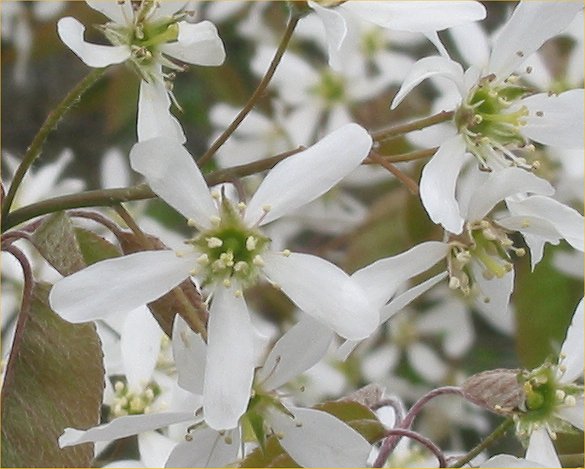
Serviceberry, or Amelanchier canadensis, is a small, deciduous tree or large shrub native to eastern North America. It is recognized for its delicate white flowers in early spring, followed by edible, purple-red berries in early summer.
This plant offers multi-season interest, with attractive bark, spring blooms, summer fruit, and vibrant autumn foliage. It is a good choice for smaller gardens or naturalized areas where year-round appeal is desired.
Key Facts
- Light: Full sun to partial shade
- Water: Moderate, especially when young
- Height: Up to 7.5 m (25 ft)
- Hardiness: USDA Zones 4-8
- Soil: Well-drained, adaptable
- Bloom: Early spring, white flowers
What Is Serviceberry Like to Grow?
Serviceberry is a low-maintenance plant that offers seasonal interest, making it suitable for many garden styles. It adapts to various soil conditions and is relatively pest-resistant.
The plant provides early spring flowers, edible berries in summer, and striking fall color, adding beauty to your landscape for several months. Its modest size also makes it a good choice for smaller yards or as an understory tree.
What Does a Serviceberry Look Like?
Serviceberry is typically a multi-stemmed shrub or small tree, reaching 4.5 to 7.5 meters (15 to 25 feet) tall and 3 to 4.5 meters (10 to 15 feet) wide. It often grows with an upright, oval to rounded habit.
Its leaves are oval, finely toothed, and emerge with a purplish tint, turning dark green in summer and then vibrant orange-red in autumn. The flowers are small, white, five-petaled, and appear in drooping clusters before the leaves fully unfurl in early spring. These blossoms give way to small, round, edible berries that ripen from red to dark purple in June or July.
The bark is smooth and gray, often developing vertical stripes as the tree matures, adding winter interest.
How Big Do Serviceberry Trees Get?
Serviceberry trees typically reach a mature height of 4.5 to 7.5 meters (15 to 25 feet) and a spread of 3 to 4.5 meters (10 to 15 feet). Its size makes it suitable for various garden applications, from specimen trees to naturalized plantings.
Growth rate is moderate, adding about 30 to 60 cm (1 to 2 feet) per year under good conditions. The plant can be grown as a multi-stemmed shrub or trained into a small single-trunk tree.
Where to Plant Serviceberry
Plant Serviceberry in a location that receives full sun to partial shade for best flowering and fruit production. While it tolerates some shade, too little light can reduce blooms and fall color.
The plant prefers well-drained, loamy soil but is adaptable to a range of soil types, including sandy or clay soils. Ensure the planting site has good air circulation to minimize disease issues. It naturally occurs in wet sites, so it tolerates moist conditions better than many other trees.
How to Plant a Serviceberry
Planting a Serviceberry tree or shrub involves preparing the site and ensuring proper root establishment. The best time to plant is in spring or fall when temperatures are mild.
- Dig a hole that is twice as wide as the root ball and just as deep.
- Carefully remove the plant from its container, gently loosening any circling roots.
- Place the plant in the hole so that the top of the root ball is level with the surrounding soil.
- Backfill the hole with native soil, tamping gently to remove air pockets.
- Water thoroughly immediately after planting to settle the soil.
- Apply a 5-10 cm (2-4 inch) layer of mulch around the base, keeping it away from the trunk.
Watering and Feeding Serviceberry
Water young Serviceberry plants regularly to establish a strong root system, aiming for 2.5 cm (1 inch) of water per week from rain or irrigation. Mature plants are more drought-tolerant but benefit from supplemental watering during prolonged dry spells.
Fertilizing is generally not necessary for established Serviceberry plants growing in healthy soil. If growth is poor or leaves appear pale, a balanced slow-release fertilizer can be applied in early spring. Avoid over-fertilizing, which can harm the plant.
Pruning Serviceberry Trees
Prune Serviceberry in late winter or early spring while the plant is dormant. This timing minimizes stress and allows you to see the plant’s structure clearly.
- Remove any dead, damaged, or diseased branches to maintain plant health.
- Thin out crowded interior branches to improve air circulation and light penetration.
- Remove suckers that emerge from the base of the plant to maintain a tree-like form.
- Shape the plant as needed to achieve a desired aesthetic, cutting back to a strong side branch or bud.
Common Serviceberry Problems
Serviceberry is generally a hardy plant, but it can encounter a few common issues. Most problems are easily managed with proper cultural practices.
Pests like aphids or spider mites can sometimes appear, especially during dry conditions. Diseases such as powdery mildew or rust may occur in humid environments or if air circulation is poor. Proper spacing and watering can help prevent many of these issues.
Winter Care for Serviceberry
Serviceberry is hardy in USDA Zones 4-8 and typically requires minimal winter care once established. Ensure the plant is well-watered before the ground freezes.
A layer of mulch around the base helps insulate the roots and retain soil moisture through the winter months. Protect young trees from rodent damage by wrapping the trunk with tree guards if voles or rabbits are present in your area.
Uses for Serviceberry
Serviceberry offers multiple uses in the landscape, making it a versatile choice for many gardeners. Its ornamental qualities are appreciated throughout the year.
- Ornamental: Used as a specimen tree, in shrub borders, or as a small shade tree.
- Edible Fruit: The sweet, dark purple berries are suitable for fresh eating, pies, jams, and jellies.
- Wildlife Plant: The berries are a food source for birds and small mammals, while the flowers attract pollinators.
- Hedge: Can be planted in groups to form an informal hedge or screen.
Year-Round Serviceberry Care
| Spring | Prune dead or crossing branches before new growth starts. Apply a balanced slow-release fertilizer if needed. Water regularly as new leaves emerge. |
|---|---|
| Summer | Harvest ripe berries in June or July. Ensure adequate watering during dry periods, especially for young plants. Monitor for pests like aphids. |
| Autumn | Enjoy the vibrant fall foliage. Rake up any fallen leaves to prevent disease carryover. Water thoroughly before the ground freezes. |
| Winter | Inspect for any winter damage or rodent activity. Protect young trunks with tree guards if rodents are a concern. Plan any major structural pruning for late winter. |
Common Serviceberry Problems Explained
| What you see | Likely cause | What to do |
|---|---|---|
| Few or no flowers | Insufficient sunlight or improper pruning | Ensure the plant receives at least 6 hours of sun; prune only after flowering or during dormancy. |
| Leaves turning yellow | Overwatering, poor drainage, or nutrient deficiency | Check soil moisture before watering; improve drainage if necessary; consider a soil test if yellowing persists. |
| Spots on leaves (rust or powdery mildew) | Fungal disease due to high humidity or poor air circulation | Improve air circulation by thinning crowded branches; remove affected leaves; consider a fungicide if severe. |
| Berries not developing | Lack of pollination or environmental stress | Ensure pollinator activity; provide consistent water during flowering and fruit set. |
Popular Serviceberry Varieties
- 'Autumn Brilliance' – known for outstanding red-orange fall color and good disease resistance.
- 'Princess Diana' – features abundant white flowers and bright red fall foliage.
- 'Robin Hill' – produces pinkish buds that open to white flowers, with good disease resistance.
Frequently Asked Questions
Are Serviceberry berries edible?
Yes, Serviceberry berries are edible and have a sweet, mild flavor similar to blueberries or raspberries. They ripen to a dark purple-red in early summer and can be eaten fresh or used in pies, jams, and jellies.
When do Serviceberry trees bloom?
Serviceberry trees bloom in early spring, typically in April or May, before their leaves fully emerge. The timing can vary slightly depending on your specific climate and cultivar.
Is Serviceberry deer resistant?
Serviceberry is generally considered moderately deer resistant, meaning deer may browse it if other food sources are scarce. Young plants are more susceptible to damage than mature ones.
What is the difference between Serviceberry and Juneberry?
Serviceberry and Juneberry are common names for plants in the genus Amelanchier, and they often refer to the same species, including Amelanchier canadensis. 'Juneberry' specifically refers to the fruit ripening in June.
How fast does a Serviceberry grow?
Serviceberry has a moderate growth rate, typically adding 30 to 60 cm (1 to 2 feet) of height per year. Its growth can be faster in ideal conditions with consistent moisture and good soil.
Sources & Verification
Taxonomy and distribution are checked against the databases below. Care guidance is written for cultivated species only and reviewed by our editor. How We Build Plant Profiles →
