
Cockspur hawthorn (Crataegus crus-galli) is a small deciduous tree native to central and eastern North America, recognized by its wide, flat-topped canopy and unlobed glossy leaves. Clusters of white flowers open in late spring, followed by persistent red pomes and rigid, sharp thorns up to 8 cm (3 in) long.
This species tolerates severe frost down to USDA Hardiness Zone 3, urban air pollution, and dry clay soils. Planting requires careful placement away from footpaths due to its protective thorn structure.
Key Facts
- Plant Type: Deciduous small tree or large shrub
- Hardiness: USDA Zones 3 to 7
- Light: Full sun (minimum 6 hours daily)
- Water: Low to moderate once established
- Mature Size: 4.5–9 m (15–30 ft) height and spread
- Thorns: 4–8 cm (1.5–3 in) rigid spikes
Where to Plant Cockspur Hawthorn
Cockspur hawthorn thrives in full sun and adapts to heavy clay, rocky ground, and urban environments across USDA Hardiness Zones 3 through 7. Its broad canopy makes it suitable as a specimen tree, screen, or security hedge.
Because the branches bear sharp 5–8 cm (2–3 in) thorns, avoid planting this species near property lines, pedestrian walkways, or child play areas. Position trees where their wide horizontal spread of up to 9 m (30 ft) will not interfere with overhead power lines or structure foundations.
Identifying Features and Thorns
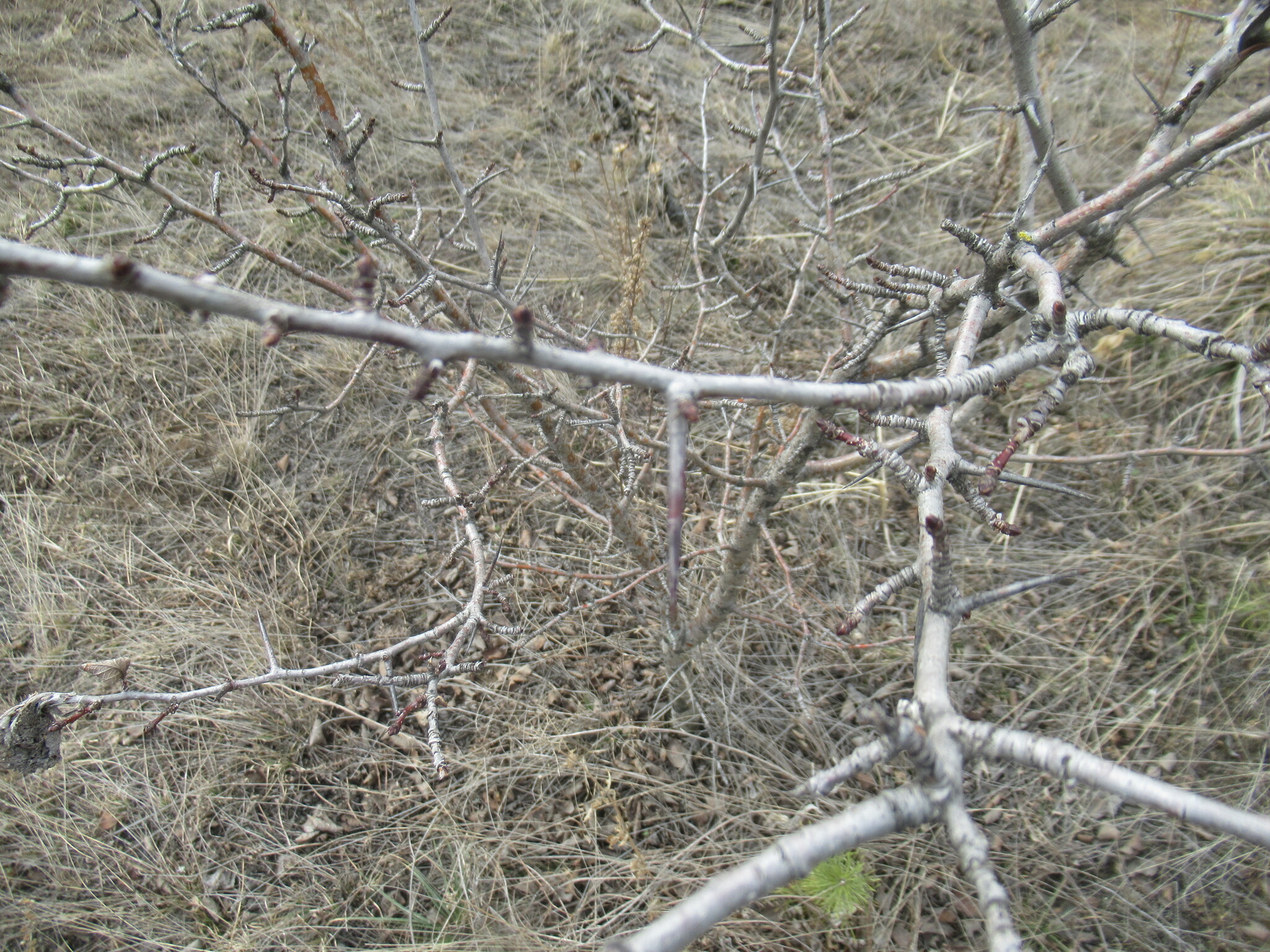
Cockspur hawthorn is a small tree featuring flat-topped horizontal branching, glossy dark green obovate leaves, and heavy, curved thorns measuring 4–8 cm (1.5–3 in) long. The unlobed leaves distinguish it from common hawthorn (Crataegus monogyna) and English hawthorn (Crataegus laevigata).
In late May or early June, corymbs of 5-petaled white flowers measuring 1.5 cm (0.6 in) wide cover the branches. In autumn, the foliage shifts to shades of bronze-orange or purplish-red alongside bright red, apple-like pomes measuring 1–1.5 cm (0.4–0.6 in) across that persist through winter.
Mature Size and Growth Rate
Cockspur hawthorn grows at a moderate rate of 30–60 cm (12–24 in) per year under full sun. It reaches a mature height of 4.5–9 m (15–30 ft) with an equal or slightly greater canopy spread.
The tree develops a dense, low-branching habit unless pruned into a single-trunk standard early in its life. Soil compaction slows height growth but rarely kills established roots.
Sunlight and Soil Conditions
Full sun providing at least 6 hours of direct light daily is necessary for dense branching, heavy flowering, and resistance to foliage fungi. Trees grown in partial shade develop open, sparse branching and produce fewer pomes.
This species tolerates a broad soil pH range from 6.0 to 7.5. It grows in poor alkaline clay, compacted urban fill, and dry limestone soils, provided water does not pool around the roots for extended periods.
How to Plant Cockspur Hawthorn
Plant container-grown or bare-root hawthorn bushes in early spring before leaf emergence or in autumn 6 weeks before the ground freezes. Dig a planting hole twice as wide as the root ball and equal in depth.
- Set the tree so the root collar sits level with or 1–2 cm (0.5 in) above the surrounding grade.
- Backfill with native excavated soil, firming gently around the roots to eliminate air pockets.
- Water deeply with 20–30 L (5–8 gal) of water immediately after planting.
- Apply a 5–7 cm (2–3 in) wood chip mulch layer around the base, leaving a 10 cm (4 in) gap around the trunk bark.
Watering and Fertilizer Needs
Young trees require 2.5 cm (1 in) of water weekly during their first two growing seasons. Once established, Cockspur hawthorn tolerates extended summer dry spells without supplemental irrigation.
Fertilizer is generally unnecessary in standard garden landscape soils. If annual growth falls below 15 cm (6 in), broadcast a balanced 10-10-10 granular fertilizer at a rate of 50 g per square meter (1.5 oz per square yard) under the drip line in early spring.
How to Prune Hawthorn Bushes
Prune hawthorn bushes in late winter while the tree is dormant to reduce fungal infection risks and improve structure. Annual pruning keeps the interior canopy open to sunlight and air circulation.
- Wear leather gauntlet gloves and eye protection to protect against sharp thorns.
- Cut out dead, diseased, or rubbing branches back to a main lateral branch or trunk collar.
- Remove sucker shoots sprouting from the root crown or lower trunk base.
- Thin out 10–15% of interior branches to maintain sunlight penetration to lower foliage.
Hawthorn Diseases and Pest Control
Cedar-hawthorn rust caused by the fungus Gymnosporangium juniperi-virginianae causes yellow spots on leaves and orange spore cups on fruit when juniper hosts grow nearby. Rust rarely kills mature trees, but severe infections cause early leaf drop.
- Fire blight: Causes branch tips to turn black and curl like a shepherd’s crook; prune infected twigs 20 cm (8 in) below visible damage using disinfected tools.
- Lace bugs: Feed on leaf undersides causing stippling; spray foliage with insecticidal soap in late spring.
- Leaf spot: Fungal spots appear during damp springs; clear fallen autumn leaves to eliminate overwintering spores.
Winter Care and Protection
Cockspur hawthorn withstands temperatures down to -35 °C (-31 °F) without artificial insulation or cold wraps. Bark split from sunscald can occur on young single-trunk specimens exposed to bright winter sun.
Wrap the lower trunk of young trees with white plastic tree guards in November to prevent trunk damage from rabbits and mice. Remove guards in April to avoid moisture build-up against the stem.
Landscape and Wildlife Uses
The dense branch network provides sheltered nesting sites for songbirds like cardinals and mockingbirds, protecting them from larger predators. White spring blossoms supply nectar to native bees and hoverflies.
The red fruits persist into winter, providing food for cedar waxwings, robins, and grouse. Thorns make Cockspur hawthorn effective as a living boundary barrier or farm hedgerow.
Year-Round Care for Cockspur Hawthorn
| Spring | Prune dormant wood in late winter or early spring before buds open. Apply a balanced slow-release fertilizer if growth was sparse the previous year, and refresh mulch to a depth of 5–7 cm (2–3 in). |
|---|---|
| Summer | Water newly planted trees weekly during hot periods with 20–30 L (5–8 gal) of water. Inspect leaves for lace bug stippling or yellow cedar-hawthorn rust spots. |
| Autumn | Rake up and discard fallen leaves to prevent fungal spores from overwintering in the soil. Plant new container-grown trees at least 6 weeks before ground frost. |
| Winter | Install plastic tree guards around young trunks to prevent rabbit and rodent gnawing. Inspect the canopy for storm-damaged branches and cut them clean. |
Cockspur Hawthorn Leaf and Disease Problems
| What you see | Likely cause | What to do |
|---|---|---|
| Yellow and orange spots on leaves in midsummer | Cedar-hawthorn rust fungal infection | Clear fallen foliage in autumn and avoid planting near eastern redcedar or juniper hosts. |
| Blackened, scorched branch tips bent downward | Fire blight bacterial infection | Prune affected branches 20 cm (8 in) below damage using tools dipped in 70% isopropyl alcohol. |
| Bleached, stippled leaves with dark dots underneath | Lace bug feeding | Spray leaf undersides thoroughly with insecticidal soap or horticultural oil in late spring. |
| Premature leaf drop in mid-to-late summer | Fungal leaf spot or drought stress | Water deeply during dry spells exceeding three weeks and clean up autumn leaf litter. |
Cockspur Hawthorn Varieties and Cultivars
- ‘Inermis’ – thornless variety with smooth stems, suitable for public landscapes
- ‘Cruzam’ Crusader – thornless selection reaching 4.5 m (15 ft) with strong disease resistance
- ‘Virdis’ – narrow-upright cultivar with glossy leaves and reduced thorn length
Frequently Asked Questions
Are hawthorn bushes evergreen?
No, Cockspur hawthorn is a deciduous tree that drops all its leaves every autumn. The foliage turns bronze, orange, or purplish-red before falling, leaving bare stems and red berries through winter.
Is hawthorn bush poisonous?
The fruit pulp of Cockspur hawthorn is non-toxic and edible, but the hard seeds inside contain small amounts of cyanogenic glycosides and should not be chewed or eaten in quantity. The sharp 5–8 cm (2–3 in) thorns also present a severe risk of puncture wounds.
How does Cockspur hawthorn differ from Indian hawthorn?
Cockspur hawthorn (Crataegus crus-galli) is a cold-hardy deciduous tree with long sharp thorns and red pomes, while Indian hawthorn (Rhaphiolepis indica) is a thornless evergreen shrub adapted only to warm climates in USDA Zones 8–10.
Are hawthorn bushes protected?
Cockspur hawthorn is not a protected species under federal laws in North America, though wild trees located in protected state parks, nature reserves, or municipal greenspaces are subject to local plant collection laws.
How do you propagate hawthorn bushes?
Cockspur hawthorn is propagated by sowing cleaned seeds outdoors in autumn so they undergo natural cold stratification for 120 days. Selected cultivars like 'Inermis' are propagated by chip budding or grafting onto seedling rootstocks in spring.
How do you remove a hawthorn bush?
Cut branches back systematically starting from the outer canopy while wearing heavy leather gloves. Dig out the main root crown completely using a sharp spade and mattock, or cut the trunk flush with the ground and apply a cut-stump herbicide to prevent root suckering.
Sources & Verification
Taxonomy and distribution are checked against the databases below. Care guidance is written for cultivated species only and reviewed by our editor. How We Build Plant Profiles →
- Kew Plants of the World OnlineTaxonomic status and native distribution
- Missouri Botanical GardenHorticultural care, hardiness, and physical characteristics
- NC State ExtensionPlant profile, disease susceptibility, and wildlife value
- USDA PLANTS DatabaseNative status and ecological classification
- GBIF — Global Biodiversity Information Facilitytaxonomy, synonyms, occurrence records
- Wikipediageneral reference
More in Crataegus

Mexican Hawthorn
Crataegus mexicana
☀️ Full Sun 💧 Moderate

Midland Hawthorn
Crataegus laevigata
☀️ Partial Sun 💧 Moderate

Common Hawthorn
Crataegus monogyna
☀️ Full Sun 💧 Moderate

Yellowleaf Hawthorn
Crataegus flava
☀️ Full Sun 💧 Low
Red Hawthorn
Crataegus sanguinea
☀️ Full Sun 💧 Moderate

Broad-Leaved Cockspur-Thorn
Crataegus persimilis
☀️ Full Sun 💧 Moderate