
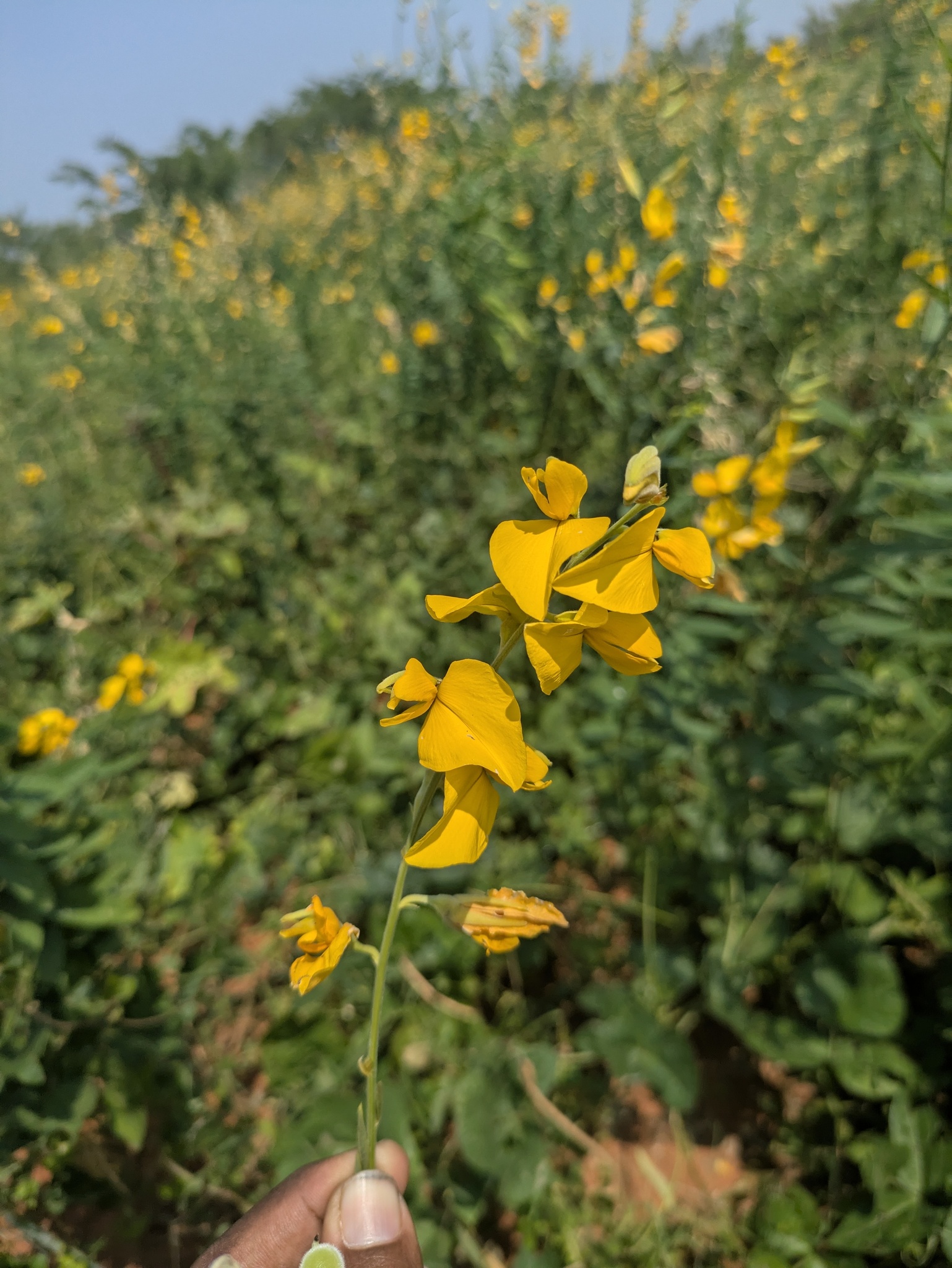
Sunn hemp (Crotalaria juncea) is a rapid-growth tropical legume from the Indian subcontinent, primarily grown for its ability to fix nitrogen and produce high-quality fiber. You can recognize it by its tall, slender stems and bright yellow pea-like flowers that bloom within 60 days of sowing.
While it belongs to the same family as garden peas, this plant is a specialized soil-builder that can produce over 5,000 kg (11,000 lbs) of biomass per hectare in just one summer. It outperforms most other cover crops in poor, sandy soils where nematodes are a problem.
Key Facts
- Growth Rate: Reaches 2 m (6 ft) in 60-90 days
- Nitrogen Fixation: Adds up to 135 kg (300 lbs) per acre
- Seeding Depth: Plant seeds 2.5 cm (1 inch) deep
- Temperature: Requires soil above 18 °C (65 °F) to germinate
- Life Cycle: Tropical perennial grown as a summer annual
Why Grow Sunn Hemp in Your Rotation
You should grow Sunn hemp if you need to improve soil nitrogen and suppress root-knot nematodes in a short window of time. This plant is a soil-building powerhouse that thrives in heat and humidity where other legumes might wither. It is particularly effective for gardeners or farmers dealing with depleted, sandy soils that lack organic matter.
Because it grows so quickly, it can be used as a “smother crop” to outcompete summer weeds like pigweed (Amaranthus) or crabgrass (Digitaria). It provides a massive amount of carbon to the soil when tilled back in, helping to retain moisture for the following crop. It is often used before planting heavy feeders like corn (Zea mays) or brassicas.
Identifying Sunn Hemp in the Field
Sunn hemp is a tall, erect plant that typically reaches 1 to 3 m (3 to 10 ft) in height with a single main stem. The leaves are simple, not trifoliate like many other legumes, and measure 4-13 cm (1.5-5 inches) in length. They have a velvety texture due to fine, silky hairs on the underside.
The flowers are a bright, clear yellow and grow in long terminal clusters called racemes. After flowering, the plant produces inflated, cylindrical pods about 3-6 cm (1-2.5 inches) long. When the seeds are mature and dry, they break loose and rattle inside the pod, which gives the genus its common name, “rattlebox.”
Ideal Growing Conditions for Crotalaria
This species requires full sun and warm temperatures, ideally between 25-35 °C (77-95 °F), to reach its full biomass potential. It is highly drought-tolerant once established but will not survive a hard frost. You should wait until the soil is consistently warm before planting, as cold, wet soil will cause the seeds to rot.
While it prefers well-drained sandy loams, it is remarkably tolerant of low-fertility soils. It does not do well in waterlogged areas or heavy clay that stays saturated. If your soil pH is very acidic, below 5.0, growth may be stunted, though it is more acid-tolerant than many other clover species.
Sowing Sunn Hemp Seed and Spacing
For a dense cover crop, you should sow seeds at a rate of 28-56 kg per hectare (25-50 lbs per acre). If you are planting in garden rows, space them 30 cm (12 inches) apart. The seeds should be buried at a depth of 2.5 cm (1 inch) to ensure good soil contact and protection from birds.
- Broadcast seeds evenly over cleared ground for green manure.
- Lightly rake or disk the area to cover the seeds.
- Inoculate seeds with cowpea-type rhizobium if the soil has not hosted legumes recently.
- Water immediately after sowing if the soil is dry to kickstart germination.
Managing and Terminating the Crop
You must terminate Sunn hemp within 60 days or as soon as it begins to flower to prevent the stems from becoming too woody. If the stems turn fibrous and brown, they become very difficult to mow or incorporate into the soil. For home gardeners, a simple flail mower or a weed trimmer can be used to chop the green material.
Once chopped, the residue can be left on the surface as a mulch or tilled into the top 15 cm (6 inches) of soil. If you are using it to suppress nematodes, tilling it in while the plant is still succulent is the most effective method. If you wait too long, the plant may produce viable seeds which can become a weed problem in subsequent seasons.
Harvesting Fiber and Collecting Seed
Harvest stems for fiber when the plant is in full bloom, as this is when the bast fibers in the bark are strongest. Historically, the stems were retted in water for several days to separate the fibers from the woody core. These fibers were then used to make twine, fishing nets, and high-quality paper.
To harvest seeds, you must allow the pods to turn brown and brittle on the stalk. Check for readiness by shaking a pod; if it rattles loudly, the seeds are dry. Wear gloves when handling large quantities of dry pods, as the fine hairs on the stems can cause skin irritation for some people.
Improving Soil and Feeding Livestock
Sunn hemp is an excellent nectar source for honey bees and other pollinators, blooming at a time when other forage may be scarce. The leaves are high in protein (up to 30%), making them a potential forage for cattle. However, you must use caution as the seeds contain toxic alkaloids.
- Graze livestock only on the foliage before seed pods develop.
- Ensure the variety grown is a low-alkaloid cultivar like ‘Tropic Sun’.
- Avoid feeding Sunn hemp to horses, as they are more sensitive to the toxins.
- Use the dried stalks as a high-carbon bedding for poultry or goats.
Managing Pests and Disease Problems
The most common pest for this crop is the lima bean pod borer (Etiella zinckenella), which can destroy a seed crop quickly. You may also see damage from various species of caterpillars that feed on the leaves. In humid climates, Fusarium wilt can cause the plants to yellow and collapse prematurely.
- Rotate crops to prevent the buildup of soil-borne fungi.
- Monitor for stink bugs during the pod-filling stage.
- Select certified weed-free seed to avoid introducing invasive species.
- Ensure good drainage to prevent damping-off in young seedlings.
Storing Seeds for Future Planting
Sunn hemp seeds remain viable for 2 to 3 years if stored in a cool, dry environment. They are susceptible to moisture, which can trigger mold or premature sprouting. Store them in airtight containers or breathable cloth bags kept in a dark pantry or climate-controlled shed.
Before storing, ensure the seeds are completely dry by pressing a fingernail into one; it should be hard and leave no mark. If you are storing large quantities, adding a desiccant pack can help maintain the low humidity required. Always label the container with the harvest date and variety name.
The Sunn Hemp Growing Cycle
| Spring | Wait for soil temperatures to reach 18 °C (65 °F) before sowing. Prepare the seedbed by removing winter weeds and ensuring the soil is loose. |
|---|---|
| Summer | Monitor growth during the first 30 days. Water during extreme droughts to ensure maximum biomass production before the 60-day termination mark. |
| Autumn | Mow or till the crop before the first frost. If saving seeds, harvest pods once they turn brown and rattle when shaken. |
| Winter | Store harvested seeds in a dry, cool location. Plan the next crop rotation to take advantage of the nitrogen fixed by the hemp. |
Common Sunn Hemp Growing Issues
| What you see | Likely cause | What to do |
|---|---|---|
| Yellowing lower leaves | Waterlogging or poor drainage | Improve drainage or move future plantings to higher ground. |
| Holes in seed pods | Pod borer larvae | Apply organic neem oil or harvest early if the crop is for fiber. |
| Stems too tough to mow | Late termination | Terminate the crop earlier, ideally at the first sign of yellow flowers. |
| Poor germination | Cold soil temperatures | Wait until late spring or early summer when soil is consistently warm. |
Sunn Hemp Cultivars for Specific Uses
- ‘Tropic Sun’ – A non-toxic cultivar developed in Hawaii for forage.
- ‘AU Golden’ – Early maturing variety with high seed yield.
- ‘Crescent Bloom’ – Known for high resistance to root-knot nematodes.
- ‘Ubon’ – A tall variety bred specifically for high biomass production.
Frequently Asked Questions
Is sunn hemp invasive?
It can be invasive in tropical regions like Florida or Hawaii if allowed to go to seed, but it is easily managed by mowing before the pods mature. In temperate zones, the winter frost naturally kills the plant, preventing it from spreading.
Is sunn hemp edible for humans?
The flowers are traditionally eaten as a vegetable in parts of Asia, but the seeds and foliage contain toxic alkaloids. It is generally not recommended for human consumption due to the risk of liver damage from these compounds.
Is sunn hemp good for cows?
Yes, it is a high-protein forage for cattle, provided you use a low-alkaloid variety like 'Tropic Sun'. You must ensure the cattle do not consume the seeds, which are the most toxic part of the plant.
How much sunn hemp seed do I need per acre?
You typically need 25 to 50 pounds of seed per acre depending on whether you are broadcasting or drilling. Higher rates are better for weed suppression and maximum nitrogen fixation.
Is sunn hemp an annual or perennial?
It is a tropical perennial that behaves as a fast-growing annual in most climates. It will grow until the first frost kills it, or until it completes its seed cycle in about 120-150 days.
Information about traditional or historical uses is provided for educational interest only and is not medical advice. Do not use any plant to treat a condition without speaking to a qualified professional.
Sources & Verification
Taxonomy and distribution are checked against the databases below. Care guidance is written for cultivated species only and reviewed by our editor. How We Build Plant Profiles →